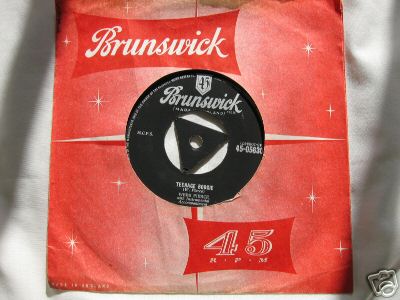
WEBB PIERCE - TEENAGE BOOGIE 1956 TRI-CENTRE
£
112
$
148


Favourite Auctions
To save auctions to your favourites, please login
If you don't have an account, please register
Description
HIGHLY COLLECTABLE AND VERY MUCH SOUGHT AFTER:
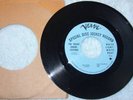
WEBB PIERCE "TENNAGE BOOGIE" cw "ANY OLD TIME"
1956 RELEASED ON BRUNSWICK (UK PRESSING) - CATALOGUE NO. 45-05630
TRI-CENTRE FIRST PRESS
VINYL RETAINS A GREAT SHINE. VERY LIGHT SURFACE MARKS BUT NOTHING SERIOUS. FABULOUS SOUND. MINIMAL BACK GROUND NOISE/CRACKLE. I'M GOING TO PLAY GRADE THIS A VERY SOLID VG+ (THIS IS BEING CONSERVATIVE).
COMES IN CONTEMPORARY BRUNSWICK PAPER SLEEVE THAT'S IN VERY NICE CONDITION.
RRPG PRICES THIS AT £180 IN MINT CONDITION)
In 1956 Webb Pierce was 35 years old and sounded 20 years older - but that didn’t stop him cutting a record called Teenage Boogie. The age difference didn’t really matter to the younger generation; as long as the beat was hot and strong they could relate to anyone twice their age. Webb was another of those hillbilly singers whose established career got diverted by rock’n'roll during the late 1950s. In his case it was not such a problem. He was already thought to be the best hanky-tonk singer since Hank Williams and that style was not many steps behind rockabilly. (The American term ‘honky-tonk’ came into general usage about 1933 and derives from the often rough and rowdy saloons and dance halls where music was played, the unsavoury kind of place a rural community could let its hair down on a Saturday night.)
Webb Pierce, born 1921 in West Monroe, Louisiana, grew up and worked on his father’s farm until he learned to play guitar and began performing on KMLB radio in his earty teens. He served in the US Army from 1942 to 1945; on his return from service he auditioned for the Louisiana Hayride show and was an instant success. He also went to work in the haberdashery department at the local Sears & Roebuck, a job he stayed with until 1952. It was September that year when he replaced Hank Williams on the Grand Ole Opry roster of country stars. (The Grand Ole Opry began on radio WSM in 1925 as National Barn Dance, hosted by George D Hay and broadcast from Memphis, Tennessee. WSM - motto ‘We Shield Millions’ - also transmitted NBC’s Grand Opera Broadcasts from New York and using a variation of this, Barn Dance was eventually changed to Grand Ole Opry.) Pierce gave up the Opry in 1955 because it interfered with his booking schedules. His recording career began with 4-Star Records in 1949 where he cut records such as High Geared Daddy and Heebie Jeebie Blues, in a hillbilly boogie style. He signed with Decca Records in 1951, a contract that proved highly lucrative for both parties. Webb had several No. 1 country htts and other long chart entries within a few years.
The time came when Webb Pierce had to make the decision whether to stick with his musical convictions, or go with the rock’n'roll trend and risk alienating his staunch country fanbase. He chose the latter option. He slipped into rock’n'roll mode with Teenage Boogie, a straightforward rockabilly single that’s a classic of the genre. This was followed with a cover of The Everly Brothers’ Bye Bye Love and other rocking hillbilly sides such as Honky Tonk Song and New Panhandle Rag. He wound up the decade with two final rockers, I Ain’t Never and No Love Have I, before returning to his more countrified roots.
By the early 1960s performing country music had made Webb Pierce extremely wealthy. He made no secret of it and spent money ostentatiously on over-the top Western outfits, customised cars and, among other things, his famous home swimming pool in the shape of a guitar. He was diagnosed as having cancer in 1990 and underwent the necessary treatment before passing away in Nashville the following year.






![Adele - 21 [LP] (160 Gram Vinyl, includes download)- SEALED](https://www.popsike.info/php/thumbnail.php?url=https://www.popsike.pics/pix/20160326/371584942504.jpg)