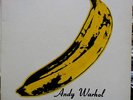
Velvet Underground Lp "Andy Warhol" Mint Banana
$
500


Favourite Auctions
To save auctions to your favourites, please login
If you don't have an account, please register
Description
Classic Velvet Underground Lp Andy Warhol in Excellent condition..,,,,usually banana has tears ,rips or is partially torn..(Banana on this particular Velvet Underground is NM/MINT(Perfect). Rest of Cover is just as Nice. .Nm w/just the slightest imperfections.(small manufacturing bubble on front cover)..(check photo carefully)..Inside Gatefold is also exceptional (Nm) as well as is back cover .Spine and seams are Perfect. Corners are square. Record is Verve Stereo in VG++/NM condition .. Buyer to pay $10.00 S/H. Thanks for looking. *****mVelvet Underground & Nico The Velvet Underground & Nico Studio album by The Velvet Underground and Nico Released March 12, 1967 (1967-03-12) Recorded April 1966, Scepter Studios, New York City; May 1966, T.T.G. Studios, Hollywood, California; November 1966, Mayfair Studios, New York City Genre Rock, art rock, experimental rock, psychedelic rock, protopunk, avant-garde Length 48:51 Language English Label Verve Producer Andy Warhol; Tom Wilson The Velvet Underground chronology The Velvet Underground & Nico
(1967) White Light/White Heat
(1968) Nico chronology The Velvet Underground & Nico
(1967) Chelsea Girl
(1967) Singles from The Velvet Underground & Nico
- "All Tomorrow's Parties"
Released: July 1966 (1966-07) - "Sunday Morning"
Released: December 1966 (1966-12)
The Velvet Underground & Nico is the debut album by American rock band The Velvet Underground and vocal collaborator Nico. It was originally released in March 1967 by Verve Records. Recorded in 1966 during Andy Warhol's Exploding Plastic Inevitable multimedia event tour, The Velvet Underground & Nico would gain notoriety for its experimentalist performance sensibilities, as well as the focus on controversial subject matter expressed in many of their songs including drug abuse, prostitution, sadism and masochism and sexual deviancy.
Though a commercial and critical failure upon release, the record has since become one of the most influential and critically acclaimed rock albums in history, appearing at number thirteen on Rolling Stone magazine's list of the 500 Greatest Albums of All Time.
Recording
The Velvet Underground & Nico was recorded with the first professional line-up of The Velvet Underground, including Lou Reed, John Cale, Sterling Morrison and Maureen Tucker. German singer Nico was also featured, having occasionally performed lead vocals for the band at the instigation of their mentor and manager, Andy Warhol. Nico sang lead on three of the album's tracks—"Femme Fatale", "All Tomorrow's Parties" and "I'll Be Your Mirror"—and back-up on "Sunday Morning". In 1966, as the album was being recorded, this was also the line-up for their live performances as a part of Warhol's Exploding Plastic Inevitable.
The bulk of the songs that would become The Velvet Underground & Nico were recorded in mid-April, 1966, during a four-day stint at Scepter Studios, a decrepit recording studio in New York City. This recording session was financed by Warhol and Columbia Records' sales executive Norman Dolph, who also acted as an engineer with John Licata. Though exact total cost of the project is unknown, estimates vary from $1,500 to $3,000.[3]
Soon after recording, Dolph sent an acetate disc of the recordings to Columbia in an attempt to interest them in distributing the album, but they declined, as did Atlantic Records and Elektra Records. Eventually, the MGM Records-owned Verve Records accepted the recordings with the help of Verve staff producer Tom Wilson, who had recently moved from a job at Columbia.
With the affirmation of a label, three of the songs, "I'm Waiting for the Man", "Venus in Furs" and "Heroin", were re-recorded in two days at T.T.G. Studios during a stay in Hollywood later in 1966. When the record's release date was postponed, Wilson brought the band into a New York studio in November 1966 to add a final song to the track listing: the single "Sunday Morning".
Production
There is some confusion as to who actually produced The Velvet Underground & Nico. Although Andy Warhol was the only formally credited producer, he had very little direct influence or authority over the album beyond paying for the recording sessions. In fact, several other individuals who worked on the album are often mentioned as the album's technical producer.
Norman Dolph and John Licata are sometimes attributed to producing the Scepter Studios sessions, considering they were responsible for recording and engineering them (despite the fact that neither of the two were ever mentioned in the original album's credits).[3] Dolph himself, however, admits John Cale as the album's rightful creative producer, as he handled the majority of the album's musical arrangements.[3] And yet, Cale later recalled that it was Tom Wilson who actually produced nearly all the tracks on The Velvet Underground & Nico. "The band never again had as good a producer as Tom Wilson", Cale told an interviewer. "Andy Warhol didn't do anything."[4]
However, others cite Warhol's lack of manipulation on the album itself a legitimate means of production.[3] Sterling Morrison described Warhol as the album's producer "in the sense of producing a film."[5] Lou Reed further discussed the matter in an interview:
He just made it possible for us to be ourselves and go right ahead with it because he was Andy Warhol. In a sense, he really did produce it, because he was this umbrella that absorbed all the attacks when we weren't large enough to be attacked... and as a consequence of him being the producer, we'd just walk in and set up and do what we always did and no one would stop it because Andy was the producer. Of course he didn't know anything about record production—but he didn't have to. He just sat there and said "Oooh, that's fantastic," and the engineer would say, "Oh yeah! Right! It is fantastic, isn't it?"Subject matter
The Velvet Underground & Nico was notable for its overt descriptions of topics such as drug abuse, prostitution, sadism and masochism and sexual deviancy. "I'm Waiting for the Man" describes a man's efforts to obtain heroin while "Venus in Furs" is a nearly literal interpretation of the nineteenth century novel of the same name (which itself prominently features accounts of BDSM). One of the best-known tracks on the album is "Heroin", a song that details an individual's use of the drug and the experience of feeling its effects.
Lou Reed, who wrote the majority of the album's lyrics, never intended to write about such topics for shock value. Reed, a fan of poets and authors such as Raymond Chandler, Nelson Algren, William S. Burroughs, Allen Ginsberg, and Hubert Selby, Jr., saw no reason why the content in their works couldn't translate well to rock and roll music. An English major who studied for a B.A. at Syracuse University, Reed said in an interview that he thought joining the two (gritty subject matter and music) was "obvious".[7] "That's the kind of stuff you might read. Why wouldn't you listen to it? You have the fun of reading that, and you get the fun of rock on top of it."[7]
Though the album's dark subject matter is today considered revolutionary,[8] several of the album's songs are centered on themes more typical of popular music. Certain songs were written by Reed as observations of the members of Andy Warhol's "Factory Superstars". "Femme Fatale" in particular was written about Edie Sedgwick at Warhol's request. "I'll Be Your Mirror", inspired by Nico,[9] is a tender and affectionate song; in stark contrast to a song like "Heroin". A common misperception is that "All Tomorrow's Parties" was written by Reed at Warhol's request (as stated in Victor Bockris and Gerard Malanga's Velvet Underground biography Up-Tight: The Velvet Underground Story). While the song does seem to be another observation of Factory denizens, Reed had written the song (and even recorded a demo version in 1965) before meeting Warhol.
Instrumentation and performance
Much of the album's sound was conceived by John Cale, who stressed the experimental qualities of the band. Cale, who was influenced greatly by his work with La Monte Young, John Cage and the early Fluxus movement, encouraged the use of alternative ways of producing sound in music. Cale thought his sensibilities meshed well with Lou Reed's, who was already experimenting with alternative tunings. For instance, Reed had "invented" the ostrich guitar tuning for a song he wrote called "The Ostrich" for the short-lived band The Primitives. Ostrich guitar tuning consists of all strings being tuned to the same note. The method was utilized on songs "Venus in Furs" and "All Tomorrow's Parties". Often, the guitars were also tuned down a whole step, which produced a lower, fuller sound that Cale called "sexy".[3]
Cale's viola was used on several of the album's songs, notably "Venus in Furs" and "Heroin". The viola used guitar and mandolin strings, and when played loudly, Cale would liken its sound to that of an airplane engine.[8] Cale's viola technique usually involved drones, or single notes sustained over long periods of time. He would, however, vary his attack, speed, or even add other notes on top to create differing tones while maintaining a consistent pitch.
Album cover
The album cover for The Velvet Underground & Nico is recognizable for featuring a Warhol print of a banana. Early copies of the album invited the owner to "Peel slowly and see"; peeling back the banana skin revealed a flesh-colored banana underneath. A special machine was needed to manufacture these covers (one of the causes of the album's delayed release), but MGM paid for costs figuring that any ties to Warhol would boost sales of the album. Most reissued vinyl editions of the album do not feature the peel-off sticker; the original copies of the album with the peel-sticker feature are now rare collector's items. A Japanese re-issue LP in the early 1980s was the only re-issue version to include the banana sticker for many years. On the 1996 CD reissue, the banana image is on the front cover while the image of the peeled banana is on the inside of the jewel case, beneath the CD itself. The album was re-pressed onto heavyweight vinyl in 2008 and this edition also features the banana sticker.
Back cover lawsuit
When the album was first issued, the main back cover photo (taken at an Exploding Plastic Inevitable performance) featured an image of actor Eric Emerson projected upside-down on the wall behind the band. Emerson threatened to sue over this unauthorized use of his image, unless he was paid.[3] Rather than complying, MGM recalled copies of the album and halted its distribution until Emerson's image could be airbrushed from the photo on subsequent pressings. Copies that had already been printed were sold with a large black sticker covering the actor's image. The image was restored for the 1996 CD reissue.
Front cover lawsuit
In January 2012, the "Velvet Underground" business partnership (of which John Cale and Lou Reed are general partners) sued The Andy Warhol Foundation for the Visual Arts, Inc. in the United States District Court for the Southern District of New York after the Foundation licensed the cover's banana design to Incase Designs for use on a line of iPhone and iPad cases. The partnership's complaint contained four claims: one involving copyright law, and three relating to trademark law.
Alleging that the Foundation had earlier claimed it "may" own the design's copyright, the partnership asked the court for a declaratory judgment that the Foundation did not have such rights.[10] In response, the Foundation gave the partnership a "Covenant Not to Sue" — a written and binding promise that, even if the partnership and certain other parties continued to use the design commercially, the Foundation would never invoke its professed copyright ownership against them in court. On the Foundation's motion, Judge Alison J. Nathan severed and dismissed from the lawsuit the partnership's copyright claim. According to Judge Nathan, the Constitution allows federal courts to decide only "Cases" or "Controversies", which means ongoing or imminent disputes over legal rights, involving concrete facts and specific acts, that require court intervention in order to shield the plaintiff from harm or interference with its rights. The judge held that the partnership's complaint fell short of that standard because even if the Foundation continued to claim ownership of the design's copyright — and even if its claim was invalid — that claim would not legally harm the partnership or prevent it from making its own lawful uses of the design. The partnership did not claim that it owned the design's copyright, only that the Foundation did not. Since, according to the court, the Foundation promised not to sue the partnership for any "potentially copyright-infringing uses of the Banana Design", the partnership could continue using the design and there would be no legal action that the Foundation could take (under copyright law[11]) to stop it. And if, the court concluded, the partnership could continue with business as usual (as far as copyright was concerned) regardless of whether the Foundation actually owned the design's copyright, a court decision would have no practical consequences for the partnership; it would be a purely academic (or "advisory") opinion, which federal courts may not issue. The court therefore dismissed the partnership's request that it resolve whether the Foundation owned the design's copyright.
The remaining trademark claims were settled out of court with a confidential agreement, and the partnership's suit was dismissed in late May 2013.[12]
Track listing
All songs written and composed by Lou Reed unless otherwise noted.
Side one No. Title Writer(s) Length 1. "Sunday Morning" Reed, Cale 2:54 2. "I'm Waiting for the Man" 4:39 3. "Femme Fatale" 2:38 4. "Venus in Furs" 5:12 5. "Run Run Run" 4:22 6. "All Tomorrow's Parties" 6:00 Side two No. Title Writer(s) Length 7. "Heroin" 7:12 8. "There She Goes Again" 2:41 9. "I'll Be Your Mirror" 2:14 10. "The Black Angel's Death Song" Reed, Cale 3:11 11. "European Son" Reed, Cale, Morrison, Tucker 7:46
price rating