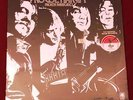
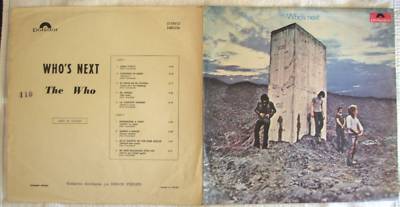
The Who- "Who's Next" IMPORT Polydor CHILENA VERY RARE
$
50


Favourite Auctions
To save auctions to your favourites, please login
If you don't have an account, please register
Description
IF YOU ARE NOT PLEASED WITH ANY of my SHIPPING RATES
or
INSTRUCTIONS
PLEASE
DO NOT BID !!
___________________________
PLEASE DO NOT PAY BEFORE I SEND YOU AN INVOICE
If you do I reserve the right to cancel the sale and relist the item.
________________________________________
SHIPPING is NOT $4.00 US Dollars
USA Shipping is: $5.99 US MEDIA MAIL
DO NOT PAY BEFORE I SEND YOU AN INVOICE
If you do I reserve the right to cancel the sale and relist the item.
and
PLEASE READ COMPLETE ITEM DESCRIPTION BEFORE BIDDING
SHIPPING is NOT $4.00 US Dollars -- USA Shipping is: $5.99 US MEDIA MAIL
_______________________________________
ALL VINYL IS RATED VISUALLY
UNDER DIRECT SUNLIGHT & BRIGHT INCANDESCENT LIGHT
________________________
A WORD ABOUT MY SHIPPING CHARGES
MOST OF THESE ITEMS REQUIRE:
1- ONE (1) OR MORE PROTECTIVE VINYL SLEEVES THAT I PURCHASE NEW
2- ONE or TWO PROTECTIVE CARDBOARD STIFFENERS THAT I PURCHASE NEW
3- SPECIALISED SHIPPING BOXES THAT I HAVE TO PURCHASE NEW TO PROFESSIONALLY PACKAGE & SHIP YOUR ITEMS SAFELY AND WELL PROTECTED AGAINST ROUGH POSTAL HANDLING.
4- THE TIME IT TAKES TO DO ALL OF THE ABOVE
PLEASE TAKE THIS INTO CONSIDERATION WHEN YOU RATE MY SHIPPING CHARGES.
THANK YOU.
____________________________________________________________________________
SORRY - NO RETURNS
Review the photos carefully, use them to determine if the item meets your standards. Ratings vary greatly from person to person so PLEASE BE SURE you want this item
--- BEFORE BIDDING ---
all sales final --- All Sales Final --- ALL SALES FINAL
__________
PAYMENT MUST BE RECEIVED WITHIN: 5 DAYS AFTER AUCTION CLOSE!!
OR
SELLER RESERVES THE RIGHT TO CANCEL SALE AND RELIST THE ITEM
_________________
I TRY to ship within 48hrs. of payment!!!
_________________________
SEE GOLDMINE RECORD GRADING INFORMATION at VERY BOTTOM
NOW THAT the SMALL PRINT is OUT of the WAY
REMEMBER THAT:
SHIPPING is NOT $4.00 US Dollars
USA Shipping is: $5.99 US MEDIA MAIL
________________
UP FOR AUCTION IS:
ORIGINAL CHILENA IMPORT
COLLECTIBLE !!
This ALBUM IS A
CHILENA IMPORT PRESSING
OF
The Who->"WHO's NEXT"
ON
POLYDOR RECORDS
POLYDOR - 2480056
See Photographs
THE ITEM YOU ARE BIDDING ON
is
The Who->
"WHO ARE YOU"
A CHILEAN IMPORT PRESSING
"ORIGINALLY RELEASED IN 1971"
Side One:
Minimal static, very pleasing sound, no skips, sticks, jumps, at all. Couple moderate "pops" or "ticks" ... one in a quiet moment during the acoustic interlude on BARGAIN, maybe two at the beginning of SONG IS OVER.
Side One rating: SOLID VG+
___________
Side Two:
Some moderate crackling & a couple ticks/pops in the beginning of GETTING IN TUNE that end by the chorus, then a random tick/pop toward the end. This second side appears to have a bit more tick/popping of the light to VERY moderate kind than side one, but, to be honest, I opened a sealed 70s lp in the last month that has more noise on it than this record does. It definitely has the warm & saturated sound that vinyl is known for. A light tick/pop at the beginning of BBEyes. Intro to WGFAgain has very little noise. One pop, in the middle of the organ/synth solo before Moonie's drum solo.
Side Two rating: STRONG VG+
IT IS ONE OF
THE MOST POPULAR and BIGGEST
SELLING ALBUMS EVER MADE
(PLEASE See Photos)-----------------------------
Here is a chance to own a
GREAT CHILENA IMPORT COLLECTIBLE
in
VERY GOOD+ CONDITION
by
THE GREATEST ROCK BAND
of ALL TIME!
**The Who->**
CONDITION
VINYL: VG+
BEAUTIFUL Very Glossy, Full of Sheen
SOME SCUFFING & HAIRLINES
PLAY GRADING:
Side One:
Minimal static, very pleasing sound, no skips, sticks, jumps, at all. Couple moderate "pops" or "ticks" ... one in a quiet moment during the acoustic interlude on BARGAIN, maybe two at the beginning of SONG IS OVER.
Side One rating: SOLID VG+
___________
Side Two:
Some moderate crackling & a couple ticks/pops in the beginning of GETTING IN TUNE that end by the chorus, then a random tick/pop toward the end. This second side appears to have a bit more tick/popping of the light to VERY moderate kind than side one, but, to be honest, I opened a sealed 70s lp in the last month that has more noise on it than this record does. It definitely has the warm & saturated sound that vinyl is known for. A light tick/pop at the beginning of BBEyes. Intro to WGFAgain has very little noise. One pop, in the middle of the organ/synth solo before Moonie's drum solo.
Side Two rating: STRONG VG+
_____
COVER: VG+VERY VERY RARE PAPER SLEEVE - FOLDING SLEEVE
A LITTLE HISTORY ABOUT THIS RECORD:
Who's Next
Chile - 1972 Polydor LP
Who's Next Studio album by The Who Released 31 July 1971 Recorded March–May 1971, Olympic Studios, London Genre Rock, hard rock[1] Length 43:38 Language English Label Decca/MCA Producer The Who, Glyn Johns (associate producer) Professional reviews
- Allmusic link
- Blender link
- BBC Music (very favorable) link
- Robert Christgau (A) link
- PopMatters (very favorable) link
- Rolling Stone link
- Sputnikmusic link
(1970) Who's Next
(1971) Meaty Beaty Big and Bouncy
(1971)
Singles from Who's Next
- "Won't Get Fooled Again"
Released: 25 June 1971 - "Behind Blue Eyes"
Released: 1971 - "Baba O'Riley"
Released: November 1971
Who's Next is the fifth album by the English rock band The Who. It was released on 31 July 1971 by Decca and MCA in the United States and 25 August 1971 in the United Kingdom through Track and Polydor. The album has origins in a rock opera conceived by Pete Townshend called Lifehouse. The ambitious, complex project did not come to fruition at the time and instead, many of the songs written for the project were compiled onto Who's Next as a collection of unrelated songs. Who's Next was a critical and commercial success when it was released, and has been certified 3x platinum by the RIAA.[2]
The Lifehouse project
The album has its roots in the Lifehouse project, which Who leader Pete Townshend has variously described as intended to be a futuristic rock opera, a live-recorded concept album and as the music for a scripted film project. The project proved to be intractable on several levels and caused stress within the band as well as a major falling out between Townshend and The Who's producer Kit Lambert. Years later, in the liner notes to the remastered Who's Next CD, Townshend wrote that the failure of the project led him to the verge of a suicidal nervous breakdown.
After giving up on recording some of the Lifehouse tracks in New York, The Who went back into the studio with new producer Glyn Johns and started over. Although the Lifehouse concept was abandoned, scraps of the project remained present in the final album. The introductory line to "Pure and Easy"—which Townshend has described as "the central pivot of Lifehouse"—shows up in the closing bars of "The Song Is Over". An early concept for Lifehouse featured the feeding of personal data from audience members into the controller of an early analog synthesizer to create musical tracks. It was widely believed that inputting the vital statistics of Meher Baba into a synthesizer generated the backing track on "Baba O'Riley", but in actuality it was Townshend playing a Lowrey organ.[3] A primary result of the abandonment of the original project, however, was a newfound freedom; the very absence of an overriding musical theme or storyline (which had been the basis of several previous Who projects) allowed the band to concentrate on maximizing the impact of individual tracks.
Although he gave up his original intentions for the Lifehouse project, Townshend continued to develop the concepts, revisiting them in later albums. In 2006 he opened a website called The Lifehouse Method to accept personal input from applicants which would be turned into musical portraits.
Arrangement and songs
The album was immediately recognized for its dynamic and unique sound. The album fortuitously fell at a time when great advances had been made in sound engineering over the previous decade, and also shortly after the widespread availability of music synthesizers. The result was a sound that was absolutely stunning at the time, and rather unprecedented in rock music (although disliked by some traditional Who fans of the time). However, as full and brash as the sound is on most of the album there are contrasts with finger-picked acoustic guitar, and Roger Daltrey's swaggering vocals alternate with quieter introspective moments.
Townshend used the early synthesizers and modified keyboard sounds in several modes: as a drone effect on several songs, notably "Baba O'Riley" and "Won't Get Fooled Again", and as a playful noisemaker, sounding almost like a teakettle whistle on "The Song Is Over". Townshend also used an envelope follower to modulate the spectrum of his guitar on "Going Mobile", giving it a distinctive squawking sound that degenerates into a bubbling noise at the end of the song.
The album opened with the innovative "Baba O'Riley", featuring piano by Townshend and a violin solo by Dave Arbus. The song's title pays homage to Townshend's guru Meher Baba and influential minimalist composer Terry Riley (and is informally known by the line "Teenage Wasteland"). Other signature tracks include the ballad "Behind Blue Eyes", and the album's closing song, the epic "Won't Get Fooled Again", but others such as "Bargain", "My Wife" and "Going Mobile" remain fan favourites.
Cover art
The album cover shows a photograph, taken at Easington Colliery, of the band apparently having just urinated on a large concrete piling protruding from a slag heap. According to photographer Ethan A. Russell, most of the members were unable to urinate, so rainwater was tipped from an empty film canister to achieve the desired effect. The photograph is often seen to be a reference to the monolith discovered on the moon in the film 2001: A Space Odyssey, which had been released only about three years earlier.[4] Director Stanley Kubrick had declined to direct the film version of their earlier rock opera Tommy (1975); though the film didn't materialize until the mid-seventies it existed as a plan, and was ultimately directed by Ken Russell. In 2003, the United States cable television channel VH1 named Who's Next's front cover the second greatest album cover of all time.
An earlier cover design had featured photographs of obese nude females and has been published elsewhere, but never actually appeared on the album. An alternate cover featured drummer Keith Moon dressed in black lingerie, holding a rope whip, and wearing a brown wig. Some of the photographs taken during these sessions were later used as part of Decca's United States promotion of the album.[5]
Recording sessions
- 1970/71 – Demo sessions at the home studios of Pete Townshend and John Entwistle that produced two reels of songs.
- January–March 1971 – Live recordings at the Young Vic (mobile Studio).
- March 1971 – New York sessions at the Record Plant, Lifehouse songs recorded with Kit Lambert and Jack Adams at the desk. These sessions were abandoned, along with the Lifehouse concept.
- 26 April 1971 – Final Lifehouse concert which was recorded and later released (in part) on disc 2 of the Deluxe Edition of Who's Next
- May 1971 – Recording at Stargroves Studio London, the sessions were abandoned.
- May–June 1971 – Olympic Studios in Barnes produced by The Who with associate producer Glyn Johns. The Olympic sessions were used for the original vinyl LP album.
The album has now been re-issued in many countries and remastered several times using tapes from different sessions. The master tapes for the Olympic sessions are believed to be lost or destroyed. Video game publisher Harmonix had previously announced that Who's Next would be released as downloadable, playable content for the music video game series Rock Band. However, this never came to fruition, since it was discovered that much of the master tapes to the album were missing, as confirmed by Townshend.[6][7] Instead, a compilation of Who songs dubbed "The Best of The Who," which includes three of the album's songs ("Behind Blue Eyes", "Baba O'Riley", and "Going Mobile"), was released as downloadable content, in lieu of the earlier-promised Who's Next album.[8]
Accolades
Who's Next has been named one of the best albums of all time by VH1 (#13) and Rolling Stone (#28). Upon its release it was named the best album of the year in The Village Voice Pazz & Jop critics poll.[9] It was also ranked #3 in Guitar World's Greatest Classic Rock Albums list. Many of its nine tracks are perennial favourites on classic rock radio, especially "Baba O'Riley", "Bargain", "Behind Blue Eyes", and the closing track "Won't Get Fooled Again". The album appeared at number 15 on Pitchfork Media's top 100 albums of the 1970s.[10] The album is also included in the book 1001 Albums You Must Hear Before You Die.[11] In 2006, the album was chosen by Time Magazine as one of the 100 best albums of all time.[12] In 2007 it was also inducted into the Grammy Hall of Fame for "historical, artistic and significant" value. In 1999 it was the subject of a Classic Albums documentary produced by Eagle Rock Entertainment which has aired on VH1 and BBC among others entitled Classic Albums: The Who - Who's Next.
Track listing
All songs written by Pete Townshend except where noted.
Side one- "Baba O'Riley" – 5:11
- "Bargain" – 5:33
- "Love Ain't for Keeping" – 2:12
- "My Wife" (John Entwistle) – 3:41
- "The Song Is Over" – 6:16
- "Getting in Tune" – 4:50
- "Going Mobile" – 3:42
- "Behind Blue Eyes" – 3:43
- "Won't Get Fooled Again" – 8:32
Personnel
The Who- Roger Daltrey — lead vocals on tracks 1, 2, 3, 6, 8 and 9; co-lead vocal on track 5, harmonica on "I Don't Even Know Myself"
- Pete Townshend — guitar, organ, VCS3 and ARP synthesizer, vocals, and piano on 'Baba O'Riley'; lead vocal on "Going Mobile" & the original version of "Love Ain't for Keeping", co-lead vocal on tracks 1, 2 and 5
- John Entwistle — bass guitar; brass, vocals and piano on "My Wife"
- Keith Moon — drums, percussion
- Nicky Hopkins — piano on "Song Is Over" and "Getting in Tune"
- Dave Arbus — violin on "Baba O'Riley"
- Al Kooper — organ on alternate version of "Behind Blue Eyes"[14]
- Leslie West — guitar on extended version of "Baby Don't You Do It"[14]
- The Who — producer
- Glyn Johns — Associate producer, mixed
- Kit Lambert, Chris Stamp, Pete Kameron — executive producers
- Photography — Ethan A. Russell
- Design — John Kosh
______________________________
The GOLDMINE STANDARD
for
RECORD GRADING
THE TRUTH BEHIND THE GRADES
Most of the time, LPs are sold with two grades — one for the record and one for the cover. We list only one grade, however, because with some exceptions, albums without covers are worthless, and covers without the accompanying record are worthless. If an album is graded VG for the cover and VG+ for the record, add the two values together and divide by 2 to get a rough estimate of the value of a “mixed-grade” LP.
Most records are graded visually. This is because most record dealers have lot of records — hundreds of thousands in some cases — and they don’t have the time to play their entire stock. That said, some defects are easy to see, such as scratches and warps. Others are subtle, such as groove wear from using a cheap or poorly aligned tone arm. It has been our experience that older LPs (1950s to about 1971) tend to play better than they look, and newer LPs (at least until 1989) tend to play worse than they look.
When grading your records, do so under a strong light. Look at everything carefully, and then assign a grade based on your overall observations.
______________________________________________________
Here are the standard grades for record albums, from best to worst.
SEALED ALBUMS
Still-sealed albums can — and do — bring even higher prices than those in our listings. However, you must be careful when paying a premium for sealed LPs of any kind for several reasons:
1. They may have been re-sealed.
2. The records may not be in Near Mint condition.
3. The record inside may not be the original or most-desirable pressing.
4. Most bizarre of all, the wrong record my be inside. (I’ve had this happen to me; I opened a sealed album by on MCA artist only to find a record by a different MCA artist inside! Fortunately, I didn’t pay a lot of or that sealed LP. I would have been quite upset if I had!)
MINT (M)
These are absolutely perfect in every way. Often rumored but rarely seen, Mint should never be used as a grade unless more than one person agrees that the record or sleeve truly is in this condition.
There is no set percentage of the Near Mint value these can bring; it is best negotiated between buyer and seller.
NEAR MINT (NM OR M-)
A good description of a NM record is “it looks like it just came from a retail store and it was opened for the first time.” In other words, it’s nearly perfect.
Many dealers won’t use a grade higher than this, implying (perhaps correctly) that no record or sleeve is ever truly perfect.
Near mint records are shiny and free of visible defects. No writing, stickers, other markings or spindle marks appear on the label. No major factory defects are present; a record and label obviously pressed off center is not Near Mint.
If played, an NM record will do so without surface noise. Near Mint records don’t have to be “never played”; a record used on an excellent turntable can remain NM after many plays if the disc is properly cared for.
NM covers have no creases, ring wear or seam splits of any kind.
These are high standards, and they are not on a sliding scale. A record or sleeve from the 1950s must meet the same standards as one from the 1990s or 2000s to be Near Mint!
It is estimated that no more than 2 to 4 percent of all records remaining from the 1950s and 1960s are truly Near Mint. This is why they fetch such high prices, even for more common items. They must meet these standards to qualify.
VERY GOOD PLUS (VG+) OR EXCELLENT (E)
A good description of a VG+ Record is “except for a couple of minor things, this would be Near Mint.”
Most collectors, especially those who want to play their records, will be happy with a VG+ record, especially if it is toward the high end of the grade, (sometimes called VG++ or E+).
VG+ records may show some slight signs of wear, including light scuffs or very light scratches that do not affect the listening experience. Slight warps that don’t affect the sound are OK. Minor signs of handling are OK, too, such as telltale marks around the center hole, so long as repeated playing has not misshapen the hole. There may be some very light ring wear or discoloration, but it should be barely noticeable.
VG+ Covers should have only minor wear. A VG+ cover might have some very minor seam wear or a split (less than one inch long) at the bottom, the most vulnerable locataion. Also, a VG+ cover may have some defacing, such as a cut-out marking. Covers with cut-out markings can never be considered Near Mint.
VERY GOOD (VG)
Many of the imperfections found on a VG+ Record are more obvious on a VG record. That said, VG records — which usually sell for no more than 25 percent of a an NM record — are among the biggest bargains in record collecting, because moost of the “big money” goes for more perfect copies. For many listeners, a VG record or sleeve will be worth the money.
VG records have more obvious flaws than their counterparts in better shape. They lack most of the original gloss found on factory-fresh records. Groove wear is evident on sight, as are light scratches deep enough to feel with a fingernail.
When played, a VG record has surface noise, and some scratches may be audible, especially in soft passages and during a song’s intro and ending. But the noise won’t overpower the music otherwise. Minor writing, tape or a sticker can detract from the label. Many collectors who have jukeboxes will use VG records in them and not think twice. They remain a fine listening experience, just not the same as if it were in better shape.
VG covers will have many signs on human handling. Ring wear in the middle or along the edges of the cover, where the edge of a record would reside, is obvious; it may appear on all three sides, thought it won’t be obvious upon looking. Someone might have written on it or stamped a price tag on it, too.
GOOD (G), GOOD PLUS (G+) OR VERY GOOD MINUS (VG-)
Lower-grade records go for 10 to 15 percent of the Near Mint value, if you are lucky.
Good does not mean bad! The record still plays through without skipping, so it can serve as filler until something better comes along. But it has significant surface noicse and groove wear. The label is worn and exhibits significant ring wear, heavy writing or obvious damage caused by tring to remove tape or stickers and failing miserably.
A Good to VG- cover has ring wear to the point of distraction, has seam splits obvious on sight and may have even heavier writing, such as huge radio station letters written across the front to deter theft.
If the item is common, it’s probably better to pass it up. But if you’ve been seeking it for a long time, get it cheap and look to upgrade.
POOR (P) AND FAIR (F)
Poor and Fair records go for 0 to 5 percent of the Near Mint value, if they go at all.
More likely, they end up going in the trash. Records are cracked, impossibly warped or skip and/or repeat when an attempt is made to play them. Covers are so heavily damaged that you almost want to cry.
Only the most outrageously rare items ever sell for more than a few cents in this condition — again, if they sell at all
price rating