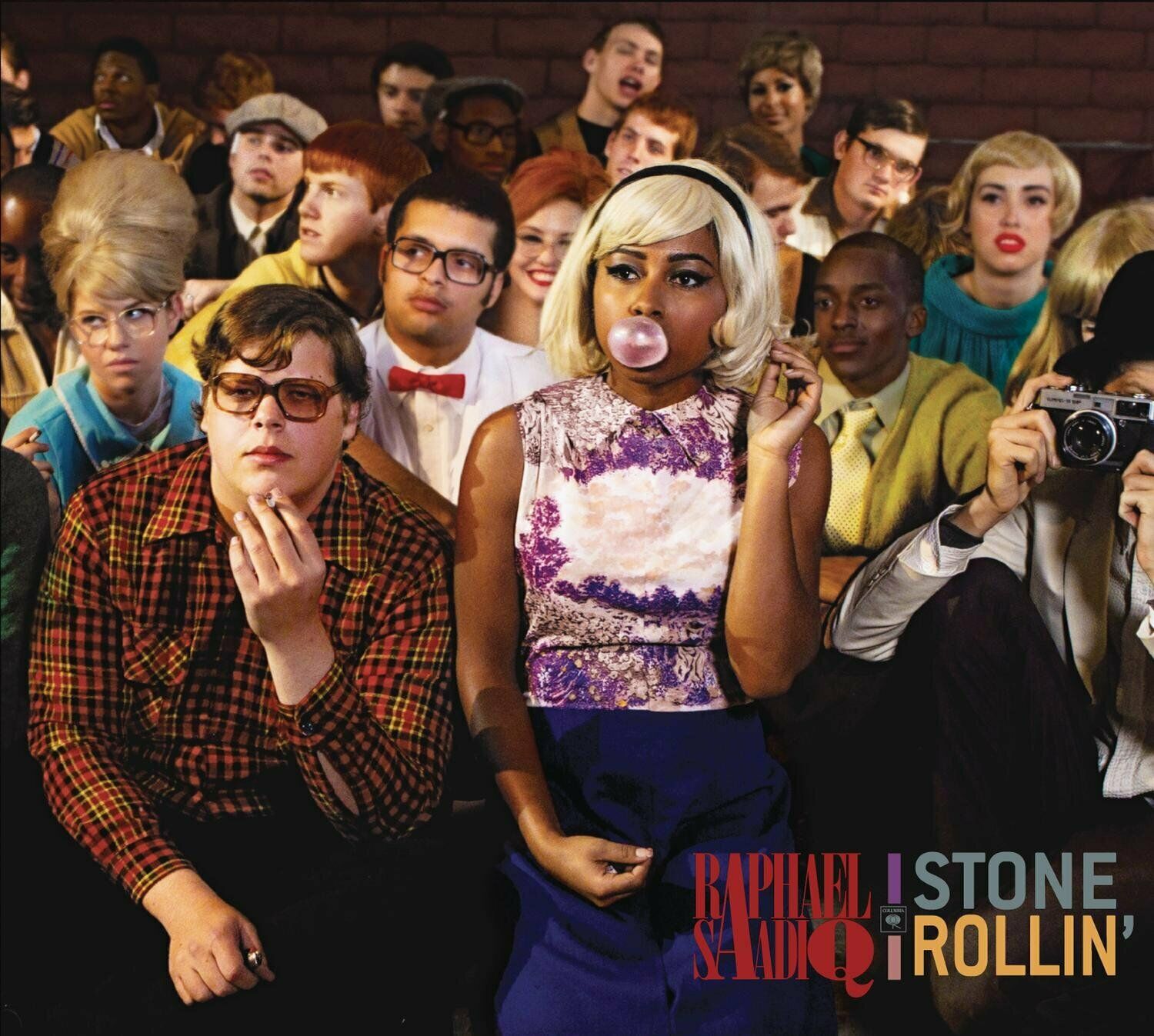
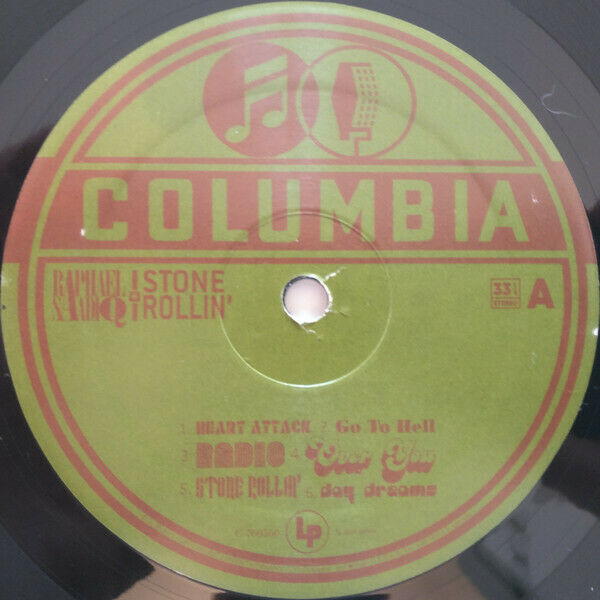
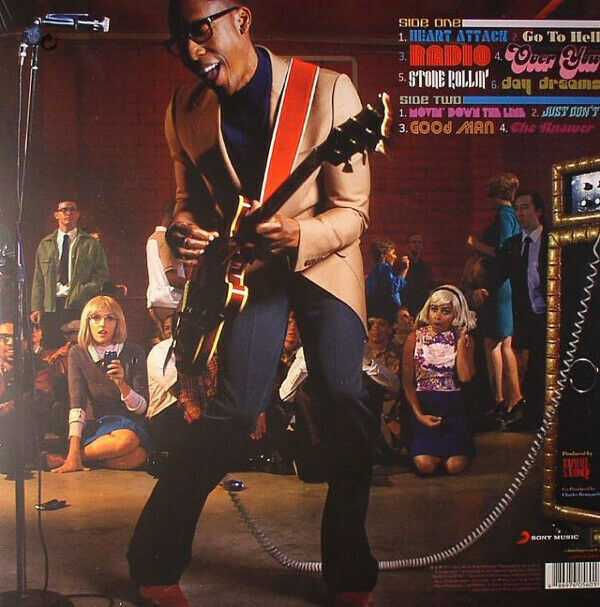
Raphael Saadiq ?? Stone Rollin' ? 2011 Columbia Heavyweight 200 Gram Vinyl LP ?
$
30


Favourite Auctions
To save auctions to your favourites, please login
If you don't have an account, please register
Description
Welcome to Classic Cadillac Records! My goal is to provide each and every customer with the best possible buying experience, no matter the size of the order. Unlike most sellers, I advertise all my items clearly and in as much detail as possible, without shouting at you in all caps. I take multiple high quality pictures and never use stock photos, so you know exactly what you?re buying. I take great pride in my work and go the extra mile, which can clearly be seen in my listings compared to other sellers that put minimal effort into theirs. I visually grade all my records as accurately as possible and will never grade anything above Near Mint unless it?s still sealed. Please note that a visual grade can differ from a play grade, and am happy to spot check a record upon request. All orders are shipped within 1 business day (usually sooner) and packed with extra care to ensure fast, safe arrival. I combine shipping on multiple orders to save you money and gladly ship worldwide. Please look closely at all pictures, read all relevant details and ask any questions you may have before buying. I offer a full 30-day return policy on everything I sell, so buy with confidence! And most importantly, thanks for looking!
Stone Rollin' Studio album by Raphael Saadiq Released March 25, 2011 Recorded 2009–2010 Studio Blakeslee Recording Company in Los Angeles Genre
- Rhythm and blues[1]
- rock
- soul[2]
- blues
- funk[3]
(2008) Stone Rollin'
(2011) Jimmy Lee
(2019) Singles from Stone Rollin'
- "Radio"
Released: December 21, 2010 - "Good Man"
Released: February 15, 2011 - "Stone Rollin'"
Released: March 22, 2011
Stone Rollin' is the fourth studio album by American R&B singer, songwriter, and producer Raphael Saadiq. It was released on March 25, 2011, by Columbia Records.
Inspired by the loud, raw quality of performing in concert, Saadiq worked with recording engineer and long-time collaborator Charles Brungardt to produce a grittier, more aggressive sound than on his previous records. Most of the instruments played on the album were performed by Saadiq, including the prominently featured Mellotron keyboard. With the help of arranger Paul Riser and engineer Gerry Brown, the singer also incorporated string and orchestral arrangements to the songs.
Stone Rollin' expands on the traditional soul music style of Saadiq's 2008 album The Way I See It by exploring rhythm and blues, rock, funk, and the blues. A widespread critical success, the record was deemed by some reviewers as Saadiq's best work while being noted for its stylistic breadth, groove-based compositions, varied subject matter, and incorporation of the Mellotron keyboard. It also became the singer's highest-charting album in the United States, reaching number 14 on the Billboard 200. He supported the album with a concert tour spanning from March to August 2011.
Background
In 2008, Saadiq released his third album The Way I See It,[4] which featured 1960s Motown Sound-inspired songs with traditional soul music influences.[5] The album was also an exemplary release of the "classic soul revival" during its peak at the time,[6][7] a music scene marked by similarly retro-minded work from mainstream artists such as Amy Winehouse and Adele, independent acts such as Sharon Jones & The Dap-Kings and Mayer Hawthorne, and older artists making comebacks such as Al Green and Bettye LaVette.[8][9] In promoting the album, Saadiq broadened his audience demographic and expanded as a touring artist,[5] playing various music festivals throughout Europe and the United States.[10] Along with the musical aesthetic of the album, Saadiq himself adopted a vintage soul image, donning old-fashioned attire and performing traditional R&B dance moves at shows.[5][6] His touring also inspired his approach for Stone Rollin',[10] as he considered the louder, raw sound and general feeling of performing live.
Saadiq has said of his creative intentions with the follow-up, "I’ve never shut my ears to anything, really. It’s not like I’m always looking for things, either, but I can’t close my ears to any music. Any guitar, any drums, any rhythm section— I’ve always been open to those things, trying to understand what makes them work in a song".[5] He was influenced by early rock and roll artists such as Chuck Berry and Bo Diddley,[12] and has cited blues musician Howlin' Wolf as an influence on the album's sound, which he described as "bluesy" and "harder" than that of his previous album,[13] with more aggressive tempos.[14] In an interview for BULLETT Magazine, Saadiq explained his idea of the album's title, stating "Stone Rollin' basically symbolizes the action of throwing dice and taking chances with life. That's what I've done my whole career—taking chances with different styles of music and making choices that other people would be afraid to take. Stone Rollin' means I'm going all the way out there this time".
Recording and production
Saadiq (pictured in 2008) recorded his vocals using a dynamic microphone, due in part to its grainy sonic character.Saadiq recorded Stone Rollin' at Blakeslee Recording Company, his recording studio complex in Los Angeles, California.[10] He spent approximately one year working on the album, including writing its music and lyrics.[15] He worked on the album's production with recording engineer and long-time collaborator Charles Brungardt. The two shared an interest in collecting vintage musical gear and studying historic recording techniques, which they had applied in recording The Way I See It.[5] However, for Stone Rollin', they sought to eschew its predecessor's Motown aesthetic for a more eclectic style, in keeping with Saadiq's other musical projects.
According to Brungardt, the recording of the project's earlier songs, "Heart Attack", was critical in their decision for the album.[5] The song was recorded during Saadiq's break from touring for The Way I See It and had originally featured that album's sound, with which they were not satisfied. When they revisited the song, Saadiq reconstructed the original recording after stripping track's individually recorded instrument parts, with the exception of the vocals and some of its drums.[5] In an interview for EQ Magazine, Brungardt said of their approach, "We wanted to evolve the songs, and I wanted to evolve the engineering, as well. On The Way I See It, everything was pretty much tube pre's and tube compressors. On this one, I wanted to play around with some of the more solid-state gear".
For the majority of the recordings, Saadiq played most of the instruments, including bass, keyboard, guitar, Mellotron, percussion, and drums,[10] and he also layered each recorded instrumental part afterwards. Brungardt used a Neumann U 47 microphone to record each of Saadiq's instrument parts.[5] Saadiq recorded his vocals on a dynamic microphone alone in the recording studio's control room, an approach encouraged to him earlier in his career by record producer and audio engineer Gerry Brown. According to Brungardt, "[Saadiq's] voice benefits from a dynamic mic because it tends to give him more bottom and presence. Plus dynamic mics can sound a little older when pushed".
Instead of just having a string section off in the background, I wanted on certain songs for the strings to be more expressive, so I talked to [arranger] Paul Riser about the titles and what I was going for in the songs. I'd say, 'For this word, I want it to be orchestrated this way. When I listen to the song 'Go to Hell', I want to hear the winds in the valley rushing into me'.— Gerry Brown (2011)
For several songs, Saadiq incorporated lush orchestration and strings as predominant elements.[5] He worked on the orchestral recording with Brown and arranger Paul Riser at Ocean Way Recording's Studio B in Los Angeles, while the songs' horn parts were mostly recorded at the Blakeslee studio.[5] Brown also worked with Saadiq on the album's tracking at Blakeslee.[5] With the songs' guitar parts, Brungardt wanted to create additional distortion in order to produce a grittier guitar sound for the songs, a stylistic preference Saadiq and he had acquired from listening to a great deal of indie rock at the time. He applied several techniques to achieve this sound, including increasing the gain on Saadiq's Fender Twin guitar amplifier, using a software plug-in for the recordings in post-production, and re-amping Saadiq's guitar parts.[5] In his interview for EQ Magazine, Brungardt discussed using a Massey TapeHead, one of his preferred plug-ins, in the recording process, stating "I’ll use that on a lot of things to get a little more grit. It thickens stuff up nicely if you record something that’s a little too bright. I usually go a lot for darker tones when recording and mixing".
The Mellotron, an old-fashioned keyboard instrument from which Saadiq incorporated soundsSome of the album's songs were recorded by Saadiq with his live band, which included drummer Lemar Carter, bassist Calvin Turner, and guitarist Rob Bacon.[5] Bacon, who had played with Saadiq since 2002, said of their grittier approach to guitar, "I have relative pitch, as opposed to perfect pitch, so there'd be times when I'd spend 15 or 20 minutes tuning my instrument. Then he'd come in and pick up his guitar and just start playing it however it was left the day before. On one of the tracks I had to play over all this stuff that was out of tune. Raphael was like, 'That's what makes it funky!'".[16] Musical guests such as vocalist Yukimi Nagano, keyboardist Larry Dunn, bass player Larry Graham,[13] keyboardist Amp Fiddler,[5] and pedal steel guitarist Robert Randolph also contributed to the album's recording sessions,[10] with Saadiq selecting their parts for certain tracks.[17] The song "Go to Hell" was conceived from one of Amp Fiddler's Mellotron ideas.[5] Saadiq recorded a duet with Graham called "The Perfect Storm", included as a hidden track on the album: "I played bass, but I put my bass down [laughs]. The first day I tried to play bass for him, I couldn't even play. I froze three times. He's my all-time idol!".
The album was mixed using Pro Tools in Blakeslee Recording Company's Studio A, with the SSL 4000 used mostly for monitoring, and using the SSL 9000 in the "C" room.[5] During mixing, Brungardt used equalization filters such as a McDSP FilterBank plug-in and Waves Renaissance EQ to handle excessive high end in spots, and he utilized other equipment for additional sound effects, including a Line 6 Echo Farm, a Roland Space Echo, and an Echoplex clone.
Music and lyrics
Chuck Berry (left) and Prince (right) have been noted as influences on the album.Musically, Stone Rollin' expands on the Motown-inspired material of Saadiq's previous album and includes various other R&B styles.[5][18] Along with mid-tempo soul songs, Stone Rollin' features styles such as early R&B-rooted rock and roll, rock-inspired funk,[19] Chess Records-blues,[20] and the more expansive orchestral sound of post-Detroit Motown and 1970s Philadelphia soul.[5][21][22] Disc jockey Chris Douridas described Saadiq's sound as "a hybrid form that's rooted in these familiar elements from classic soul but recontextualized with a modern sound".[16] Nick Butler of Sputnikmusic called the album's songs "belters" and "guitar-heavy", and wrote of its musical influences, "While Prince informs the sound of this more than anybody, it's a very early-'70s sounding album on the whole [...] but there are influences that go back even further than that — Ray Charles and Little Richard in particular inform some of this record's more energetic moments."[2] Los Angeles Times journalist Mikael Wood said of the album's sound and production, "Where Saadiq's previous efforts luxuriated in the layering and the fine-tuning made possible by modern recording gear, Stone Rollin' presents a rawer, rowdier soul-rock sound modeled after his energetic stage show".
Music writer Robert Christgau said Saadiq's compositions are characterized by "groove rather than song".[23] Andy Kellman of AllMusic wrote that the songs are "tied together by the Mellotron, a vintage keyboard — commonly associated with psychedelic and progressive rock recordings, but not foreign to soul — that evokes diseased flutes and wheezing strings", adding that "Saadiq tends to use the instrument for shading".[24] Music journalist Jim DeRogatis observed "a little less Motown gloss" than The Way I See It and "a little more rock grit in Saadiq’s grooves, heavy on the Sly Stone (witness the opening 'Heart Attack'), late '50s/early '60s Isley Brothers (the joyful 'Radio'), and Ray Charles ('Day Dreams'), to say nothing of the skillful use of Mellotron orchestrations as a connecting thread throughout the disc, sort of like the Moody Blues suddenly finding the funk ('The Answer')."[25] Steve Horowitz from PopMatters found the songs' subject matter to be assorted and said that Saadiq "personalizes each song so they seem connected as just the many aspects of one man’s existence and experience".
"Go to Hell" MENU 0:00 "Go to Hell" heavily incorporates the Mellotron keyboard,[24] gospel music,[12] and spiritual views of hardship, redemption, and love. Problems playing this file? See media help.The opening track, "Heart Attack", is a rock and roll/soul song that incorporates driving bass, reverberating rhythm guitar,[24] and a four-on-the-floor drum beat.[28] It is an homage to one of Saadiq's musical idols, Sly Stone,[5] and was inspired by Sly and the Family Stone songs "M'Lady" and "Dance to the Music",[29] whose burbling background vocals are referenced in "Heart Attack".[28] Saadiq said he wanted to open Stone Rollin' "with that sense of urgency, that global soul and rock & roll feel".[29] On "Go to Hell", he alludes to his adopted surname with the line "I'm going to be a warrior of everything I say";[17] "Saadiq" means "man of his word" in Arabic.[30] He played a rockabilly style of guitar on "Radio",[28] which portrays a disapproving woman as the personification of mainstream radio: "I met this girl named Radio / said her signal was low / she wasn't getting my sound".[6] According to Saadiq, the line "I tried to move away / she found me the very next day" alludes to his affinity for his musical roots and those of rock and roll.
The album's title track was written as an ode to curvaceous, full-figured women,[31] backed by a sound Saadiq described as "dirty, more of like a Chicago Blues, Rolling Stones dirty record ... the bluesiest joint" on the album.[32] "Movin' Down the Line", an ode to a love unrequited,[33] features mellow horns, jangling guitar, heavy bass lines, and a swelling string and piano conclusion.[34] In the opinion of Lloyd Bradley, the song exemplifies the album's combination of traditional styles and contemporary production: "It has every bit of digital snap needed to succeed among today’s sounds; but Saadiq's masterful use of a big brass section lurking w-a-a-ay into the background picks the tune up and puts it down in a completely different era. The song turns out both laidback and urgent at the same time, and is utterly irrepressible for it".
"Good Man" MENU 0:00 "Good Man" features classic soul and Brill Building sounds, and a slow-burning narrative about betrayal.[35] Problems playing this file? See media help.Containing a psychedelic funk sound,[12] "Just Don't" is sung from the point of view of a dejected narrator as realizes his woman has moved on from him.[34] The song features guest vocals by Yukimi Nagano and an extended Moog solo played by Larry Dunn.[29] "Good Man" contains plaintive lyrics, a hook co-written and sung by vocalist Taura Stinson,[29][36] and lyrics about a man mourning his partner's unfaithfulness.[37] The album's closing track, "The Answer", features a wistful, jazz-funk sound,[19] and lyrics expressing a call for collective and individual responsibility.[38] Saadiq said, "I always have a song similar to that on my albums. I was just thinking about growing up in Oakland and all the older people and mentors who helped me out at the time. So I just wanted to throw it back and say thank you, and tell all the kids out there to listen to the people trying to guide them".
Marketing and sales
Stone Rollin' was promoted with the release of three singles:[4] "Radio" on December 21, 2010,[39] "Good Man" on February 15, 2011,[40] and the title track on March 22.[41] A music video for "Good Man" was filmed by Isaiah Seret, featuring fashion model Yaya DaCosta and actor Chad Coleman.[42] Saadiq performed the title track on The Tonight Show with Jay Leno in March,[43] and on Conan in May.
The album was released in March 2011 by Columbia Records.[45] In the United States, it debuted at number 14 on the Billboard 200, selling 21,000 copies in its first week.[46] It was Saadiq's highest-charting album on the Billboard 200.[47] By May, the album had sold 32,100 copies, according to Nielsen SoundScan.
Critical reception
Professional ratings Aggregate scores Source Rating Album of the Year 77/100 AnyDecentMusic? 7.6/10 Metacritic 86/100 Review scores Source Rating AllMusic The A.V. Club A? Entertainment Weekly B+ The Independent Los Angeles Times Mojo MSN Music (Expert Witness) A? Rolling Stone Spin 7/10 USA TodayStone Rollin' was met with widespread critical acclaim, becoming one of the year's best reviewed records.[58] At Metacritic, which assigns a normalized rating out of 100 to reviews from mainstream publications, the album received an average score of 86, based on 20 reviews.[51] Aggregator AnyDecentMusic? gave it 7.6 out of 10, based on their assessment of the critical consensus.
Reviewing the album for AllMusic, Kellman deemed it not just a "period-piece" but also "the high point of Saadiq’s career, his exceptional output with Tony! Toni! Toné! included",[24] while Kevin Ritchie of Now said he exhibited "the electrifying fervour and meticulous musicianship typical of his stage show" on the record.[59] Steve Horowitz from PopMatters wrote that the album "shows off Saadiq's genius as a singer, writer, instrumentalist, and producer of modern rhythm and blues that pays homage to its traditions", adding that it does not have "a false step or even a dull note".[26] In MSN Music, Robert Christgau said Saadiq "plays with himself to beat the band" like Prince and "makes these 10 tracks bump and pulse. And then you notice even the less pneumatic ones connecting as songs." However, he perceived a drop-off from The Way I See It in terms of songwriting and catchiness, singling out "Go to Hell", "Day Dreams", and "Good Man" as the highlights.[23] Slant Magazine's Matthew Cole was more critical, finding the record too involved in fabricating retro sensibilities "to leave a lasting impression of its own ... even the highlights are complacent genre exercises".
At the end of 2011, Stone Rollin' was named one of the year's best albums in several critics' top-10 lists; it was ranked at number one by Thomas Fawcett from The Austin Chronicle, number three by James Reed of The Boston Globe, number six by Los Angeles Times critic Todd Martens,[61] and number seven by Chicago Tribune critic Greg Kot, who also called it Saadiq's greatest work: "He's always written songs steeped in soul and R&B, but now he gives them a progressive edge with roaming bass lines and haunted keyboard textures. He's no longer a retro stylist – he's writing new classics."[62] "Good Man" was nominated for the 2012 Grammy Award for Best Traditional R&B Performance.
Touring
Saadiq performing at France's Eurockéennes de Belfort in July 2011Saadiq toured in support of the album from March to June 2011 throughout North America. The tour began on March 15 at the House of Blues in Dallas and concluded on June 8 at Stubb's in Austin, Texas.[64][65] Some concert dates featured electronic music duo Quadron as an opening act.[64] The tour included performances at music festivals such as South by Southwest and Coachella Valley Music and Arts Festival,[65] for which Saadiq played songs from The Way I See It and Stone Rollin', as well as unreleased material.
To reproduce the album's recorded music onstage, Saadiq performed with an eight-piece band,[14] which included bass player Calvin Turner, drummer Lemar Carter, keyboardist Charles Jones, guitarists Rob Bacon and Josh Smith, and backing singers Erika Jerry and BJ Kemp.[67] In contrast to his touring for The Way I See It, Saadiq did not include a horn section for certain shows and played on guitar for a more rock-oriented sound.[28] While travelling between concert dates, Saadiq and his bandmates watched music documentaries for inspiration, including a documentary on Bob Marley & The Wailers and the 1973 film Wattstax.
Saadiq expanded his touring for the album into August 2011, with concerts alternating between North American headlining dates and European music festivals.[20] He also toured Europe through March 2012, including as an opening act on Lenny Kravitz's tour.
Track listing
No. Title Writer(s) Length 1. "Heart Attack" Raphael Saadiq 3:03 2. "Go to Hell"- Saadiq
- Taura Stinson
- Saadiq
- Stinson
- Saadiq
- Stinson
Notes
- All songs were produced by Raphael Saadiq and co-produced by Charles Brungardt.[69]
- "The Answer" contains a hidden track, known as "The Perfect Storm".[70]
price rating


![Room 93: The Remixes [LP] by Halsey (Vinyl, Jul-2016, Astralwerks)](https://www.popsike.info/php/thumbnail.php?url=https://www.popsike.pics/pix/20210202/333877043021.jpg)