Patrick Gogerty - US band The CHARLATANS - Solo LP Vinyl Pvt Label 1976 - SIGNED
$
35


Favourite Auctions
To save auctions to your favourites, please login
If you don't have an account, please register
Description
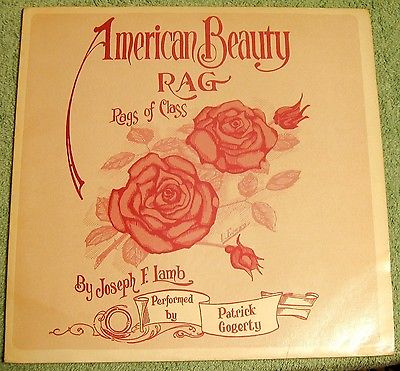
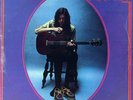
Patrick Gogerty - US band The CHARLATANS - Solo LP Vinyl Private Label 1976 SIGNED
American Beauty Rag - Rags of Class - Classical Piano Rags of Joseph F. Lamb
One vinyl LP 33rpm album - Sound Current Records, L.A. CA - no number
The record cover is inscribed on the back: To Jim, my friend the teacher! Best always, Patrick K. Gogerty
Produced by Patrick Gogerty and Jackson Howe Engineer - John Walker Assistant - Elza Comacho Mastering - Alan Zentz Tech Advisor - Tom Harvey Piano used - Yamaha grand Cover Art - David Edwards Calligraphy - Billy Steve Clayton
"After nearly a decade of playing the rags of Joseph Lamb and of hearing others perform them I offer this set of interpretations of his music as a tribute to his genius and, hopefully, as an inspiration for other musicians to explore the subtle nuances and experience the abundant joy and wit to be found within his music. I remain in awe of this gentle man's understanding of harmony, melory and rhythm. His physical demands of the performer are often strenuous but are delightfully rewarding when mastered. The interlocking coherency of his music, from the title to the double bar, places him clearly within the ranks of the geniuses of piano music, not simply of ragtime music, but of that form of music elevated to the immortal realms which we call classical music. I hope the music presented here will bring you as much pleasure as it gives me." ~~ Liner Notes - Patrick K. Gogerty, March 1976
Song Listing:
Topliner [1916] Patricia [1916] Bohemias [1919] Ethiopia [1909] Excelsior [1909]
Nightengale (sic) [1915] Sensation [1908] Cottontail [1959] Bobolink [1959] Contentment [1915] American Beauty [1913]
The cover is Fine to VF, with minor exterior wear and overall handling, some minor creasing and stress to lower area, small tape at bottom corner approx 1.5". Spine is unprinted. Signature area slightly smeared, which probably happened at the time of signing. The disc is EX to EX-, has a few slight scuffs which are related to the time is spent without an inner paper sleeve before I found it, a few light spindle marks, but no true visible detractions.
========================================================================
BACKGROUND:
Joseph Francis Lamb (1887–1960) was a noted American composer of ragtime music. Lamb, of Irish descent, was the only non-African American of the "Big Three" composers of classical ragtime, the other two being Scott Joplin and James Scott.
Life and career:
Lamb was born in Montclair, New Jersey. The youngest of four children, he taught himself to play the piano, and was very taken with the early ragtime publications of Scott Joplin. He dropped out of St. Jerome's College in 1904 to work for a dry goods company. In 1907 Lamb was purchasing the latest Joplin and James Scott sheet music in the New York City offices of John Stark & Son when he met his idol Joplin. Joplin was favorably impressed with Lamb's compositions, and recommended him to classical ragtime publisher John Stark. Stark published Lamb's music for the next decade, starting with "Sensation".
Lamb’s twelve rags published by Stark from 1908 to 1919 can be divided into two groups.
A) The “heavy” rags which are incorporated with Scott Joplin’s melody–dominated style and James Scott’s expansive use of the keyboard registers. This style of rags includes
"Ethiopia Rag" (1909) "Excelsior Rag" (1909) "American Beauty Rag" (1913) "Ragtime Nightingale" (1915) "The Top Liner Rag" (1916)
B) The “light” rags which have the cakewalk tradition show the narrow-range melodies inspired by Joplin. This style of rags includes
"Champagne Rag" (1910) "Cleopatra Rag" (1915) "Reindeer : Ragtime Two Step" (1915) "Bohemia Rag" (1919)
"Contentment Rag" (1915) and "Patricia Rag" (1916) have both characteristics of “heavy” rags and “light” rags.
Lamb’s works show individual stylistic traits. First, he uses sequence for development purposes. Second, he emphasizes on the harmonic sonority of the diminished seventh with upper-neighbor appoggiatura. His contributions to the ragtime literature also show his unique traits. He used a great diversity of texture for all of his rags. In addition, Lamb surpassed ragtime’s usual four-measure phrase structure.
In 1911, Lamb married Henrietta Schultz and moved to Brooklyn, New York. He worked as an arranger for the J. Fred Helf Music Publishing Company and later, starting in April 1914, as an accountant for L. F. Dommerich & Company.
Henrietta died of influenza in 1920, about the same time that popular music interest shifted from ragtime to jazz. Lamb stopped publishing his music, playing and composing only as a hobby. "Bohemia Rag" was the last Lamb rag published before his death in 1960. That same year, his album, Joseph Lamb: A Study in Classic Ragtime, was released by Folkways Records.
With the revival of interest in ragtime in the 1950s, Lamb shared his memories of Joplin and other early ragtime figures with music historians. (Many were surprised to find that not only was he still living, but that he was white.) He also composed some new rags, brought out some of his old compositions that had never been published, and made some recordings.
Lamb died in Brooklyn of a heart attack at age 72.
Rags that remained unpublished at the time of his death include:
"Alabama Rag" "Alaskan Rag" "Arctic Sunset" "Bee Hive" "Bird-Brain Rag" "Blue Grass Rag" "Chasin' the Chippies" "Chime In" "Cinders" "Cottontail Rag" "Crimson Ramblers" "Firefly Rag" "Good and Plenty Rag" "Greased Lightning" "Hot Cinders" "Jersey Rag" "Joe Lamb's Old Rag" "The Old Home Rag" "Ragged Rapids Rag" "Ragtime Bobolink" "Ragtime Special" "Rapid Transit Rag" "Shootin' the Works" "Thoroughbred Rag" "Toad Stool Rag" "Walper House Rag"
=======================================================================
BACKGROUND:
The Charlatans were an influential psychedelic rock band that played a role in the development of the San Francisco music scene during the 1960s and are often cited by critics as being the first group to play in the style that became known as the San Francisco Sound. Exhibiting more pronounced jug band, country and blues influences than many bands from the same scene, the Charlatans’ rebellious attitude and distinctive, late 19th century fashions exerted a major influence on the Summer of Love in San Francisco. Their recorded output was small, with their first album, The Charlatans, not being released until 1969, some years after the band's heyday. The band is notable for featuring the first commercial appearance of Dan Hicks, later of Dan Hicks and his Hot Licks.
Early years: 1964–1965: Formed in the summer of 1964, by amateur avant-garde musician George Hunter and music major Richard Olsen, the earliest line up of The Charlatans featured George Hunter (autoharp, vocals), Olsen (bass, vocals), Mike Wilhelm (lead guitar, vocals), Mike Ferguson (piano/keyboards, vocals), and Sam Linde (drums). Linde's drumming was felt to be substandard by the rest of the band and he was soon replaced by Dan Hicks (drums, vocals). The group was known for their style of dress, clothing themselves in late 19th century attire, as if they were Victorian dandies or Wild West gunslingers. This eye-catching choice of clothing was influential on the emerging hippie counter-culture, with young San Franciscans dressing in similarly late Victorian and early Edwardian era clothing.
In June 1965, the Charlatans began an extended residency at the Red Dog Saloon in Virginia City, Nevada, just across the border from Northern California. This six week stint at the Red Dog was important because band members Mike Ferguson and George Hunter produced a rock concert poster in advance of the residency to promote the performances. This poster—known as "The Seed"—is almost certainly the first psychedelic concert poster. By the end of the decade, psychedelic concert poster artwork by artists such as Wes Wilson, Rick Griffin, Stanley Mouse, Alton Kelley, and Victor Moscoso had become a mainstay of San Francisco's music scene. There were, in fact, two "Seed" posters, which look almost identical. They are differentiated by their dates. The first lists the band as playing between June 1 and 15, while the second states "Opening June 21".
Another reason that the Charlatans' extended stay at the Red Dog Saloon was important was that, immediately before their first performance at the club, the band members took LSD. As a result, the Charlatans are sometimes called the first acid rock band, although their sound is not representative of the feedback-drenched, improvisational music that would later come to define acid rock.
The Charlatans returned to San Francisco at the end of summer 1965 and, in September, were given the chance to audition for Autumn Records, a label headed by local DJ, Tom "Big Daddy" Donahue. Autumn didn't sign the band, partly due to conflicts between the group and Donahue over suitable material and partly due to lack of money; the label was on the verge of bankruptcy and was sold to Warner Bros. Records early the following year.
Later years: 1966–1969: The failed Autumn Records audition proved to be only a minor setback as The Charlatans signed with Kama Sutra Records in early 1966. As home to the Lovin' Spoonful, one of the earliest folk rock bands to find international success, the group thought the label would be the ideal home for their music. However, after the band had recorded a number of songs for the record label and chosen to issue "Codine" as their debut single, the record company vetoed the release, due to the song's drug connotations. Ironically, the tune, penned by folk artist Buffy Sainte-Marie, spoke of the dangers of drugs, rather than promoting their use, but Kama Sutra was adamant and refused to release the song. The tune later gained some notoriety when recorded by Quicksilver Messenger Service in 1968.
Instead, two other songs from the Kama Sutra sessions, "The Shadow Knows" and "32-20", were released by Kapp Records in 1966 as the band's first single, with some copies being housed in a very rare, promotional-only picture sleeve. Kapp Records failed to adequately promote the release and the single was a commercial flop. The remaining songs recorded for The Charlatans' debut album during the Kama Sutra sessions remained unreleased until they were officially issued for the first time by Big Beat Records in 1996, on The Amazing Charlatans album.
Mike Ferguson was fired from the Charlatans in 1967 and replaced by Patrick Gogerty. Additionally, Terry Wilson was brought in to take over as drummer after Dan Hicks moved to rhythm guitar, enabling him to sing his compositions as a front man for the group. Hicks eventually left the group in 1968 to form his own band, Dan Hicks and his Hot Licks, and Gogerty was subsequently fired from the band.
Tensions between George Hunter and the rest of the band escalated throughout 1968 until Mike Wilhelm, Richard Olsen and Terry Wilson decided to disband the group, reforming soon afterward without inviting Hunter back into the band. The Charlatans recruited new member, Darrell DeVore (piano/keyboards, vocals), and soon secured a recording contract with Philips Records. The band released one album with Philips in 1969, titled simply The Charlatans. The album was a commercial failure, largely due to the band's retro sound being somewhat outdated by 1969.
~~ from the Internet
price rating


![The Beatles in Mono [Vinyl Box Set] by The Beatles (Vinyl, Sep-2014, 14...](https://www.popsike.info/php/thumbnail.php?url=https://www.popsike.pics/pix/20250118/256787374726.jpg)






![Various – Dance Classics [ 2 x LP Greek Compilation Dance Pop Latin Disco ]](https://www.popsike.info/php/thumbnail.php?url=https://www.popsike.pics/pix/20240201/256396833578.jpg)