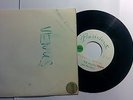
Mahalia Jackson Silent Night Holy Night Mountain 10" 78 RPM 1950 G+ Apollo 235
$
25


$ 25
Sold For
Oct 24, 2015
Sold Date
Sep 25, 2015
Start Date
$ 30
Start price
1
Number Of Bids
USA
Country Of Seller
eBay
Sold at
Favourite Auctions
To save auctions to your favourites, please login
If you don't have an account, please register
Description
- This 1950 10" 78 RPM Apollo Record features fantastic versions of "Silent Night, Holy Night" and "Go Tell It On The Mountain" by Mahalia Jackson
- This record is over 60 years old. It is a functional piece of American music history.
- It is in GOOD Condition. It will look great in your collection and sound good on your player, or make a fun GIFT
- You want it
- You deserve it
- It will make you happy
- It’s only THIRTY BUCKS and that includes shipping
- The sooner you click on “Buy It Now” the sooner it will be in your hands
- I’ll pack it safe and ship it the next business day. Take a look at my positive reviews.
Take a look at More Christmas 78 Records and other Items with Free Shipping:
Visit My eBay Store: The Sultans Treasure Vault
Mahalia Jackson - Silent Night, Holy Night / Go Tell It on The Mountain Apollo 235
1950 10" 78 RPM
- Record is in GOOD condition
- Light scratches and scuffs
- NO Cracks
- NO Breaks
- NO Chips
Mahalia Jackson (/m??he?lj?/ m?-hayl-y?; October 26, 1911 – January 27, 1972) was an American gospel singer. Possessing a powerful contralto voice,[2] she was referred to as "The Queen of Gospel".[1][3][4] She became one of the most influential gospel singers in the world and was heralded internationally as a singer and civil rights activist.[5] She was described by entertainer Harry Belafonte as "the single most powerful black woman in the United States".[5] She recorded about 30 albums (mostly for Columbia Records) during her career, and her 45 rpm records included a dozen "golds"—million-sellers.
"I sing God's music because it makes me feel free", Jackson once said about her choice of gospel, adding, "It gives me hope. With the blues, when you finish, you still have the blues."
The third and best known Apollo Records to exist was an independent record label in business from 1944 until 1962 in the United States. It was formed in New York City in 1944 by Bess Berman and her husband Isaac "Ike" Berman together with Hy Siegel and Sam Schneider. Apollo is most remembered for early doo-wop recordings from groups such as the Larks and the "5" Royales, blues artists such as Champion Jack Dupree, Duke Henderson and Doc Pomus and for releasing gospel records, particularly those by Mahalia Jackson.
In the early 1940s, the Bermans and Siegel were working at the Rainbow Record Shop in Harlem, located on 125th Street. Before naming their label after the nearby Apollo Theater, the Bermans issued some prospective discs with plain labels bearing no company identity;[1] Hy Siegel served as Apollo's first president. Initially Apollo employed three primary product lines, including a 300 series featuring principally Rhythm & Blues and jazz artists and a 100 series which was more of a catch-all for a variety of genres; Gospel, Calypso, Western, Jewish comedy records and the like. By about issue #188 the 100 series shifted exclusively towards Gospel. The third line, starting at #750, was dubbed "Jazz Masterworks;" a popular 1000 series was undertaken a little later in 1945.[2] Apollo Records recorded rhythm-and-blues superstars Dinah Washington and Wynonie Harris before they became far more famous for other labels, Washington on Mercury and Harris on King.
In 1946, the Bermans signed Mahalia Jackson to a recording contract; although she was already regarded as "The Queen of Gospel" based on her personal appearances, Jackson had previously known only scant contact with recording. With the release of Jackson's two-part "Move On Up a Little Higher" in January 1948, Apollo discovered they had a major hit on their hands, and overtime shifts were added to keep up with the demand for the record. At an Apollo board meeting held on May 27, 1948, Hy Siegel stepped down and Bess Berman was installed as president.[3] Berman was among a very few women serving in an executive capacity in the 78 era and apparently the only company head. Ike Berman was no longer directly affiliated with the company, but ran the pressing plant that manufactured the Apollo Records and continued in that capacity; ultimately, they separated as a couple.
Although Apollo is known today primarily for its work in R&B and doo-wop, Gospel was Apollo's main bread and butter during its years of peak production, from 1948-1952. In addition to Mahalia Jackson, established by 1948 as Apollo's biggest seller and the artist they recorded the most often overall, Apollo also issued recordings by the Roberta Martin Singers, the Dixie Hummingbirds, The Robert Anderson Singers, the Professor Alex Bradford Singers, Harold Ivory Williams (bishop) and the Ivory Gospel Singers, Rev. B. C. Campbell and his Congregation, the Daniels Singers and the Two Gospel Keys, among others. Rev. James Cleveland made some of his first recordings with Apollo in a group called The Gospelaires and in The Gospel All-Stars, a session he led and arranged. As a result, while Apollo continued to record R&B throughout this period, before 1950 the label had little contact with secular vocal groups of the kind that were becoming popular elsewhere.
Captivated by the popularity of secular vocal groups named after birds, such as the Orioles, Berman re-christened a gospel group generally known as the Selah Jubilee Singers, but recording for her as the Southern Harmonaires, as the Larks and began to record them in popular material. The Larks scored a #5 spot on the R&B chart with "Eyesight To The Blind" in 1951, along with a couple of other numbers, but the group split in 1952. Berman stuck to her guns and renamed the Royal Sons Quintet the "5" Royales whose success even exceeded that of the Larks. In 1954, Apollo established a subsidiary called Lloyd's Records exclusively devoted to doo-wop, including recordings of a new edition of The Larks organized under their only remaining member, Gene Mumford.[5]
In 1953, Hy Siegel left to form his own company, Timely Records, and this was the beginning of a domino effect that would prove the undoing of Bess Berman and Apollo. In 1954, Mahalia Jackson defected to Columbia Records, a major blow to Apollo from which it never truly recovered;[6] likewise The "5" Royales went off to King Records. At this time, Bess Berman began to suffer from health issues as well, and a development in May 1955 would not serve to make her feel any better; that month, Hill & Range announced they were suing Berman, Apollo and Lloyd's for infringement. Hill & Range cited 20 records where copyrighted songs by Thomas A. Dorsey and others were issued on Berman's labels credited to Berman and Mahalia Jackson. Jackson swiftly responded with a letter denying all knowledge of such an arrangement, and Berman was left to contend with the consequences.[7] As the music press did not follow up on the story, the matter was likely settled out of court.
The second edition of the Larks failed to chart, and in 1955, broke up. The following year Apollo ceased production of 78 rpm records, and with it, its entire gospel recording program, focusing on producing 45s for the pop market. They produced many singles in this period beloved of doo-wop and early rock 'n roll collectors by groups such as the Opals, the Romeos, the Gentlemen and the Casanovas, but very few of these efforts had an impact commercially. About the last Apollo Record to score in that sense was the Chesters' "The Fire Burns No More" (Apollo 521) in 1957. "Handy Man" was first recorded for Apollo in 1959 by the Sparks of Rhythm, but did not become a hit until lead singer Jimmy Jones recorded it for Cub Records in 1960. By that time, Apollo had stopped making recordings altogether and was concentrating heavily on reissues, even in the 45 market; after the Chesters' renamed themselves Little Anthony and the Imperials and became stars for another record company, their Apollo releases reappeared, billed as Little Anthony records.[8] One important artist who appeared late in the Apollo game was Solomon Burke, who was featured on several singles and was the subject of a rare Apollo LP.[9]
Apollo employed a very modest campaign of LPs, and never issued a stereo recording; appearing at the rate of only one or two releases a year from 1954 forward and these were almost exclusively reissues of material that had already appeared as singles, or masters leased from other labels. Mahalia Jackson figured very prominently in this reissue program, and one of Apollo's last releases from 1962 were two LPs titled Apollo Records Requests the Honor of Your Presence at the Command Performance of Mahalia Jackson, Re-Creating Her European Concert Tour. Packaged to look like a live recording taken from Jackson's 1961 tour—and therefore, competing directly with Columbia album Mahalia Jackson Recorded in Europe During Her Latest Concert Tour -- it consisted of recordings made for Apollo in the 40s and early 50s.
Apollo Records closed for good in 1962, but as soon as the "closed" sign went over the door a mysterious subsidiary, Kenwood Records,[10] appeared. Over the next decade, the label—which never issued a stereo recording—reissued practically all of the Apollo Records albums and added a few more compilations, hanging around long enough to release a Mahalia Jackson memorial album when she died in 1972. While the owner or partner in the Kenwood concern is not known, it is assumed that Bess Berman was also the likely party behind this label. While the Apollo records catalog has seen little exploitation in the digital era, several doo-wop compilations have been coming out since the 1980s through Relic Records and also some of Apollo's jazz material has appeared on Delmark Records. Berman herself died in 1997; in a sense, Cash Box had already memorialized her in 1954 by stating that Berman "was the only woman ever to break through with outstanding success in the male-dominated recording industry
price rating
![SLASH MADE IN STOKE 24/7/11 3 Lp Gatefold USA 2011 GREEN VINYL [UNPLAYED]](https://www.popsike.info/php/thumbnail.php?url=https://www.popsike.pics/pix/20150922/291571300932.jpg)








![Frank Ocean Blond & Endless Vinyl [Sealed, Ltd Edition, MINT]](https://www.popsike.info/php/thumbnail.php?url=https://www.popsike.pics/pix/20190125/303041063803.jpg)