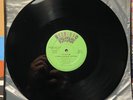
Computer Speech synthesis demo 1963 private 7" Bell Telephone Labs IBM vocode NM
$
25


Favourite Auctions
To save auctions to your favourites, please login
If you don't have an account, please register
Description
-
I use the standard Goldmine grading system visual only,I rarely playgrade..International shiiping is 1st class Please request invoice.
- Near Mint (NM or M-) A nearly perfect record. Many dealers won't give a grade higher than this implying (perhaps correctly)that no record is ever truly perfect.
The record should show no obvious signs of wear. A 45 RPM or EP sleeve should have no more than the most minor defects, such as almost invisible ring wear or other signs of slight handling.
An LP cover should have no creases, folds, seam splits or other noticeable similar defects. No cut-out holes, either. And of course, the same should be true of any other inserts, such as posters, lyric sleeves and the like.
Basically, an LP in near mint condition looks as if you just got it home from a new record store and removed the shrink wrap.
Near Mint is the highest price listed in all Goldmine price guides. Anything that exceeds this grade, in the opinion of both buyer and seller, is worth significantly more than the highest Goldmine book value. - Very Good Plus (VG+) Generally worth 50 percent of the Near Mint value.
A Very Good Plus record will show some signs that it was played and otherwise handled by a previous owner who took good care of it.
Record surfaces may show some signs of wear and may have slight scuffs or very light scratches that don't affect one's listening experiences. Slight warps that do not affect the sound are "OK".
The label may have some ring wear or discoloration, but it should be barely noticeable. The center hole will not have been misshapen by repeated play.
Picture sleeves and LP inner sleeves will have some slight wear, lightly turned up corners, or a slight seam split. An LP cover may have slight signs of wear also and may be marred by a cut-out hole, indentation or corner indicating it was taken out of print and sold at a discount.
In general, if not for a couple things wrong with it, this would be Near Mint. All but the most mint-crazy collectors will find a Very Good Plus record highly acceptable. - Very Good (VG) Generally worth 25 percent of Near Mint value. Many of the defects found in a VG+ record will be more pronounced in a VG disc. Surface noise will be evident upon playing, especially in soft passages and during a song's intro and fade, but will not overpower the music otherwise. Groove wear will start to be noticeable, as with light scratches (deep enough to feel with a fingernail) that will affect the sound.
Labels may be marred by writing, or have tape or stickers (or their residue) attached. The same will be true of picture sleeves or LP covers. However, it will not have all of these problems at the same time, only two or three of them.
Goldmine price guides with more than one price will list Very Good as the lowest price. This, not the Near Mint price, should be your guide when determining how much a record is worth, as that is the price a dealer will normally pay you for a Near Mint record. - Good (G), Good Plus (G+) Generally worth 10-15 percent of the Near Mint value. Good does not mean Bad! A record in Good or Good Plus condition can be put onto a turntable and will play through without skipping. But it will have significant surface noise and scratches and visible groove wear (on a styrene record, the groove will be starting to turn white).
A cover or sleeve will have seam splits, especially at the bottom or on the spine. Tape, writing, ring wear or other defects will start to overwhelm the object.
It is a common item, you'll probably find another copy in better shape eventually. Pass it up. But, if it's something you have been seeking for years, and the price is right, get it...but keep looking to upgrade. - Poor (P), Fair (F) Generally worth 0-5 percent of the Near Mint price. The record is cracked, badly warped, and won't play through without skipping or repeating. The picture sleeve is water damaged, split on all three seams and heavily marred by wear and writing. The LP cover barely keeps the LP inside it. Inner sleeves are fully seam split, crinkled, and written upon.
If I thinks its in between I'll use S VG+ ( Little bit better than VG+ & V S VG+ close to NM but not quite . also any VG+ or S VG+ or VS VG+are expected to have some scratching or skuffs or writing or stickers on label .varying degree .
Listed by artist and Album title graded visually only no playgrade Sold as is many LPS N M. Grade cover 1st LP 2nd
- Near Mint (NM or M-) A nearly perfect record. Many dealers won't give a grade higher than this implying (perhaps correctly)that no record is ever truly perfect.
-
Please see pictures for more details
-
Take into consideration before bidding: We will not be held responsible for any lost/stolen/damaged packages that are not sent insured and/or via Priority Mail Express, it's the buyers responsibility to cover all postage and insurance, please ask for any shipping quotes before bidding and/or paying.
-
-
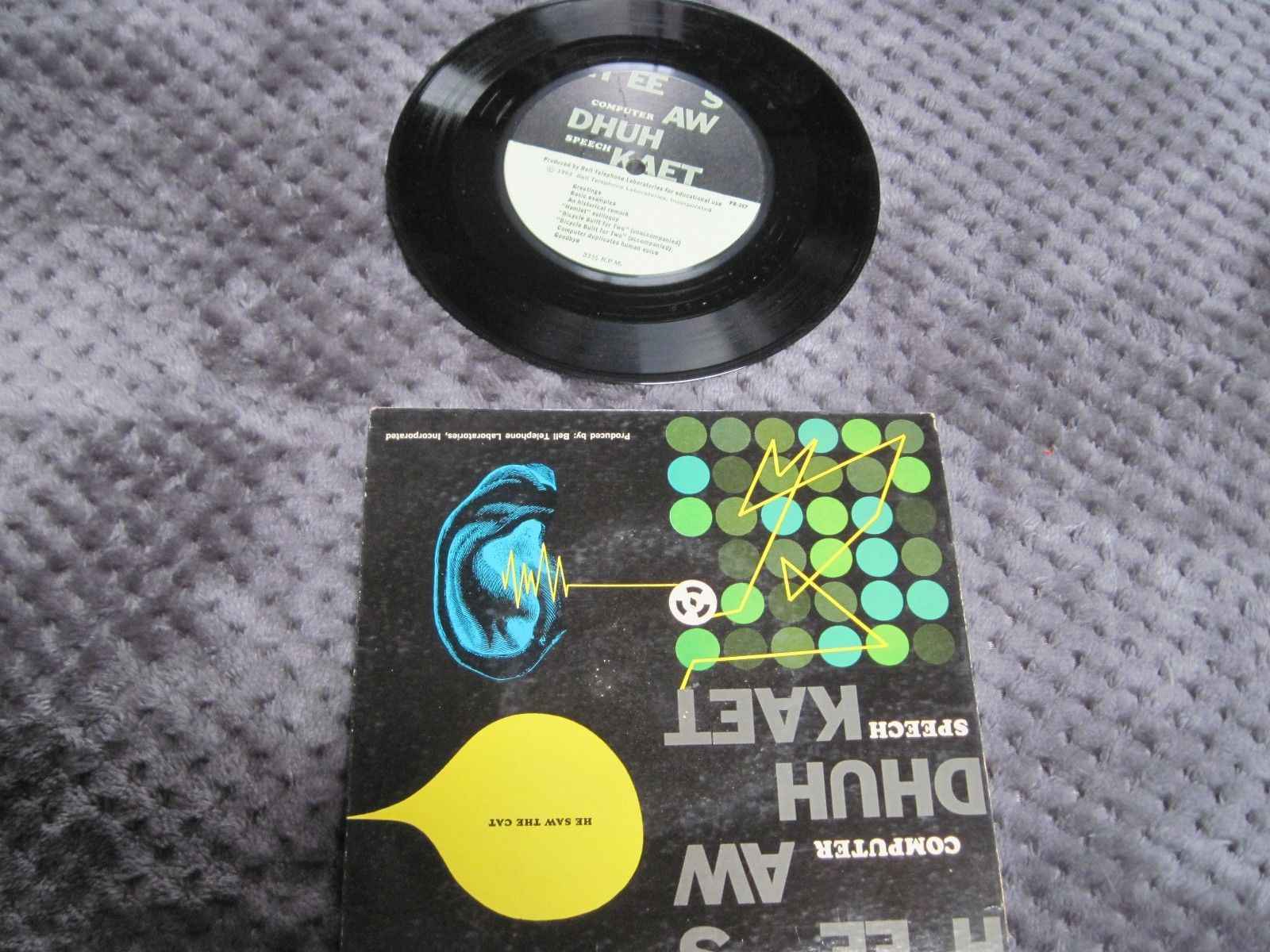
Computer Speech synthesis demo 1963 private 7" Bell Telephone Labs IBM vocode NM
-
Bell Telephone Laboratories: Computer Speech - Examples of Synthesized Speech Developed for Educational Use (1963)label & cat. no.:
Bell Telephone Laboratories, Incorporated [private pressing, no cat#]pressed in:
USAdate:
1963format:
7" 33rpmcondition:
Vinyl: ex (looks barely if ever played)
Cover: ex (beautiful shape, very minor wear)description:
Scarce one-sided private pressing issued by the folks behind the legendary Music From Mathematics and Voice Of The Computer early electronic music lps. This artifact presents the first ever recordings of electronic speech synthesis, as researched at Bell Labs by scientist D.H. VanLenten using an ancient punchcard-fed IBM mainframe computer. A narrator discusses the wonders of "speech artificially constructed from the basic building blocks of the English language" and the issues of timing, pitch, and accents, and provides several computerized speech examples including the "to be or not to be" soliloquy from Hamlet and the song "Bicycle Built for Two" (in 2 versions, one a capella and one accompanied by synthesized tones probably programmed by Max Mathews [though this is a different version from the track on the Music From Mathematics album]). This record was apparently distributed to school libraries around the US (reportedly making a memorable impression on many awestruck children), and inspired filmmaker Stanley Kubrick in his staging of HAL's death scene in 2001: A Space Odyssey (when HAL sings "Bicycle Built for Two"). -
price rating