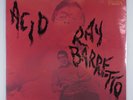
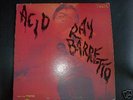
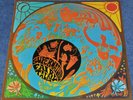
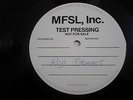
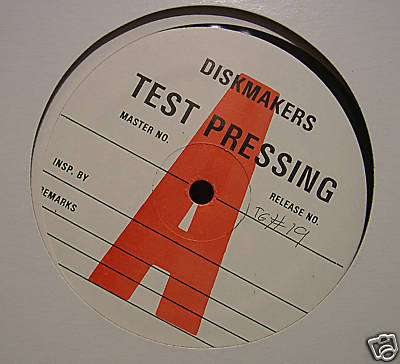
BUTTHOLE SURFERS Locust Abortion TEST PRESSING (TG 87)
$
76


Favourite Auctions
To save auctions to your favourites, please login
If you don't have an account, please register
Description
ARTIST: Butthole Surfers
Title: Locust Abortion Technician
Label: Touch & Go (Chicago)
Year: 1987
Related link: http://en.wikipedia.org/wiki/Butthole_Surfers
The Butthole Surfers are an American alternative rock band formed by Gibby Haynes and Paul Leary in San Antonio, Texas in 1981. The band has had numerous personnel changes, but the core lineup of Haynes, Leary, and drummer King Coffey has been together since 1983. Teresa Nervosa served as second drummer from 1983 to 1985, 1986 to 1989, and 2009. The band has also employed a variety of bass players, most notably Bill Jolly and Jeff Pinkus.[1]
The Buttholes are best known for their chaotic and disturbing live shows, black humor, a sound that incorporates elements of punk rock, psychedelia, heavy metal, noise rock, and electronica, as well as their use of sound manipulation and tape editing.[2][3] The Buttholes have a well-reported appetite for recreational drugs, particularly psychedelics, an evident influence on their sound.[4]
Although they were respected by their peers and attracted a devoted fan base, the Butthole Surfers had little commercial success until 1996’s Electriclarryland, their only gold record to date.[5] The album contained the hit single “Pepper” which climbed to number one on Billboard's Modern Rock Tracks chart that year.[6]
Pre-history
The Butthole Surfers had their genesis at San Antonio, Texas’ Trinity University in the late 1970s, when students Gibson “Gibby” Haynes, and Paul Leary Walthall (later just Paul Leary) met for the first time.[2] Though it was their overall strangeness and shared taste in non-mainstream music that caused them to become fast friends, both appeared to be headed for very conventional careers. Haynes, as captain of Trinity's basketball team, as well as the school's "Accountant of the Year," soon graduated to a position with a respected Texas accountancy firm, while Leary remained in college working on his MBA degree.[7]
In 1981, Haynes and Leary published the magazine Strange V.D., which featured photos of abnormal medical ailments, coupled with fictitious, humorous explanations for the diseases.[8] After being caught with one of these pictures at work, Haynes left the accountancy firm, and moved to Southern California. Leary, at the time one semester shy of his degree, dropped out of college and followed Haynes. After a brief period spent selling homemade clothes and linens emblazoned with Lee Harvey Oswald's image, the pair returned to San Antonio, and launched the band that would eventually become the Butthole Surfers.[9]
Early years (1981–1984)
Haynes and Leary played their debut show at a San Antonio art gallery in 1981; at that time they had not yet settled on the title "Butthole Surfers". By 1982, the band were backed by the sibling rhythm section made up of bassist Quinn Matthews and his brother, drummer Scott Matthews. The band did not gain a following in San Antonio, and purchased a van to return to California later that summer.[10]
During a brief concert at the Tool and Die club in San Francisco, Dead Kennedys frontman and Alternative Tentacles overseer Jello Biafra witnessed their performance and became a fervent fan.[11] Biafra invited the group to open for the Dead Kennedys and T.S.O.L. at the Whisky a Go Go in Los Angeles, and soon made an offer that would launch their recording career: if they could get someone to lend them studio time, Alternative Tentacles would reimburse the studio when the album was complete. The band then returned to San Antonio to record at BOSS Studios (a.k.a. Bob O'Neill's Sound Studios, a.k.a. the Boss).[12] However, the Matthews brothers did not enter the studio with Haynes and Leary; the two had quit following a physical altercation between Scott Matthews and Haynes. The bass position was taken over by Bill Jolly, who would play on the Surfers' next two releases, and a number of drummers participated. The last of these, King Coffey (born Jeffrey Coffey), is still with the band to this day.[13]
Released on Alternative Tentacles in July 1983, the resulting EP, Butthole Surfers (also known as Brown Reason to Live and Pee Pee the Sailor), offered songs with provocative titles like "The Shah Sleeps in Lee Harvey's Grave" and "Bar-B-Q Pope," alternately sung by Haynes and Leary. (Haynes would become the band's primary singer by the time of their first LP.) The album cover, like the many bizarre illustrations that would accompany the Surfers' succeeding work, was designed by the band itself.[14] Teeming with humor, Butthole Surfers laid the foundation for what was to come.[2] It influenced at least one future superstar in Nirvana frontman Kurt Cobain, who listed it as one of his top 10 favorite albums in his Journals.[15] Cobain would later meet his wife, Courtney Love of Hole, at a Butthole Surfers/L7 concert in 1991.[16]
Soon after the release of Butthole Surfers, the band recruited a second drummer, Teresa Nervosa (born Teresa Taylor), who had previously played with Coffey in a number of high school marching bands in the Texas' Fort Worth and Austin areas.[17] She and Coffey would drum in unison on separate, stand-up kits, adding to the spectacle of the Surfers' ever-evolving stage show. Though Nervosa and Coffey repeatedly referred to themselves, and were referred to, as siblings, it has since been revealed that the two only presented themselves as such due to their similar appearances, and are not actually related.[18] With her arrival, the band's core "classic lineup" – Haynes, Leary, Coffey, and Nervosa – was in place. With the exception of a number of different bass players and Nervosa's brief sabbatical from late 1985 to 1986, it remained largely unchanged until her final departure in 1989.[19] In 2008, she returned to the band--the band's website announced 2009 tour dates including "Teresa Taylor."[20]
In September 1984, the Surfers issued a second EP on Alternative Tentacles, Live PCPPEP. Primarily featuring live performances of songs from their debut, it prompted some critics and fans to joke that they had released the same album twice.[2] What many didn't realize, however, is that the band had already returned to BOSS Studios to record enough material for a full-length album months before Live PCPPEP's release. (Jolly left shortly after these sessions, but did perform on the live EP). Moreover, they had started a second album at the same studio. Both were originally offered to Alternative Tentacles, with Psychic... Powerless... Another Man's Sac arriving first.[21]
Before either album could be released, though, Alternative Tentacles had to acquire the master tapes from Bob O'Neill, BOSS Studios' namesake and owner. He refused to release them until he'd been reimbursed for the sessions, and Alternative Tentacles couldn't immediately afford to pay. After waiting months, the band issued Live PCPPEP out of financial desperation, and O'Neill was preparing to release Psychic... on his own Ward 9 label to recoup his expenses.[22]
Legend grows (1984–1987)
With some members working as dishwashers, the group was apparently not thrilled with the album being released on Ward 9. Terry Tolkin, a friend and their east coast booking agent, signed the band to Corey Rusk's then-nascent Touch and Go Records in Detroit. Psychic... Powerless... Another Man's Sac was released in 1984.[23] Building on their first EP, the Surfers made psychedelia a much bigger part of their sound on this release, which made full use of the tape editing, non-traditional instrumentation, and sound modulation that came to define their studio recordings.[2]Just before Psychic...'s debut, and with new bassist Terence Smart in tow (the first of many through 1986), the band commenced their first nationwide tour. It was on this outing that they truly established a national presence, starting at Touch and Go's early headquarters in Detroit before heading to New York City, where they impressed members of Sonic Youth, as well as Shockabilly (and future Butthole Surfers) bassist Mark Kramer. They then crisscrossed the country for several months, including a show in Seattle, that made a fan of future Soundgarden guitarist Kim Thayil. While in San Francisco at the end of the tour, and without a place to live, the band collectively decided to move to Winterville, Georgia, where they admittedly made a hobby of stalking members of R.E.M.. Smart quit after falling in love with a friend of the band, and Trevor Malcolm, a young Canadian musician recommended by Touch and Go, replaced him on bass.[24]
Word was spreading about the band's bizarre stage show by the time they hit the road again, resulting in ever-larger audiences at their concerts.[25] Not long after Malcolm's arrival, the Surfers recorded their act for posterity by filming two concerts at Detroit's Traxx club. Some of this footage was eventually packaged as Blind Eye Sees All, their only official video release to date. They purchased their first 8-track recorder at this time, and used it to record two songs later used on the A-side of Cream Corn from the Socket of Davis.[21]
Reportedly unhappy with life in the band, Malcolm quit in the early summer of 1985.[26] A friend of the band's from Athens, Juan Molina, was brought in for a brief U.S. tour, but was not interested in becoming a full-time member.[21] Without a permanent bassist and a quickly approaching European tour looming – the band's first – they contacted Kramer, who quickly agreed to join.[26] Meanwhile, their second LP, which had been submitted to Alternative Tentacles as Rembrandt Pussy Horse, was still in limbo. The reasons for Alternative Tentacles' actions are unclear, but it is known that the label delayed a decision for about a year before ultimately refusing to publish it.[27] While waiting, the band released the four-song Cream Corn from the Socket of Davis EP on Touch and Go in late 1985. Once Alternative Tentacles finally declined, the group went back into the studio to record two new tracks to replace "To Parter" and "Tornadoes," which were originally intended for Rembrandt... before appearing on the Cream Corn... EP's B-side.[21]
Following the European tour, the Surfers experienced more upheaval when Nervosa left around Christmas 1985, as she was tired of the living conditions associated with constant touring and had a desire to be with family.[28] She was replaced by another female drummer, known as Cabbage, who in turn introduced the band to their legendary "naked dancer," Kathleen Lynch (a.k.a. Kathleen, a.k.a. Ta-Da the Shit Lady). Kramer left during this period and was replaced by Jeff Pinkus, who gave the band's bass position its longest period of stability by staying until 1994.[29]
Their second LP was finally issued as Rembrandt Pussyhorse on Touch and Go in April 1986. Coming out some two years after the original sessions, it featured a different mix and song selection than Alternative Tentacles' unreleased version.[27] Best known for its minimalist reworking of The Guess Who's "American Woman," it is one of the most experimental albums in the Surfers' heavily experimental career.[30] Following a particularly out-of-control tour, even by Butthole Surfers standards, the band semi-settled in Austin, Texas in the summer of 1986. Nervosa rejoined them (Cabbage having been fired months earlier), and they went to work on crafting their first home studio in a rental house on the outskirts of town. Before long, they started a leisurely recording session for their third full-length project.[31] Released in March 1987, Locust Abortion Technician is one of the heaviest Butthole Surfers albums, and it is often considered their finest to date.[32] Harnessing aspects of punk, heavy metal, and psychedelia, its unique sound produced a number of grinding, slower-paced songs, arguably making it an early precursor of grunge.[30]
Evolution (1987–1991)
Around the time of Locust Abortion Technician's debut, the group bought a home in Driftwood, Texas, approximately 30 miles (48 km) outside Austin. It was a ranch house built into the side of a hill, with 5 acres (20,000 m2) of surrounding property. As with the rental home, the compound was turned into a de facto recording studio. They did not live together in the new house for long, though, with Coffey being the first to move out and get his own place. They all had separate residences by 1991.[12]
In early 1988, the Surfers were ready to record a new album and wanted to use a modern studio for the first time, choosing a state-of-the-art facility in Texas. The following sessions took only one week, as the band had been performing most of the material for years.[33] The band opted to follow this album's blueprint on future projects. In contrast, songs on their earlier recordings had undergone far more in-studio development and experimentation. Pinkus has expressed the opinion that the later, better-organized sessions stifled much of the spontaneous creativity that had propelled their earlier releases.[34]
Hairway to Steven was issued in April, and marked a midway point between the band's punk rock roots, and the more accessible recordings that would follow. While half of the material is as extreme sounding as their earlier work, other songs are more conventional. This was the first Surfers album to make extensive use of acoustic guitar. Hairway to Steven did not have song titles when first released, and instead represented each track with an absurdist, often scatological, cartoon.[35] The band traveled widely in support of the album over the next year, including a very successful tour of Europe (helped in part by the influence of new UK distributor Blast First). Like their studio recordings, their live shows were beginning to lose much of their earlier chaos.[36]
While touring during the winter of 1988, the Surfers used a portable DAT recorder to tape various concerts. The strongest of these recordings were packaged as Double Live, a limited edition double album released on vinyl and cassette in 1989, and on CD the following year. This was the first release on the band's Latino Buggerveil label. Though the album, as of spring 2007, is out of print, its songs are available as free MP3 downloads on the band's official website. Issued in response to widespread, for-profit bootlegging of their live shows, it contained performances of songs from all of their previous studio albums and EPs.[37]
Double Live was to be the last Surfers album to feature Nervosa, who left early in 1989. Shortly after leaving, she was diagnosed with an aneurysm, and was forced to undergo brain surgery. She further began to suffer from strobe light-induced seizures.[12] In 1991, Nervosa (who has gone by Teresa Taylor since her retirement) had a small role in Richard Linklater's film Slacker. She was employed at the Texas School for the Blind and Visually Impaired as recently as 1995.[38]
The band did not begin as the Butthole Surfers, although they did have a song of that title, possibly an early version of 1984's "Butthole Surfer". This changed at their first paid concert, when an announcer forgot what the band was called and used the song title for the group’s name. They decided to keep the moniker, and have largely been billed as such ever since.[9] Prior to that, the Surfers performed under a different name at every live show. Early aliases included the Dick Clark Five, Nine Foot Worm Makes Own Food, the Vodka Family Winstons, and many others.[58]The name has long been a source of trouble for the band. Many clubs, newspapers, radio, and TV stations refuse to print or mention their full name, and instead opted to use "B.H. Surfers", or other abbreviations.[9]
RECORD: MINT
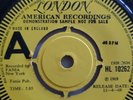
NOTES: Test pressing with Diskmakers labels on the both sides. Only signifying feature is "TG#19" handwritten on the a-side. Comes in regular paper sleeve. No picture sleeve.
ORIGIN/PROVENANCE: My friend Corey Rusk, who runs Touch & Go Records (and formerly of The Necros), has been cleaning out his storage space and has realized that he really doesn't have any more room for the all doubles and triples of many of the rare records in his collection. He's busy running Touch and Go and doesn't have the time to deal with selling his extras... but they do need to go. So he asked me to help him sell them off. And of course, as a long time friend of Corey and and fan of Touch and Go Records (along with being a 10+ year eBay seller with a perfect feedback rating of 1900+), I jumped at the chance.
PAYMENT: Paypal only. Or so sez eBay.
SHIPPING: The record will be housed between two pieces of cardboard and then put inside a sturdy mailer which might possibly be recycled (in an effort to save trees). I ship records the way I like them shipped to me. Simple as that. If you live inside the US, tracking is provided free of charge. Outside of the US, airmail rates apply. IF YOU LIVE OUTSIDE THE US, DO NOT PAY UNTIL I SEND YOU AN INVOICE!
And yes, I'll be happy to combine shipping. It saves your money, my time and the environment!
price rating