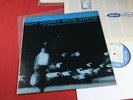
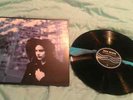
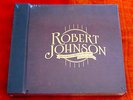
BOSCOE - SELF TITLED LP RARE private press 1st pressing 1973 Kingdom of Chad
$
699


Favourite Auctions
To save auctions to your favourites, please login
If you don't have an account, please register
Description
This is an original / 1st pressing of the super rare BOSCOE - SELF TITLED private press LP produced in 1973 on the Kingdom of Chad label. Absolutely killer funk / soul LP... In my opinion one of the coolest private press records ever released.
SLEEVE:
VG+ condition - light ring wear at top and bottom of front. 2" seam split at top. light rubbing to front and back. corners good, sleeve flat.
RECORD:
VG+ condition - Both labels in excellent condition. LP very clean, light marks, plays excellent. Background noise in quiet passages. First track on both sides has a little more noise. NO SKIPS.
SHIPPING:
Within the United States, shipped via insured Priority Mail in a record mailer. Will only ship via Express Mail to Canada and overseas. I will ship to Japan, Australia, Canada, UK, France, Germany.
_______________________________
According to Record-Fiend.blogspot :
When this funk-soul-jazz-spoken word monster finally got reissued a few years ago, many hailed it as a lost masterpiece of the early 1970s Chicago black underground. Now that the dust has settled and the hype has died down, Boscoe's lone recorded effort still holds up as one of the most significant rediscoveries of the last decade. If you like music with a groove that also makes you think, look no further.
The group's lineup included James Rice on guitar, Harold Warner on trumpet, Darryl Johnson on saxophone, Reg Holden on trombone, Ron Harris on bass, and Steve Cobb on drums. Originally known as From the Womb to the Tomb, the sextet earned its reputation as a formidable cover band by regularly gigging at South Side venues such as the High Chapparal, the Green Bunny, and the Burning Spear. Somewhere along the way, they changed their name to Boscoe and started writing their own material that artfully reflected the realities of inner-city living as well as the turbulent late 1960s-early 1970s period of which they were a cultural product. Percussionist Cobb spearheaded the group's movement toward socially-conscious lyrics. In interviews, he recalls how they would win over audiences with well-executed cover versions of contemporary R&B and soul hits during their shows' first sets only to unleash their more challenging self-composed material after the intermission. Cobb considered their performances successful if people in the crowd stuck around and appreciated the music in a more quiet and thoughtful manner. After developing a following and getting increased exposure from playing on the college circuit throughout the Midwest, it came time for Boscoe to record their eponymous long player. The problem was that none of the major music companies were interested in having them on their roster, possibly due to the unyielding nature of the band's compositions. The album was essentially self-released on the extremely obscure Kingdom of Chad label in 1973, with a mere 500 copies being pressed. Fame and fortune were not in the cards for the group, and they folded not long afterward. As is often the case for an outfit of this nature, record collectors (especially Japanese ones) helped keep the memory of the sextet alive, which ultimately culminated in this fine reissue from 2007 in addition to some long overdue attention from the mainstream media.
BOSCOE AT A GIG SOMEWHERE DURING THE EARLY 1970s
Stylistically speaking, the material on Boscoe lies somewhere between early-period Funkadelic, Gil Scott-Heron, and contemporary Chicago groups like the Pharaohs, with its eight tracks recorded live in the studio and more or less sounding the same as when the band performed them on stage. Warner, Johnson, and Holder are an extremely impressive brass section and their instruments collectively have that melancholy tone unique to horn players from the Windy City, even on the more uptempo numbers. Rice provides tasty leads or stuttering rhythm fills on his guitar when relevant and appropriate, while Harris' bass playing provides a rock-solid foundation for the rest of the group to follow. As far as I'm concerned, Boscoe's star attraction is Cobb, whose breathtakingly agile drumming has to be heard to be believed. "Introduction" and "Writin' on the Wall" are essentially spoken-word performances that leave little to the listener's imagination regarding the band's politics. Although uniquely a part of this outfit's vision, these pieces compare favorably to material by the Last Poets and the Watts Prophets. The tough "He Keeps You" represents everything great about Boscoe: killer harmony vocals, imaginative horns, and a seductive beat with one-of-a-kind time signatures. "We Ain't Free" utilizes the same formula but takes things even further as an eight-minute mini-epic that also includes plenty of space for sermonizing and soloing. The one-two punch of this pair of tracks delivers quite a funk wallop. The propulsive "If I Had My Way" keeps things going in the same direction and showcases the horn players better than any other selection. Another reviewer has pointed out that "I'm What You Need" sticks out as the LP's only love song in which the vocalists are cast as suitors to a single mother whose child's father has just left her. Even at its most sentimental, this album stays true to Boscoe's South Side roots. If I could include only one of these songs on a playlist, it would have to be the anthemic "Money Won't Save You," which features all of the groups' hallmarks and could have been a hit single with a bit more production and promotion. The stretched-out "Now and Den" comes closest to the band playing jazz, and its mellow ambiance makes it the perfect closing track.