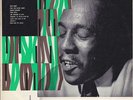
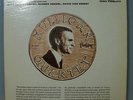
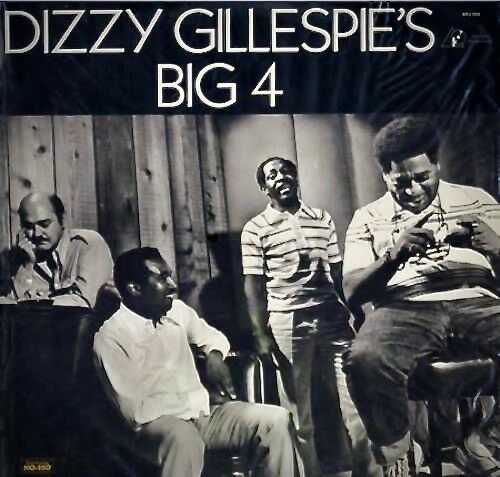
Analogue Productions ?LP APJ-024: Dizzy Gillespie's Big 4 - 2006 USA #d Ltd. Ed.
C$
80
$
58



C$ 80
Sold For
Sep 13, 2019
Sold Date
Jan 10, 2019
Start Date
1
Number Of Bids
Canada
Country Of Seller
eBay
Sold at
Favourite Auctions
To save auctions to your favourites, please login
If you don't have an account, please register
Description
****Welcome to our listing, thanks very much for looking!
****See our own website! We have lots of out of print LPs and CDs! Find us on the web at -
hearthedifference.net
****Shipping cost is only an estimate - it depends on the actual weight and size of the package as well as the service required. We do not profit from shipping costs, so if we overcharge, we will refund the difference back to you. It's always best to wait for our invoice before paying for your item. We will combine shipping for multiple items purchased.
****Please see our other listings - new items added daily!****To access our eBay store click on the little red door at the top right section of any of our eBay listings or, click on -
http://stores.ebay.com/Hear-The-Difference
Background -
Dizzy Gillespie's contributions to jazz were huge. One of the greatest jazz trumpeters of all time (some would say the best), Gillespie was such a complex player that his contemporaries ended up copying Miles Davis and Fats Navarro instead, and it was not until Jon Faddis' emergence in the 1970s that Dizzy's style was successfully recreated. Somehow, Gillespie could make any "wrong" note fit, and harmonically he was ahead of everyone in the 1940s, including Charlie Parker. Unlike Bird, Dizzy was an enthusiastic teacher who wrote down his musical innovations and was eager to explain them to the next generation, thereby insuring that bebop would eventually become the foundation of jazz.Dizzy Gillespie was also one of the key founders of Afro-Cuban (or Latin) jazz, adding Chano Pozo's conga to his orchestra in 1947, and utilizing complex poly-rhythms early on. The leader of two of the finest big bands in jazz history, Gillespie differed from many in the bop generation by being a masterful showman who could make his music seem both accessible and fun to the audience. With his puffed-out cheeks, bent trumpet (which occurred by accident in the early '50s when a dancer tripped over his horn), and quick wit, Dizzy was a colorful figure to watch. A natural comedian, Gillespie was also a superb scat singer and occasionally played Latin percussion for the fun of it, but it was his trumpet playing and leadership abilities that made him into a jazz giant.
The youngest of nine children, John Birks Gillespie taught himself trombone and then switched to trumpet when he was 12. He grew up in poverty, won a scholarship to an agricultural school (Laurinburg Institute in North Carolina), and then in 1935 dropped out of school to look for work as a musician. Inspired and initially greatly influenced by Roy Eldridge, Gillespie (who soon gained the nickname of "Dizzy") joined Frankie Fairfax's band in Philadelphia. In 1937, he became a member of Teddy Hill's orchestra in a spot formerly filled by Eldridge. Dizzy made his recording debut on Hill's rendition of "King Porter Stomp" and during his short period with the band toured Europe. After freelancing for a year, Gillespie joined Cab Calloway's orchestra (1939-1941), recording frequently with the popular bandleader and taking many short solos that trace his development; "Pickin' the Cabbage" finds Dizzy starting to emerge from Eldridge's shadow. However, Calloway did not care for Gillespie's constant chance-taking, calling his solos "Chinese music." After an incident in 1941 when a spitball was mischievously thrown at Calloway (he accused Gillespie but the culprit was actually Jonah Jones), Dizzy was fired.
By then, Gillespie had already met Charlie Parker, who confirmed the validity of his musical search. During 1941-1943, Dizzy passed through many bands including those led by Ella Fitzgerald, Coleman Hawkins, Benny Carter, Charlie Barnet, Fess Williams, Les Hite, Claude Hopkins, Lucky Millinder (with whom he recorded in 1942), and even Duke Ellington (for four weeks). Gillespie also contributed several advanced arrangements to such bands as Benny Carter, Jimmy Dorsey, and Woody Herman; the latter advised him to give up his trumpet playing and stick to full-time arranging.
Dizzy ignored the advice, jammed at Minton's Playhouse and Monroe's Uptown House where he tried out his new ideas, and in late 1942 joined Earl Hines' big band. Charlie Parker was hired on tenor and the sadly unrecorded orchestra was the first orchestra to explore early bebop. By then, Gillespie had his style together and he wrote his most famous composition "A Night in Tunisia." When Hines' singer Billy Eckstine went on his own and formed a new bop big band, Diz and Bird (along with Sarah Vaughan) were among the members. Gillespie stayed long enough to record a few numbers with Eckstine in 1944 (most noticeably "Opus X" and "Blowing the Blues Away"). That year he also participated in a pair of Coleman Hawkins-led sessions that are often thought of as the first full-fledged bebop dates, highlighted by Dizzy's composition "Woody'n You.”
1945 was the breakthrough year. Dizzy Gillespie, who had led earlier bands on 52nd Street, finally teamed up with Charlie Parker on records. Their recordings of such numbers as "Salt Peanuts," "'Shaw Nuff," "Groovin' High," and "Hot House" confused swing fans who had never heard the advanced music as it was evolving; and Dizzy's rendition of "I Can't Get Started" completely reworked the former Bunny Berigan hit. It would take two years for the often frantic but ultimately logical new style to start catching on as the mainstream of jazz. Gillespie led an unsuccessful big band in 1945 (a Southern tour finished it), and late in the year he traveled with Parker to the West Coast to play a lengthy gig at Billy Berg's club in L.A. Unfortunately, the audiences were not enthusiastic (other than local musicians) and Dizzy (without Parker) soon returned to New York.
The following year, Dizzy Gillespie put together a successful and influential orchestra which survived for nearly four memorable years. "Manteca" became a standard, the exciting "Things to Come" was futuristic, and "Cubana Be/Cubana Bop" featured Chano Pozo. With such sidemen as the future original members of the Modern Jazz Quartet (Milt Jackson, John Lewis, Ray Brown, and Kenny Clarke), James Moody, J.J. Johnson, Yusef Lateef, and even a young John Coltrane, Gillespie's big band was a breeding ground for the new music. Dizzy's beret, goatee, and "bop glasses" helped make him a symbol of the music and its most popular figure. During 1948-1949, nearly every former swing band was trying to play bop, and for a brief period the major record companies tried very hard to turn the music into a fad.
By 1950, the fad had ended and Gillespie was forced, due to economic pressures, to break up his groundbreaking orchestra. He had occasional (and always exciting) reunions with Charlie Parker (including a fabled Massey Hall concert in 1953) up until Bird's death in 1955, toured with Jazz at the Philharmonic (where he had opportunities to "battle" the combative Roy Eldridge), headed all-star recording sessions (using Stan Getz, Sonny Rollins, and Sonny Stitt on some dates), and led combos that for a time in 1951 also featured Coltrane and Milt Jackson. In 1956, Gillespie was authorized to form a big band and play a tour overseas sponsored by the State Department. It was so successful that more traveling followed, including extensive tours to the Near East, Europe, and South America, and the band survived up to 1958. Among the young sidemen were Lee Morgan, Joe Gordon, Melba Liston, Al Grey, Billy Mitchell, Benny Golson, Ernie Henry, and Wynton Kelly; Quincy Jones (along with Golson and Liston) contributed some of the arrangements. After the orchestra broke up, Gillespie went back to leading small groups, featuring such sidemen in the 1960s as Junior Mance, Leo Wright, Lalo Schifrin, James Moody, and Kenny Barron. He retained his popularity, occasionally headed specially assembled big bands, and was a fixture at jazz festivals. In the early '70s, Gillespie toured with the Giants of Jazz and around that time his trumpet playing began to fade, a gradual decline that would make most of his '80s work quite erratic. However, Dizzy remained a world traveler, an inspiration and teacher to younger players, and during his last couple of years he was the leader of the United Nation Orchestra (featuring Paquito D'Rivera and Arturo Sandoval). He was active up until early 1992.
Dizzy Gillespie's career was very well documented from 1945 on, particularly on Musicraft, Dial, and RCA in the 1940s; Verve in the 1950s; Philips and Limelight in the 1960s; and Pablo in later years. - Scott Yanow
The relationship between Dizzy Gillespie and Ray Brown goes back to the mid 1940s when Brown was the bassist in Gillespie's magnificent big band. Joe Pass and Mickey Rocker came along somewhat later. When he heard them, Dizzy understood immediately that they were worthy of admission into the inner circle of musicians whose artistic life was centered in the bebop tradition that he and Charlie Parker had established. The core of that tradition is perfectly expressed in this blistering version of Be Bop, a piece Dizzy wrote in 1942 that still tests musicians' ability to express themselves at high velocity. Gillespie's tender side and harmonic wisdom are disclosed in Hurry Home and September Song, his blues expressiveness in his classic Birks Works. Pass solos beautifully and rounds out a stunning rhythm section.
Dizzy Gillespie omits a piano on these 1974 sessions, but it is never missed due to the potent rhythm section supplied by guitarist Joe Pass, bassist Ray Brown, and drummer Mickey Roker. Starting with the inspired, occasionally funky Latin-flavored "Frelimo" (which features the leader on both muted and open trumpet), Gillespie is in top form. His deliberate treatment of the forgotten chestnut "Hurry Home" is a lyrical gem, while the breezy setting of the standard "Russian Lullaby" bubbles with excitement. But the fireworks take place in the rapid-fire performance of Gillespie's "Be Bop (Dizzy's Fingers)," in which Pass seems to play at an impossible tempo. Just as much fun is the sassy, intricate interpretation of the trumpeter's blues "Birk's Works," powered by Brown's potent bass, along with the hip updated treatment of Fats Waller's "Jitterbug Waltz." This is easily one of Dizzy Gillespie's best small-group recordings from the latter portion of his career. - Ken Dryden
Trumpeter Dizzy Gillespie first recorded "Be Bop (Dizzy's Fingers)" in New York City, January 9, 1945, with a sextet exactly one month before he recorded what is considered to be the first Modern Jazz (be bop) recordings: "Groovin' High" and "Blue N' Boogie." This was a heady time in jazz when big bands were giving way to smaller combos and the music was to become more intimate. Be bop was creativity at white heat burning itself out on March 12, 1955 in New York City's Stanhope Hotel. How does this music fare, in its creator's hands thirty years later? Norman Granz knew, and took advantage of it.
Gillespie, who figured large in the second outpouring of Pablo releases, finds friendly confines within this cozy guitar-anchored quartet. Bassist Ray Brown was part of Gillespie's short-lived big band rhythm section back in the day while guitarist Joe Pass and drummer Mickey Roker were of more recent vintage, but fully steeped in the vernacular of bop. The compositions chosen for performance are firmly in the bop vein, propelled by Gillespie's quicksilver mind and deliver. That said, the the global sonic footprint is one of a delicate surface tension. The playing is fluid and light, an essence or aroma that piques the memory.
The seven original selections released originally are supplemented with alternate takes of Irving Berlin's "Russian Lullaby" and Fats Waller's "Jitterbug Waltz." Gillespie's playing on the Waller tune, both takes, is revelatory for both Gillespie's improvisational and arranging facilities. Roker and Brown establish an exotic rhythm over which Gillespie spreads muted notes like pedals. Pass provides filigree and harmonic directions, but the four musicians function very independently and this independence never threatens the integrity of the whole performance. "Russian Lullaby" is effected the same way. Gillespie choses a two-part format, where the song begins slow and plaintively with much introspection. Gillespie and Brown share an exquisite duet for a couple of choruses before picking things up and the remainder of the band joins. It is an evolution from largo to allegretto to presto.
The collection is centered on "Be Bop (Dizzy's Fingers)," "Birk's Works," and "September Song." This is possibly the finest playing of Gillespie's late career. Pass is also in superb form. Pass is the guitar equivalent of pianist Oscar Peterson and the two of them acolytes of Art Tatum. Pass, particularly in solo performance, too often sacrificed practical brevity for virtuosity as Tatum did. A double-edged sword, virtuosity can at once be impressive and awe inspiring and boring. On this recording, Pass remains in the former camp, adding just enough juice to keep the Gillespie stimulus inspiring the recording date. - All About Jazz
-
ANALOGUE PRODUCTIONS Records LP item - SILVER record labels with BLACK lettering
-
Record Made in the USA
-
Pressing is in STEREO - originally issued on the PABLO Record Label, in 1975
-
Limited Edition and NUMBERED LP
-
Record Speed: 33 1/3 rpm
-
Record Made issued in: 2006
-
Record Catalog Number: APJ 024
Featured on this item:
Dizzy Gillespie, Ray Brown, Joe Pass, Mickey Roker
Title of this Audiophile LP -
Dizzy Gillespie's Big 4
Track Listings -
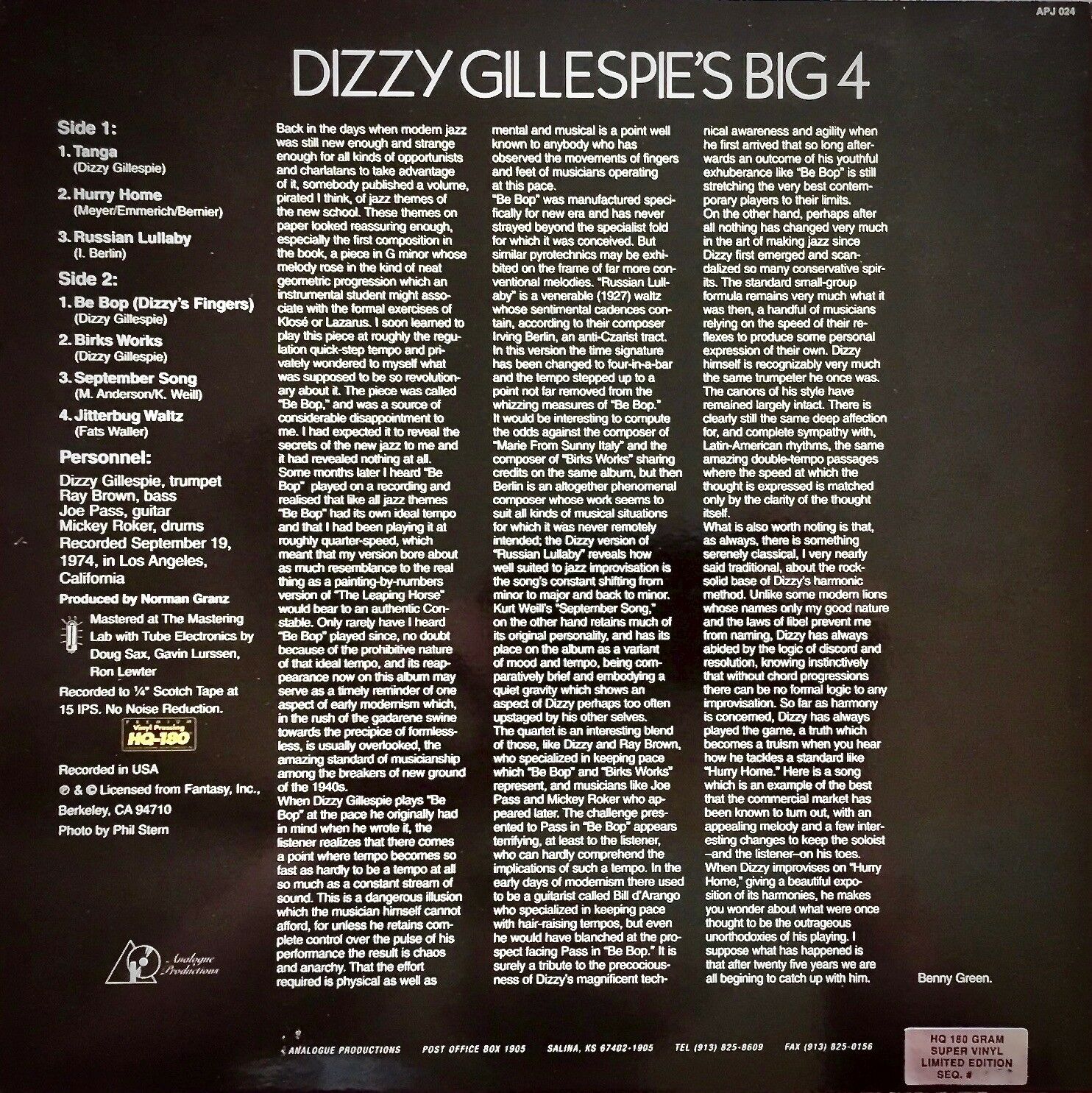
A1. Tanga - Written-By – Dizzy Gillespie - 8:06 A2. Hurry Home - Written By – Meyer/Emmerich/Bernier Written-By – Buddy Bernier, Joseph Meyer, Robert D. Emmerich - 6:20A3. Russian Lullaby - Written-By – I. Berlin - 6:46
B1. Be Bop (Dizzy's Fingers) - Written-By – Dizzy Gillespie - 4:26
B2. Birks Works - Written-By – Dizzy Gillespie - 8:48
B3. September Song - Written By – M. Anderson/K. Weill Written-By – Kurt Weill, Maxwell Anderson - 2:45
B4. Jitterbug Waltz - Written-By – Fats Waller - 6:49
Performed By / Credits / Other Information on this LP -
• Double Bass – Ray Brown
• Drums – Mickey Roker
• Guitar – Joe Pass
• Liner Notes – Benny Green
• Mastered By – Doug Sax, Gavin Lurssen, Ron Lewter
• Photography By – Phil Stern
• Producer – Norman Granz
• Trumpet – Dizzy Gillespie
Mastered at The Mastering Lab with Tube Electronics by Doug Sax, Gavin Lurssen, Ron Lewter
Recorded to 1/4" Scotch Tape at 15 ips. No Noise Reduction.
CONDITION Details:
LP Jacket:-
The jacket is in Near MINT minus condition - no seam splits!
-
The jacket has NO splits of any kind - it is completely solid and intact, and shows only some very minimal shelf wear along the seams and corners.
-
It has NO cut out marks of any kind.
-
There is NO writing on the front or back of the jacket.
-
The cover has clean and sharp colors - see picture with this listing for more detail.
-
The LP is in Near MINT minus condition - super glossy and appears like it's been seldom played!
-
This is the copy you want for your collection - any super picky audiophile would be happy with this one!
-
As for any record, even brand new, sealed ones, we always recommend a proper record cleaning before playing!
A Short Note About LP GRADING -
- Mint = Only used for sealed items.
- Near Mint = Virtually flawless in every way.
- Near Mint Minus = Item has some minor imperfections, some audible.
- Excellent = Item obviously played and enjoyed with some noise.
- Very Good Plus = Many more imperfections which are noticeable and obtrusive.
price rating