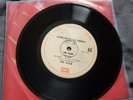
1936 PUERTO RICO RAFAEL HERNANDEZ Orq GRILLON Movie MARIA ELENA Bamba Chinchorro
  $   75


$ 75 Sold For
Feb 23, 2022 Sold Date
Feb 18, 2022 Start Date
1 Number Of Bids
  USA Country Of Seller
eBay Sold at
 
save auction  

Description

A series of great Latin, Spanish, Portuguese and Brazilian dance and folk songs

Check out more Latin recordings for sale by clicking the link below

Over 100 Latin recordings available now!

great Latin record recorded in Mexico City


Rafael Hernández, one of the most important figures in Latin music in the United States. He penned what is considered to be the first Latin protest song in the U.S. (“Lamento Borincano”) during the Great Depression. The group is named in honor of his sister Victoria who owned one of the most seminal Latin record shops in New York City called ‘Almacenes Hernandez’ on Madison Ave and 114th St in El Barrio.

 Puerto Rican Band Leader PUERTO RICO RAFAEL HERNANDEZ y su Orq de GRILON

El chinchorro - Bolero son
Lorenzo Barcelata (composer)

Bamba- Son from María Elena [Motion picture]
Lorenzo Barcelata (composer) 

Rafael Hernández (leader) 
Orquesta del Grillon
Description: Jazz/dance band
Category: Instrumental
Marketing Genre: Spanish

Mar. 1936 or earlier Mexico City, Mexico [unconfirmed] Master Victor 75248

Please see top of the page for condition

Rafael Hernández (October 24, 1892 – December 11, 1965), was one of the most important composers of Puerto Rican popular music during the 20th century. Rafael Hernández (birth name: Rafael Hernández Marín) was born in the town of Aguadilla, Puerto Rico, into a poor family. As a child, he learned the craft of cigar making, from which he made a modest living. He also grew to love music and asked his parents to permit him to become a full-time music student. When he was 12 years old, Rafael Hernández studied music in San Juan, under the guidance of music professors Jose Ruellan Lequenica and Jesús Figueroa. He learned to play many musical instruments, among them the clarinet, tuba, violin, piano and guitar. However, according to many Puerto Rican music historians, it was when he learned how to write music that his life and the history of Puerto Rican music would change forever. At the age of 14, he played for the Cocolia Orquestra. Rafael Hernández moved to San Juan where he played for the municipal orchestra under the director Manuel Tizol.In 1917, Rafael Hernández was working as a musician in North Carolina, when the U.S. entered World War I. The Jazz bandleader James Reese Europe recruited brothers Rafael and Jesús Hernández, and 16 more Puerto Ricans to join the United States Army’s Harlem Hell fighters musical band, the Orchestra Europe. He enlisted and was assigned to the U.S. 369th Infantry Regiment (formerly known as the 15th Infantry Regiment, New York National Guard, created in New York City June 2, 1913). The regiment, nicknamed “The Harlem Hell Fighters” by the Germans, served in France. Rafael Hernández toured Europe with the Orchestra Europe. The 369th was awarded French Croix de Guerre for battlefield gallantry by the President of France.After the war, Rafael Hernández moved to New York City. In the 1920s, he started writing songs and organized a trio called “Trio Borincano”. In 1926, fellow Puerto Rican Pedro Flores joined the Trio. Even though Rafael Hernández and Flores became and always remained good friends, they soon went their separate ways and artistically competed against each other. After the trio broke up, he formed a quartet called “Cuarteto Victoria” which included singer Myrta Silva, also known as La Guarachera and La Gorda de Oro. With both groups, Hernández traveled and played his music all over the United States and Latin America. On September 2, 1927, Hernández’ sister Victoria opens what is probably the first Puerto Rican-owned music store, which also acts as a booking agency and base of operations for her brother. In 1929, Trío Borinquen recorded Linda Quisqueya (originally titled Linda Borinquen) and that same year he founded the “Cuarteto Victoria” (also known as “El Cuarteto Rico”) named after his sister. In 1932, Rafael Hernández moved to Mexico, where the Mexicans treated him as one of their own. There, he directed an orchestra and enrolled in Mexico’s National Music Conservatory to further enrich his musical knowledge. Hernández also became an actor and organized many of the musical scores in Mexico’s “golden age” of movies. The Mexicans of the state of Puebla consider his composition “Qué Chula es Puebla” to be their unofficial anthem. His wife (and eventual widow) was Mexican.In 1937, Rafael Hernández wrote one of his greatest works, “Lamento borincano”. That same year, he also wrote what is considered by many to be his masterpiece, “Preciosa”. In 1947, Hernández returned to Puerto Rico and became the director of the Puerto Rico Symphony Orchestra. He was also a musical advisor to the government-owned WIPR Radio. Hernandez’s talent went beyond composing only patriotic music. He also composed Christmas music, Danzas, Zarzuelas, Guarachas, Lullabies, Boleros, Waltzes and more. Many people in the Dominican Republic consider his composition “Linda Quisqueya” their second national anthem. Hernández’s works’ include “Ahora seremos felices” (Now We Will Be Happy), “Campanitas de cristal” (Crystal Bells), “Capullito de Alhelí”, “Culpable” (Guilty),”El Cumbanchero” (also known as “Rockfort Rock” or “Comanchero” (sic) to reggae aficionados), “Ese soy yo” (That’s Me), “Perfume de Gardenias” (Gardenia’s Perfume), “Silencio” (Silence), and “Tú no comprendes” (You Don’t Understand), among 3,000 others. His music became an important part of the Puerto Rican Culture. Rafael Hernández was Honorary President of the Authors and Composers Association. He was also the founder of little league baseball in Puerto Rico. President John F. Kennedy christened him “Mr. Cumbanchero”. Rafael Hernández died in San Juan on December 11, 1965, shortly after Banco Popular de Puerto Rico produced a TV special in his honor in which he addressed the people for the last time. The special was simulcast on all TV and most island radio stations. The TV special was rebroadcast on May 13, 2007. Rafael Hernández’s remains are buried in the Santa Maria Magdalena de Pazzis Cemetery of Old San Juan.


price rating