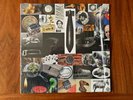
white Album no 0017073
£
205
$
272


Favourite Auctions
To save auctions to your favourites, please login
If you don't have an account, please register
Description
I have a U.K. copy of
The Beatles-The White Album No 0017073
the matrixes and stampers as follows:
side 1 (xex 709) 4 GH
side 2 (xex 710) 26 RG
side 3 (xex 711) 1 R
side 4 (xex 712) 2 R
SO THE STAMPERS ON SIDE 3&4 OR VERY VERY LOW
with.......
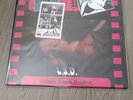
original poster
4 x original photos
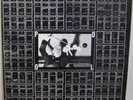
2 x original black 'die-cut' inner sleeves
"Sold in the UK" text on labels
No 'EMI' text on labels
VINYL
I am a private seller just wanting to make more room and have not played this record in a very long time. But it has been kept in a safe environment and is in good condition
LABELS
Dark Green Apple labels are clear and bright on all 4 sides, no scuffs, stickers or writing.
INNER SLEEVES
Original black die-cut inner sleeves, no seam-splits.
INSERTS
4 colour Portraits in super condition
Large fold-out Poster has some wear on the creases
COVER
Double has "The Beatles" title Embossed on the front together with stamped number "No. 0017073". Flip-back edges on the inside fully intact with no tears or lifing
HAPPY BIDDING ANY QUESTIONS JUST MESSAGE ME I WILL GET BACK TO YOU ASAP OR ANY MORE PHOTOS I CAN EMAIL THEM TO YOU
On 10-Mar-11 at 22:14:27 GMT, seller added the following information:
Parlophone Matrix, Mothers, Stampers and Tax Codes
96 out of 100 people found this guide helpful. Guide viewed: 10273 times Tags: Beatles | Parlophone | Matrix | Mothers | StampersParlophone Matrix, Mothers, Stampers and Tax Codes
Recording The Disc
For the first several decades of disc record manufacturing, sound was recorded directly on to the master disc (also called the matrix, sometimes just the master) at the recording studio. From about 1950 on (earlier for some large record companies, later for some small ones) it became usual to have the performance first recorded on audio tape, which could then be processed and/or edited, and then dubbed on to the master disc. A record cutter would engrave the grooves into the master disc. Early on these master discs were soft wax, later on a harder lacquer was used.
The mastering process was originally something of an art as the operator had to manually allow for the changes in sound which affected how wide the space for the groove needed to be on each rotation. In the run-off groove area it was normal to scratch or stamp identifying codes to distinguish each master.
Mass Producing Records
The soft master known as a "Lacquer" would then be electroplated with a metal, commonly a nickel alloy (this and all subsequent metal copies were known as "matrices" or singular "matrix"). When this metal was removed from the Lacquer, it was a copy of the Lacquer and of the yet to be produced record. In the UK, the copy from the lacquer was called the "Master". In the earliest days the Master was used as a mold to press records sold to the public, but as demand for mass production of records grew, another step was added to the process.
The metal Master was then electroplated to create "Mothers". From the "Mothers", "Stampers" would be formed. The Stampers would be used in hydraulic presses to mould the LP discs. The advantages of this system over the earlier more direct system included ability to make a large number of records quickly by using multiple stampers. Also, more records could be produced from each Master since molds would eventually wear out.
Since the Master was the unique source made to ultimately produce the Stampers, it was considered a Library Item. The "Pedigree" of any record can be traced through the Mother/Stamper identities used, by reading the lettering found on the record run-out area.
Parlophone Decoding
Laquers make Masters which in turn produce Mothers which then create Stampers. So for your Parlophone records, the Master is the matrix at the 6 o'clock position, the Mother is the number etched in the deadwax at the 9 o'clock location and the Stamper is identified by the letter(s) etched at the 3 o'clock postion. For the 3 o'clock position, Parlophone use the following coding: G R A M O P H L T D (Gramophone Ltd) where G=1, R=2, A=3, M=4, O=5, P=6, H=7, L=8, T=9 and D=0. Therefore, many times you will see more then one letter etched in the dead wax in the Stamper location (3 o'clock). For example, if "MM" is etched, it means the record was pressed with the 44th stamper. The ultimate early pressing of any Beatle Parlophone LP would be denoted with the codes 1/G 1/G (side 1 and side 2), where the "1" represents the first Mother (9 o'clock) and the "G" denotes the first Stamper (3 o'clock) or one of the first 300 off the press!
The picture below illustrates where to locate the information to date your Parlophone record:
- A - Matrix or Master (6 o'clock)
- B - Mother produced from the Master (9 o'clock)
- C - Stamper produced from the Mother (3 o'clock)
The tax codes are located next to the record spindle hole. Here are the dates to help you date your Parlophone record:
- ZT = April 1962 through November 1962
- PT = November 1962 through January 1963
- MT = January 1963 through July 1963
- KT = July 1963 through January 1969
- No Tax Code = All pressings after January 1969
Sources and thanks: Wikipedia, peterice.com/Beatlesdna.htm and yokono.co.uk/collection/beatles/uk/guide_lp_g_parlo.html (don't forget to add the www. prefix)
Guide ID: 10000000000116173Guide created: 12/23/05 (updated 01/10/11)
price rating