ZAPPA THE MOTHERS OF INVENTION BURNT WEENY SANDWICH STEAMBOAT A1 B1
£
19
$
25

Favourite Auctions
To save auctions to your favourites, please login
If you don't have an account, please register
Description
WARNING: MAKE SURE YOU READ THE DESCRIPTION FULLY BEFORE BIDDING
ALL MY RECORDS ARE PLAYED FULLY FOR GRADING PURPOSES
NOT JUST GUESSED AT!
POSTAGE RATES & GRADINGS ARE AT THE FOOT OF THE LISTING.
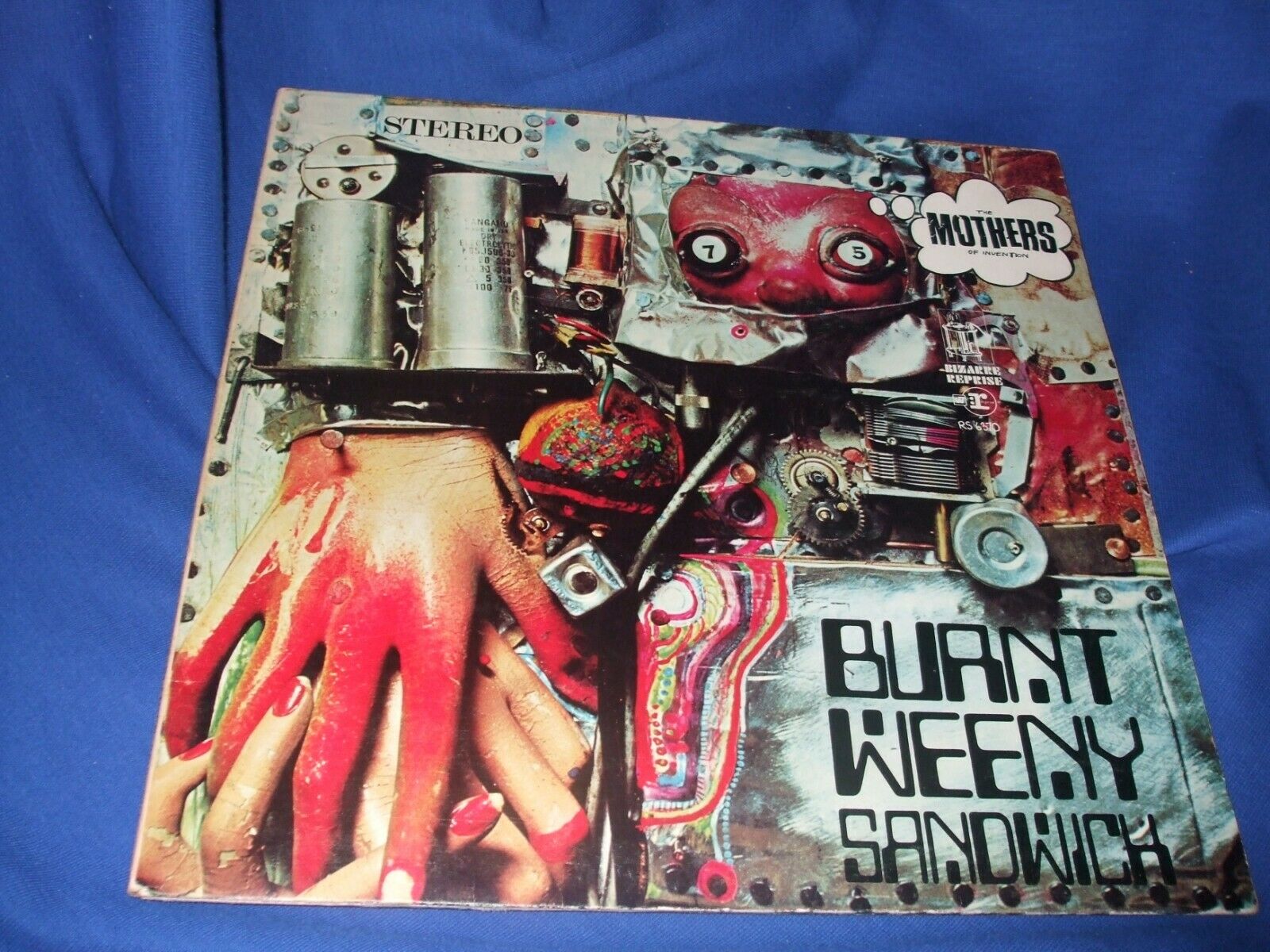
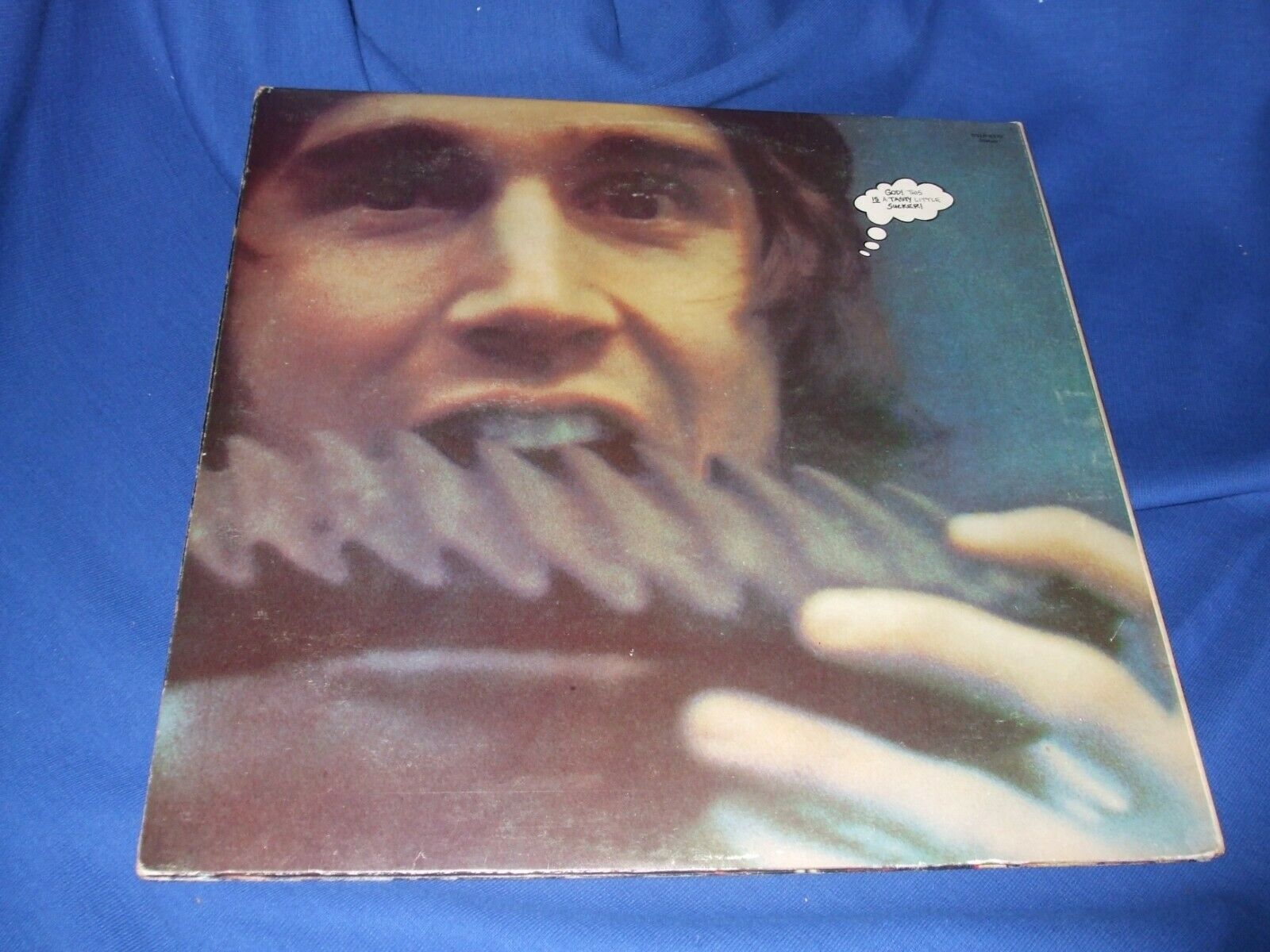
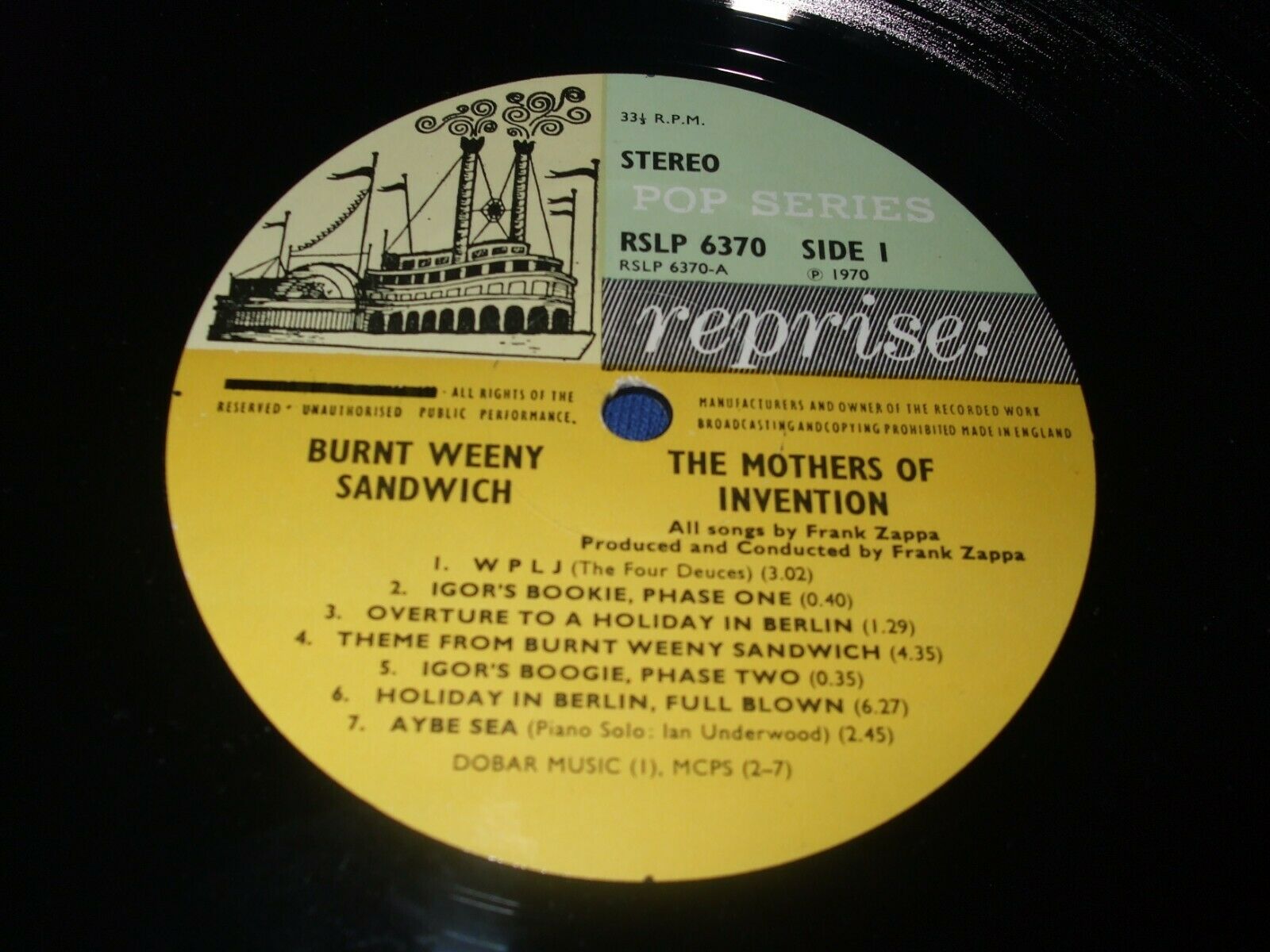
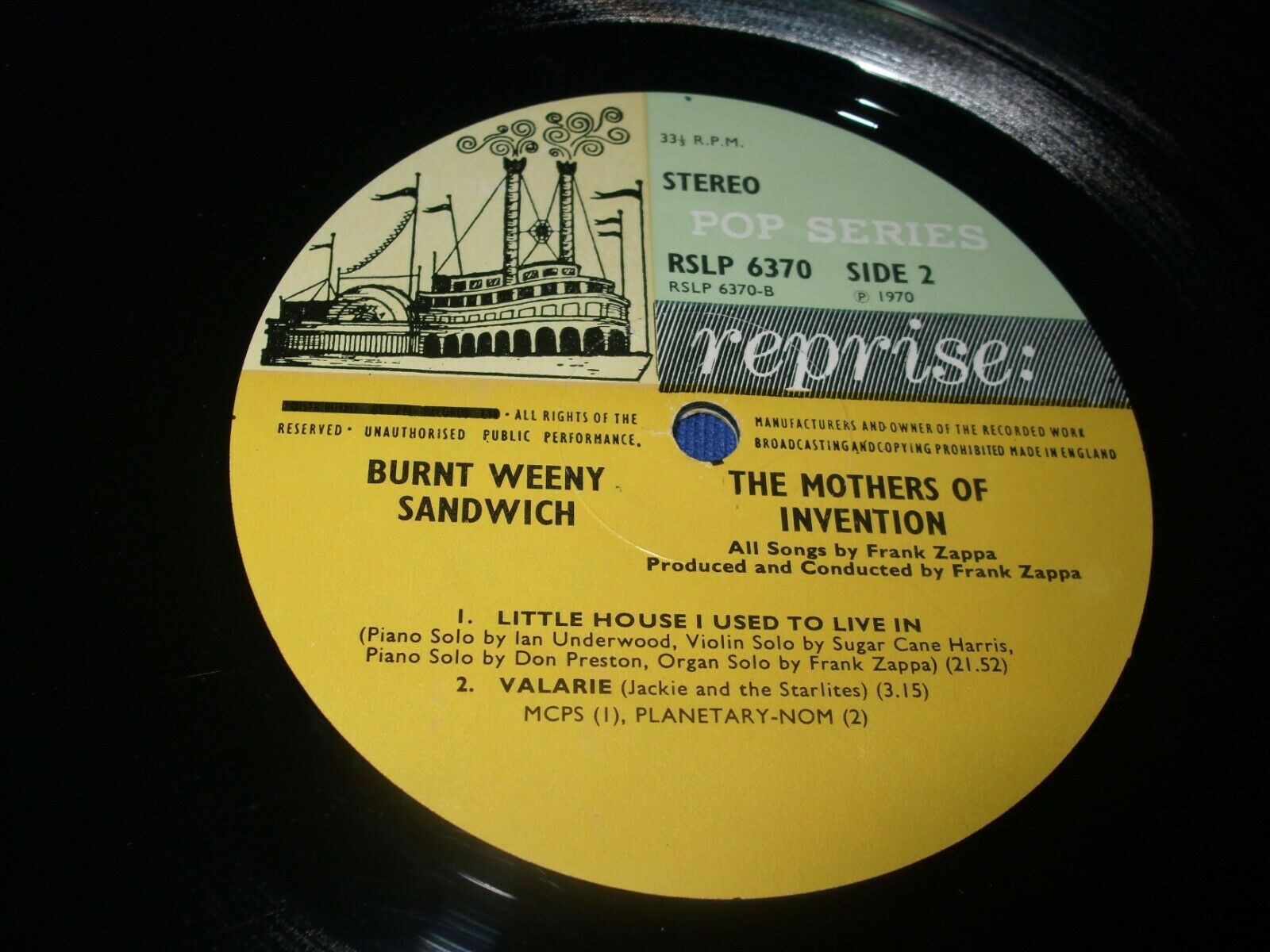
Artist. The Mothers of Invention. Title. Burnt Weeny Sandwich. Label Reprise - Steamboat. First UK Press 1970. Catalogue number. RSLP 6370. Matrix A-1 B-1.
====================================================================================
Wow, as you probably gathered from the album title and disturbing cover art, 1970's "Burnt Weeny Sandwich" was one bizarre collection. Released after a tired and frustrated Frank Zappa had decided to disband the Mothers of Invention (though the album was still credited to them), the set offered up a posthumous mixture of studio and live material. Apparently compiled from a mixture of 1967-69 era studio and concert outtakes and miscellaneous shelved efforts, the results found Zappa himself strangely subdued throughout the collection. This time out there was literally a little bit of everything to be found including '50s doo-wop ('WPLJ'), classical moves ('Igor's Boogie'), straight ahead experimentation, and even a sea shanty ('Abye Sea'). Zappa fans tend to fawn over this one, which leaves me at somewhat of a loss. I'll give him credit for the opening and closing doo-wop numbers (perhaps the inspiration for the 'Sandwich' album title), but going ga-ga over numbers like the classically inspired 'Igor's Boogie', or Sugar Cane Harris' extended violin solo on 'Little House I Used To Love In' simply leaves me scratching my head in puzzlement. Technically it was all pretty impressive, but to call it enjoyable was kind of a stretch. Personally I'd rather hear 'Hot Rats'. To each his own ...
Originally recorded by The Four Deuces, 'WPLJ' served to underscore Zappa's long standing affection for doo-wop. The lyric about making your own wine out of port and lemon juice (the title didn't refer to a radio station call sign rather White Port and Lemon Juice), always made me laugh as did Roy Estrada's Spanish commentary. No idea what he was saying, but I suspect it was colourful. Apparently inspired by long-standing Zappa hero Russian composer Igor Stravinsky, 'Igor's Boogie Phase One' was a brief and suitably discordant blast of musique-Concrete styled experimentation. You can just see the Mothers of Invention going "what the hell ..."
Opening up with what sounded like Ian Underwood on a kid's piano and some out of tune sax, ''Overture To a Holiday In Berlin' was another strange instrumental. Imagine The Mothers hanging out with Brian Eno and the Portsmouth SInfonia and you'd have a feel for the sound. The song was apparently inspired by a Zappa trip to Berlin where folks tried to get him to join an anti-establishment riot. There's another version of the song with lyrics.
Apparently a live-in-the-studio performance, the instrumental 'Theme from a Burnt Weeny Sandwich' served as a showcase for an extended and surprisingly commercial Zappa solo ... Folks forget what an accomplished player Zappa was an on this track he turned in a very West Cost CS&N-flavoured vibe (if you could overlook the oddball and jarring percussion sounds slapped on top of the mix). Picking up where the first snippet ended, 'Igor's Boogie, Phase Two' was no less experimental and irritating though anyone into the sound squawking ducks (I think the sounds were actually bike horns), should enjoy the track.
As you can tell from the title, this segment of 'Holiday In Berlin, Full Blown' benefited from a filler arrangement. Complete with martial drumming and supper club sax solo, the results were still pretty goofy, though Zappa's blazing end-of-song guitar solo almost salvaged the track.
Showcasing Underwood on harpsichord and Zappa on acoustic guitar, the instrumental 'Abye Sea' (think A-B-C) came off like and 1800s sea shanty. Surprisingly, the tune was quite infectious.
Long considered one of Zappa's classic compositions, 'Little House I Used To Love In' was an extended, multi-part suite. Zappa certainly deserved credit for seamlessly editing the track together from various studio sessions and some live tapes, though I'd still question the 'holy grail' status fans have given the track. Opened up with Ian Underwood playing some stark and discordant chords on a piano, just as a melody began to emerge from his efforts the song abruptly shifted gears into an up tempo big band arrangement than sounded like some sort of late night television theme. That extended into a series of extended solos; one of the highlights being a furious Zappa guitar solo. Apparently marking one of Zappa's edits, the song then detoured into a bluesier segment featuring an extended Sugar Cane Harris electric violin solo. Harris was certainly a talented performer, but to my ears his screeching violin quickly wore out its welcome. Another edit found the song briefly shifting gears into smoother territory, followed by some outright experimentation (think about attending a circus on speed) which featured Zappa on organ - there's something strange in hearing Zappa say 'thank you and goodnight and then humorously take out an English heckler'.
Yeah it may have been meant as a parody, but who knew Zappa was capable of penning something as pretty as 'Valarie'? I'm not a big doo-wop fan, but this was simply one of Zappa's sweetest compositions and hearing Roy Estrada on falsetto was worth the price of admission. Only complaint on this one was that it faded out too early.
Hardly Zappa's most consistent, or accessible release (of course accessibility isn't something true Zappa fans are looking for), but it had some interesting moments that will appeal to casual fans. Hard to imagine an album like this charting in this day and age.
This is an ORIGINAL UK 1st pressing on the Steamboat Reprise record label. This LP sold hardly at all and was almost immediately deleted. Stereo copies are very scarce.
Vinyl: Plays superbly without any problems. Not even a trace of crackle. Under a bright light some minor sleeve removal marks BUT absolutely nothing serious. EX+.
EXCELLENT: The record shows some signs of having been played, but there is very little lessening in sound quality. The cover and packaging might have slight wear and/or creasing.
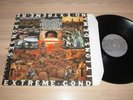
Sleeve: EX. A great gatefold sleeve and the original non laminated matt one for this first UK press version. The sleeve has a couple of minor corner bumps. Nothing serious.
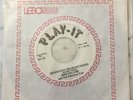
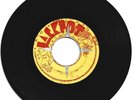
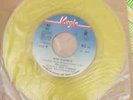
Labels: NM. Rare first issue Stereo. See photos.
Inner sleeve. Plain sleeve EX. No splits. No tears.
Will be sent with a NAGAOKA anti static inner sleeve as well as the original one.
Overall a really great looking AND sounding copy.
You will not be disappointed!
Due to parcels not arriving items sent to the following countries must be sent fully insured. If value is between £20 and £50 the cost is £10.65. Each extra lp up to 5 lps is £1.60 each
If value is over £50 the cost is £13.99. Each extra lp up to 5 lps is £1.60 each.
This applies to Italy and Ukraine.
Discounts given for multi purchases up to a maximum of 5 lps. SEE BELOW.
UK 1-5 records £4.75 2nd class signed for.
Europe £13.99. International tracked & insured. Each extra LP £1.60 Maximum 5LPs ROW £15.99. International tracked & insured. Each extra LP £3.20. Maximum 5LPs
Grading is as follows based on collector magazine UK
MINT: Virtually unplayed. The record itself is in brand new condition with no surface marks or deterioration in sound quality. Cover is pristine.
EXCELLENT: The record shows some signs of having been played, but there is very little lessening in sound quality. The cover and packaging might have slight wear and/or creasing.
V.G PLUS: The record will still be nice and shiny, but may have a few light marks, and will play well. Slight wear and tear on the cover.
V.G: The record has obviously been played many times, but displays no major deterioration in sound quality, despite noticeable surface marks and occasional light scratch. Normal wear and tear on the cover or extra items.
GOOD: The record has been played so much that the sound quality has noticeably deteriorated, perhaps with some distortion and mild scratches. The cover and contents suffer from folding, scuffing of edges, spine splits, etc.
FAIR: Fair. It is noticeable that the record has been played so much that the sound quality has deteriorated very noticeably. The cover and contents are showing signs of folding, scuffing of edges etc.
Further information. All records are separated from the covers and sent in a brand new polythene sleeve and packed in heavy duty cardboard.
Do not ask for a Buy it Now
A full refund is guaranteed if you are not completely satisfied with your purchase.
price rating