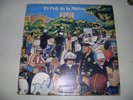
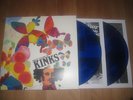
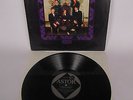
Willie Colon Hector Lavoe- Lo Mato LP VMP Sky Blue Vinyl Ltd 759/1000
$
88


Favourite Auctions
To save auctions to your favourites, please login
If you don't have an account, please register
Description
Willie Colon Hector Lavoe- Lo Mato LP VMP Sky Blue Vinyl Ltd Ed 759/1000 Salsa essencial Limited to 1,000 copies, pressed on 180g 1LP Sky Blue vinyl at Memphis Record Pressing.
Direct-to-board, foil stamped and numbered jacket.
The last of the classic Willie Colón LPs featuring Héctor Lavoe, at least, before Rubén Blades entered the picture, Lo Mato followed some heavy hitters in the Colón canon (Cosa Nuestra, The Big Break-La Gran Fuga, El Juicio) but proved without a doubt that salsa's new king for the '70s had nearly endless reserves of compositional fortitude -- and the powerhouse band to match. Right in the typical Colón bag were "Todo Tiene Su Final" and "Calle Luna Calle Sol" (both soon to become salsa classics), but Colón and his group mixed it up elsewhere, refreshingly dabbling with samba rhythms on "La Maria" (featuring great comping by the Professor, Joe Torres, on piano) and never failing to keep the energy up, even when Lavoewas sidelined on the instrumental "Junio 73" (which found plenty of solo space for a wild-armed Louis Romero on timbales).
Lo Mato (Si No Compra Este LP), in English: "I'll kill him. (If you don't buy this LP)", is the eighth studio album of Willie Colón & Héctor Lavoe issued in 1973 by Fania Records. It was the fourth of Colón and Lavoe's records to go gold, after Cosa Nuestra (1970), La Gran Fuga (1971), and El Juicio (1972).
The cover shows a variant of the National Lampoon, January 1973 cover If you don't buy this magazine, we'll kill this dog. The man being held up on the cover, while reversing the roles with Willie on the floor on the reverse, was José R. Padrón.
William Anthony Colón Román (born April 28, 1950) is a Puerto Rican and American Salsa musician and social activist. He began his career as a trombonist but also sings, writes, produces and acts. Colón was a pioneer of Salsa music and a best-selling artist in the genre, having been a key figure in the nascent New York City scene associated with Fania Records. He is also noteworthy for having assumed the gangster image in his album covers before it was culturally popular. Since the 1980s he has at times been deeply involved in the politics of New York City.
Héctor Juan Pérez Martínez (September 30, 1946 – June 29, 1993), better known as Héctor Lavoe, was a Puerto Rican salsa singer. Lavoe is considered to be possibly the best and most important singer and interpreter in the history of salsa music because he helped to establish the popularity of this musical genre in the decades of 1960s, 1970s and 1980s. His personality, style and the qualities of his voice led him to a successful artistic career in the whole field of Latin music and salsa during the 1970s and 1980s. The cleanness and brightness of his voice, coupled with impeccable diction and the ability to sing long and fast phrases with total naturalness, made him one of the favorite singers of the Latin public.
Lavoe was born and raised in the Machuelo Abajo barrio of Ponce, Puerto Rico. Early in his life, he attended Escuela Libre de Música de Ponce, known today as the Instituto de Música Juan Morel Campos and, inspired by Jesús Sánchez Erazo, developed an interest in music. He moved to New York City on May 3, 1963, at the age of sixteen. Shortly after his arrival, he worked as the singer in a sextet formed by Roberto García. During this period, he performed with several other groups, including Orquesta New York, Kako All-Stars, and Johnny Pacheco's band.
In 1967, Lavoe joined Willie Colón's band as its vocalist, recording several hit songs, including "El Malo" and "Canto a Borinquen." Lavoe moved on to become a soloist and formed his own band performing as lead vocalist. As a soloist, Lavoe recorded several hits including: "El cantante" composed by Rubén Blades, "Bandolera" composed by Colón, and "Periódico de ayer", composed by Tite Curet Alonso. During this period he was frequently featured as a guest singer with the Fania All Stars recording numerous tracks with the band.
price rating