What's My Line? Dot Records DLP 3153 1958 Game Show LP John Daly
$
100


Favourite Auctions
To save auctions to your favourites, please login
If you don't have an account, please register
Description
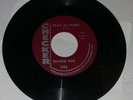
What's My Line? Label: Dot Records – DLP 3153 Format: Vinyl, LP, Album Country: US Released: 1958 Genre: Non-Music, Stage & Screen Style: Public Broadcast A1 Mystery Guest 1 A2 Mystery Guest 2 A3 Mystery Guest 3 A4 Mystery Guest 4 B1 Mystery Guest 5 B2 Mystery Guest 6 B3 Mystery Guest 7 B4 Mystery Guest 8 Matrix / Runout (Side One (Machine Stamped)): M 50147 1 Matrix / Runout (Side Two ( Machine Stamped)): M 50148 1
What's My Line? is a panel game show that originally ran in the United States, between 1950 and 1967, on CBS, originally in black and white and later in color, with subsequent American revivals. The game uses celebrity panelists to question contestants in order to determine their occupation. The majority of the contestants were from the general public, but there was one weekly celebrity "mystery guest" for whom the panelists were blindfolded. The series is on the list of longest-running American primetime network television game-shows. Originally moderated by John Charles Daly and most frequently with regular panelists Dorothy Kilgallen, Arlene Francis, and Bennett Cerf, What's My Line? won three Emmy Awards for Best Quiz or Audience Participation Show in 1952, 1953, and 1958 and the Golden Globe for Best TV Show in 1962.[1][2]
More than 700 episodes exist as kinescope recordings, the prevailing recording medium for recording live television until the 1960s emergence of videotape.[3] Many early episodes were lost due to budgetary limitations from 1950 and 1952. All episodes from July 1952 to September 1967 were preserved in the archives of producers Mark Goodson and Bill Todman, but by 1975, some of the episodes had been lost.[3]
After CBS cancelled the series in 1967, it returned the following year in a syndicated version for local television stations that committed to airing it five days a week.[3] This syndicated version was broadcast until 1975 and was hosted by Wally Bruner and later by Larry Blyden. There have been a dozen international versions, radio versions, and a live stage version. Revivals in the United States have been proposed several times, but all failed to go past the planning stages.[4] New episodes have not been created for American television since December 12, 1974.[3]
In 2013, TV Guide ranked What's My Line? ninth on its list of the 60 greatest game shows ever[5] and Time ranked it as one of the 100 "All-Time" TV shows ever.[6]
Original CBS series (1950–1967) Produced by Mark Goodson and Bill Todman for CBS, the show was initially called Occupation Unknown before deciding on the name What's My Line?.[7] The original series, which was usually broadcast live, debuted on Thursday, February 2, 1950, at 8:00 p.m. ET. After airing alternate Wednesdays, then alternate Thursdays, finally on October 1, 1950, it had settled into its weekly Sunday 10:30 p.m. ET slot where it would remain until the end of its network run on September 3, 1967.
In 1958, Goodson-Todman Productions decided to sell the series to CBS for an undisclosed amount of price, although Goodson-Todman decided to retain talent for the series. The practice continued long after the show moved to syndication, until 1971, when G-T bought back the property after CBS was spun off its syndicated division into Viacom.[8][9]
Starting in July 1959, and continuing until July 1967, the show would occasionally record episodes onto quadruplex videotape for playback at a future date. In July 1959, this was state-of-the-art technology. At that time, the immediate concern of Mark Goodson and Bill Todman was that John Daly, anchor of the ABC network's nightly newscasts, would be allowed to visit Moscow to cover, in that capacity, a breaking news story. While Daly moderated the first live episode after his return from Moscow, he praised his employers' use of videotape.[10] In such instances, cast and crew worked on two episodes consecutively during the same Sunday night: the "taped" one, followed immediately by the "live" one.[11] The cast and crew began taking "summer breaks" from the show in July 1961, through July 1967. The closing credits of each prerecorded episode included an acknowledgment of the prerecorded status by the offscreen announcer.
Hosts and panelists
Host John Charles Daly's 1950 CBS publicity photo for What's My Line?
Original panelists from the premiere broadcast, February 2, 1950
The panel in 1952. From left: Dorothy Kilgallen, Bennett Cerf, Arlene Francis and Hal Block with John Daly as the host.
(l–r) Arlene Francis, Bennett Cerf, Dorothy Kilgallen and John Daly on the 15th anniversary show in 1965 The host, then called the moderator, was veteran radio and television newsman John Charles Daly. Clifton Fadiman,[12][13] Eamonn Andrews, and Random House co-founding publisher and panelist Bennett Cerf[14] substituted on the four occasions when Daly was unavailable.
The show featured a panel of four celebrities who questioned the contestants. On the initial program of February 2, 1950, the panel comprised former New Jersey governor Harold Hoffman, columnist Dorothy Kilgallen, poet Louis Untermeyer, and psychiatrist Richard Hoffmann. The panel varied somewhat in the following weeks, but after the first few broadcasts, during the show's earliest period the panel generally consisted of Kilgallen, actress Arlene Francis, Untermeyer and comedy writer Hal Block. Publisher Bennett Cerf replaced Untermeyer as a regular panelist in 1951, and comedian Steve Allen replaced Block in 1953. Allen left in 1954 to launch The Tonight Show, and he was replaced by comedian Fred Allen (no relation),[15] who remained on the panel until his death in 1956.
Fred Allen was not replaced on a permanent basis, and for the majority of the show's network run, between 1956 and 1965, the panel consisted of Kilgallen, Cerf, Francis and a fourth guest panelist. After Kilgallen's death in 1965, she was similarly not replaced with a permanent panelist, and for the show's final two years, the panel consisted of Cerf, Francis and two guests.
At various times, a regular panelist might take a vacation or be absent from an episode due to outside commitments. On these occasions, a guest panelist would take their spot. The most frequent guest panelist was Arlene Francis's husband Martin Gabel, who appeared 112 times over the years. Other frequent guest panelists include Tony Randall, Robert Q. Lewis and Phyllis Newman. Dick Cavett, in an early television appearance in Fred Allen's vacated chair in 1966, noted that the mystery guest was probably wondering who Cavett was.
Regular announcers included Lee Vines, who served from 1950 to 1955; Hal Simms, from 1955 to 1961; Ralph Paul, whose tenure was confined to 1961; and Johnny Olson, perhaps the best known of Goodson-Todman's television announcers, whose tenure began in 1961 and ran until the show's cancellation in 1967.
Timeline of regular panelists
Gameplay What's My Line? was a guessing game in which the four panelists attempted to determine the occupation (i.e., "line [of work]") of a guest. In the case of the famous mystery guest each week, the panel sought to determine the identity of the celebrity. Panelists were required to probe by asking only yes–no questions. A typical episode featured two standard rounds (sometimes a third, and very rarely a rushed fourth) plus one mystery guest round. On the occasions on which there were two mystery guests, the first would usually appear as the first contestant.
Standard rounds For the first few seasons, contestants would "sign in" by writing their name on a chalkboard, and meet the panel up close for a casual inspection, and the panel was allowed one initial "wild" guess. The first contestant on What's My Line? was Pat Finch, a hat check girl at the Stork Club.[16] Finch appeared again on the fifth anniversary show (with the "line" of "chorus girl" appearing in the musical Fanny) and on the final broadcast in 1967 as a guest.[16]
Beginning in 1955 Daly simply greeted and seated the contestant, who later met the panel at the end of the game. Additionally, starting April 17, 1955, the panel stopped taking initial guesses.[17] The contestant's line was then revealed to the studio and home audiences, and Daly would tell the panel whether the contestant was salaried or self-employed, and from 1960 on, whether they dealt in a product or a service.
A panelist chosen by Daly would begin the game. If their question elicited a yes answer, they continued questioning. When a question was answered no, questioning passed to the next panelist and $5 was added to the prize. The amount of the prize was tallied by Daly who flipped up to ten cards on his desk. A contestant won the top prize of $50 by giving ten no answers, or if time ran out, with Daly flipping all the cards. As Daly occasionally noted, "Ten flips and they (the panel) are a flop!" Daly later explained, after the show had finished its run on CBS, the maximum payout of $50 was to ensure the game was played only for enjoyment, and that there could never be even the appearance of impropriety.[citation needed] Later in the series, Daly would throw all the cards over with increasing frequency and arbitrariness (frequently to give a particularly interesting or worthy contestant the maximum available prize money), evidence the prize was secondary to game play.
Panelists had the option of passing to the next panelist—or even disqualifying themselves entirely if they somehow knew the contestant's occupation or identity (especially in the case of a mystery challenger) before the round. They could also request a conference, in which they had a short time for open discussion of ideas about occupations or lines of questioning.
Panelists adopted some basic binary search strategies, beginning with broad questions, such as whether the contestant worked for a for-profit corporation or non-profit organization or whether a product was alive, worn, or ingested. To increase the probability of affirmative answers, panelists would often phrase questions in the negative starting with "Is it something other than..." or "Can I rule out..."
The show popularized the phrase, "Is it bigger than a breadbox?" Steve Allen first posed this on January 18, 1953, and it was then refined over subsequent episodes. Soon, other panelists were asking this question as well.[18][19] On one occasion the guest was a man who made breadboxes. Allen correctly guessed the guest's occupation when Daly could not restrain his laughter in response to Kilgallen asking, "Is it bigger than a breadbox?"[20][21]
The mystery guest round
Blindfolds on for a mystery guest The ultimate or penultimate round of an episode involved blindfolding the panel for a celebrity guest appearance (originally called "mystery challengers" by Daly) whom the panel had to identify by name, rather than occupation. (In the first episode, the mystery guest was New York Yankees shortstop Phil Rizzuto.)[22] In the early years of the show, the questioning was the same as it was for regular contestants, but starting with the April 17, 1955 edition, panelists were only allowed one question at a time.[17] Mystery guests usually came from the entertainment world, either stage, screen, television or sports. When mystery guests came from other walks of life or were non-famous individuals whom the panel but not the studio audience might know, they were usually played as standard rounds. However, the panel might be blindfolded, or the contestant might sign in simply as "X", depending on whether they would be known by name or sight.
Mystery guests would usually attempt to conceal their identities with disguised voices, much to the amusement of the studio audience. According to Cerf, the panel could often determine the identities of the mystery guests early, as they knew which celebrities were in town, or which major movies or plays were about to open. On those occasions, to provide the audience an opportunity to see the guest play the game, the panelists and host would typically allow questioning to pass around at least once before coming up with the correct guess.[23] As Cerf admitted in the episode broadcast on November 27, 1966, his wife, Phyllis, was frequently told the name of the mystery guest beforehand.
Sometimes, two mystery guest rounds were played in an episode, with the additional round usually as the first round of the episode.
Most notably, the mystery guests ran the gamut of show business's most legendary icons, including Jack Benny, John Wayne, Gary Cooper, Elizabeth Taylor, Ella Fitzgerald, Ava Gardner, Joan Crawford, James Cagney, Julie Andrews, Jack Lemmon, Jackie Gleason, Steve McQueen, Alfred Hitchcock, Doris Day, James Garner, Ronald Reagan, Jane Russell, Rosalind Russell, Fred Astaire, George Raft, Edward G. Robinson, Gene Autry, Lena Horne, Paul Newman and Joanne Woodward, Andy Griffith, Harry Belafonte, Ginger Rogers, Roy Rogers, Lucille Ball, Desi Arnaz, Bob Hope, Frank Sinatra, Dean Martin and Jerry Lewis, Sammy Davis Jr., Peter Lawford, Sean Connery, James Stewart, Henry Fonda, Salvador Dalí, Aretha Franklin, and many more.
Style What's My Line? is known for its attention to manners and class.[4][24] In its early years, business suits and street dresses were worn by the host and panelists, but by 1953, the men normally wore black suits with bow tie (a few guests in fact wore black tie) while female panelists donned formal gown and often gloves. Exceptions to this dress code were on the broadcasts immediately following the deaths of Fred Allen[25] and Dorothy Kilgallen,[26] in which the male cast members wore straight neckties and the women wore simpler dresses.
The game followed a line of formality and adherence to rules. Although using first names at other points, Daly usually addressed using surnames when passing the questioning to a particular panelist. He would also amiably chide the panel[27] if they began a conference without first asking him.
However, even with such formality, Daly was not above trading bon mots with the panelists during the game, and Cerf would often attempt to make a pun of his name. Occasionally Daly would amiably one-up Cerf if he felt the pun was of lesser quality. Cerf also played a myriad of games with Daly's full name, John Charles Patrick Croghan Daly, reciting it correctly only a handful of times over the course of the series.[28]
Often Daly would need to clarify a potentially confusing question, but he had a penchant for amusingly wordy, long-winded replies that often left panelists more confused than before, which Danny Kaye once parodied as a panelist.[29] Daly was also scrupulous about providing answers that, did, in fact, answer questions as they were posed, and on more than one occasion, Daly "led the panel down the garden path" – a favorite phrase used when a technically correct (but perhaps incomplete or somewhat unhelpful) answer had proven misleading to the panelists.
Broadcast format From 1950 to 1966, the game show was broadcast in black and white, as was typical of most game shows at the time. In September 1966, all three networks began broadcasting their prime-time schedules entirely in color television, including What's My Line? The new color episodes were preserved only with black-and-white kinescopes, however, and even several of those from 1967 were lost. The color composition of the What's My Line? soundstage has been lost to posterity.[30]
The show began as a live broadcast but during the last eight years many episodes were videotaped weeks or months in advance of their telecasts.[3] The show's announcer acknowledged this fact during the closing credits of every "prerecorded" episode.
Radio In addition to the television version, What's My Line? was also broadcast on network radio for a short time. From May 20 to August 27, 1952, an NBC Radio Network version was produced on Tuesday nights with the same cast as the TV version. After August 27, the program was then broadcast live on CBS Radio on Wednesday nights at 8:00 PM for 10 months, concluding July 1, 1953.[31][32] The radio version is notable for the only appearances of Marlene Dietrich, Constance Bennett, and Marlon Brando.
1953 Community Chest Special A Community Chest Special, completely separate from the regular production of episodes, was broadcast live on all the major networks (CBS, ABC, NBC, and DuMont) on the afternoon of Sunday, September 27, 1953.[33]
Production practices On-camera The program began with Daly and panel entering from off-stage as they were introduced. Prior to 1954, both panelists and host began the program in their seats, but this was changed, responding to letters asking what panelists looked like away from their seats.[citation needed] The first panelist would be introduced by the announcer following the show's introduction, and each panelist would introduce the next in turn, with the last introducing Daly. During his tenure, Hal Block sat in the final seat and began the practice of introducing Daly with a pun. Upon his departure, Bennett Cerf took over this position. Cerf's introductions of Daly were generally straightforward in his earliest years on the show, but as time went by Cerf expanded these introductions, often telling long jokes which he tied to Daly in some way.[3]
To begin a round, Daly would invite the contestant to "come in and sign in, please," which, by 1960, had evolved to the more familiar "enter and sign in, please." The contestant entered by writing his or her name on a small sign-in board. (For the first few telecasts, the contestants signed their names on an artist's sketch pad; but when the brightness of the studio lights made it difficult for the signatures to be seen clearly by the viewers, the white sketchpad was replaced by a black chalkboard.) Daly would then usually ask where the guest lived and, with a woman, if she should be addressed as "Miss" or "Mrs." Early in the show's run, the panel was allowed to inspect contestants, studying their hands, or label on their suit or asking them to make a muscle.
While ostensibly a game show, if there was time, it also was an opportunity to conduct interviews. Line's sister show, I've Got a Secret, and later, the syndicated version of WML engaged in the practice of contestants demonstrating their talents. However, despite frequent requests by the panel, particularly Arlene Francis, such demonstrations rarely occurred as according to executive producer Gil Fates, Daly was not fond of this practice.[3]
Sponsors After the first four episodes, the show gained its initial sponsor when Jules Montenier paid to have his product, Stopette spray deodorant, featured in advertising on the program. This involved featuring the product in the show's opening, on the front of the panel's desk, above the sign-in board, and on Daly's scorecards. In his last years, Cerf explained to interviewer Robbin Hawkins that Montenier was ultimately ruined by his refusal to abandon or share sponsorship as the show entered new markets and became too expensive.[34][35] After Montenier sold Stopette to Helene Curtis,[36] the series was sponsored by a variety of companies which were either regular or rotating. Sponsors were accorded the same exposure on the set as Stopette. One of the first rotating sponsors, which actually came before Montenier's sale of Stopette to Helene Curtis (who continued to sponsor the program after the purchase and still promoted Stopette in their advertising), was the Remington Rand Corporation, who used their time to promote their line of electric shaver and computers such as the UNIVAC.
Near the end of its run, sponsors would be introduced in the opening title and given commercials during the show, but would not be displayed on the set. Frequent sponsors in the 1960s were Kellogg's cereals, Allstate Insurance, and Geritol.
Behind the scenes Unknown to the public, mystery guests were paid $500 (equal to $6,691 in 2025[37]) as an appearance fee, whether they won or lost the game. This was in addition to the maximum $50 (equal to $669 in 2025[37]) game winnings, which guests sometimes donated to charity. Guest panelists were paid $750 (equal to $10,036 in 2025[37]) as an appearance fee. The regular panelists were under contract and were paid "much more," according to Fates.[38] Bennett Cerf explained that when he became a permanent member of the program, he was paid $300 (equal to $4,015 in 2025[37]) per week, and he told Robbin Hawkins in their interview that by the end of the series, the panelists were being paid "scandalous amounts of money."[39][40]
Studio locations The first four episodes (#001 – #004; February – March 16, 1950) were broadcast live from a converted loft at the former CBS Studio 41 Grand Central Studios at Grand Central Terminal (15 Vanderbilt Ave., NY).[41]
Beginning with the first Wednesday episode (#005; April 12, 1950, and continuing until around 1951), the show was broadcast from the now demolished CBS Studio 51 (Maxine Elliott's Theatre, aka Maxine Elliott Theatre, 109 W. 39th St., NY).[41]
At least by episode #034 (January 21, 1951),[42] the show moved to CBS Studio 59 (Mansfield Theatre, later renamed the Brooks Atkinson Theatre in 1960, 256 W. 47th St., NY), and stayed until Episode #516, June 5, 1960.[41][43] Meanwhile, the concurrent 1952–1953 Radio edition, at least during the CBS run, was heard live from CBS Studio Building 22 (49 E. 52nd St., NY).[44]
Episode #225 (September 19, 1954) was a color edition of the show, broadcast live from CBS Studio 72 (on Manhattan's Upper West Side, Broadway at 81st St., NY). This predated the show's eventual move to color by 12 years.[41][45]
Episode #323 (August 12, 1956), in conjunction with the 1956 Democratic National Convention, was a special Chicago episode broadcast from the studios of CBS owned-and-operated WBBM-TV (630 N. McClurg Ct., Chicago, IL).[41]
Episode #397 (January 12, 1958) was a special Hollywood episode broadcast from CBS Television City (7800 Beverly Boulevard, Los Angeles, CA). The moderator and panel's desks were not brought over, as they had been for the Chicago special.[46]
Beginning with episode #517 through episode #829 (June 12, 1960 – September 4, 1966), the show used CBS Studio 52 (254 W. 54th St., NY; the future Studio 54).[41] The last episode aired in black & white was taped on July 17, 1966, and the last episode to be produced there in black & white aired live on July 24.
For the final season, from episode #830 to episode #876 (September 11, 1966 – September 3, 1967), in conjunction with the program's permanent move to color, the show used CBS Studio 50 (later renamed the Ed Sullivan Theater, 1697 Broadway at 53rd St., NY).[41]
The final CBS network show CBS announced in early 1967 that a number of game shows, including What's My Line?, were to be canceled at the end of the season. Bennett Cerf wrote that the network had decided that game shows were no longer suitable for prime time, and that the news was broken by The New York Times on February 14[47] before anyone involved with the show was notified.[48] The primary reason for the cancellation, along with the other panel shows CBS aired in prime time, was that the programs' low overall viewership—the key metric of success during Michael Dann's time with the network—could no longer justify their presence even as the shows continued to turn a profit with their low production costs.[49]
The 876th and final CBS telecast of What's My Line? aired on September 3, 1967; it was highlighted by clips from past telecasts, a visit by the show's first contestants, a challenger from the New York unemployment office, and the final mystery guest, who was John Daly himself. Daly had always been the emergency mystery guest in case the scheduled guest was unable to appear on the live broadcast, but this had never occurred. Mark Goodson, Bill Todman and (briefly) Johnny Olson appeared on-camera as well.
price rating