Waylon Jennings – This Time Vinyl LP RCA Victor APL1-0539 Stereo
$
50


Favourite Auctions
To save auctions to your favourites, please login
If you don't have an account, please register
Description
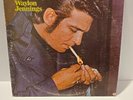
Rare EX-condition copy of Waylon Jennings’ “This Time,” personally AUTOGRAPHED by Waylon himself. 1974 RCA Victor APL1-0539 Indianapolis pressing. Highly sought-after outlaw country collectible
Brought to you by ebay seller: vinylcounterattackrecords
Vinyl Counterattack Records / West Virginia, United States of America
Format & Label: Vinyl LP RCA Victor APL1-0539 Stereo
Title & SKU #: Waylon Jennings – This Time Vinyl LP RCA Victor APL1-0539 Stereo
Waylon Jennings – This Time
Featuring an AUTOGRAPHED 1974 apparent 1st Pressing copy of this LP set & the hit single “This Time”
Label: RCA Victor – APL1-0539
Format: Vinyl, LP, Album, Stereo, Indianapolis Pressing
Country: US
Released: 1974
Genre: Folk, World, & Country
Style: Country
Tracklist
A1 This Time
Written-By – Waylon Jennings
2:24
A2 Louisiana Women
Written-By – J.J. Cale
3:58
A3 Pick Up The Tempo
Written-By – Willie Nelson
2:29
A4 Slow Rollin' Low
Written-By – Billy Joe Shaver
2:42
A5 Heaven Or Hell
Written-By – Willie Nelson
1:37
B1 It's Not Supposed To Be That Way
Written-By – Willie Nelson
3:28
B2 Slow Movin' Outlaw
Written-By – Dee Moeller
3:35
B3 Mona
Written-By – Mirriam Eddy
2:46
B4 Walkin'
Written-By – Willie Nelson
2:23
B5 If You Could Touch Her At All
Written-By – Lee Clayton
3:02
Companies, etc.
Pressed By – RCA Records Pressing Plant, Indianapolis
Credits
Art Direction – Herb Burnette, Pinwheel Art Studios*
Bass – Duke Goff
Drums – Richie Albright
Harmonica – Don Brooks
Lead Guitar – Reggie Young
Liner Notes – John L. Smith
Photography By – Jack Music, Inc., John Donegan (2)
Piano, Organ – Dee Moeller, Jessi Colter
Piano, Organ, Trumpet – Kyle Lehning
Producer, Arranged By, Rhythm Guitar, Lead Guitar – Waylon Jennings
Producer, Lead Guitar – Willie Nelson
Rhythm Guitar – Larry Whitmore
Rhythm Guitar, Lead Guitar – Fred Newell
Steel Guitar, Dobro – Ralph Mooney
Willie Nelson appears courtesy of Atlantic Records.
Notes
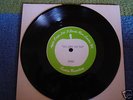
This version has orange RCA Victor labels. Another Indianapolis pressing exists with tan labels.
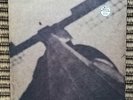
The back cover is AUTOGRAPHED in black magic marker: “To Stan” “Waylon Jennings” (hand-signed). The late “Stan” (affectionately known as “Uncle Stan”) was an avid New Jersey collector of thousands of vinyl records. His collection was multi-genre & multi-generational, mostly spanning the 1950s-1980s. This AUTOGRAPHED Waylon Jennings cover/jacket combined with an original, apparent 1974 1st Pressing album is most certainly a gem.
Matrix / Runout
Matrix / Runout (Side A Label, printed): APL10539-A 1S I
Matrix / Runout (Side B Label, printed): APL10539-B 1S I
Matrix / Runout (Side A, stamped with etched symbols): APL1 0539 A 1S I ⁄|⁄ǀ⁄|⁄ǀ⁄|⁄K A1
Matrix / Runout (Side B, stamped with etched symbols): APL1 0539 B 1S ⁄|⁄ǀ⁄|⁄ǀ⁄|⁄K I A3
Matrix / Runout (Engineer): ⁄|⁄ǀ⁄|⁄ǀ⁄|⁄K (Randy King)
Record Highlights
Released in 1974, This Time marks a key moment in Waylon Jennings’ creative evolution, bridging his earlier RCA sound with the outlaw movement he would soon define. The album leans heavily on songwriting from close collaborators Willie Nelson, Billy Joe Shaver, J.J. Cale, and Lee Clayton, giving it a stripped-down, road-hardened feel that stands in contrast to Nashville polish of the era.
Highlights include the defiant title track, Nelson’s “Pick Up The Tempo,” and the haunting “Slow Movin’ Outlaw,” all backed by a stellar lineup featuring Ralph Mooney on steel guitar and Richie Albright on drums. Pressed at RCA’s Indianapolis plant, this copy also carries a personal touch with a hand-signed inscription by Waylon Jennings on the back cover, making it a standout piece for collectors of classic outlaw country.
On top of all of that, this version has orange RCA Victor dynaflex labels. The back cover is AUTOGRAPHED in black magic marker: “To Stan” “Waylon Jennings” (hand-signed). The late “Stan” (affectionately known as “Uncle Stan”) was an avid New Jersey collector of thousands of vinyl records.
Vinyl Counterattack Records – Find your next treasure
MEDIA CONDITION: Excellent (EX) = A-
COVER CONDITION (See Photos): Excellent (EX) = A-
ULTRASONIC CLEANING CARE
* Vinyl media (record album) is in beautiful condition; it is clean, glossy shines & looks like it has rarely been played (plays well, too) * Cover/jacket is likewise in great condition for a vintage LP (with only minor signs of any storage wear); at a glance the vinyl and cover/jacket look almost as good as new * NOTE: Older vinyl records may present nominal analog vinyl surface noise, particularly on quiet songs; covers/jackets may have been cleaned & restored when deemed necessary * This RARE, 1974, iconic album contains some of the most notable work of Waylon Jennings before the Country “Outlaw” era, and is apparently an AUTOGRAPHED 1974 1st Pressing with future, potential collectable value * A great addition to the record collection of any vintage Country music and/or Waylon Jennings fan * Vinyl records make great gifts, too
ebay Seller: vinylcounterattackrecords
Vinyl Counterattack Records / West Virginia, United States of America
-----------------------------------------------------------------------
Vinyl Counterattack Records Grading Scale
Based, in part, on the Goldmine® Grading Guide…and equated to a traditional USA public school grading scale for more clarity (A, B, C, D, F)
MINT (M) = A+
These are perfect in every way. Often rumored but rarely seen, Mint is never used as a grade unless the record or sleeve truly is in this condition. We generally never use this grade unless the record is still sealed and unopened, unless the record set is Mint and recently unsealed.
NEAR MINT (NM OR M-) = A
A good description of a NM record is “it looks almost like it just came from a retail store and it was only recently opened.” In other words, it is nearly perfect. Many dealers will not use a grade higher than this, implying (perhaps correctly) that no record or sleeve is ever perfect.
NM records are shiny and clean, with no visible defects. Writing, stickers or other markings do not appear on the label, nor do significant “spindle marks” from someone trying to blindly put the record on the turntable. Major factory defects are absent; a record and label obviously pressed off center is not Near Mint. If played, it will do so with little to no surface noise. NM records do not have to be “never played”; a record used on an excellent turntable can remain NM after many plays if the disc is properly cared for. NM covers are free of creases, ring wear and seam splits of any kind.
NOTE: These are high standards, and they are not on a sliding scale. A record or sleeve from the 1950s must meet the same standards as one from the 1990s or 2000s to be Near Mint! It has been estimated that no more than 2 to 4 percent of all records remaining from the 1950s and 1960s are truly Near Mint.
EXCELLENT (EX) = A-
EX records are also generally shiny and clean, with almost no visible defects. Writing, stickers or other markings do not appear on the label, nor do significant “spindle marks” (only minor marks might be noticeable) from someone trying to blindly put the record on the turntable. Major factory defects also must be absent. If played, it will do so with only minor surface noise…perhaps not Near Mint, but still providing for an excellent listening experience. EX records have likely been rarely played and have obviously been properly cared for. EX covers may only have generally insignificant creases, minimum ring wear, and no seam splits of any kind. Many casual record collectors consider an EX record to be highly satisfactory, even though the record set is no longer brand new.
VERY GOOD PLUS (VG+) = B+ or B or B-
A good description of a VG+ record is “except for a couple minor things, this would be Near Mint.” Most collectors, especially those who want to play their records, will be happy with a VG+ record, especially if it toward the high end of the grade. Some VG+ records are almost as good as EX.
VG+ records may show some slight signs of wear, including light scuffs or noticeably light scratches that do not affect the listening experience very much. Slight warps that do not affect the sound are OK, and many of these go unnoticed by casual collectors. Minor signs of handling are OK, too, such as telltale marks around the center hole, but repeated playing has not misshapen the hole. There may be some noticeably light ring wear or discoloration, but it should be barely noticeable or (at least) not detracting from the general appearance.
VG+ covers should have only minor wear. A VG+ cover might have some very minor seam wear or a split (less than one inch long) at the bottom, the most vulnerable location. Also, a VG+ cover may have some defacing, such as a cut-out marking. Covers with cut-out markings can never be considered Near Mint, even if the record is a sealed, unopened discounted “cut-out.”
VERY GOOD (VG) = C+ or C or C-
Many of the imperfections found on a VG+ record are much more obvious on a VG record. That said, VG records, which usually sell at a significantly reduced price as compared to NM or EX or VG+ value, are among the biggest bargains in record collecting, because most of the “big money” goes for more perfect copies. For many listeners, a VG record or sleeve will be worth the money, especially if they are purchasing the record because they simply enjoy the music.
VG records have more obvious flaws than their counterparts in better shape. They lack most of the original gloss found on factory-fresh records. Groove wear is evident on sight, as are light scratches deep enough to feel with a fingernail. When played, a VG record has noticeable surface noise, and some scratches may be audible, especially in soft passages and during a song’s intro and ending. But the noise will not overpower the louder music otherwise.
Minor writing, tape or a sticker can detract from the label. Many collectors who have jukeboxes will use VG records in them and not think twice. They remain a fine listening experience, just not the same as if it were in better shape.
VG covers will have many signs of human handling. Ring wear in the middle or along the edges of the cover where the edge of a record would reside, is obvious, though not overwhelming. Some more creases might be visible. Seam splitting will be more obvious; it may appear on all three sides, though it will not be obvious upon looking. Someone might have written or it or stamped a price tag on it, too.
GOOD (G) = D
Good does not necessarily mean bad, but at Vinyl Counterattack Records we also consider the Good title somewhat misleading; it should be more like a public school grade of D. The record still plays through with little to no skipping, so it can serve as filler until something better comes along. But it has significant surface noise and groove wear, and the label may be worn, with significant ring wear, heavy writing, or obvious damage caused by someone trying to remove tape or stickers and failing. A Good cover has ring wear to the point of distraction, has seam splits obvious on sight, and may have even heavier writing, such as, for example, huge radio station letters written across the front to deter theft. If you have been seeking the title it for a long time, it is an opportunity to get it cheap and look to upgrade.
FAIR (F) and POOR (P) = F
Fair (F) and Poor (P) records have minimal value. These records are cracked, impossibly warped, or skip and/or repeat often when an attempt is made to play them. Covers may also be so heavily damaged that you consider replacing or discarding them. Only the most outrageously rare items would be attractive to anyone in this condition. At Vinyl Counterattack Records we refrain from selling any record sets of this grade unless they are extremely factory defective, but look otherwise almost new, and possibly a rare/fluke collector’s item. The rest of the F or P rated records go in the trash and we will not attempt to sell them.
price rating