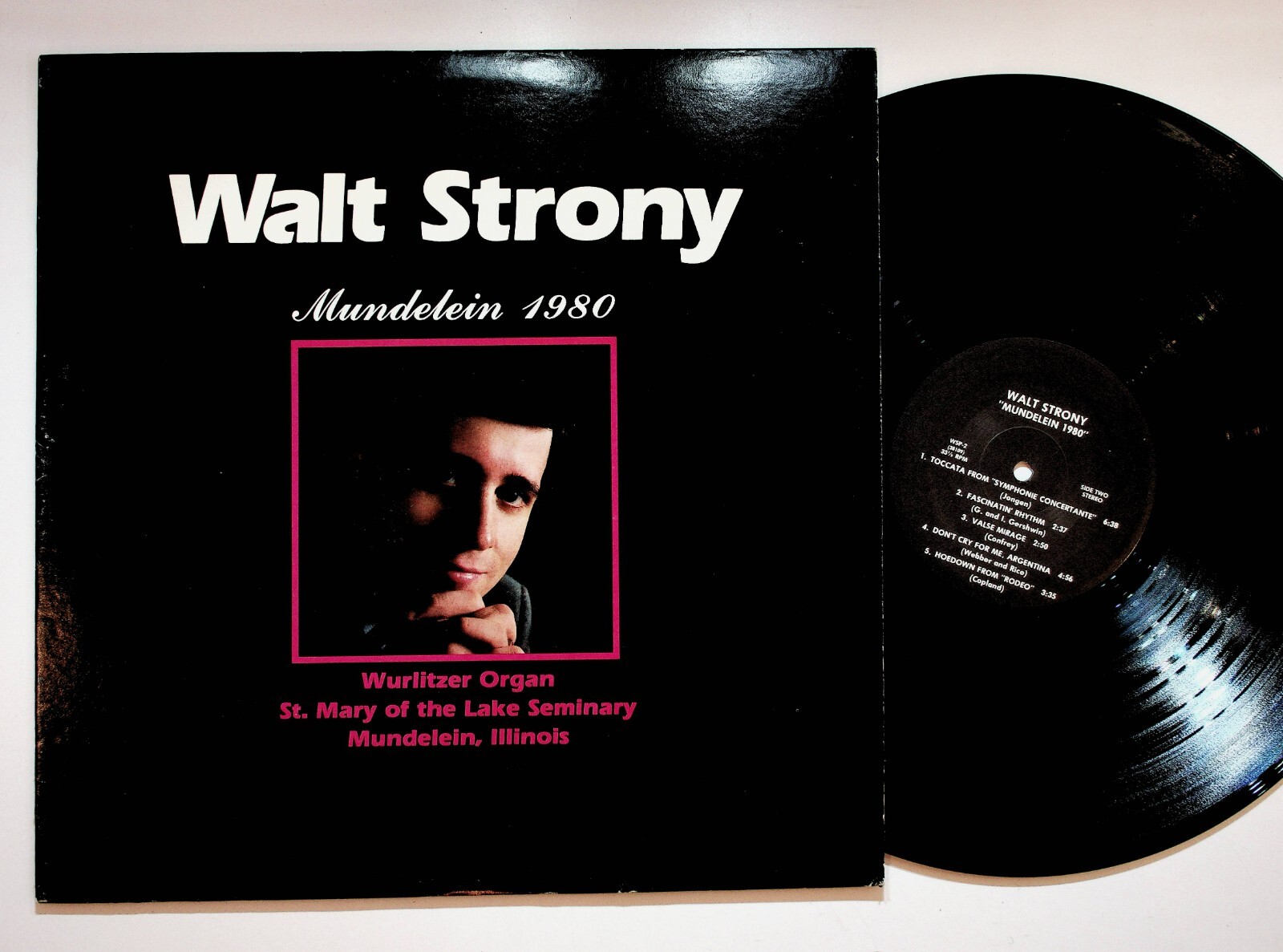
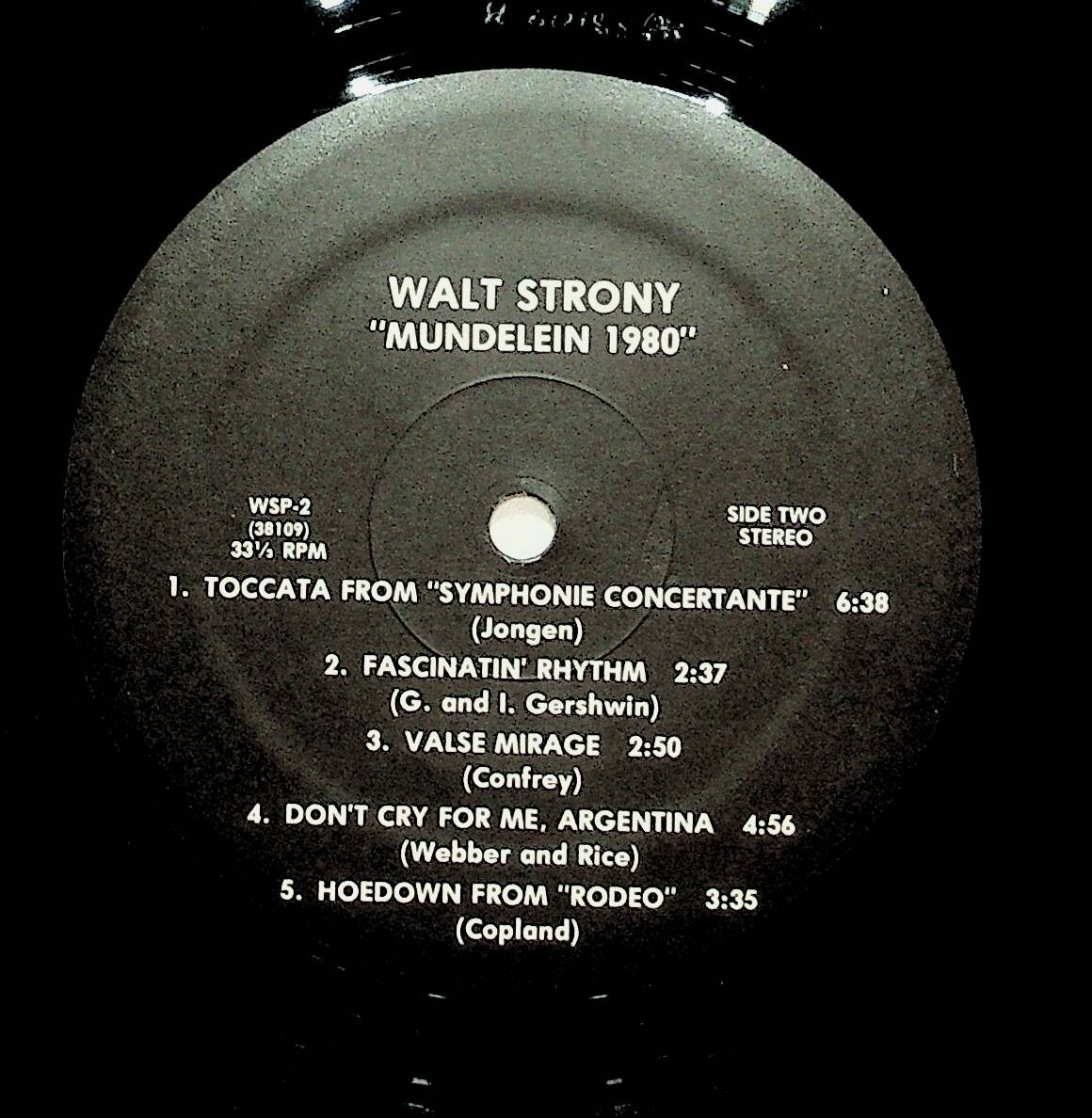
Walt Strony Mundelein 1980 Wurlitzer Organ Vinyl LP Record VG+
$
27


Favourite Auctions
To save auctions to your favourites, please login
If you don't have an account, please register
Description
Combined Shipping - Add items to cart
Walt Strony Mundelein 1980 Wurlitzer Organ Vinyl LP Record VG+
Vinyl / Jacket Grade Per Goldmine Standard: VG+ / VG+
Wurlitzer Organ St. Mary Of The Lake Seminary Mundelein, Illinois
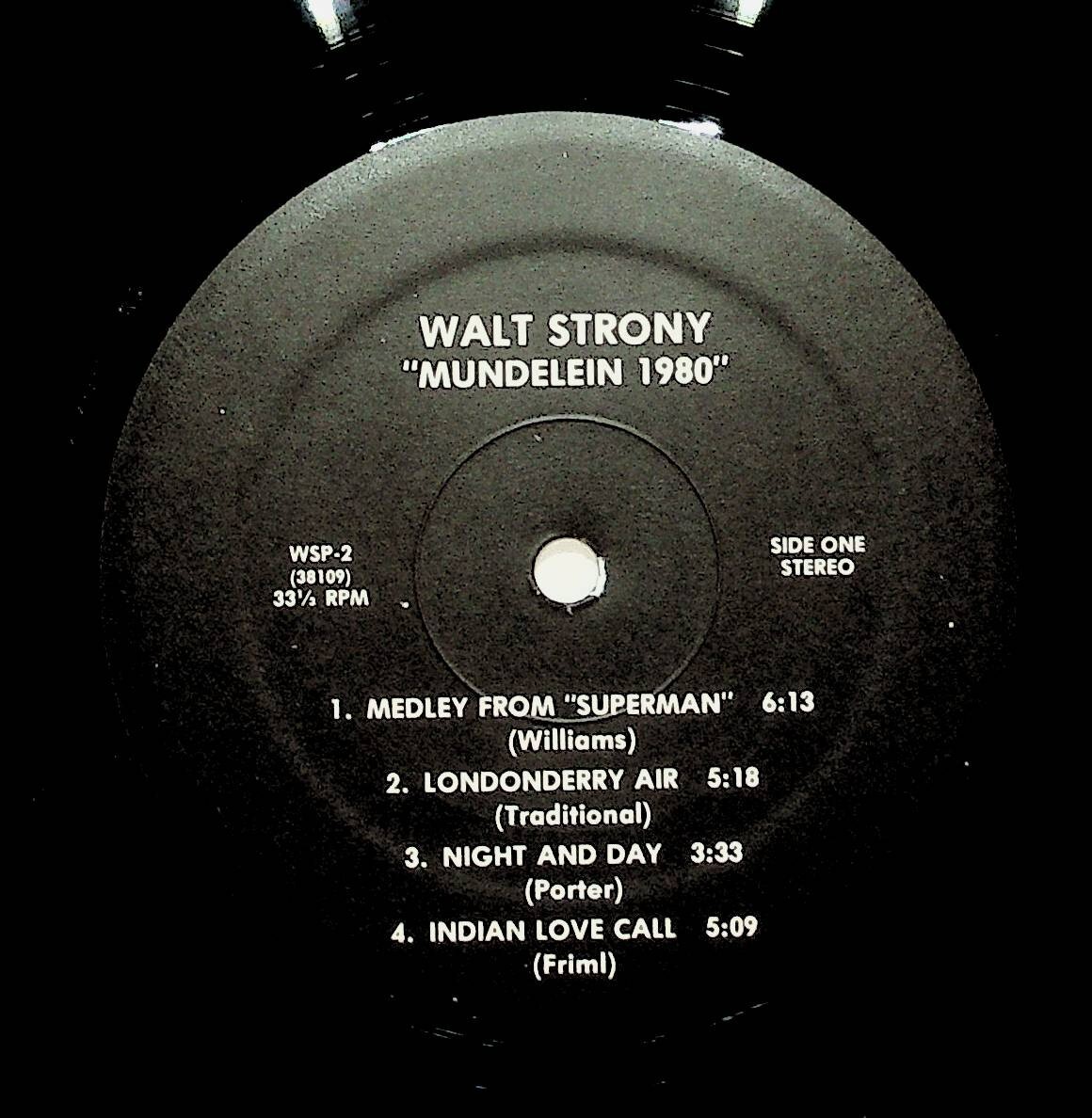
SIDE ONE 1. Medley from "Superman"—6:13................John Williams (Main Title and "Can You Read My Mind") 2. Londonderry Air—5:18...........................Traditional 3. Night and Day—3:33.............................Cole Porter 4. Indian Love Call—5:09.........................Rudolph Friml SIDE TWO 1. 2. 3. 4. Toccata from "Symphonie Concertante"—6:38....Joseph Jongen Fascinatin' Rhythm—2:37..............George and Ira Gershwin Valse Mirage—2:50.............................Zez Confrey Don't Cry For Me, Argentina........Andrew Lloyd Webber and from "Evita"—4:56 Tim Rice 5. Hoedown from "Rodeo"—3:35.................Aaron Copland Wherever I play, there are several questions that constantly get asked of me . .. Walt, what's your favorite song? . . . What do you like to play? .. . Who's your favorite composer? These are extremely difficult questions for me to answer. My taste in music runs the gamut from music of the pre-Bach period, to the great theater music of George and Ira Gershwin, to the ingenious harmonizations of George Shearing, and to the high-camp of the Village People. This brings to light the main reason that I find the theater organ to be an ideal means of expression . . . there's almost no limit to the amount of music that can be effectively performed on it. What I have attempted to do on this album is to play for you some of the music that I enjoy. You will notice that none of the selections have anything in common. This is the key to what I enjoy playing the most... a variety of music. Again, this is why I enjoy the theater organ. What other instrument is capable of doing so many things as well? Besides this, one can be his own arranger, conductor, and performer, all at the same time. The organ used on this recording is the four manual-nineteen rank Wurlitzer organ in the auditorium of St. Mary of the Lake Seminary in Mundelein, Illinois. This organ is very special to me, for it was the first modern theater organ that I ever heard. What a thrill for an eleven year oldl The high quality of the organ and of the musical presenta- tions I heard during those years were an inspiration. If these circumstances had not oc- cured, I may have ended up in an entirely different field than music. Back in those days, this organ was well ahead of its time. The well thought out and innovative tonal regulation, as well as its extensively unified stoprail made it an extremely unique instrument. Another point is the fact that during the Mundelein organ's prime days, many theater organists were still used to playing the many partial- ly inoperable theater organs in the Chicago area (and around the country) with all their dead notes, inoperable combination actions, air leaks, etc. By contrast, the Mundelein organ was in perfect shape. However, it is now 1980. Due to the efforts of the many chapters of the American Theater Organ Society and many other individuals, the theater organ in general has taken a long step. Some of them are still in theaters, perfectly restored. Many have been reinstalled in homes, new auditoriums, and pizza parlors. Hopefully, these new situations will allow many people to hear these instruments for many years to come. What about the Mundelein organ? After a few years of neglect (during which several of its choice ranks disappeared) it is now being maintained by the Chicago Chapter of the American Theater Organ Society. They have replaced many of the miss- ing ranks and other parts, and have presented it in several concerts. Those that remember the organ will still recognize that crisp, articulate Mundelein sound, and the stunning acoustics of the auditorium. Those acoustics are so stunning, that in order to get a natural recorded sound, it was virtually impossible to exclude the sounds of the combination action and a squeaky bench which reverberated throughout the hall I I would like to close by congratulating the Seminary and CATOE for their mutual efforts in restoring the organ and hope that they continue to see that it gets all the lov- ing attention that it deserves and needs. Most of all, I hope that many future genera- tions of organists can be as inspired by it as I was! ACKNOWLEDGEMENTS: ENGINEERING: Wade Bray MASTERING: Bob Burgland, Sound 80, Inc. PORTRAIT PHOTOGRAPHY: Paul Gittings ON LOCATION PHOTOGRAPHY: James Taggart and Alden Stockebrand Thanks to Bill Brown, Bill Hansen, John Peters, Fred Kruse, Gary Hanson, Tom Lind, Dorothy Frends, Cathy Manor, Pepsi-Cola, and McDonalds for all their help in making this album a reality. Sincere sympathy to those who experienced car trouble during the time this album was being recorded (that is a complete story in itselfl) SPECIAL THANKS to His Emminence, Cardinal John Patrick Cody, Archbishop of Chicago, Rev. Richard F. Schroeder, and Rev. Thomas R. Franzman for their cooperation in making this album possible. TECHNICAL INFORMATION: This recording was made with an Ampex 440B 2-track tape recorder, a microphone mixer custom- built by Wade Bray, and two AKG C414 condenser microphones. Tape-to-disc transfer was by Sound 80 in Minneapolis, using the LJ. Scully "The Lathe" with Ortofon cutter head and special Sound 80 drive amplifiers. This album is dedicated to the memory of Virgil Fox, who passed away just as this recording was about to be released. Words alone cannot express the effect that this man has had on the organ world. He will always be remembered through his many recordings, the many organists he inspired, and by the millions of people that heard him perform throughout his 55 year career. Mr. Strony's solo arrangement of the Jongen Toccata was inspired by the recording that Mr. Fox made of the work with the Paris Opera Orchestra, which is still available on the Angel label. All arrangements are by Walt Strony. Recorded during the hot, humid and rainy days of Labor Day weekend, 1980
Thank you for your business.
Gallimoresgoods
price rating