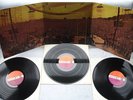
WEEZER (self-titled) Mobile Fidelity Sound Lab 180 gram High Definition vinyl
$
65





Favourite Auctions
To save auctions to your favourites, please login
If you don't have an account, please register
Description
Weezer (self-titled) Mobile Fidelity Sound Lab 180 gram Audiophile pressing MINT
Label:
Mobile Fidelity Sound Lab – MFSL 1-394Series:
GAIN 2™ Ultra Analog LP 180g Series, Original Master RecordingFormat:
Vinyl, LP, Album, Limited Edition, Numbered, Special Edition, Stereo, GatefoldCountry:
USReleased:
Jul 2013Genre:
RockStyle:
Alternative Rock, Power PopA1 Don't Let Go 2:59 A2 Photograph 2:19 A3 Hash Pipe 2:51 A4 Island In The Sun 3:20 A5 Crab 2:34
B1 Knock-Down Drag-Out 2:08 B2 Smile 2:38 B3 Simple Pages 2:56 B4 Glorious Day 2:40 B5 O Girlfriend 3:49
- Copyright © – Geffen Records
- Manufactured By Mobile Fidelity Sound Lab
- Mastered At – Mobile Fidelity Sound Lab
- Lacquer Cut At – Mobile Fidelity Sound Lab
- Pressed By – Record Technology Incorporated
- Bass, Vocals – Mikey Welsh
- Drums – Patrick Wilson
- Guitar, Vocals – Brian Bell
- Lacquer Cut By – KW
- Mastered By – Krieg Wunderlich
- Producer – Ric Ocasek
- Vocals, Guitar, Songwriter – Rivers Cuomo
Notes
Numbered limited edition, pressed on 180g vinyl housed in heavy cardboard stock gatefold sleeve.Even though not mentioned on release, track A3 (Hash Pipe) uses the UK 7" single edit.
℗ 2001, © 2013 Geffen Records. Manufactured by
Mastered by Krieg Wunderlich at Mobile Fidelity Sound Lab, Sebastopol, CA on The GAIN 2™ Ultra Analog System. Digital clone of original digital master to analog console to lathe.
Recorded at Cello Studios, Los Angeles, December 2000
Dedicated in loving memory to Mykel and Carli
Special Limited Edition (№ 000238)
- Matrix / Runout (Side A runout): MFSL1-394 A1 KW MoFi 20934.1(3)...
- Matrix / Runout (Side B runout): MFSL1-394 B1 KW MoFi 20934.2(3)...
Weezer Weezer (Green Album) on Numbered-Edition 180g 33RPM LP from Mobile Fidelity: Audiophile Pressing of 2001 Power-Pop Album Is Out of Print.
Band's Fastest-Selling Release Includes “Hash Pipe,” “Island in the Sun,” “Don’t Let Go”. This record launched one of most memorable comebacks in history
Weezer’s self-titled third album, collectively known as the Green Album, nearly never came to pass. The band had all but broken apart, with leader Rivers Cuomo choosing to go back to college and the other members dismayed at the initial reception to 1996’s Pinkerton. Persuaded at the turn of the century to return to the concert stage, the foursome launched one of the most enduring comeback stories in history, and in the process, penned 75 songs, the choicest of which grace 2001’s concise, tightly played Green Album.
Pressed on 180 gram High Definition vinyl at RTI, Mobile Fidelity’s reissue presents the music with by far the most dynamic range it’s ever enjoyed. Cars icon Ric Ocasek’s production comes into fuller relief, with guitar notes ringing with front-to-back depth and superb imaging. Cuomo’s singing gains focus and clarity, and the rhythms that help give the tunes their incessant catchiness are better defined, with the low end finally present.
That nearly everything on Green Album—from the cover to the producer to sonics—reflects those of Weezer’s blockbuster debut isn’t merely coincidence. The quartet, not yet realizing that Pinkerton had already become a cult classic (and, soon after, would be hailed as one of the most prized albums of its generation), intentionally pursued a back-to-basics approach that echoed its roots. Unadorned simplicity, skyscraper-sized hooks, and short-but-sweet arrangements are the hallmarks here, each a signpost on how rock albums can work their way into a listener’s head and provide limitless satisfaction.
Of course, however crucial, the music is just one component in Weezer’s arsenal. Akin to its sibling efforts, Green Album wouldn’t be the same devoid of Cuomo’s lyrics, which exude charming personality and boyish awkwardness. Absent the heart-on-a-sleeve obviousness of the fare of Pinkerton, the material here echoes with a related emotional universality whereby romantic yearning, fear of rejection, and getaway fantasies spark with the winking promise of enthusiasm and attainment. There’s a reason every passage remains so accessible; playfulness and wryness abound.
price rating

![WAYNE WADE / EVIL WOMAN [VIVIAN JACKSON PROPHETS label] LP](https://www.popsike.info/php/thumbnail.php?url=https://www.popsike.pics/pix/20170618/391819966525.jpg)