Varese Columbia-Princeton Electronic Music Center 10th Anniversary 2LP Box CRI
$
45


Favourite Auctions
To save auctions to your favourites, please login
If you don't have an account, please register
Description
Columbia-Princeton Electronic Music Center Tenth Anniversary Celebration
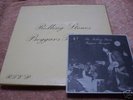
CRI SD 268 - two-LP Box Set with booklet and notes
1971
Electronic, Experimental
A1 Edgard Varèse – Déserts A2 Otto Luening – In The Beginning B1 Milton Babbitt – Vision And Prayer B2 Vladimir Ussachevsky – Computer Piece No. 1 B3 Vladimir Ussachevsky – Two Sketches For A Computer Piece C1 Pril Smiley – Kolyosa C2 Alice Shields – Transformation Of Ani D1 Bülent Arel – Stereo Electronic Music No. 2 D2 Mario Davidovsky – Synchronisms No. 5
Works composed between 1956 and 1971. Déserts performed by the Group for contemporary music at Columbia University conducted by Charles Wuorinen. Vision and prayer performed by Bethany Beardslee (soprano). Synchronisms No. 5 performed by a percussion ensemble conducted by Harvey Sollberger. Booklet with discography, bibliography, and biographical notes.
CRI SD 268 COLUMBIA-PRINCETON ELECTRONIC MUSIC CENTER TENTH ANNIVERSARY ALBUM Edgard Varèse: DÉSERTS (1954-1961) with newly-realized version of organized sound Group for Contemporary Music at Columbia University, Charles Wuorinen, conductor Otto Luening: IN THE BEGINNING from THEATER PIECE No. 2 (1956) Milton Babbitt: VISION AND PRAYER (1961) Bethany Beardslee, soprano Vladimir Ussachevsky: COMPUTER PIECE No. 1 (1968) TWO SKETCHES FOR A COMPUTER PIECE (1971) Pril Smiley: KOLYOSA (1970) Alice Shields: THE TRANSFORMATION OF ANI (1970) Bülent Arel: STEREO ELECTRONIC MUSIC No. 2 (1970) Mario Davidovsky: SYNCHRONISMS No. 5 (1969) Ray Des Roches, Richard Fitz, Claire Heidrich, Donald Marcone, Howard Van Hyning, percussion; Harvey Sollberger, conductor
-
DÉSERTS is the first large work using electronically recorded sounds composed by a man who has since become a major prophet of electronic music. Varèse began to gather and process the sounds as soon as he could find equipment capable of doing the job, and completed it during 1954 at the studios of the French Radio, upon the invitation of one of the pioneers in the field, Pierre Schaeffer. The world premiere was given by Hermann Scherchen and the Orchestre Nationale, Paris, December 2, 1954. The interpolations of organized sound were revised with the technical assistance of Bülent Arel in 1961 at the Columbia-Princeton Electronic Music Center. A new master was prepared especially for this recording by Mr. Arel. DÉSERTS consists of four instrumental sections and three interpolations of organized sound. In Varèse's own words: "The music given to the instrumental ensemble may be said to evolve in opposing planes and volumes, producing the sensation of movement in space." The mutation and movement of these "planes and volumes" are defined by intervals that are "not based on any fixed set ... such as a scale, a series," but "determined by the exigencies of this particular work." The interpolations are "based on what may be called raw sounds (friction, percussion, hissing, swishing, grinding, puffing)," electronically processed and then composed "to fit the pre-established plan of the work." Instrumental sounds, both new and quotes from the instrumental sections are electronically "combined with these sounds as a structural and stabilizing element."As for the title, DÉSERTS, Varèse wrote: “I had in mind not only all physical deserts (of sand, sea and snow, of outer space, of empty city streets) but also the deserts in the mind of man: not only those stripped aspects of nature that suggest barrenness, aloofness, timelessness, but also that remote inner space no telescope can reach, where man is alone, a world of mystery and essential loneliness."
EDGARD VAR?SE was born in Paris on December 22, 1883 and died in New York, where he lived most of his life, on November 6, 1965. He studied with Vincent d'Indy, Albert Roussel and Charles Widor. As a young composer he was befriended by Debussy, Richard Strauss and Ferruccio Busoni. Even as a student, he "began to think of music as spatial — as bodies of intelligent sounds moving freely in space" and conceived the idea of liberating music from the tempered scale and the limitations of musical instruments. In 1913 he met René Bertrand, from whom he later learned about the possibilities of electronics as a musical medium. As early as 1916, shortly after his arrival in New York, he said: "Our musical alphabet must be enriched. We also need new instruments . . . new mediums of expression." During the next decade or so, however, he was preoccupied with composing, conducting and directing the International Composers' Guild, which he founded in 1921 and which, during its six years of existence, gave world or American premieres of works by over fifty composers, among them Berg, Hindemith, Schoenberg, Stravinsky and Webern. Immediately after the closing of the Guild, he began discussing with Bertrand and Harvey Fletcher, then Acoustical Research Director of the Bell Telephone Laboratories, the possibilities of developing an electronic instrument for composing, but failed to gain any financial support for it. Meanwhile he worked on several projects, none completed, involving ideas that would require electronic means for their realization. Although Leon Theremin built to his specifications two instruments for Ecuatorial in 1933, it was not until twenty years later that he wrote his first electronic composition, the interpolations for DÉSERTS. Nevertheless, in conceiving music as sound organized yet set free, he made wholly original contributions and opened up new horizons, not in the '50s with his electronic works, but in the '20s and '30s with his works for conventional instruments. Thus, he anticipated today's musical developments by over a quarter-century. Aside from DÉSERTS he produced two other electronic works, Poème Electronique, for presentation at the Brussels World's Fair of 1958 in the Philips Pavilion designed by Le Corbusier, and the "electronically organized sound" for the Good Friday Procession in Verges sequence in the film, Around and About Juan Miró (1956) by Thomas Bouchard. —Chou Wen-chung
THEATER PIECE No. 2 was commissioned for Humphrey-Limon by the Juilliard Musical Foundation for the Festival of American Music in celebration of the founding of Juilliard School of Music. The opening of the ballet, "In the Beginning", expressed the contrast of the inchoate world and the emerging human element by juxtaposing a human voice against the electronic sound. In the original production, lights, movement and mobiles on stage added to the theatrical counterpoint. Three components are used in the work: electronic sound, instrumental sounds manipulated on tape, and a human voice recorded. The electronic sounds were made during a short visit at the Cologne Studio in 1955 through the courtesy of Herbert Eimert. The instrumental sounds were produced here and the material modified in our traveling laboratory which at this time had landed in my apartment at 405 W. 118th St. The voice is that of Ethel Luening's recording for New Music of Night Piece from my Suite for Soprano and Flute. The composition revolves around some easily recognizable tonal centers. It includes microtonal sequences, electronic sounds of varying character as well as the voice itself, singing without words. Depending on their character and relationships to preceding and following musical events, the sounds, including the voice, take place in a carefully planned time and pitch sequence so that they do not mask each other and can be readily perceived. The voice, of course, was introduced to express the human element as it emerged from the mysterious and rather cold beginning. —Otto Luening
VISION AND PRAYER, for soprano and synthesized accompaniment, was commissioned by the Fromm Foundation, composed in 1961, and first performed in September, 1961 by Bethany Beardslee, at a concert presented by the Fromm Foundation at the Congress of the International Musicological Society. The work was the first to combine live vocal performance with a tape produced entirely on the Mark II RCA Synthesizer. Dylan Thomas' poem, "Vision and Prayer", was first published in 1945, and consists of twelve "shaped" stanzas, each of the first six of which progresses from an initial line of a single syllable, by the addition of a syllable per line, to a syllabically maximal line of nine syllables, and then subtractively returns to a single syllabic line, The second group of six reverses the process, by progressing from an initial line of nine syllables to a center line of a single syllable, and then returning to the nine-syllable line. The temporal, sonic, and pattern characteristics of this poetic structure, as well as certain interpretations of these properties in strictly musical terms, were initial determinants of both musical details and the large-scale disposition of the compositional sections. The cumulative musical progression from these details to the sections, and to the totality of which these sections are members, is achieved by such traditional compositional procedures as trichordal and hexachordal derivation, harmonic succession through aggregates — within which the polyphony and the counterpoint are shaped by the properties of the work's third-order combinatorial set, and by the increased dimensionality — the refinements within and the compoundings of primary dimensions — easily and precisely afforded by the electronic medium. - Milton Babbitt
COMPUTER PIECE No. 1 and SKETCHES FOR A COMPUTER PIECE have one thing in common; they were "put together" in a conventional electronic music studio, using the sound material produced by way of the digital computers at the Bell Telephone Laboratories. It is likely that all known methods of generating sounds with the digital computer are illustrated in these two pieces. COMPUTER PIECE No. 1 was composed from three types of material: material initially generated on the digital computer GE 635 by a composer-physicist, Jean Claude Risset, and, in highly transformed form, used to create the beginning and closing sections of the piece; a succession of four-note clusters with spectrum characteristics of square-wave, originally synthesized for me by F. R. Moore; and material from several diversified "concrete" sound sources, such as recordings of a gong, of a distorted human speech, of a highly modulated passage on electronic organ, etc. These sounds, of 9 seconds to 20 seconds in duration, were converted from analogue-to-digital form, stored in the memory of the digital computer as "files", and then recalled and reconverted to analogue form in predetermined fragments by a special set of instructions. Were it not for the fact that the first set of materials was subjected by me to a post-computer modulation, using a Bode frequency shifter and reverberation at the Columbia-Princeton Electronic Music Center, the composition could have been programmed in its entirety on the digital computer. As such, it is an example of electronic music from computer-generated and computerprocessed sound materials, modified and assembled according to the usual methods employed in an electronic music studio. The method of producing sound material for SKETCHES FOR A COMPUTER PIECE was markedly different. A program caller GRØØVE, developed by Dr. Max Mathews and F. R. Moore, capable of creating, storing, reproducing, and editing functions of time was used. The computer was DDP224. The GRØØVE program makes it possible to produce the tunable succession of pitches in real time by playing a small keyboard connected to the computer. Additional controls in the form of ordinary small knobs and a set of foot-pedals for octave transpositions are available. The computer responds by providing voltages through digital-to-analogue converters to a set of Wavetek generators set in a saw-tooth position, and 3 amplifiers with one VC band-pass filter from the Moog synthesizer. In this manner all of the horn-like sound material was obtained. One, two, or three simultaneous sounds are possible. The tuning is in tempered pitch. A distinctly different method of computer-controlled, random production of untuned pitches, characterized by random amplitudes and either rigid or random rhythmic succession, was also used to obtain both the disjointed ping-like sounds and the rushing ostinato passages. An occasional sequence of softer percussion sounds, also from a special resonant circuit by Dr Mathews, and controlled through the keyboard, was employed as well. Only a moderate amount of timbre-modification was applied here and there. Otherwise, the material is largely in the form obtained in realtime sound production — a great advantage in employing the GROOVE program. I am deeply grateful to both Dr. Mathews and Mr. Moore for their assistance to me in both of the above compositions. —Vladimir Ussachevsky
price rating