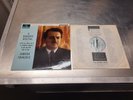
Van Morrison Moondance Warner Bros Seven Arts WS 1835 1970 W7 RARE Tambourine
$
27




Favourite Auctions
To save auctions to your favourites, please login
If you don't have an account, please register
Description
Van Morrison ?– Moondance Label: Warner Bros. - Seven Arts Records ?– WS 1835 Format: Vinyl, LP, Album, W7 Tambourine Country: US Released: 28 Feb 1970 Genre: Jazz, Rock, Funk / Soul, Folk, World, & Country Style: Folk Rock, Rhythm & Blues, Classic Rock, Contemporary Jazz Tracklist Hide Credits A1 And It Stoned Me 4:30 A2 Moondance 4:35 A3 Crazy Love Backing Vocals – Emily Houston, Jackie Verdell, Judy Clay 2:34 A4 Caravan 4:57 A5 Into The Mystic 3:25 B1 Come Running 2:30 B2 These Dreams Of You 3:50 B3 Brand New Day Backing Vocals – Emily Houston, Jackie Verdell, Judy Clay 5:09 B4 Everyone 3:31 B5 Glad Tidings 3:13 Credits Bass – John Klingberg Clavinet [Clavinette], Piano, Organ – Jeff Labes Congas – Guy Masson Drums, Vibraphone, Percussion – Gary Malaber* Guitar – John Platania Producer – Van Morrison Rhythm Guitar, Vocals, Tambourine – Van Morrison Soprano Saxophone, Alto Saxophone – Jack Schroer Tenor Saxophone, Flute – Collin Tillton* Notes On this W7 pressing (and all first pressings, whether W7 or WB logo) is featured a mix of 'Into The Mystic' in which Van Morrison can be heard playing tambourine. This mix was apparently Van's preferred mix, but due to a clerical error, all subsequent pressings (except a much later audiophile pressing) use a rejected version omitting the tambourine.
Moondance is the third studio album by Northern Irish singer-songwriter Van Morrison. It was released on 27 February 1970 by Warner Bros. Records. After the commercial failure of his first Warner Bros. album Astral Weeks (1968), Morrison moved to upstate New York with his wife and began writing songs for Moondance. There, he met the musicians that would record the album with him at New York City's A & R Studios in August and September 1969.
The album found Morrison abandoning the abstract folk jazz compositions of Astral Weeks in favor of more formally composed songs, which he wrote and produced entirely himself. Its lively rhythm and blues/rock music was the style he would become most known for in his career. The music incorporated soul, jazz, pop, and Irish folk sounds into songs about finding spiritual renewal and redemption in worldly matters such as nature, music, romantic love, and self-affirmation.
Moondance was an immediate critical and commercial success. It helped establish Morrison as a major artist in popular music, while several of its songs became staples on FM radio in the early 1970s. Moondance has since been cited by critics as one of the greatest albums of all time. In 2013, the album's remastered deluxe edition was released to similar acclaim.
After leaving the rock band Them, Morrison met record producer Bert Berns in New York City and recorded his first solo single, "Brown Eyed Girl", in March 1967 for Berns' Bang Records. When the producer unexpectedly died later that year, Morrison was offered a record deal by Warner Bros. Records executive Joe Smith, who had seen the singer perform at Boston's Catacombs nightclub in August 1968. Smith bought out Morrison's Bang contract, and he was able to record his first album for Warner Bros., Astral Weeks, that year.[1] Although it was later acclaimed by critics, its collection of lengthy, acoustic, revelatory folk jazz songs was not well received by consumers at the time and the album proved to be a commercial failure.
After recording Astral Weeks, Morrison moved with his wife, Janet Planet, to a home on a mountain top in the Catskills near Woodstock, a hamlet in upstate New York with an artistic community. According to Planet, he was influenced by Bob Dylan, who had just moved out of town when Morrison arrived. "Van fully intended to become Dylan's best friend", Planet recalled. "Every time we'd drive past Dylan's house ... Van would just stare wistfully out the window at the gravel road leading to Dylan’s place. He thought Dylan was the only contemporary worthy of his attention."
Morrison began writing songs for Moondance in July 1969. Because of Astral Weeks's poor sales figures, the singer wanted to produce a record that would be more accessible and appealing to listeners. "I make albums primarily to sell them and if I get too far out a lot of people can't relate to it", he later said. "I had to forget about the artistic thing because it didn't make sense on a practical level. One has to live." The musicians who went on to record Moondance with Morrison were recruited from Woodstock and would continue working with him for several years, including guitarist John Platania, saxophonist Jack Schroer, and keyboardist Jef Labes. The singer left after the Woodstock music festival in August attracted an influx of people to the area.
Morrison began recording sessions for Moondance at Century Sound in New York, accompanied by most of the musicians from Astral Weeks and its engineer Brooks Arthur.[4] Lewis Merenstein—Moondance's executive producer—had brought in Astral Weeks session musicians Richard Davis, Jay Berliner, and Warren Smith, Jr. for the first session, but Morrison—according to Platania—"sort of manipulated the situation" and "got rid of them all. For some reason he didn't want those musicians."[9] In place of these jazz-influenced musicians were a horn section and chorus enlisted by Morrison, who Merenstein recalled had grown more confident, outspoken, and independent of the producer.[4] Around this time, the singer made it known to Warner Bros. that he would lead production duties for all his future recordings, which forced producers recruited by the label into assisting roles. It also led to frequent enlisting and dismissal of musicians to meet Morrison's creative vision.
Morrison went on to record Moondance at the Studio A penthouse of A & R Studios in New York from August to September 1969.[11] He entered A & R Studios with only the basic song structures written down and the songs' arrangements in his memory, developing the compositions throughout the album's recording. Without any musical charts, he received help with developing the music from Labes, Schroer, and flautist/saxophonist Collin Tilton.[5] "That was the type of band I dig", the singer recalled. "Two horns and a rhythm section — they're the type of bands that I like best."[12] According to biographer Ritchie Yorke, all of the "tasteful frills" were generated spontaneously and developed at the studio.[5] Most of Morrison's vocals were recorded live, and he later said that he would have preferred to record the entire album live.[5] Shelly Yakus—one of the audio engineers who recorded the singer—remembered him being "very quiet and really introverted" in the studio, "yet when he sang it was a 'Holy Shit!' moment."[11]
Moondance was the first album for which Morrison was credited as the producer; he later said "no one knew what I was looking for except me, so I just did it."[5] While not an overbearing presence among the record's personnel, the singer later conceded to creating an atmosphere of artistic autonomy during the sessions: "When I go into the studio, I'm a magician. I make things happen. Whatever is working in that particular space at that particular time, I use, I take advantage of."[10]
Music and lyrics For Moondance, Morrison abandoned the abstract folk compositions of Astral Weeks in favor of rhythm and blues sounds, formally composed songs, and more distinct arrangements that included a horn section and chorus of singers as an accompaniment.[13] The album found Morrison using more traditional melodic figures, which VH1 editor Joe S. Harrington said lent the songs a "rustic and earthy" quality.[14] In Robert Christgau's opinion, Moondance showed the singer integrating his style of Irish poetry into popular song structure while expanding on Astral Weeks' "folk-jazz swing" with lively brass instruments, innovative hooks, and a strong backbeat.[15] The songs were generally arranged around Morrison's horn section; music journalist John Milward called it "that rare rock album" on which the solos were performed by the saxophonist rather than the guitarist.[16] In The Rolling Stone Album Guide (1992), Paul Evans observed upbeat soul music, elements of jazz, and ballads on what he considered a "horn-driven, bass-heavy" record.[17] Rob Sheffield said it debuted the musical style Morrison would become known for—a "mellow, piano-based" fusion of jazz, pop, and Irish folk styles.
Morrison's lyrics on Moondance deal with themes of spiritual renewal and redemption.[20] It departed from Astral Weeks' discursive, stream-of-consciousness narratives as the singer balanced his spiritual ideas with more worldly subject matter, which biographer Johnny Rogan felt offered the record a quality of "earthiness".[21] As a counterpart to Astral Weeks, AllMusic critic Jason Ankeny believed it "retains the previous album's deeply spiritual thrust but transcends its bleak, cathartic intensity" by rejoicing in "natural wonder".[20] According to Christgau, the essence of Morrison's spirit was, much like the African-American music that inspired him, "mortal and immortal simultaneously: this is a man who gets stoned on a drink of water and urges us to turn up our radios all the way into the mystic."[15] His "giddy" preoccupation with "natural wonder" on the album was a product of the new approach to composition and the mellow feel of his new band, Harrington said. In his opinion, the record's exuberant spirit and theme of self-affirmation were partly inspired by the singer having "settled into a life of domestic bliss".[22] Musicologist Brian Hinton argued that Morrison was celebrating a "natural alternative" in his music after quitting soft drugs around this time because they had impeded his productivity.[23]
The opening song, "And It Stoned Me", was written about feelings of ecstasy received from witnessing and experiencing nature, in a narrative describing a rural setting with a county fair and mountain stream. Morrison said he based it on a quasi-mystical experience he had as a 12 year old fishing in the Comber village of Ballystockart, where he once asked for water from an old man who said he had retrieved it from a stream. "We drank some and everything seemed to stop for me", the singer recalled, adding that it induced a momentary feeling of quietude in him. According to Hinton, these childhood images foreshadowed both spiritual redemption and—in Morrison's reference to "jellyroll" in the chorus—sexual pleasure.[23] AllMusic's Tom Maginnis argued that the singer was instead likening the experience to the first time hearing jazz pianist Jelly Roll Morton.[24] The largely acoustic title track featured piano, guitar, saxophone, electric bass, and a flute over-dub backing Morrison, who sang of an adult romance set in Autumn and imitated a saxophone with his voice near the song's conclusion. "This is a rock musician singing jazz, not a jazz singer, though the music itself has a jazz swing", Hinton remarked, noting how its rhythm is played in triplets rather than rock's archetypical quadruple time signature.[25] "Crazy Love" was recorded with Morrison's voice so close to the microphone that it captured the click of Morrison's tongue hitting the roof of his mouth as he sang.[26] He sings in falsetto, producing what Hinton felt was a sense of intense intimacy, backed by a female chorus.[27]
Some songs used a three-piece chorus of backup singers that featured Emily Houston (pictured in 1975). "Caravan" and "Into the Mystic" were cited by Harrington as examples of Morrison's interest in "the mystifying powers of the music itself" throughout Moondance.[14] The former song thematizes music radio and gypsy life—which fascinated the singer—as symbols of harmony.[27] Harrington called it an ode to "the transcendent powers of rock 'n' roll and the spontaneous pleasures of listening to a great radio station", while biographer Erik Hage regarded it as "a joyful celebration of communal spirit, the music of radio, and romantic love".[28] "Into the Mystic" reconciles Moondance's R&B style with the more orchestrated folk music of Astral Weeks, along with what Evans described as "the complimentary sides of Morrison's psyche".[17] Harrington believed it explores "the intricate balance between life's natural wonder and the cosmic harmony of the universe".[14] Hinton said the song evoked a sense of "visionary stillness" shared with "And It Stoned Me" and the gypsy imagery of "Caravan", while working on several other interpretive levels. Its images of setting sail and water in particular represented "a means of magical transformation" for the writer, comparable to Alfred Lord Tennyson's poems of leave-taking such as "Crossing the Bar", which had "the same sense of crossing over, both to another land and into death". The lyrics also deal with "the mystical union of good sex", and an act of love Hinton said was intimated by Morrison's closing vocal "too late to stop now"—a phrase the singer would use to conclude his concerts in subsequent years.[29]
"Come Running" was described by Morrison as "a very light type of song. It's not too heavy; it's just a happy-go-lucky song." By contrast, Hinton found the song's sentiments tender and lustful in the vein of the 1967 Bob Dylan song "I'll Be Your Baby Tonight". He argued that "Come Running" juxtaposed images of unstoppable nature—wind and rain, a passing train—against "which human life and death play out their little games", and in which the narrator’s and his lover’s dream will not end "while knowing of course it will".[30] According to the writer, "These Dreams of You" manages to be simultaneously accusatory and reassuring. The lyrics cover such dream sequences as Ray Charles being shot down, paying dues in Canada, and "his angel from above" cheating while playing cards in the dark, slapping him in the face, ignoring his cries, and walking out on him. Morrison said he was inspired to write "Brand New Day" after hearing The Band on the radio playing either "The Weight" or "I Shall Be Released": "I looked up at the sky and the sun started to shine and all of a sudden the song just came through my head. I started to write it down, right from 'When all the dark clouds roll away'."[31] Yorke quoted Morrison as saying in 1973 that "Brand New Day" was the song that worked best to his ear and the one with which he felt most in touch.[32]
Along with "Brand New Day", "Everyone" and "Glad Tidings" form a closing trio of songs permeated by what John Tobler called "a celebratory air, bordering on spiritual joy".[8] Labes opened "Everyone" by playing a clavinet figure in 6 8 time. A flute comes in, playing the melody after Morrison has sung four lines, with Schroer playing the harmony underneath on soprano saxophone. Although Morrison says the song is just a song of hope, Hinton says its lyrics suggest a more troubled meaning, as 1969 was the year in which The Troubles broke out in Belfast.[31] The final track, "Glad Tidings", has a bouncy beat but the lyrics, like "Into the Mystic", remain largely impenetrable, according to Hinton. In his opinion, "the opening line and closing line, 'and they'll lay you down low and easy', could be either about murder or an act of love."[33] In Hage's opinion, "'Glad Tidings' was a premonition of the future, as for the next four decades, Morrison would continue to use a song here and there to vent about the evils of the music industry and the world of celebrity."[34]
price rating