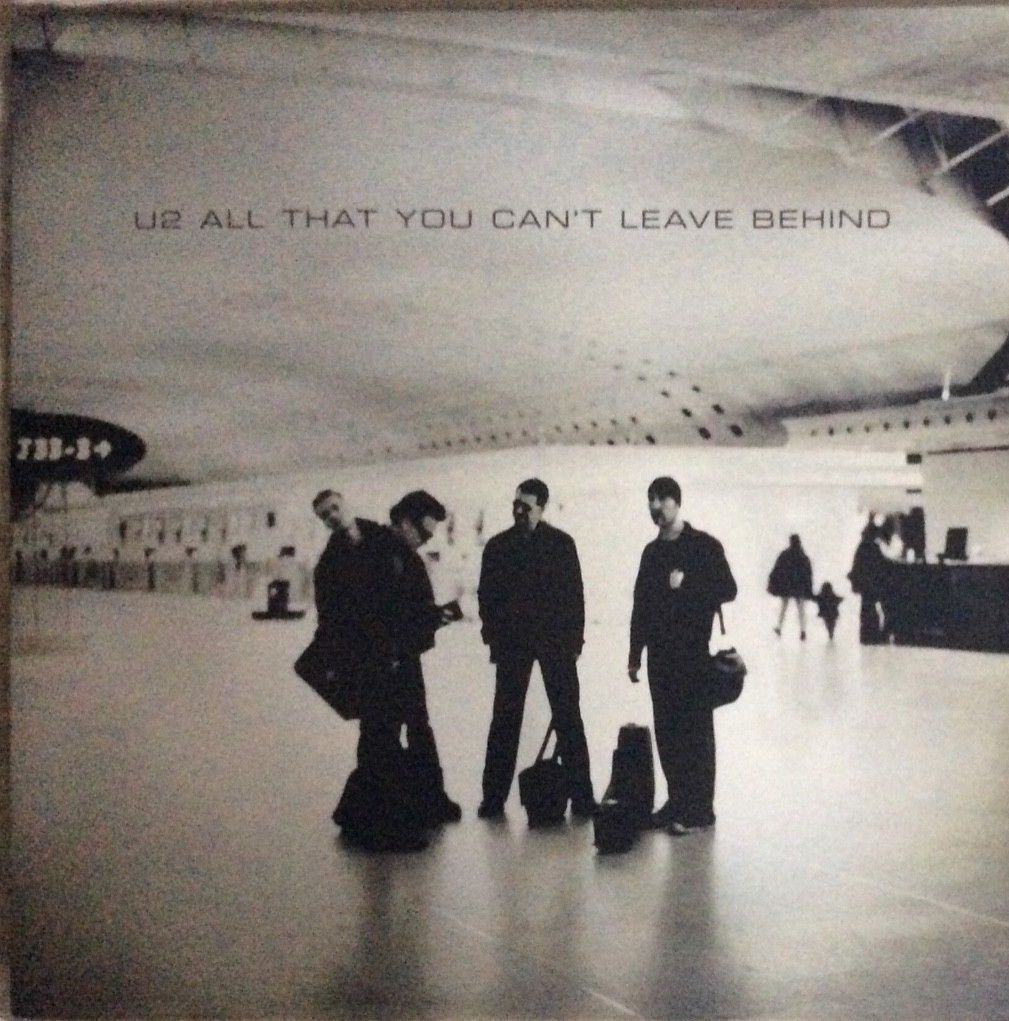
U2 all that you can’t leave behind LP 1st pressing Mint
£
65
$
86


Favourite Auctions
To save auctions to your favourites, please login
If you don't have an account, please register
Description
You are bidding on a Mint copy of the 1st pressing of this U2 album
All That You Can't Leave Behind is the tenth studio album by Irish rock band U2. It was produced by Brian Eno and Daniel Lanois, and was released on 30 October 2000 through Island Records and Interscope Records. Following the mixed reception to their 1997 album, Pop, All That You Can't Leave Behind represented a return to a more mainstream sound for the band after they experimented with alternative rock and dance music in the 1990s. At the time of the album's release, U2 said on several occasions that they were "reapplying for the job ... [of] the best band in the world". U2 brought back Eno and Lanois, who had produced three of the band's previous albums. The album was originally named "U2000", which had been a working title for their PopMart Tour.
All That You Can't Leave Behind Studio album by U2 Released 30 October 2000 Recorded 1998–2000 Studio- HQ (Dublin)
- Windmill Lane Studios(Dublin)
- Westland Studios (Dublin)
- Totally Wired (Dublin)
- South of France
- Island
- Interscope
- Daniel Lanois
- Brian Eno
(1998) All That You Can't Leave Behind
(2000) Elevation 2001: Live from Boston
(2001) Singles from All That You Can't Leave Behind
- "Beautiful Day"
Released: 9 October 2000 - "Stuck in a Moment You Can't Get Out Of"
Released: 29 January 2001 - "Elevation"
Released: 12 June 2001 - "Walk On"
Released: 19 November 2001
All That You Can't Leave Behind received favourable reviews from critics and sold over 12 million copies. The songs "Beautiful Day", "Walk On", "Elevation", and "Stuck in a Moment You Can't Get Out Of" were all successful singles. The record and its songs won seven Grammy Awards; it is the only album in history to have multiple tracks win the Grammy Award for Record of the Year: "Beautiful Day" in 2001 and "Walk On" in 2002. In 2003, the album was ranked number 139 on Rolling Stone magazine's list of "The 500 Greatest Albums of All Time", but it was re-ranked at number 280 in 2012. The supporting Elevation Tour, on which the band returned to playing arenas with a more intimate stage design, was also a critical and commercial success.
Contents
Writing and recordingEdit
Throughout the 1990s, U2 experimented with alternative rock and electronic dance music, culminating with their 1997 album Pop and the accompanying PopMart Tour. Guitarist the Edge said that with Pop, the band had "taken the deconstruction of the rock 'n' roll band format to its absolute 'nth degree."[4] However, following the poor reception to the album and tour, the band wished to return to song arrangements that consisted almost entirely of guitar, bass, and drums, and to quickly regroup in the studio after the tour. They reunited with producers Brian Eno and Daniel Lanois, who also produced their albums The Unforgettable Fire, The Joshua Tree and Achtung Baby.
Although the band wanted to write new material before beginning recording sessions, Eno convinced them to quickly write songs in the studio. For three weeks in late 1998, U2, Eno, and Lanois recorded demos in Hanover Quay Studios. One of the few quality ideas that stemmed from these brief sessions was the song "Kite". Lead singer Bono's vocals inspired everyone in the studio, particularly after he had been suffering from vocal problems for the previous few years. U2 thought they would have a new record completed in time for 1999. After the band's brief demo sessions, The Edge worked alone on song ideas before the band reunited at Hanover Quays. They recorded with the mentality of a "band in a room playing together", an approach that led to the album's more stripped-down sound.
Bono's involvement in the Jubilee 2000 campaign prevented him from dedicating all of his time to the album's recording, something Eno thought was a distraction. There was also a two-month break in the sessions when Bono collaborated with Lanois and Hal Wilner on the Million Dollar Hotel film soundtrack. The band had thought they could complete the album for 1999, but the sessions ran long, with band members' conflicting schedules playing a large part in the delay. U2 did not want to put a deadline on completing the album after their experience with Pop, which had to be rushed to completion into order to meet the deadline set by their pre-booked PopMart Tour.
In the summer of 1999, bassist Adam Clayton and drummer Larry Mullen, Jr. bought houses in the South of France, in order to be near Bono and The Edge's homes so they could have a place to both "work and play". That year, a bag holding personal papers and a laptop computer containing lyrics for the album was taken from Bono's car, which was parked outside Dublin's Clarence Hotel, which is owned by Bono and The Edge. Bono offered a reward of £2,000 for the return of the computer. An Irish man returned the laptop after having bought it for £300 thinking it was from a reputable source. He realized it was Bono's when he saw a picture of the singer's child Elijah Bob on the screen, prompting him to contact U2's management.
The band have said that All That You Can't Leave Behind was an album that acknowledged the band's past. For example, there was a big debate amongst the band members during the writing and recording of "Beautiful Day"; The Edge was playing with a guitar tone that he had not used much since their 1983 album War and the band wanted something more forward-looking. The Edge won out and the tone made it into the final studio version of the song. Additionally, although the record was described as "a return to the traditional U2 sound", many songs were complex and retained elements of the band's 1990s experimenting; Beautiful Day" features an electronic drum beat, and the song's intro features an "electronification of the [chorus] chords with a beat box and a string part"; New York" came together when the band members were away at a meeting and Lanois and Eno were playing around with a drum loop that Mullen had recorded. The album's recording wrapped up in 2000.
price rating