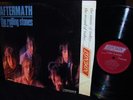
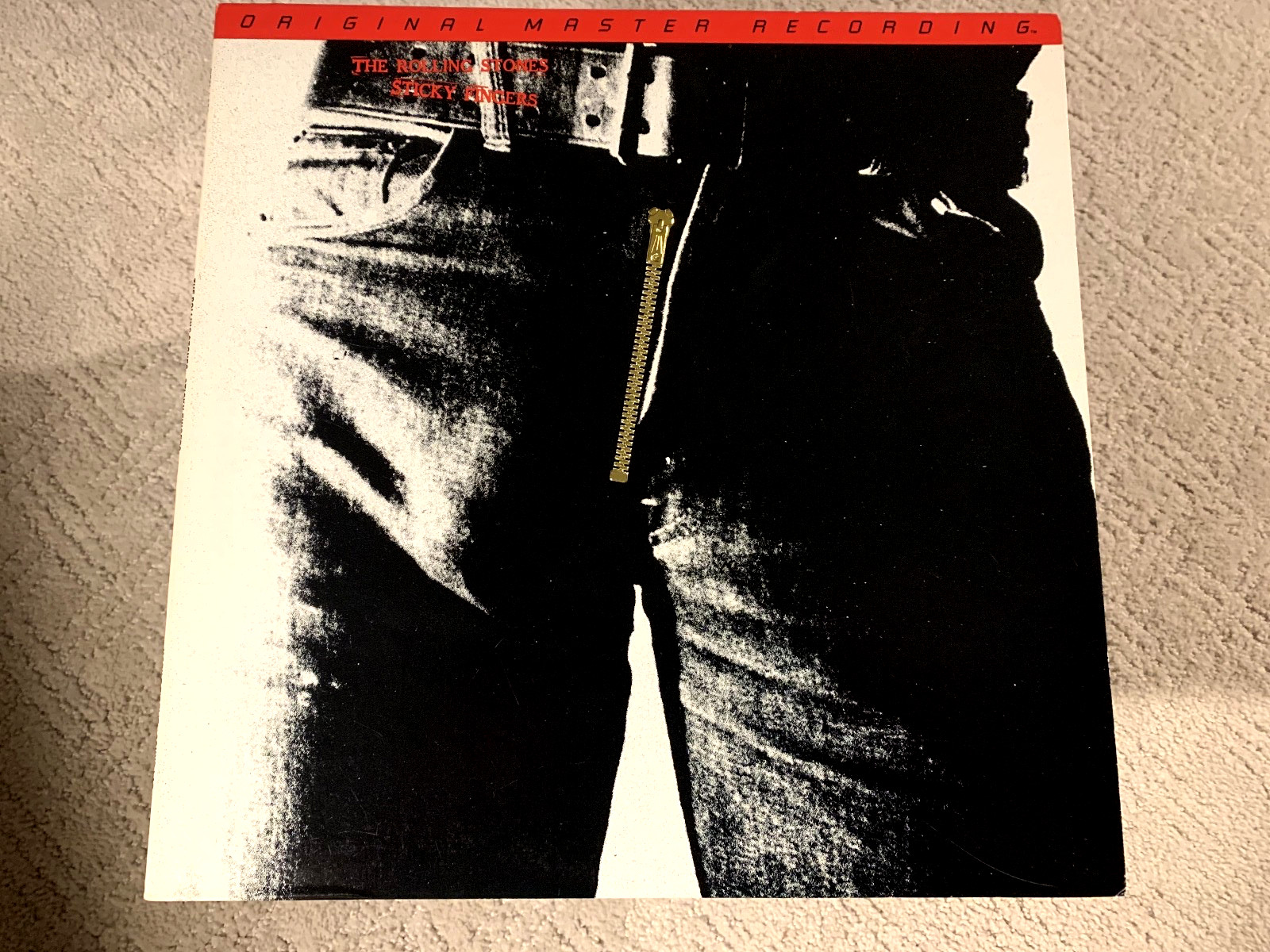
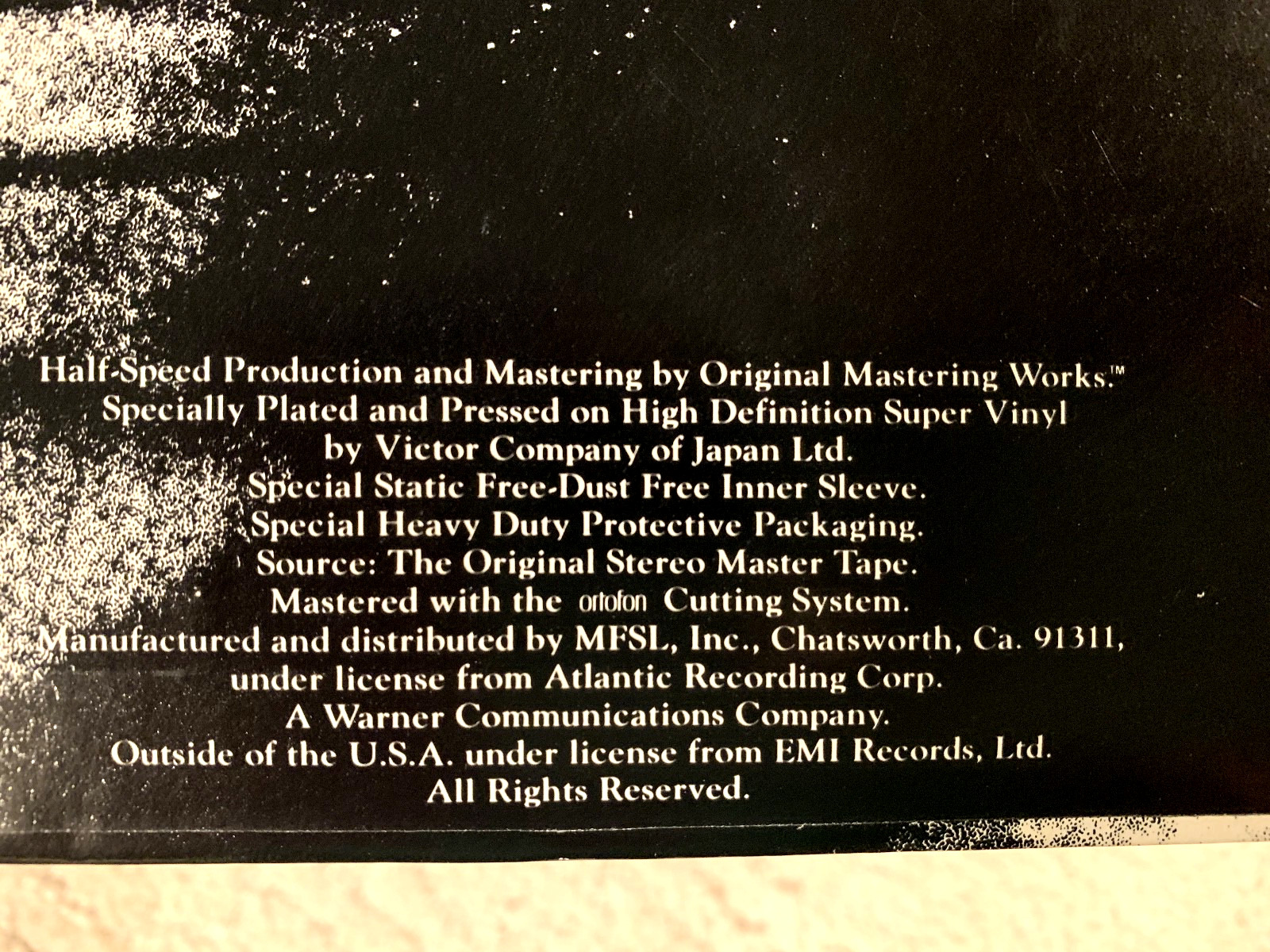
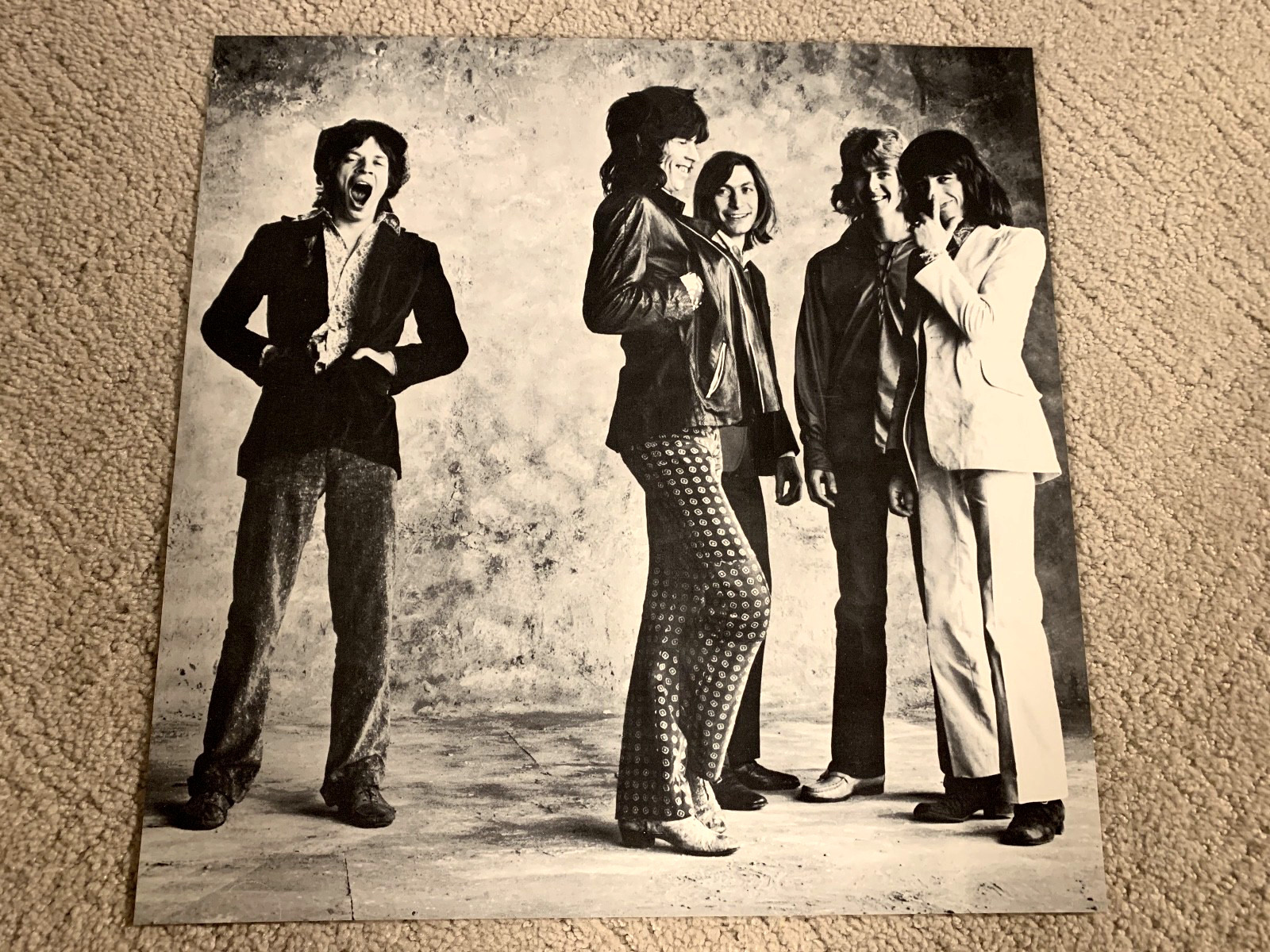
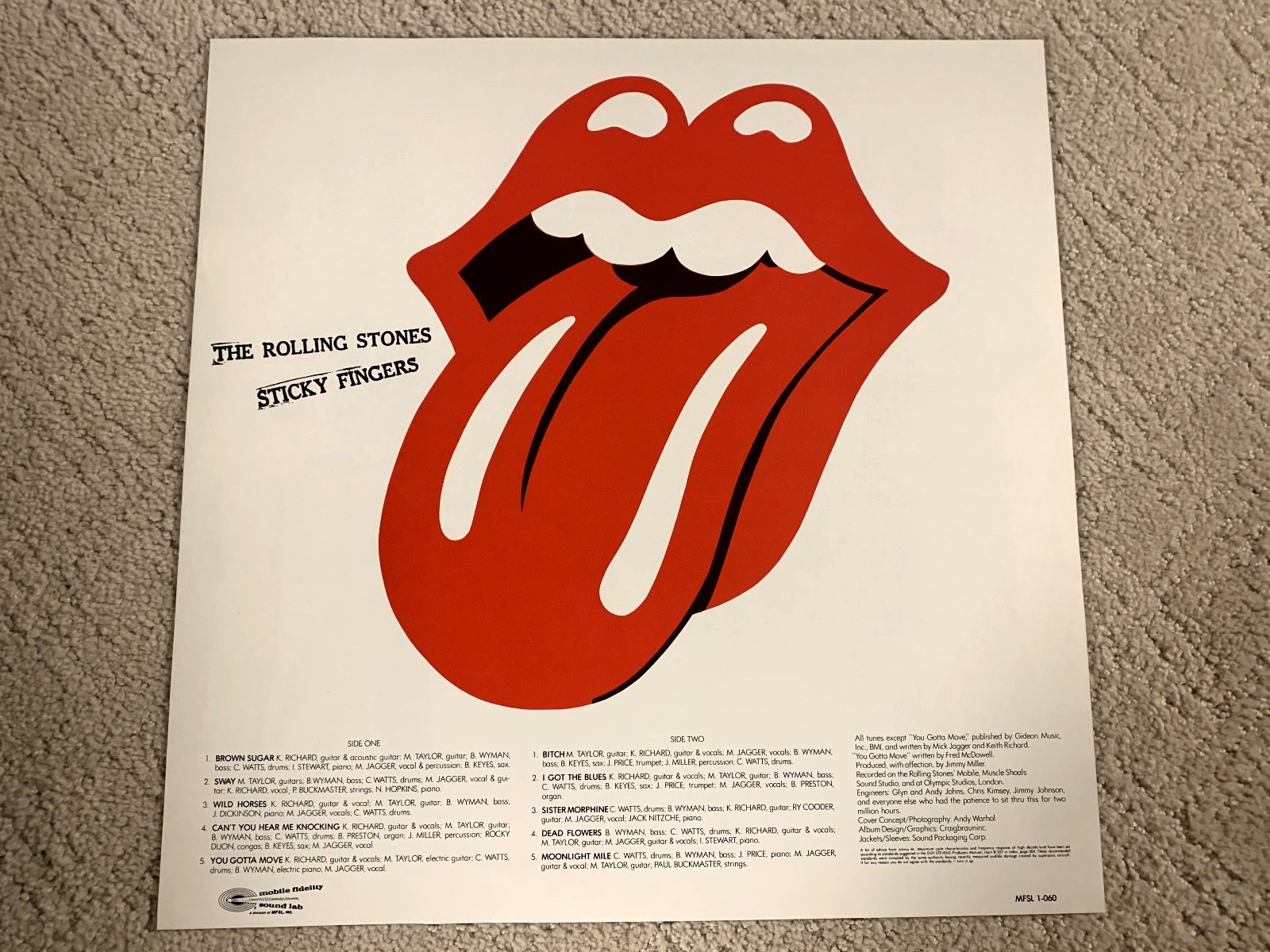
The Rolling Stones, "Sticky Fingers," 1981 Mobile Fidelity Ltd. Ed. Japan Press
$
89

Favourite Auctions
To save auctions to your favourites, please login
If you don't have an account, please register
Description
Dr. John’s Spin Factory invites you to consider (reconsider?) one dynamite sounding album made by one of the longest performing bunch of R&R bad boys in history, The Rolling Stones. Sticky Fingers, the Stones’ iconic 1971 album with cover art conceived and designed by pop artist Andy Warhol featured a close-up photo of a man in tight jeans with an actual working zipper, which, when unzipped, revealed actual underwear underneath! As cartoon character Rocky (of Rocky and Bullwinkle) used to exclaim, “Hokey Smokes!” And let’s be clear. The cover art, though salacious on its own, is milk toast compared to many of the lyrics within. Here is AllMusic’s Thomas Erlewine to explain and backfill…
Pieced together from outtakes and much-labored-over songs, Sticky Fingers manages to have a loose, ramshackle ambience that belies both its origins and the dark undercurrents of the songs. It's a weary, drug-laden album -- well over half the songs explicitly mention drug use, while the others merely allude to it -- that never fades away, but it barely keeps afloat. Apart from the classic opener, "Brown Sugar" (a gleeful tune about slavery, interracial sex, and lost virginity, not necessarily in that order), the long workout "Can't You Hear Me Knocking" and the mean-spirited "Bitch," Sticky Fingers is a slow, bluesy affair, with a few country touches thrown in for good measure. The laid-back tone of the album gives ample room for new lead guitarist Mick Taylor to stretch out, particularly on the extended coda of "Can't You Hear Me Knocking." But the key to the album isn't the instrumental interplay -- although that is terrific -- it's the utter weariness of the songs. "Wild Horses" is their first non-ironic stab at a country song, and it is a beautiful, heart-tugging masterpiece. Similarly, "I Got the Blues" is a ravished, late-night classic that ranks among their very best blues. "Sister Morphine" is a horrifying overdose tale, and "Moonlight Mile," with Paul Buckmaster's grandiose strings, is a perfect closure: sad, yearning, drug-addled, and beautiful. With its offhand mixture of decadence, roots music, and outright malevolence, Sticky Fingers set the tone for the rest of the decade for the Stones.
As an aside, if you’re a bit more intrigued with how this album of wildly divergent songs and styles came to be, get your hands on the book, “Sound Man,” by British recording engineer Glyn Johns. It’s a fabulous read, as Johns (engineer for Sticky Fingers) describes moments like Keith Richards sleeping on the recording studio floor because he was stoned out of his mind.
All of that insider blather aside, there are a few critical details the potential purchaser of this album needs to understand. In bulleted list form, here they are:
- Especially after ultrasonic cleaning using the Kirmuss system, 95% of the music truly sounds absolutely awesome—NM to M. One reason, like all early MOFI releases, this one was pressed in Japan. The vinyl is mostly super quiet. The sound quality is something from analog heaven. (Also note that early MOFI discs pressed in Japan were not numbered.)
- However, on one song there are 2 or 3 small scratches that you will hear. That one song, “Sister Morphine,” earns a rating of VG.
- How bad are the clicks and pops in "Sister Morphine?" First, there are no skips or huge, jolting snaps. Meaning, they’re not awful, just annoying, and the record plays through the damage. Plus, most of them go by within the first two minutes of the song. However, as I listened to “Sister Morphine” repeatedly, it occurred to me that the clicks and pops almost work with the subject matter of the song. Let me explain: This song tells a pretty dark story involving a junkie being taken by ambulance to hospital for the explicit purpose of “scoring.” So, after a fashion, after multiple spins, to me the audible damage to the vinyl began to feel like a rather apt metaphor, as it amplifies the dark, damaged, self-inflicted, human suffering the song describes. (Now there’s some kind of lousy reframe, don’t you think?)
- I have walked you through all this because it leads to: I have no idea how to price this record. It is not an easy to find record in anything like NM condition. And, for every song on the album, other than "Sister Morphine" of course, I have never heard a copy of Sticky Fingers with the clarity, low-end punch, dynamics, staging, and naturalness of voices and instruments as this one. Meaning, 95% of the music on this album sounds NM to M, and that 95% is just totally exciting.
- Regarding shipping: I ship all previously opened and played records (such as this) with the record in its sleeve outside of the record jacket. I place both the empty jacket and the disc in its sleeve inside a plastic slipcover. This prevents the disc from sliding around inside the jacket during shipment, which can cause damage to the jacket's spine. This has happened to me frequently over the years of mail order purchases. (Really--a vinyl disc can slice right through the spine of its jacket given enough jostling.)
Good luck! May your brain fully tune into the music and fully tune out the clicks and pops! (It's the big challenge with vinyl, is it not?) Dr. John
price rating