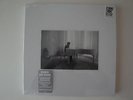
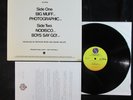
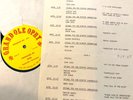
The Brotherhood 45 Hey Good Lookin' Mike Finnigan SERFS
$
39


Favourite Auctions
To save auctions to your favourites, please login
If you don't have an account, please register
Description
This next auction cycle deals with several very obscure Psych and Rock, Titles, most unplayed PROMO 45's. I've seen several of these on peoples want-lists and such. These are untouched promos in the original jackets. Generally in MINT condition. If not, I will specify in the ad title the condition of the 45. These are all no-reserve auctions starting at .99 and most likely all will sell, and certainly get multiple bids, so don't let your gem get away. Thanks for stopping by!
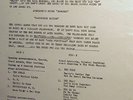
On Jan-12-08 at 07:32:42 PST, seller added the following information:Here's an ultra-rare track from The Brotherhood, a band that was very cool and may have only recorded this one demo! The group was full of class "A" musicians that later made their mark, but in 1970 were still unknown. Here is an interview with Mike Finnigan.
4) I read somewhere that Jerry Hahn Brotherhood played at the Fillmore East. What are your memories of that gig?
As it happens, I just saw Jerry Hahn on July 6 in Portland, Oregon. I played a blues festival there with the amazing Etta James and Jerry, who now lives in Portland, showed up at the gig. It was wonderful to see him again. I don’t remember much about playing the Fillmore East. I believe we were on a bill with Chicago. Keep in mind that you’re asking about events that took place over thirty years ago! I’d like to say that working with Jerry Hahn was a marvelous experience for me. He is a tremendous musician and a generous man. The other two members of the band, Mel Graves (bass), and George Marsh (drums), are just wonderful musicians. They are both currently teaching music at Sonoma State University. At the risk of seeming immodest, I believe that the Brotherhood was an innovative group. I believe we were, if not the first, certainly at the forefront of the so-called "fusion" movement.
In 1970, he launched the Jerry Hahn Brotherhood.
An eclectic quartet with Mike Finnigan on Hammond B-3 organ and vocals, Mel Graves on bass and George Marsh on drums, the Brotherhood released a promising debut on Columbia and toured behind it to great acclaim. Before the term “jazz-rock fusion” was coined, Hahn and his colleagues were already practicing it.
“I had a trio with George Marsh and Mel Graves, and we were all jazz players, but we had some other influences. We had some rock influences, also. But then we brought in Mike Finnigan, who played B-3 and just sang great.” Finnigan, who had been living in Wichita since the early 1960s, moved to San Francisco at Hahn’s behest, bringing with him material written by former bandmate Lane Tietgen that had never been recorded.
“It was just a combination of this expert, seasoned jazz musicianship along with this great-sounding Mike Finnigan voice with this great material and Mike playing Hammond B-3 organ. We thought we’d just throw all that stuff together and stir it up and see what came out!” Hahn readily acknowledges the band’s contribution to contemporary music, noting that German jazz authority Joachim Berendt described the Jerry Hahn Brotherhood as one of the “trailblazers of rock-jazz integration.”
"Miles (Davis) gets most of the credit, but we were right there beside Miles at the exact same time,” Hahn said. “It was the same type of a thing. We were borrowing from all different kinds of influences and styles and putting them into another context, and had a unique sound.”
But, as with so many great ideas, the Jerry Hahn Brotherhood lasted only a year. The rigors of the road took their toll, but Hahn blames something more insidious for the band’s premature demise.
“The reason why that band didn’t stick together was our management was crooked. I knew this, and I wanted to change, but I couldn’t get an agreement with everybody else. So, I left and the band broke up, and then everybody found out I was right.” Columbia allowed the band’s sole recording to go out of print, and the company retains ownership of this valuable collector’s item.
“I’ve actually talked to them, trying to buy it, but they don’t want to give it up,” Hahn said. “They still have all the masters stored somewhere up in New York.”
After the breakup of the Brotherhood, Hahn returned to Wichita, where he founded the guitar program and taught for 15 years at Wichita State University. He also began writing a regular column for Guitar Player magazine that inspired a popular jazz guitar method book published by Mel Bay.
price rating