The Beatles "Eight Days A Week" 7" 5371 John Lennon Paul McCartney
$
23


Favourite Auctions
To save auctions to your favourites, please login
If you don't have an account, please register
Description
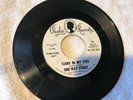
The Beatles "Eight Days A Week" 7" Capitol Records 5371 (US)
Out of Print!!
Record is VG+, Jacket is VG+
Track Listing:
A Eight Days A Week 2:43 B I Don't Want To Spoil The Party 2:38The Beatles were an English rock band, formed in Liverpool in 1960, and one of the most commercially successful and critically acclaimed acts in the history of popular music. From 1962, the group consisted of John Lennon (rhythm guitar, vocals), Paul McCartney (bass guitar, vocals), George Harrison (lead guitar, vocals) and Ringo Starr (drums, vocals). Rooted in skiffle and 1950s rock and roll, the group later worked in many genres ranging from pop ballads to psychedelic rock, often incorporating classical and other elements in innovative ways. The nature of their enormous popularity, which first emerged as "Beatlemania", transformed as their songwriting grew in sophistication. They came to be perceived as the embodiment of ideals of the social and cultural revolutions of the 1960s.
Initially a five-piece line-up of Lennon, McCartney, Harrison, Stuart Sutcliffe (bass) and Pete Best (drums), they built their reputation playing clubs in Liverpool and Hamburg over a three-year period from 1960. Sutcliffe left the group in 1961, and Best was replaced by Starr the following year. Moulded into a professional outfit by their manager, Brian Epstein, their musical potential was enhanced by the creativity of producer George Martin. They achieved mainstream success in the United Kingdom in late 1962, with their first single, "Love Me Do". Gaining international popularity over the course of the next year, they toured extensively until 1966, then retreated to the recording studio until their break-up in 1970. Each then found success in independent musical careers. Lennon was murdered outside his home in New York City in 1980, and Harrison died of cancer in 2001. McCartney and Starr remain active.
During their studio years, they produced what critics consider some of their finest material including the album Sgt. Pepper's Lonely Hearts Club Band (1967), widely regarded as a masterpiece. They are the best-selling band in the history of popular music, and four decades after their break-up, their recordings are still in demand. They have had more number one albums on the UK charts, and held down the top spot longer, than any other musical act. According to the RIAA, they have sold more albums in the United States than any other artist. The Beatles placed number one on Billboard magazine's fiftieth-anniversary list of all-time top Hot 100 artists in 2008. They have received 7 Grammy Awards from the American National Academy of Recording Arts and Sciences and 15 Ivor Novello Awards from the British Academy of Songwriters, Composers and Authors. They were collectively included in Time magazine's compilation of the 20th century's 100 most influential people.
A Hard Day's Night, Beatles for Sale, Help! and Rubber SoulCapitol Records' lack of interest throughout 1963 had not gone unnoticed, but a competitor, United Artists Records, encouraged United Artists' film division to offer The Beatles a motion picture contract in the hope that it would lead to a record deal. Directed by Richard Lester, A Hard Day's Night had the group's involvement for six weeks in March–April 1964 as they played themselves in a boisterous mock-documentary. The film premiered in London and New York in July and August, respectively, and was an international success. The Observer's reviewer, Penelope Gilliatt, noted that "the way The Beatles go on is just there, and that's it. In an age that is clogged with self-explanation this makes them very welcome. It also makes them naturally comic." According to Allmusic, the accompanying soundtrack album, A Hard Day's Night, saw them "truly coming into their own as a band. All of the disparate influences on their first two albums had coalesced into a bright, joyous, original sound, filled with ringing guitars." That "ringing guitar" sound was primarily the product of Harrison's 12-string electric Rickenbacker, a prototype given him by the manufacturer, which made its debut on the record. Harrison's ringing 12-string inspired Roger McGuinn, who obtained his own Rickenbacker and used it to craft the trademark sound of The Byrds.
Beatles for Sale, the band's fourth studio album, saw the emergence of a serious conflict between commercialism and creativity. Recorded between August and October 1964, the album had been intended to continue the format established by A Hard Day's Night which, unlike the band's first two LPs, had contained no cover versions. Acknowledging the challenge posed by constant international touring to the band's songwriting efforts, Lennon admitted, "Material's becoming a hell of a problem". Six covers from their extensive repertoire were included on the album. Released in early December, its eight self-penned numbers nevertheless stood out, demonstrating the growing maturity of the material produced by the Lennon-McCartney partnership.
In April 1965, Lennon and Harrison's dentist spiked their coffee with LSD while they were his guests for dinner. The two later deliberately experimented with the drug, joined by Starr on one occasion. McCartney was reluctant to try it, but eventually did so in 1966, and later became the first Beatle to discuss it publicly.
Controversy erupted in June 1965 when Elizabeth II appointed the four Beatles Members of the Order of the British Empire (MBE) after Prime Minister Harold Wilson nominated them for the award. In protest—the honour was at that time primarily bestowed upon military veterans and civic leaders—some conservative MBE recipients returned their own insignia.
The US trailer for Help! with (from the rear) Harrison, McCartney, Lennon and (largely obscured) StarrThe Beatles' second film, Help!, again directed by Lester, was released in July. Described as "mainly a relentless spoof of Bond", it inspired a mixed response among both reviewers and the band. McCartney said, "Help! was great but it wasn't our film—we were sort of guest stars. It was fun, but basically, as an idea for a film, it was a bit wrong." The soundtrack was dominated by Lennon, who wrote and sang lead on most of its songs, including the two singles: "Help!" and "Ticket to Ride". The accompanying album, the group's fifth studio LP, again contained a mix of original material and covers. Help! saw the band making increased use of vocal overdubs and incorporating classical instruments into their arrangements, notably the string quartet on the pop ballad "Yesterday". Composed by McCartney, "Yesterday" would inspire the most recorded cover versions of any song ever written. The LP's closing track, "Dizzy Miss Lizzy", became the last cover the band would include on an album. With the exception of Let It Be's brief rendition of the traditional Liverpool folk song "Maggie Mae", all of their subsequent albums would contain only self-penned material.
The Beatles' third US visit, on 15 August, opened with the first major stadium concert in history when they performed before a crowd of 55,600 at New York's Shea Stadium. A further nine successful concerts followed in other American cities. Towards the end of the tour the group were introduced to Elvis Presley, a foundational musical influence on the band, who invited them to his home. Presley and the band set up guitars in his living room, jammed together, discussed the music business and exchanged anecdotes. September saw the launch of an American Saturday morning cartoon series, echoing A Hard Day's Night's slapstick antics. Original episodes appeared for the next two years, and reruns aired through 1969.
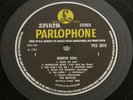
Rubber Soul, released in early December, was hailed by critics as another major step forward in the maturity and complexity of the band's music. Biographer and music critic Ian MacDonald observes that with Rubber Soul, they "recovered the sense of direction that had begun to elude them during the later stages of work on Beatles for Sale". After Help!'s foray into the world of classical music with flutes and strings, Rubber Soul's introduction of a sitar on "Norwegian Wood (This Bird Has Flown)" marked a further progression outside the traditional boundaries of rock music. The album also saw Lennon and McCartney's collaborative songwriting increasingly supplemented by distinct compositions from each (though they continued to share official credit). Their thematic reach was expanding as well, embracing more complex aspects of romance and other concerns. As their lyrics grew more artful, fans began to study them for deeper meaning. There was speculation that "Norwegian Wood" might refer to cannabis. In 2003, Rolling Stone magazine's "The 500 Greatest Albums of All Time" ranked Rubber Soul at number five, and the album is today described by Allmusic as "one of the classic folk rock records". According to both Lennon and McCartney, it was "just another album". Recording engineer Norman Smith saw clear signs of growing conflict within the group during the Rubber Soul sessions; Smith later said that "the clash between John and Paul was becoming obvious", and, "as far as Paul was concerned, George could do no right."
Revolver and Sgt. Pepper's Lonely Hearts Club BandRubber Soul had marked a major step forward; Revolver, released in August 1966 a week before The Beatles' final tour, marked another. Pitchfork identifies it as "the sound of a band growing into supreme confidence" and "redefining what was expected from popular music." Described by Gould as "woven with motifs of circularity, reversal, and inversion", Revolver featured sophisticated songwriting and a greatly expanded repertoire of musical styles ranging from innovative classical string arrangements to psychedelic rock. Abandoning the group photograph that had become the norm, its cover—designed by Klaus Voormann, a friend of the band since their Hamburg days—was a "stark, arty, black-and-white collage that caricatured The Beatles in a pen-and-ink style beholden to Aubrey Beardsley." The album was preceded by the single "Paperback Writer", backed by "Rain". The Beatles shot short promo films for both songs, described as "among the first true music videos", which aired on Top of the Pops and The Ed Sullivan Show.
Among Revolver's most experimental tracks was "Tomorrow Never Knows", for whose lyrics Lennon drew from Timothy Leary's The Psychedelic Experience: A Manual Based on the Tibetan Book of the Dead. The song's creation involved eight tape decks distributed about the recording studio building, each manned by an engineer or band member, who randomly varied the movement of a tape loop while Martin created a composite recording by sampling the incoming data. McCartney's "Eleanor Rigby" made prominent use of a string octet; it has been described as "a true hybrid, conforming to no recognizable style or genre of song." Harrison was developing as a songwriter, and three of his compositions earned a place on the record. In 2003, Rolling Stone ranked Revolver as the third greatest album of all time. During the US tour that followed, however, the band performed none of its songs. As Chris Ingham explains, they were very much "studio creations ... and there was no way a four-piece rock 'n' roll group could do them justice, particularly through the desensitising wall of the fans' screams. 'Live Beatles' and 'Studio Beatles' had become entirely different beasts." The final show, at San Francisco's Candlestick Park on 29 August, was their last commercial concert. It marked the end of a four-year period dominated by touring that included over 1,400 concert appearances internationally.
Freed from the burden of touring, the band's desire to experiment grew as they recorded Sgt. Pepper's Lonely Hearts Club Band, beginning in December 1966. Emerick recalled their insistence "that everything on Sgt. Pepper had to be different. We had microphones right down in the bells of brass instruments and headphones turned into microphones attached to violins. We used giant primitive oscillators to vary the speed of instruments and vocals and we had tapes chopped to pieces and stuck together upside down and the wrong way round." Parts of "A Day in the Life" required a forty-piece orchestra. Nearly seven hundred hours of studio time were devoted to the sessions. They first yielded the non-album double A-side single "Strawberry Fields Forever"/"Penny Lane" in February 1967; Sgt. Pepper followed in June. The musical complexity of the records, created using only four-track recording technology, astounded contemporary artists. For Beach Boys leader Brian Wilson, in the midst of a personal crisis and struggling to complete the ambitious Smile, hearing "Strawberry Fields" was a crushing blow and he soon abandoned all attempts to compete. Sgt. Pepper met with great critical acclaim. In 2003, Rolling Stone ranked it number one among its "500 Greatest Albums of All Time" and it is widely regarded as a masterpiece. Jonathan Gould describes it as
a rich, sustained, and overflowing work of collaborative genius whose bold ambition and startling originality dramatically enlarged the possibilities and raised the expectations of what the experience of listening to popular music on record could be. On the basis of this perception, Sgt. Pepper became the catalyst for an explosion of mass enthusiasm for album-formatted rock that would revolutionize both the aesthetics and the economics of the record business in ways that far outstripped the earlier pop explosions triggered by the Elvis phenomenon of 1956 and the Beatlemania phenomenon of 1963. Front cover of Sgt. Pepper's Lonely Hearts Club Band, "probably the most famous album cover in popular musical history"Sgt. Pepper was the first major pop album to include its complete lyrics, which were printed on the back cover. Those lyrics were the subject of intense analysis; fans speculated, for instance, that the "celebrated Mr K." in "Being for the Benefit of Mr. Kite!" might in fact be the surrealist fiction writer Franz Kafka. The American literary critic and professor of English Richard Poirier wrote an essay, "Learning from The Beatles", in which he observed that his students were "listening to the group's music with a degree of engagement that he, as a teacher of literature, could only envy." Poirier identified what he termed the "mixed allusiveness" of the material: "It's unwise ever to assume that they're doing only one thing or expressing themselves in only one style ... one kind of feeling about a subject isn't enough ... any single induced feeling must often exist within the context of seemingly contradictory alternatives." McCartney said at the time, "We write songs. We know what we mean by them. But in a week someone else says something about it, and you can't deny it. ... You put your own meaning at your own level to our songs". Sgt. Pepper's remarkably elaborate album cover also occasioned great interest and deep study. The heavy moustaches worn by the band swiftly became a hallmark of hippie style. Cultural historian Jonathan Harris describes their "brightly coloured parodies of military uniforms" as a knowingly "anti-authoritarian and anti-establishment" display.
On 25 June, the band performed their newest single, "All You Need Is Love", to TV viewers worldwide on Our World, the first live global television link. Appearing amid the Summer of Love, the song was adopted as a flower power anthem. Two months later the group suffered a loss that threw their career into turmoil. After being introduced to Maharishi Mahesh Yogi, they travelled to Bangor for his Transcendental Meditation retreat. During the retreat, Epstein's assistant Peter Brown called to tell them Epstein had died. The coroner ruled Epstein's death an accidental overdose, but it was widely rumoured that a suicide note had been discovered among his possessions. Epstein had been in a fragile emotional state, stressed by both personal issues and the state of his working relationship with the band. He worried that they might not renew his management contract, due to expire in October, based on discontent with his supervision of business matters. There were particular concerns over Seltaeb; the company that handled merchandising rights in the United States. Epstein's death left the group disorientated and fearful about the future. Lennon said later, "I didn't have any misconceptions about our ability to do anything other than play music and I was scared." He also looked back on Epstein's death as marking the beginning of the end for the group: "I knew that we were in trouble then. ... I thought, we've fuckin' had it now."
Magical Mystery Tour, White Album and Yellow SubmarineMagical Mystery Tour, the soundtrack to a forthcoming Beatles television film, appeared as a six-track double extended play disc (EP) in early December 1967. In the United States, the six songs were issued on an identically titled LP that also included tracks from the band's recent singles. Allmusic says of the US Magical Mystery Tour, "The psychedelic sound is very much in the vein of Sgt. Pepper, and even spacier in parts (especially the sound collages of 'I Am the Walrus')", and calls its five songs culled from the band's 1967 singles "huge, glorious, and innovative". It set a new US record in its first three weeks for highest initial sales of any Capitol LP, and it is the one Capitol compilation later to be adopted in the band's official canon of studio albums. Aired on Boxing Day, the Magical Mystery Tour film, largely directed by McCartney, brought the group their first major negative UK press. It was dismissed as "blatant rubbish" by the Daily Express, which described it as "a great deal of raw footage showing a group of people getting on, getting off, and riding on a bus".[159] The Daily Mail called it "a colossal conceit", while the Guardian labelled it "a kind of fantasy morality play about the grossness and warmth and stupidity of the audience". It fared so dismally that it was withheld from the US at the time. In January, the group filmed a cameo for the animated movie Yellow Submarine, a fantasia featuring cartoon versions of the band members. The group's only other involvement with the film was the contribution of several unreleased studio recordings. Released in June 1968, it was well received for its innovative visual style and humour, as well as its music. It would be seven months, however, before the film's soundtrack album appeared.
McCartney, Starr, Harrison and Lennon in the trailer for Yellow Submarine. Their cameo was filmed 25 January 1968, three weeks before they left for India.In the interim came The Beatles, a double LP popularly known as the White Album for its virtually featureless cover. Creative inspiration for the album came from an unexpected quarter when, with Epstein's guiding presence gone, the group turned to Maharishi Mahesh Yogi as their guru. At his ashram in Rishikesh, India, a three-month "Guide Course" became one of their most creative periods, yielding a large number of songs including most of the thirty recorded for the album. Starr left after ten days, likening it to Butlins, and McCartney eventually grew bored with the procedure and departed a month later. For Lennon and Harrison, creativity turned to questioning when Yanni Alexis Mardas, the electronics technician dubbed Magic Alex, suggested that the Maharishi was attempting to manipulate the group. After Mardas alleged that the Maharishi had made sexual advances to women attendees, Lennon was persuaded and left abruptly, taking the unconvinced Harrison and the remainder of the group's entourage with him. In his anger Lennon wrote a pointed song called "Maharishi", which he later modified to avoid a legal suit, resulting in "Sexy Sadie". McCartney said, "We made a mistake. We thought there was more to him than there was."
During recording sessions for the album, which stretched from late May to mid-October 1968, relations among the band's members grew openly divisive. Starr quit for a period, leaving McCartney to play drums on several tracks. Lennon's romantic preoccupation with avant-garde artist Yoko Ono contributed to tension within the band and he lost interest in co-writing with McCartney. Flouting the group's well-established understanding that they would not take partners into the studio, Lennon insisted on bringing Ono, whom Harrison disliked anyway, to all of the sessions. Increasingly contemptuous of McCartney's creative input, he began to identify the latter's compositions as "granny music", dismissing "Ob-La-Di, Ob-La-Da" as "granny shit". Recalling the White Album sessions, Lennon gave a curiously foreshortened summing-up of the band's history from that point on, saying, "It's like if you took each track off it and made it all mine and all Paul's... just me and a backing group, Paul and a backing group, and I enjoyed it. We broke up then." McCartney also recalled that the sessions marked the start of the break-up, saying, "Up to that point, the world was a problem, but we weren't". Issued in November, the White Album was the band's first Apple Records album release. The new label was a subsidiary of Apple Corps, formed by the group on their return from India, fulfilling a plan of Epstein's to create a tax-effective business structure. The record attracted more than two million advance orders, selling nearly four million copies in the US in little over a month, and its tracks dominated the playlists of American radio stations. Despite its popularity, it did not receive flattering reviews at the time. According to Jonathan Gould,
The Beatles, known as the White Album for its radically minimalist cover. Conceived by pop artist Richard Hamilton, it has been interpreted as suggesting both a "clean slate" and an ironic relationship with the avant-garde. The critical response ... ranged from mixed to flat. In marked contrast to Sgt. Pepper, which had helped to establish an entire genre of literate rock criticism, the White Album inspired no critical writing of any note. Even the most sympathetic reviewers ... clearly didn't know what to make of this shapeless outpouring of songs. Newsweek's Hubert Saal, citing the high proportion of parodies, accused the group of getting their tongues caught in their cheeks.General critical opinion eventually turned in favour of the White Album, and in 2003 Rolling Stone ranked it as the tenth greatest album of all time. Pitchfork describes it as "large and sprawling, overflowing with ideas but also with indulgences, and filled with a hugely variable array of material ... its failings are as essential to its character as its triumphs." Allmusic observes, "The Beatles' two main songwriting forces were no longer on the same page, but neither were George and Ringo"; yet "Lennon turns in two of his best ballads", McCartney's songs are "stunning", Harrison is seen to have become "a songwriter who deserved wider exposure" and Starr's composition is "a delight".
By now the interest in their lyrics was taking a serious turn. When Lennon's song "Revolution" had been released as a single in August ahead of the White Album, its messages seemed clear: "free your mind", and "count me out" of any talk about destruction as a means to an end. In a year characterized by student protests that stretched from Warsaw to Paris to Chicago, the response from the radical left was scathing. However, the White Album version of the song, "Revolution 1", added an extra word, "count me out ... in", implying a change of heart since the single's release. The chronology was in fact reversed—the ambivalent album version was recorded first—but some felt that Lennon was now saying that political violence might indeed be justifiable.
The Yellow Submarine LP finally appeared in January 1969. It contained only four previously unreleased songs, along with the title track (already issued on Revolver), "All You Need Is Love" (already issued as a single and on the US Magical Mystery Tour LP) and seven instrumental pieces composed by Martin. Because of the paucity of new Beatles music, Allmusic suggests the album might be "inessential" but for Harrison's "It's All Too Much", "the jewel of the new songs ... resplendent in swirling Mellotron, larger-than-life percussion, and tidal waves of feedback guitar ... a virtuoso excursion into otherwise hazy psychedelia".
All records are shipped in professional 7” & 12” box mailers. All CDs are shipped in padded bubble mailers. Buy multiple items and save on shipping. Thanks for Visiting!!
price rating