THE OSCAR PETERSON TRIO 'NIGHT TRAIN' ORIGINAL 1963 PUNCHY MONO VERVE V-8538
$
27


Favourite Auctions
To save auctions to your favourites, please login
If you don't have an account, please register
Description
THE OSCAR PETERSO TRIO NIGHT TRAIN' 1963 VERVE V-8538 RARE PUNCHY MONO
THE OSCAR PETERSON TRIO "NIGHT TRAIN" (OSCAR PETERSON, RAY BROWN, ED THIGPEN) LABEL: VERVE V-8538 RELEASED: EARLY 1963 ORIGINAL 1963 MONO (FIRST?) PRESSING RECORDED: DECEMBER 15th & 16th, 1962 ~ LOS ANGELES RECORDED: RADIO RECORDERS STUDIO ~ HOLLYWOOD, CA RECORD COMPANY: MGM RECORD MANUFACTURING DIVISION PRODUCER: NORMAN GRANZ RECORDING ENGINEER: VAL VALENTINE PETE TURNER COVER ART FANTASTIC LINER NOTES BY BENNY GREEN MATRIX (SIDE A): (Etched) V8538 SIDE 1 63VG144 MATRIX (SIDE B): (Etched) V8538 SIDE 2 63VG145
CONDITION: VINYL: VG++ JACKET: VG++ ORIGINAL INNER SLEEVE
I've been going thru my massive vinyl record collection these past few weeks and pulling out some LPs that I thought that someone else would want for their collection. I've been collecting records for over 45 years and it's time to pass some of them on to the next generation of collectors.
This week on EBay I am offering up this rare early 1963 original Mono pressing of 'Night Train' by the Oscar Peterson Trio that I've had in my collection for over 40 years. ~~~~~~~~~~~~~~~~~~~~~~~~
'Night Train' is one of the best and most popular jazz piano trio albums ever made, and deservedly so.
Across Oscar Peterson's long career and extensive discography, one album, this one, 'Night Train' really stands out from all the rest. It's one of the many masterpieces recorded by the classic Oscar Peterson Trio with Ray Brown on Bass and Ed Thigpen on Drums.
This classic jazz piano album Night Train was recorded by The Oscar Peterson Trio over 60 years ago in Los Angeles on December 15 and 16, 1962.
It features the iconic pianist's 'classic' trio and is the perfect example of what can be accomplished with a trio of gifted, virtuoso musicians. They take the accessible elements and melodies from traditional jazz standards, but transform them into modern, tight, swinging performances.
~~~~~~~~~~ The title of the album 'Night Train' was a nod to Oscar Peterson's father, who worked as a sleeper-car night attendant for the Canadian Pacific Railways. The album is dedicated to him.
The cover art photograph of a speeding locomotive is by Pete Turner
The back of the album has fantastic liner notes written by pianist Benny Green who was a member of Art Blakey's Jazz Messengers and a huge fan of Oscar Peterson. ~~~~~~~~
This is an original, 1963 MONO pressing. The Mono pressings of this album are much preferred over the more common Stereo version for technical reasons that I'll discuss below.
This is an original 1963 very early, possibly first pressing, with the early label variation showing the MGM Record Manufacturing Division pressing information.
The labels have the Mono catalog number, V/8538.
The vinyl comes in a modern poly-lined sleeve but this record includes it's original 1963 Verve Jazz inner sleeve.
This copy is likely as nice an original 1963 Mono pressing as you could ever expect to find. A vinyl record that belongs in every collection and an essential, must-have album for any jazz enthusiast. ~~~~~~~~~~~~~~~~~~~~~
This album would be a perfect introduction to Jazz for people who don't like Jazz. It's fantastic, very accessible, and just swings.
This album was recorded in late 1962. At that time a lot of jazz, through musicians such as John Coltrane, were trying to push boundaries and make jazz more 'free'. If you think that 60's jazz is full of endless noodling and self-indulgence, this is the album to contradict that notion.
There's no long solos, no long improvised 'blowing' or improvisations on this album, in fact no saxophones or horns at all.
What makes 'Night Train' such a great record is that it takes a smooth, hip, respectful look at traditional jazz standards. It's full of catchy, tight, relatively short, songs that swing but stay true to the melody.
Oscar Peterson's playing is elegant, sophisticated, and 'accessible', yet also very hard-driving, swinging and irresistible. ~~~~~~~~~~~~~~~~~~~~~~~~~~~~~
BACKGROUND ON OSCAR PETERSON & THE OSCAR PETERSON TRIO
Famed piano virtuoso Oscar Peterson was a lifelong Canadian and the winner of seven Grammy awards. He was born in Montreal in 1925, and by the age of five was learning to play both trumpet and piano. As a young boy he contracted tuberculous, which damaged his lungs and ended his trumpet playing.
This focused all his energies on playing the piano, and he progressed from classical lessons, to an interest in playing boogie-woogie, and then falling in love with traditional jazz.
Oscar Peterson's playing was heavily influenced by people like Teddy Wilson, Art Tatum, and Nat 'King' Cole, all masters of jazz piano.
All these influences can be heard in his playing, but he soon developed his own distinct style. That’s the beauty of jazz - it takes you from emulation of your heroes to developing your own style and creation.
By the late forties Peterson was establishing a reputation for himself in the clubs as a fast, technically skilled keyboardist and an inventive improviser.
He recorded several early albums for Victor Records, but got his big break when jazz impresario Norman Granz heard Peterson playing in the clubs and invited him to play for 'classier' New York City audiences at Granz's 1949 "Jazz At The Philharmonic" series of concerts at Carnegie Hall.
Peterson got some well deserved recognition and continued touring with the JATP tour for a few years, releasing a bunch of albums on Norman Granz's Verve Jazz label.
Granz and Peterson would work together for many years. ~~~~~~~~~~~~~~~~
Oscar Peterson made a few solo recordings, and was the band pianist on some legendary jazz albums, but where he really shined, and how he preferred to record, was in a simple piano jazz trio setting.
In the late 1950's, Oscar Peterson redefined the jazz trio by surrounding himself with musicians of the highest level, and writing songs and arrangements where all three musicians are involved in highly sophisticated improvisational interplay, and all three musicians are equal contributors.
Peterson's 1950's Trio with Ray Brown on Bass and Herb Ellis on Guitar was racially integrated and rather controversial at the time. Oscar has called this group "the most stimulating" of his trios.
Herb Ellis left the group in 1958, and, believing that they could never adequately replace Ellis' guitar sound, Oscar chose to add a drummer instead. Ed Thigpen joined the trio in 1959. This 'classic' trio recorded this album in late 1962 and 'Canadiana Suite' in late 1964.
Brown and Thigpen left in 1965 and were replaced by bassist Sam Jones and drummer Lou Hayes.
Drummer Bobby Durham would join the trio later on for some of Peterson's late 60's releases.
In the 1970s, Oscar reformed a guitar based trio with the virtuoso musician Joe Pass and "the Great Dane" Niels-Henning Ørsted Pedersen on bass.
This trio was Peterson's most commercially successful, recording many best-selling, critically acclaimed albums, and playing some amazing performances at many jazz festivals around the world.
Their album 'The Trio' won the 1974 Grammy for Best Jazz Performance, and their 1978 double 'Live in Paris' album sold over a Million copies. ~~
Although Peterson had put together some amazing trio's over the years, the early 60's Trio on this album, with Ed Thigpen on drums and Ray Brown on bass, was the 'classic' trio and set the standard for Piano Jazz Trio playing at the time.
They were a tight knit group of three virtuoso musicians who were masters of their instruments, but knew how to listen to each other, read each other, and complement each other, to create smooth, tight, flowing, inspired and amazing performances.
The Trio understood when to use the 'less is more' approach and when to open up, solo and cut loose. The trio is really tight and cookin' on this session. They create such a large textured sound for just 3 musicians.
Bassist Ray Brown's accompaniment is simply amazing. He constructs long walking bass lines with a very satisfying melodic shape to them, but he's capable of playing the melody and a counter melody at the same time. His bass has a rich bottom end and he turns in a few good solos.
Thigpen keeps the groove flowing, keeping time with a few classy fills, but he pays a lot of attention to adding subtleties and textures to the music, with some light and heavy touches, stickwork, and gentle swish of his brushes.
If there's any 'fault' at all to this album, it's in Ed Thigpen's use of a riveted ride cymbal.
Back in 1962, Stereo recording was still in it's infancy and for this album, Drummer Ed Thigpen's drums were recorded with close-mikes, to better capture his amazing, delicate brush work and textures on some of the album's ballads.
The up-close microphones also captured Thigpen's riveted, or sizzle ride cymbals, which sound a bit "bright" on some of the tracks. This sound was made more obvious and worse by the heavy wide panning used in the early days of stereo recording.
Early Stereo pressings, with the drums panned to one channel, suffer from Thigpen's odd cymbal sound. When isolated to one speaker, the cymbals almost sound like they are going in and out of phase.
The early original Mono pressings from 1963, like this copy, made when the tapes were fresh, sound amazing and incredible. 1963 Mono pressings are much rarer and harder to find in nice condition, but sound much better as the drums are mixed well, part of the overall sound, and aren't isolated in one channel.
This is an excellent album, but MONO is definitely the way to go. ~~~~~~~~~~~~~~~~~~~~~~~~~~~~~
By the time this recording session took place in December 1962, Norman Granz had sold his record label Verve, but he was still Oscar Peterson's manager, so Granz produced and supervised the 'Night Train' recording sessions.
Granz was trying to promote his star pianist, and the best way to do that at the time was to get Oscar Peterson's music on the radio.
Commercial radio at the time was reluctant to play any tracks longer than a few minutes, which automatically eliminated a lot of Jazz music. Granz suggested that the Trio keep some of the tracks on this album 'short, hot and sweet' so that they would get radio play.
The approach worked, the album received radio play, and 'Night Train' became one of Peterson's best and most commercially successful recordings, and one of the greatest trio records in jazz. ~~
Oscar Peterson was not only one of the giants of jazz music, but he did more to bring jazz to a wider audience than most any other jazz musician.
Peterson had an incredible knack of keeping his music accessible, but without diluting the feel, content, or integrity of the music.
Oscar Peterson always had an ear for great melodies, and on this album the trio performs unique, imaginative and harmonically sophisticated interpretations of some of the most popular compositions and melodies from the Great American Jazz Songbook.
The trio cover some jazz standards written by Duke Ellington and other masters, with a little Bebop and R&B thrown in for good measure. ~~~~~~~~~~~~~~~~~~~~~~~~~~~
OSCAR PETERSON'S STYLE
Some jazz purists feel that Peterson's playing is a little 'over-the-top' and that he adds much more complexity and notes to his playing than is necessary to follow the melody. That may be true, and his 'style', but despite the quantity of notes he chooses, Peterson’s playing is simple, pure and each note is placed with precision and care. It all adds to the composition, rather than stealing focus or detracting from the overall piece.
Peterson’s lines are fast, clean and flowing, but he has a very delicate and controlled touch on the keyboard. On the ballads, his touch is exquisite and beautiful. Although he plays a lot of notes, every phrase and note is made to count.
Oscar plays with his usual blistering pace across the keys, but he shows amazing technical prowess and his playing is smooth, graceful and flawless. Most of the time his playing is rhythmic and relaxed, creating an unfailing groove, and his music just happens to swing like mad.
One of the best traditional jazz pianists, Oscar has an amazing ability to keep his pieces tight, focused and close to the song's accessible melody. Peterson had a passion and understanding of melody that kept it accessible, without diluting the essence of jazz as an improvisational art form.
His playing is great throughout this entire album and his music just draws the listener in. The music swings hard with a bluesy feeling and the joy and intensity of this music will have you boppin' along and tapping your foot. ~~~~~~~~~~~~~~~~~~~~~~~~~~~
The original pressings of this album contained 11 fantastic songs. All but one are covers of classic traditional Jazz standards, but the album also includes nods to blues and R&B.
The song titles, composer and year written are:
NIGHT TRAIN (aka 'Happy-Go-Lucky Local') (1951) Jimmy Forrest C-JAM BLUES (1942) ("Duke" Ellington) GEORGIA ON MY MIND (1930) Hoagy Carmichael BAG'S GROOVE (1952) Milt Jackson MOTEN SWING (1932) Bennie Moten EASY DOES IT (1940) 'Sly' Oliver & Jimmy Young THE HONEYDRIPPER (1944) Joe Liggens THINGS AIN'T WHAT THEY USED TO BE (1942) Mercer Ellington I GOT IT BAD (AND THAT AIN'T GOOD) (1941) "Duke" Ellington BAND CALL (circa 1954) "Duke" Ellington HYMN TO FREEDOM (1962) Oscar Peterson ~~~
Peterson’s love of, and respect to, the classic traditional jazz music of Duke Ellington is shown by featuring no less than four of Duke’s compositions, and one by Ellington’s son, Mercer.
The album opens with the title track, "Night Train," which is representative of the style of music on this whole album.
It's a perfect example of the Trio's ability to balance their virtuosity, amazing musicianship, and musical innovation with the song's great melody, slick groove and popular appeal.
The original 1946 title of 'Night Train' was Ellington's ‘Happy-Go-Lucky Local' before his tenor sax player Jimmy Forrest, re-interpreted it in 1952 as the soulful 'Night Train’.
Next up is 'C-Jam Blues’, a very popular and well known jazz standard. Peterson first performed this back when it was a staple in the set of Granz’s JATP concerts in the late 40's.
The trio puts their own hip, modern, interpretation on it adding some new textures, a great piano solo full of difficult runs, and a driving urgency from the rhythm section of Ray Brown and drummer Ed Thigpen.
"The Honeydripper” is another standout track, with it's locomotive-like groove, rhythmic tempo and catchy hooks. The Trio deliver this classic tune with power, elegance and amazing dexterity, using tempo, the dynamics of crescendo and diminuendo, tight arrangement, textures and a hip groove to create a masterpiece.
‘Bag’s Groove’, a gently swinging bebop tune by vibes maestro Milt Jackson, part of the Modern Jazz Quartet, is re-interpreted in a totally new key, and at a rolling medium tempo, giving it a smooth, relaxed and unhurried vibe. It also contains an excellent solo from bassist, Ray Brown.
Although most of this album is up-tempo, the Trio’s mastery of interpreting ballads is demonstrated on several tracks.
There's a lovely, captivating performance of Ellington's ‘I Got It Bad (And That Ain’t Good)’ and a terrific slow burning take of Hoagy Carmichael's "Georgia on my mind".
The last song on side two is the only Oscar Peterson original composition on this album.
While the band was in the studio on the 2nd day of recording this 'Night Train' album, December 16, 1962, they needed to lay down a few more songs to have enough material to choose from to create the album.
With most of the tunes finished and 'in the can', they were running low on new ideas. Producer Norman Granz suggested that they play a simple blues tune with a "definitive early-blues feel".
Oscar decided to dig deep and really go back to the roots of jazz, to the roots of the blues, back to the old Negro spirituals, and came up with the melody.
Kelly Peterson, Oscar’s widow, explained to Chicago's WBGO jazz radio station that, live in the studio, with the tape rolling, Peterson just improvised on the spot. “He told Ray and Ed, ‘I'll take the first chorus and then I'll let you know when to come in and join me,’ which is what they did.
The song reverently embraced the truth and roots of Oscar's musical heritage and he called the composition “Hymn to Freedom” in honor of the work that Martin Luther King, Jr. was doing in the Civil Rights Movement at the time.
Oscar Peterson wrote the beautiful “Hymn to Freedom” live on the spot and completely off his head. It's a very stirring and emotional piece that begins as a slow moving solo performance, which builds up tempo and power with the use of tremolos, before it crescendos into a rousing spiritually charged gospel feel as Ed and Ray join in.
The final piece, done in one take, is absolutely breathtaking, and it connected wholeheartedly and resonated deeply within many people in the jazz and African American community when it was first released.
A year later, in 1964, Harriette Hamilton wrote some strong, heartfelt accompanying lyrics to the song and it resonated even deeper, becoming an unofficial anthem of the Civil Rights Movement.
"Hymn to Freedom," the album's only original Oscar Peterson composition, was written on the spot in the studio and became one of Peterson's best known original songs.
The song was later performed on the steps of the Capital during President Obama's first inauguration in 2009.
On December 16, 2022, exactly 60 years after the song was first composed and recorded, Peterson's wife Kelly supervised a new version of “Hymn to Freedom”, also recorded in Los Angeles, and released as a single on all digital and streaming platforms by Mack Avenue.
The new modern version featured Benny Green on piano, John Clayton on bass and Jeff Hamilton on drums, three musicians that had close personal ties to Peterson. Clayton played the session using Ray Brown’s original bass.
"Hymn to Freedom" became part of Peterson's enduring legacy and the song is featured prominently in the 2023 documentary 'Oscar Peterson: Black + White'.
~~~~~~~~~~~~~~~~~~~~~~~~~~~~~~~~~~~~~~~~~~~~~~~~~~~~~
CONDITION: I tried to show good hi-resolution photos of the cover, sleeve, labels and vinyl in my pictures.
I purchased this copy back in the mid 70's, nearly 50 years ago, during one of my regular vinyl digs as a teen in the great record shops of NYC's Greenwich Village, and have taken great care of it since.
VINYL: I tried to show some close-up pictures of the vinyl in my photos. The vinyl looks terrific. Clean, bright and shiny. Maybe a small hairline or two, but a beauty.
I haven't messed with it or cleaned it, other than my trusty 'DiscWasher' brush, in nearly 50 years, and although it looks fantastic, it would likely benefit from a good deep cleaning to make it even better looking and better sounding than it already is.
The Deadwax has the original early etched Mono pressing marks and the 1963 date built into the matrix numbers. See the full Matrix above.
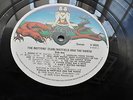
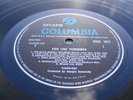
LABELS: This is pressed with the 'classic' early 1960's Black and Silver Verve 'T' labels. It has the Mono catalog number and the MGM distribution info, making this a First, or very very early 1963 pressing.
The labels are clean and bright. No marks or damage. The spindle holes are still relatively sharp and clean, suggesting minimal playing and my careful handling over the years.
JACKET: As you can see from my pictures, this still looks very nice for a 60+ year old OG copy. This jacket is in fantastic condition.
This dark jacket is notorious for showing ringwear, dirt, scuffs and damage, but this copy is still quite nice. Minimal wear. The White back cover is still nice, bright and white. A nice survivor.\
The edges and corners are sharp, the spine is straight, and the cover art is still bright and sharp. A beautiful, clean, bright, jacket with beautiful colors. Later pressings had a completely different cover.
INNER SLEEVE: This comes with its original Verve Jazz inner sleeve.
Overall, I'll call the whole record at least VG+. A fantastic, rare, original 1963 Mono copy. This copy is all original, complete, rare and a real gem. I'm sure you'll love it.
This record has been sleeved and stored properly for decades, and still quite nice for an original early US pressing. ~~~~~~~~~~~~
** NOTE: I'm selling this rare 'Collector' Jazz record "AS IS" and "NO RETURN". It's rare and as described and shown, and I'm sure you'll be very happy with it. ~~~~~~~~~~~~~~~
A very cool, original, 1963 Mono pressing of Osacar Peterson's classic 'Night Train' that I thought someone would like for their vinyl collection. ~~~~~~~~~~~~~~
I’m recently retired and downsizing and letting go some gems and rarities from nearly 45 years of vinyl record collecting. Check out the many other fantastic 45s and 33s coming soon to my page!
All records have been carefully evaluated and graded by me. I visually inspect all records under bright light, personally gently clean them with a soft cloth and then, if unsure, play them on a modern high-end turntable to get a true picture of condition.
Please look at all the high-resolution pictures I added. They are all my own and are of the actual record being sold. The pictures are part of the description and can show small details, label variations, and condition better than I can put into words.
My grading is fair and honest. I have had over 3,400 happy and satisfied EBay customers over the years, with 100% positive feedback, and I have been buying/selling on EBay for well over 25 years, so please bid with confidence!
I'm a 0ne-man operation, this is a hobby, not my job. I do this for fun. I do this because I love music, love collecting vinyl and want others to share in that same experience. I take my time listening, researching, grading, listing and packaging. I will NOT sell any record that I personally would not want in my collection.
As you well know, packing and shipping rare records requires special care and attention, therefore, shipping cost within the lower 48 states is $5.00 on this item. If you would like insurance, or anything faster than Media/Economy Mail, please let me know and I can arrange it for you. I’ll work with you to make sure you’re happy!
I will gladly combine multiple records, or other items on my page, and make the shipping much less for you. I don’t inflate the shipping costs; they are what they are. I strive to keep them as low as possible. See my feedback for comments on my quality packing and shipping.
All items are packaged with sturdy cardboard mailers and appropriate padding. I take pride in my packaging and shipping and package all my records as if I were sending them to myself. I refuse to use cheap flimsy packaging material when sending my vinyl. I treat them as if they were my own and mail them the same way.
All orders are processed and shipped within 2 business days of receipt. We package and ship our vinyl records with the greatest care, using proper packaging to ensure that your rare and collectible vinyl records arrive in pristine condition.
Payments can be made by any of the multiple options that Ebay offers.
I will be happy to exchange feedback with anyone I complete a transaction with.
THANK YOU for looking and reading my lengthy description if you got this far. -- JOHN
price rating