THE INCREDIBLE STRING BAND Wee Tam The Big Huge record
£
21
$
28


Favourite Auctions
To save auctions to your favourites, please login
If you don't have an account, please register
Description
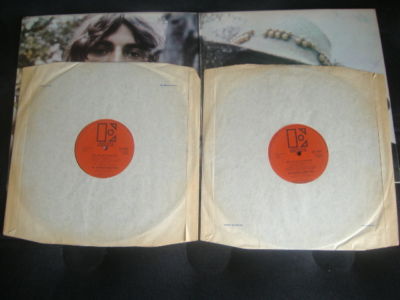
For sale this rare double Album on the Elektra Label original 1968 Rare Double Album.Will post Worldwide..Highly collectible.The Vinyls are absolutely fantastic condition.Please ask any questions.will post worldwide.Pictures form part of the description.Rare Psych album.Low start no reserve Auction..Thankyou good luck bidding.Dont miss this opportunity to own this.No Insert.And there are marks to the laminate cover.However I assure you the vinyls and labels are in superb condition.Please see photos it was quite hard to get a decent picture of the labels the winning bidder will not be dissapointed with the condition.They do not look like they have been played.So if you would love to own this rare double album of this scarcity do not miss this chance..thankyou..Everything else as it should be.I can only see two very light marks on one side the vinyl and labels do not look played.I am a trusted and long term ebay seller and Buyer.So bid with confidence.Thankyou.I will post worldwide.Please ask questions always happy to answe alll enquiries.do not hesitate to get in touch.The highest bidder will win.No reserve and ridiculous low start on this rare album. Please see my other listing for ISB other album The Hangmans beautiful Daughter.
Wee Tam and the Big Huge is the fourth album by the Incredible String Band, released in Europe as both a double LP and separate single LPs in November 1968. In the US, however, the two discs were released separately as Wee Tam and The Big Huge.
The album is considered by many to be, along with its predecessor The Hangman's Beautiful Daughter, the best work the band ever produced. Consisting of a very varied selection of songs by Robin Williamson and Mike Heron, with intriguing and poetic lyrics, the album is rich with eclectic and adept instrumentation and arrangements. Around 15 instruments are featured, played mainly by the two band members Williamson and Heronbut also, in supporting roles, on a few tracks by Rose Simpson and Licorice McKechnie.
Williamson explained the title as follows:- "I saw a man with a huge big dog, [and] we knew somebody called Wee Tam, in Edinburgh. It seemed like it was a good idea in terms of one person looking up at the stars - Wee Tam and the Big Huge, just like the vastness of the universe."[1]
Contents
[hide]- 1 Background
- 2 Track listing
- 2.1 Disc one (Wee Tam)
- 2.2 Disc two (The Big Huge)
- 3 References
Track listing
[edit]Disc one (Wee Tam)
Side A
- "Job's Tears" (Williamson) - 6:40
- "Puppies" (Heron) - 5:30
- "Beyond the See" (Heron) - 2:16
- "The Yellow Snake" (Williamson) - 2:04
- "Log Cabin Home in the Sky" (Heron) - 4:00
Side B
- "You Get Brighter" (Heron) - 5:44
- "The Half-Remarkable Question" (Williamson) - 5:01
- "Air" (Heron) - 3:12
- "Ducks on a Pond" (Williamson) - 9:17
[edit]Disc two (The Big Huge)
Side A
- "Maya" (Williamson) - 9:24
- "Greatest Friend" (Heron) - 3:30
- "The Son of Noah's Brother" (Williamson) - 0:16
- "Lordly Nightshade" (Williamson) - 5:13
- "The Mountain of God" (Williamson) - 1:51
Side B
- "Cousin Caterpillar" (Heron) - 5:15
- "The Iron Stone" (Williamson) - 6:33
- "Douglas Traherne Harding" (Heron) - 6:15
- "The Circle Is Unbroken" (Williamson) - 4:47
the Incredible String Band...The very Rare and Collectible Album is the Holy Grail for I.S.B. Collectors,,The Rarety is Due to a Marketing Disaster by Electra,,They Took The Bold Step of Issuing This Rare Double Album in 1968.only to find out Sales Were Nearly Non Existant due to the cost of a Double Album in 1968,Even The Beatles Had Not Yet Taken Such a Big Step..Electra Then Quickly Split The Album Into Two Separate Issues to Recover Some of There Outlay..Making This 1968 First Press Original Double of Wee Tam & The Big Huge a Very Rare I.S.B.IteThe Incredible String Band (sometimes abbreviated as ISB) were a psychedelic folkband formed in Scotland in 1966.[1] The band built a considerable following, especially within British counterculture, before splitting up in 1974. The group's members are musical pioneers in psych folk and, by integrating a wide variety of traditional music forms and instruments, in the development of world music. The group reformed in 1999 and continued to perform until 2006. m.
The Hangman's Beautiful Daughter and Wee Tam and the Big Huge: 1968
1968 was the band's annus mirabilis with the release of their two most-celebrated albums, The Hangman's Beautiful Daughter and the double LP Wee Tam and the Big Huge (issued as two separate albums in the US). Hangman's reached the top 5 in the UK album charts soon after its release in March 1968 and was nominated for a Grammy in the US. Robert Plant of Led Zeppelin said his group found their way by playing Hangman's and following the instructions. A departure from the band's previous albums, the set relied heavily on a more layered production, with imaginative use of the then new multi-track recording techniques.[4] The album featured a series of vividly dreamlike Williamson songs, such as "The Minotaur's Song", a surreal music-hall parody told from the point of view of the mythical beast, and its centrepiece was Heron's "A Very Cellular Song", a 13-minute reflection on life, love and amoebas; its complex structure incorporated a Bahamian spiritual ("I Bid You Goodnight") and an adaptation of a Sikh hymn (by "may the pure light within you"). Williamson and Heron in this album had added their girlfriends, Licorice McKechnie and Rose Simpson to the band to contribute additional vocals and a variety of instruments, including organ, guitar and percussion. Despite their initially rudimentary skills, Simpson swiftly became a proficient bass guitarist, and some of McKechnie's songs were recorded by the band.[3]
By early 1968 the group were capable of filling major venues in the UK. They left behind their folk club origins and embarked on a nationwide tour incorporating a critically acclaimed appearance at the London Royal Festival Hall. Later in the year they performed at the Royal Albert Hall, at open-air festivals, and at prestigious rock venues such as the Fillmore auditoriums in San Francisco and New York. After their appearance at the Fillmore East in New York they were introduced to the practice of Scientology by David Simons (aka "Rex Rakish", once of Jim Kweskin's Jug Band). Joe Boyd, in his book White Bicycles - Making Music in the 1960s and elsewhere[7], describes how he was inadvertently responsible for their "conversion" when he introduced the band to Simons who, having become a Scientologist, persuaded them to enrol in his absence. The band's support for Scientology over the next few years was controversial among some fans, and seemed to coincide with what many saw as the beginning of a decline in the quality of their work.[citation needed] In an interview with Oz magazine in 1969 the band spoke enthusiastically of their involvement with it, although the question of its effect on their later albums has provoked much discussion ever since.[citation needed]
Their November 1968 album Wee Tam and The Big Huge recorded before the US trip, was musically less experimental and lush thanHangman's but conceptually even more avant-garde, a full-on engagement with the themes of mythology, religion, awareness and identity. Williamson's otherworldly songs and vision dominate the album, though Heron's more grounded tracks are also among his very best, and the contrast between the two perspectives gives the record its uniquely dynamic interplay between a sensual experience of life and a quest for metaphysical meaning. The record was released as a double album and also simultaneously as two separate LPs, a strategy which lessened its impact on the charts.
[edit]Woodstock and multi-media: 1969-70
At this time most of the group lived communally at a farmhouse near Newport in Pembrokeshire, Wales, where they developed ideas for mixed media experiments with Malcolm Le Maistre and other members of David Medalla's Exploding Galaxy troupe and the Leonard Halliwell Quartet. There, a film was made about the ISB, Be Glad For the Song Has No Ending. Originally planned for BBCTV's arts programme Omnibus, it featured documentary footage and a fantasy sequence, 'The Pirate and the Crystal Ball', illustrating their attempt at an idyllic communal lifestyle. It made little impact at the time, but reissues on video and DVD have contributed to the recent revival of interest in the band.
The band toured for much of 1969, in the USA and the UK. In August they played at Woodstock later than planned, having refused to perform in the pouring rain on the opening evening (which was for folk and acoustic acts). Their slot was taken by Melanie, whose performance inspired her song "Lay Down (Candles in the Rain)". Their performance was rescheduled to the following day (the lineup that day consisting of more rock-oriented acts), and they followed Canned Heat on stage. In November 1969 they released the albumChanging Horses, which was generally seen as a disappointment after their earlier work. By late 1969, they had established a communal base at Glen Row near Innerleithen, and the relationships between Mike and Rose and Robin and Licorice had ended. In April 1970 they released the album I Looked Up.
The ISB's performances were more theatrical than those of most of their contemporaries. In addition to the spectacle of their exotic instruments and colourful stage costumes, their concerts sometimes featured poems, surreal sketches and dancers, all in the homegrown, non-showbiz style characteristic of the hippy era. In 1970, Robin Williamson (with little input from Heron) attempted to fuse the music with his theatrical fantasies in a quixotic multi-media spectacular at London's Roundhouse called "U", which he envisaged as "a surreal parable in dance and song". It combined the band's music with dancing by the Stone Monkey troupe (which had evolved out of Exploding Galaxy), the letter U representing a transition from a high level of spiritual awareness to a low, then returning to a final peak of awareness and communication. Although ambitious, critical response was mixed, with some harsh reviews from critics who had in some cases acclaimed their earlier work. It fared little better in New York, a planned US tour of "U" having to be cancelled after a few performances at the Fillmore East. Joe Boyd described the show as "a disaster".[3]
price rating