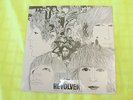
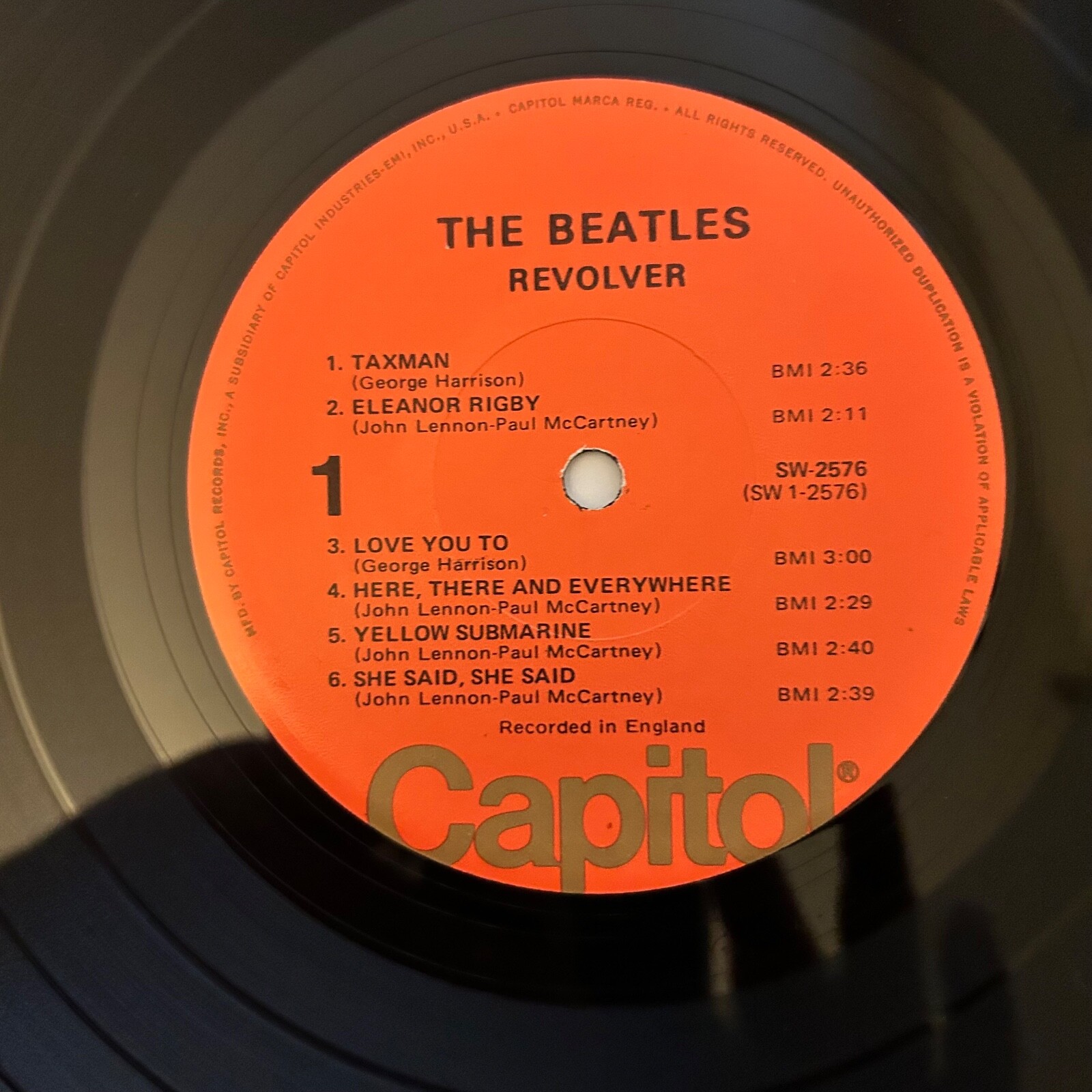
THE BEATLES Revolver LP Capitol SW 2576 RE 1976 ST Orange John Lennon
$
29




Favourite Auctions
To save auctions to your favourites, please login
If you don't have an account, please register
Description
The Beatles Revolver Capitol SW 2576 RE 1976 ST Orange Archival Sleeve John Lennon Paul McCartney Ringo George Harrison Orange label with green 'Capitol' at bottom. The words "All rights reserved", etc are present. This places this pressing between 1976 and 1978
The eleven-song North American LP was the band's tenth album on Capitol Records and twelfth US album in total. The release of Revolver marked the last time that Capitol issued an altered UK Beatles album for the North American market. When the Beatles re-signed with EMI in January 1967, their contract stipulated that Capitol could no longer alter the track listings of their albums
Revolver is the seventh studio album by the English rock band the Beatles. It was released on 5 August 1966, accompanied by the double A-side single "Eleanor Rigby" / "Yellow Submarine". The album was the Beatles' final recording project before their retirement as live performers and marked the group's most overt use of studio technology to date, building on the advances of their late 1965 release Rubber Soul. It has since become regarded as one of the greatest and most innovative albums in the history of popular music, with recognition centred on its range of musical styles, diverse sounds and lyrical content.
The Beatles recorded Revolver after taking a three-month break at the start of 1966, and during a period when London was feted as the era's cultural capital. Regarded by some commentators as the start of the group's psychedelic period, the songs reflect their interest in the drug LSD, Eastern philosophy and the avant-garde while addressing themes such as death and transcendence of material concerns. With no plans to reproduce their new material in concert, the band made liberal use of automatic double tracking, varispeed, reversed tapes, close audio miking, and instruments outside of their standard live set-up. Among its tracks are "Tomorrow Never Knows", incorporating heavy Indian drone and a collage of tape loops; "Eleanor Rigby", a song about loneliness featuring a string octet as its only musical backing; and "Love You To", a foray into Hindustani classical music. The sessions also produced a non-album single, "Paperback Writer" backed with "Rain
Revolver expanded the boundaries of pop music, revolutionised standard practices in studio recording, advanced principles espoused by the 1960s counterculture, and inspired the development of psychedelic rock, electronica, progressive rock and world music. The album cover, designed by Klaus Voormann, combined Aubrey Beardsley-inspired line drawing with photo collage and won the 1967 Grammy Award for Best Album Cover, Graphic Arts.
In America, Capitol were wary of the religious references in "Eleanor Rigby", given the ongoing controversy, and instead pushed "Yellow Submarine". The latter peaked at number 2 on the Billboard Hot 100, making it, in Gould's description, "the first 'designated' Beatles single since 1963" not to top that chart. On the Billboard Top LPs chart, Revolver hit number 1 on 10 September, a week after the end of Yesterday and Today's five-week run at the top. The Beatles were presented with gold discs from the Recording Industry Association of America (RIAA), recognising the album as a "million seller", during their 24 August press conference at the Capitol Tower in Hollywood. Revolver was number 1 there for six weeks and remained on the chart until mid February 1968. In March 1967, Revolver was nominated for the Grammy Award for Album of the Year. Voormann's cover design won the Grammy for Best Album Cover, Graphic Arts.
price rating