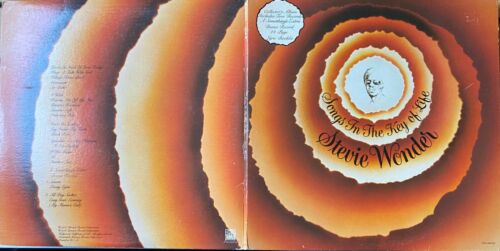
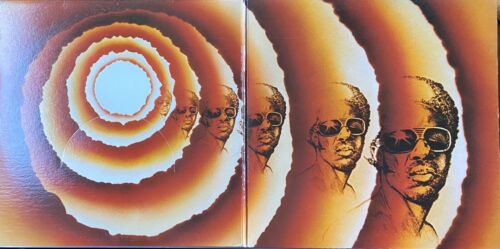
Stevie Wonder "Songs In The Key Of Life" Tamla T13-340C2 2xLP+7"+Booklet US 1976
£
22
$
29
Favourite Auctions
To save auctions to your favourites, please login
If you don't have an account, please register
Description
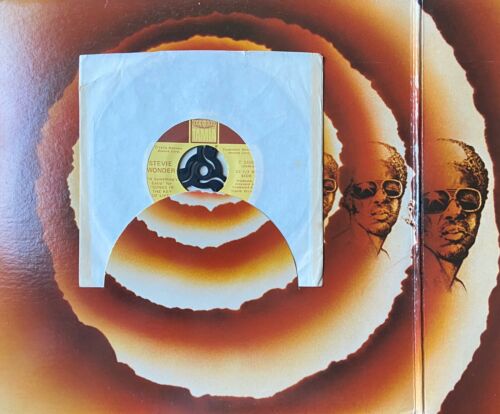
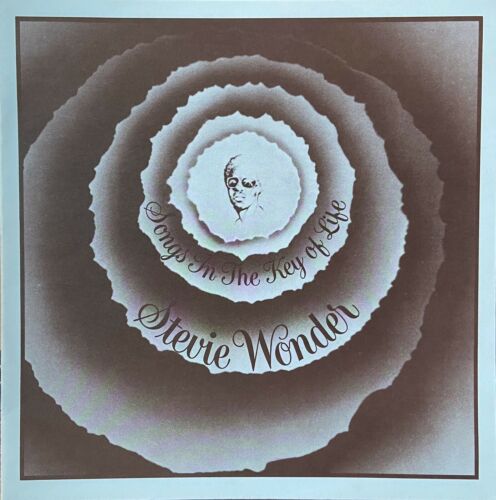
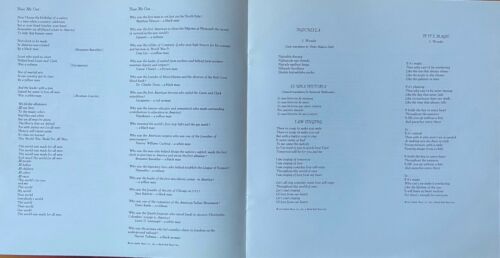
Stevie Wonder ? "Songs In The Key Of Life" Tamla ?T13-340C2 US 1st press (Waddell Press) 2 × Vinyl, LPs plus a Vinyl, 7" EP, (33? RPM), housed in a gate-fold sleeve, and released, with a 24-page lyric booklet, in 1976.
Both LPs and the 7" EP appear to have been lightly played and are in great condition. They all played through beautifully on my elderly stereo - no hop, stick or jump. The LPs are housed in a gate-fold sleeve, which also shows minimal signs of wear and which is also in great condition, with no rips or writing. The spine is intact and legible. Similarly, the 24-page lyric booklet also shows minimal signs of use and is also in great shape. Matrix / Runout Side 1 : T·13340 C2 2645S EBF 98 XTAL AB A-WA Matrix / Runout Side 2 : T·13340 C2 2646S EBF 98 XTAL AB A-W-A Matrix / Runout Side 3 : T·13340 C2 2647S EBF 98 XTAL AB B-WA Matrix / Runout Side 4 : T·13340 C2 2648S EBF 98 XTAL AB A-WA Matrix / Runout Side 5 : T-340-EP-A (UP) T13340 EP 2649 06-B ?100679 #8 (5) JS•4•XTAL Matrix / Runout Side 6 : T-340-EP-B (UP) T13340 EP 2650 06-A ?100679-X #8 (3) JS•6•XTAL
"Songs in the Key of Life" is Stevie Wonder's eighteenth album. It was released on September 28, 1976, by Tamla Records, a division of Motown. The album has been regarded by music journalists as the culmination of Wonder's "classic period" of recording. Some observers count six classic albums, some count five, and others count four. The album was recorded primarily at Crystal Sound studio in Hollywood, with some sessions recorded at the Record Plant in Hollywood, the Record Plant in Sausalito, and The Hit Factory in New York City. Final mixing was performed at Crystal Sound.
By 1974, Wonder was one of the most successful figures in popular music. Within a short space of time, the albums "Talking Book", "Innervisions" and "Fulfillingness' First Finale" were all back-to-back critical successes. By the end of 1975, Wonder became serious about quitting the music industry and emigrating to Ghana to work with handicapped children. He had also expressed his anger with the way that the U.S. government was running the country. Though a farewell concert was being considered as the best way to retire, Wonder changed his decision and signed a new contract with Motown on August 5, 1975 which was a seven-year, seven LP, $37 million deal and gave him full artistic control, making this the largest recording deal in history at the time. Almost immediately, Wonder took a year off from the music market, with a project for a double album to be released in 1976.
There was huge anticipation for the new album which was initially scheduled for release around October 1975. It was delayed on short notice when Wonder felt that further remixing was essential. According to Wonder, the marketing campaign at Motown decided to take advantage of the delay by producing "We're almost finished" T-shirts. Work on the new album continued into early 1976. A name was finally chosen for the album: "Songs in the Key of Life". The title would represent the formula of a complex "key of life" and the proposals for indefinite success. The album was released on September 28, 1976, after a two-year wait as a double LP album with a four-track seven-inch EP titled A Something's Extra ("Saturn", "Ebony Eyes", "All Day Sucker" and "Easy Goin' Evening (My Mama's Call)") and a 24-page lyric and credit booklet.
The working title was "Let's See Life the Way It Is". Wonder recorded the great majority of the album at Crystal Sounds in Hollywood, with Gary Olazabal as engineer, and studio owner John Fischbach as engineer. Some material was recorded at the Record Plant in Hollywood and the Record Plant in Sausalito. During a period when Crystal Sounds had a prior obligation to record another artist, Wonder and Fischbach travelled to the Hit Factory in New York City to work for about six weeks but only used one basic track. As a perfectionist, Wonder spent long hours in the studio for almost every track he recorded. He was "not eating or sleeping, while everyone around him struggled to keep up." According to Wonder, "If my flow is goin', I keep on until I peak."
A total of 130 people worked on the album, but Wonder's preeminence during the album was evident. Among the people present during the sessions, there were legendary figures of R&B, soul and jazz music – Herbie Hancock played Fender Rhodes on "As", George Benson played electric guitar on "Another Star", and Minnie Riperton and Deniece Williams added backing vocals on "Ordinary Pain". Mike Sembello was a prominent personality throughout the album, playing guitar on several tracks and also co-writing "Saturn" with Wonder. Some of the most socially conscious songs of the album were actually written by Wonder with other people – these included "Village Ghetto Land" and "Black Man" (co-written with Gary Byrd) and "Have a Talk with God" (co-written by Calvin Hardaway). Nathan Watts, Wonder's newest bass player at the time, originally recorded a bass track for "Isn't She Lovely" that Wonder replaced with his own keyboard bass for the final version. The same guide-track method was employed for "Knocks Me Off My Feet".
At the time of release, reporters and music critics, and everyone who had worked on the album, travelled to Long View Farm, a recording studio in Massachusetts for a press preview of the album. Everybody received autographed copies of the album and Wonder gave interviews. Critical reception was immediately positive. The album was viewed as a guided tour through a wide range of musical styles and the life and feelings of the artist. It included recollections of childhood, of first love and lost love. It contained songs about faith and love among all peoples and songs about social justice for the poor and downtrodden. Village Voice critic Robert Christgau said, "in themselves the words are much funnier and trickier than the sociospiritual bullshit or Maurice White or Kenny Gamble; as validated by the wit, pace, and variety of the music, they come close to redeeming the whole genre."
On February 19, 1977, Wonder was nominated for seven Grammy Awards, including Album of the Year, an award that he had already won twice, in 1974 and 1975, for "Innervisions" and "Fulfillingness’ First Finale". Since 1973, Stevie’s presence at the Grammy ceremonies had been consistent – he attended most of the ceremonies and also used to perform on stage. But in 1976, he did not attend as he was not nominated for any awards (as he had not released any new material during the past year). Paul Simon, who received the Grammy for Album of the Year in that occasion (for "Still Crazy After All These Years") jokingly thanked Stevie for not releasing an album that year. A year after, Wonder was nominated for "Songs in the Key of Life" in that same category, and was widely favoured by many critics to take the award. The other nominees were "Breezin’" by George Benson, "Chicago X" by Chicago, "Silk Degrees" by Boz Scaggs, and the other favourite, Peter Frampton’s "Frampton Comes Alive!", which was also a huge critical and commercial success. Wonder was again absent from the ceremony, as he had developed an interest in visiting Africa. In February he travelled to Nigeria for two weeks, primarily to explore his musical heritage, as he put it. A satellite hook-up was arranged so that Stevie could be awarded his Grammys from across the sea. Bette Midler announced the results during the ceremony, and the audience was only able to see Wonder at a phone smiling and giving thanks. The video signal was poor and the audio inaudible. Andy Williams went on to make a public blunder when he asked the blind-since-birth Wonder, “Stevie, can you see us?” In all, Wonder won four out of seven nominations at the Grammys: Album of the Year, Best Male Pop Vocal Performance, Best Male R&B Vocal Performance and Producer of the Year.
Over time, the album became a standard, and it is considered Wonder's signature album. "Of all the albums," he told Q magazine (April 1995 issue), "Songs in the Key of Life" I'm most happy about. Just the time, being alive then. To be a father and then… letting go and letting God give me the energy and strength I needed." "Songs in the Key of Life" is often cited as one of the greatest albums in popular music history. It was voted as the best album of the year in The Village Voice's annual Pazz & Jop critics poll; in 2001 the TV network VH1 named it the seventh greatest album of all time; in 2003, the album was ranked number 57 on Rolling Stone Magazine's list of the 500 greatest albums of all time, maintaining the rating in a 2012 revised list.
Many musicians have also remarked on the quality of the album and its influence on their own work. For example, Elton John said, in his notes for Wonder on the 2003 Rolling Stone's list of "The Immortals – The Greatest Artists of All Time" (in which Wonder was ranked number 15): "Let me put it this way: wherever I go in the world, I always take a copy of "Songs in the Key of Life". For me, it's the best album ever made, and I'm always left in awe after I listen to it." In an interview with Ebony magazine, Michael Jackson called "Songs in the Key of Life" his favourite Stevie Wonder album. George Michael cited the album as his favourite of all time and with Mary J. Blige covered "As" for a 1999 hit single. Michael performed "Love's in Need of Love Today" on his Faith tour in 1988, and released it as a B-side to "Father Figure". He also performed "Village Ghetto Land" at the Nelson Mandela 70th Birthday Tribute in 1988. He later covered "Pastime Paradise" and "Knocks Me Off My Feet" in his 1991 Cover to Cover tour.
R&B singers in particular have praised the album – Prince called it the best album ever recorded, Mariah Carey generally names the album as one of her favourites, and Whitney Houston also remarked on the influence of "Songs in the Key of Life" on her singing. (During the photo-shoot for her "Whitney: The Greatest Hits", as seen on its respective home video, the album was played throughout the photo sessions, at Houston’s request.) The album's importance has also been recognized by heavy metal musicians, with singer Phil Anselmo describing a live performance of "Songs in the Key of Life" as "a living, breathing miracle".
The album’s tracks have provided numerous samples for rap and hip-hop artists; for example, "Pastime Paradise", which itself drew on the first eight notes and four chords of J.S. Bach's Prelude No. 2 in C minor (BWV 847), was reworked by Coolio as "Gangsta's Paradise". In 1995, smooth jazz artist Najee recorded a cover album titled "Najee Plays Songs from the Key of Life", which is based entirely on Wonder's album. In 1999, Will Smith used "I Wish" as the base for his US number-one single "Wild Wild West". The song repeated the main melody of "I Wish" as a riff and some lyrics re-formed.
Highly anticipated, the album surpassed all commercial expectations. It debuted at number 1 on the Billboard Pop Albums Chart on October 8, 1976, becoming only the third album in history to achieve that feat and the first by an American artist (after British singer/composer Elton John's albums "Captain Fantastic and the Brown Dirt Cowboy" and "Rock of the Westies", both in 1975). In Canada, the album achieved the same feat, entering at number one on the RPM national albums chart on October 16. "Songs in the Key of Life" spent thirteen consecutive weeks at number one in the US, and 11 during 1976. It was the album with the most weeks at number one during the year. In those eleven weeks, "Songs in the Key of Life" managed to block four other albums from reaching the top – in order, Boz Scaggs’s "Silk Degrees", Earth, Wind & Fire's "Spirit", Led Zeppelin's soundtrack for "The Song Remains the Same" and Rod Stewart's "A Night on the Town". On January 15, 1977, the album finally dropped to number two behind Eagles' "Hotel California" and the following week it fell to number four. On January 29 it returned to the top for a fourteenth and final week. The album then began its final fall. It spent a total of 35 weeks inside the top ten and 80 weeks on the Billboard albums chart. "Songs in the Key of Life" also saw longevity at number one on the Billboard R&B/Black Albums chart, spending 20 non-consecutive weeks there.
In all, "Songs in the Key of Life" became the second best-selling album of 1977 in the US, only behind Fleetwood Mac's blockbuster "Rumours", and was certified as a diamond album by the RIAA, for sales of 10 million units in the US alone (each individual record or disc included with an album counts towards RIAA certifications). It was the highest selling R&B/Soul album on the Billboard Year-End chart that same year.
"Songs in the Key of Life" was also the most successful Wonder project in terms of singles. The lead-off, the upbeat "I Wish" was released in November 1976, over a month after the album was released. On January 15, 1977, it reached number one on the Billboard R&B chart, where it spent five weeks at the top. Seven days after, it also reached the summit of the Billboard Hot 100, although it spent only one week at number one. The track became an international top 10 single, and also reached number five in the UK. "I Wish" became one of Wonder's standards and remained one of his most sampled songs. The follow-up, the jazzy "Sir Duke", surpassed the commercial success of "I Wish". It was released in March 1977 and also reached number one on the Billboard Hot 100 (spending three weeks at the top starting on May 21) and the R&B chart (for one week, starting on May 28). It also reached number two in the UK, where it was kept off the top spot by the song "Free" by Deniece Williams, who had provided backing vocals on the album.
As sales for the album began to decline during the second half of 1977, the two other singles from "Songs in the Key of Life" failed to achieve the commercial success of "I Wish" and "Sir Duke". "Another Star" was released in August and reached only number 32 on the Hot 100 (number 18 on the R&B chart, and number 29 in the UK) and "As" came out two months later, peaking at number 36 on both the Pop and R&B charts. Though not released as a single, "Isn't She Lovely" received wide airplay and became one of Wonder's most popular songs. It was soon released by David Parton as a single in 1977 and became a top 10 hit in the UK.
price rating