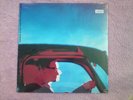
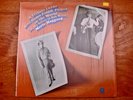
Sealed LP: Carl Perkins: The Best Of Carl Perkins
$
38


Favourite Auctions
To save auctions to your favourites, please login
If you don't have an account, please register
Description
Carl Perkins
The Best Of Carl Perkins
FACTORY SEALED LP
Format: Sealed Album
Country: U.S.A.
Record Company & Release Number: Trip Country: TLX-8503
Original release date: 1974
Bar Code: NONE
Condition of the cover: Mint
Condition of this sealed album: Sealed - Assumed Mint
My inventory number: 208070
Shipping Weight: 1 pounds, 9 ounces
Notes:
This Sealed Album came from a record store in Allentown, Pennsylvania called "Phantasmagoria" which went out of business in 1978. I purchased most of their unsold inventory several years later when I owned "Music Madness" - a new & used record store in Catasauqua, Pennsylvania.
Since this Sealed Album was part of Phantasmagoria's inventory when they closed in 1978, it cannot be any newer than a 1978 pressing. Being a Sealed Album, I cannot tell specifically what pressing it is prior to 1978. In some cases, hype stickers might help to determine if it is a first pressing, but I cannot be any more specific.
Phantasmagoria used round colored stickers to indicate the price of their inventory. They had a sign on the wall with the color sticker combinations for the customers to use so they knew the price of what they were purchasing. Some of the Sealed Albums still have these stickers on them, and in some rare cases, the stickers are written on. Some of the Sealed Albums have prices on them. This is the price you would have paid for this Sealed Album in 1978 if you had bought it at Phantasmagoria. If this Sealed Album has a price on it, please don't confuse the price with the current value for this Sealed Album.
2 LPs, very minor shelf wear to the lower left corner of the shrink wrap. There is no year listed on the cover. It is most likely a mid-1970's release - most likely 1974.
Please contact me if you have any difficulty viewing the photos.All pictures are of the exact item being sold. The pictures shown below supersede any written description of this item.
Songs
All Mama’s Children
- Blue Suede Shoes
- Boppin’ The Blued
- Dixie Fried
- Everybody’s Tryin’ To Be My Baby
- Glad All Over
- Honey Don’t
- Honkey Tonk Gal
- Lend Me Your Comb
- Let The Jukebox Keep On Playing
- Lonely Street
- Matchbox
- Movie Magg
- Only You
- Pink Peddle Pushers
- Put Your Cat Clothes On
- Roll Over Beethoven
- Tennessee
- True Love
- Wrong Yo Yo
CREDITS ARE NOT LISTED ON THE COVER
Album Review for "The Best Of Carl Perkins"
ALBUM REVIEW NOT AVAILABLE ON ALLMUSIC.COM
Carl Perkins biography by Cub Koda
While some ill-informed revisionist writers of rock history would like to dismiss Carl Perkins as a rockabilly artist who became a one-hit wonder at the dawn of rock & roll's early years, a deeper look at his music and career reveals much more. A quick look at his songwriting portfolio shows that he composed "Daddy Sang Bass" for Johnny Cash, "I Was So Wrong" for Patsy Cline, and "Let Me Tell You About Love" for the Judds, big hits and classics all. His influence as the quintessential rockabilly artist has played a big part in the development of every generation of rockers to come down the pike since, from the Beatles' George Harrison to the Stray Cats' Brian Setzer to a myriad of others in the country field as well. His guitar style is the other twin peak -- along with that of Elvis' lead man Scotty Moore -- of rockabilly's instrumental center, so pervasive that modern-day players automatically gravitate toward it when called upon to deliver the style, not even realizing that they're playing Perkins licks, sometimes note for note. As a singer, his interpretation of country ballads is every bit as fine as his better-known rockers. And within the framework of the best of his music is a strong sense of family and roots, all of which trace straight back to his humble beginnings.
He was born to sharecroppers Buck and Louise Perkins (misspelled on his birth certificate as "Perkings") and was soon out in the fields picking cotton and living in a shack with his parents, older brother Jay, and his younger brother Clayton. Working alongside Blacks in the field every day, it's not at all surprising that when Carl was gifted with a secondhand guitar, he went to a local sharecropper for lessons, learning firsthand the boogie rhythm that he would later build a career on. By his teens, Carl was playing electric guitar and had recruited his brothers Jay on rhythm guitar and Clayton on string bass to become his first band. The Perkins Brothers Band, featuring both Carl and Jay on lead vocals, quickly established itself as the hottest band in the get-hot-or-go-home cutthroat Jackson, Tennessee honky tonk circuit. It was here that Carl started composing his first songs with an eye toward the future. Watching the dancefloor at all times for a reaction, Perkins kept reshaping these loosely structured songs until he had a completed composition, which would then be finally put to paper. Perkins was already sending demos to New York record companies, who kept rejecting him, sometimes explaining that this strange new hybrid of country with a Black rhythm fit no current commercial trend. But once Perkins heard Elvis on the radio, he not only knew what to call it, but knew that there was a record company person who finally understood it and was also willing to gamble in promoting it. That man was Sam Phillips and the record company was Sun Records, and that's exactly where Perkins headed in 1954 to get an audition.
It was here at his first Sun audition that the structure of the Perkins Brothers Band changed forever. Phillips didn't show the least bit of interest in Jay's Ernest Tubb-styled vocals but flipped over Carl's singing and guitar playing. A scant four months later, he had issued the first Carl Perkins record, "Movie Magg"/"Turn Around," both sides written by the artist. By his second session, he had added W.S. Holland -- a friend of Clayton's -- to the band playing drums, a relatively new innovation to country music at the time. Phillips was still channeling Perkins in a strictly hillbilly vein, feeling that two artists doing the same type of music (in this case, Elvis and rockabilly) would cancel each other out. But after selling Elvis' contract to RCA Victor in December, Perkins was encouraged to finally let his rocking soul come up for air at his next Sun session. And rock he did with a double whammy blast that proved to be his ticket to the bigs. The chance overhearing of a conversation at a dance one night between two teenagers coupled with a song idea suggestion from labelmate Johnny Cash inspired Perkins to approach Phillips with a new song he had written called "Blue Suede Shoes." After cutting two sides that Phillips planned on releasing as a single by the Perkins Brothers Band, Perkins laid down three takes each of "Blue Suede Shoes" and another rocker, "Honey Don't." A month later, Phillips decides to shelve the two country sides and go with the rockers as Perkins' next single. Three months later, "Blue Suede Shoes," a tune that borrowed stylistically from pop, country, and R&B music, sat at the top of all charts, the first record to accomplish such a feat while becoming Sun's first million-seller in the bargain.
Ready to cash in on a national basis, Carl and the boys headed up to New York for the first time to appear on The Perry Como Show. While en route their car rammed the back of a poultry truck, putting Carl and his brother Jay in the hospital with a cracked skull and broken neck, respectively. While in traction, Perkins saw Presley performing his song on The Dorsey Brother Stage Show, his moment of fame and recognition snatched away from him. Perkins shrugged his shoulders and went back to the road and the Sun studios, trying to pick up where he left off.
The follow-ups to "Shoes" were, in many ways, superior to his initial hit, but each succeeding Sun single held diminishing sales, and it wasn't until the British Invasion and the subsequent rockabilly revival of the early '70s that the general public got to truly savor classics like "Boppin' the Blues," "Matchbox," "Everybody's Trying to Be My Baby," "Your True Love," "Dixie Fried," "Put Your Cat Clothes On," and "All Mama's Children." While labelmates Cash and Jerry Lee Lewis (who played piano on "Matchbox") were scoring hit after hit, Perkins was becoming disillusioned with his fate, fueled by his increasing dependence on alcohol and the death of his brother Jay to cancer. He kept plugging along, and when Cash left Sun to go to Columbia in 1958, Perkins followed him over. The royalty rate was better, and Perkins had no shortage of great songs to record, but Columbia's Nashville watch-the-clock production methods killed any of the spontaneity that was the charm of the Sun records. By the early '60s, after being dropped by Columbia and moving over to Decca with little success, Perkins was back playing the honky tonks and contemplating getting out of the business altogether. A call from a booking agent in 1964 offering a tour of England changed all of that. Temporarily swearing off the bottle, Perkins was greeted in Britain as a conquering hero, playing to sold-out audiences and being particularly lauded by a young beat group on the top of the charts named the Beatles. George Harrison had cut his musical teeth on Perkins' Sun recordings (as had most British guitarists) and the Fab Four ended up recording more tunes by him than any other artist except themselves. The British tour not only rejuvenated his outlook, but suddenly made him realize that he had gone -- through no maneuvering of his own -- from has-been to legend in a country he had never played in before. Upon his return to the States, he hooked up with old friend and former labelmate Cash and was a regular fixture of his road show for the next ten years, bringing his battle with alcohol to an end. The '80s dawned with Perkins going on his own with a new band consisting of his sons backing him. His election to the Rock and Roll Hall of Fame in the mid-'80s was no less than his due. After a long battle with throat cancer, Perkins died in early 1998, his place in the history books assured.
This sealed album is being sold as a collector's item and cannot be returned due to manufacturer's defects. It may be almost impossible to replace many of the sealed albums I am selling. If I am aware of any defects, I will list it in the notes and pictures above.
I always leave feedback before your item ships. Please consider leaving feedback for me after you have had a chance to inspect and enjoy your purchase.
Please avoid questions on the last day of the listing. I might not have enough time to give you an answer before the it ends.
All album reviews, credits and artist biographies are from AllMusic Guide. If you haven't been to their web site, you should check it out. It's one of the most comprehensive music references on the internet. In some cases, credits may include reissue (CD) information. Obviously any credits referenced to CDs might not apply to this release.
SHIPPING
If you have any special shipping requirements (extra padding, oversized boxes, etc.) you must let me know BEFORE making your payment. The cost of shipping is based my standard packaging (new boxes, padded envelopes, etc.). If you make a request for special shipping requirements during or after making your payment, I will refund your purchase and relist the item(s). You can bid on them again and then I will send you a revised invoice. I will do my best to accommodate any request as long as you are willing to pay accordingly.
USA (Domestic) Shipping and pick-up
- If your invoice does not include combined shipping, please send a request for an updated invoice.
- Your item(s) will be shipped within 2 business days after I receive your cleared payment. When possible, I try to ship the same day your payment clears.
- Local pick-up is fine with me. Contact me before making your payment to setup a time and place that is convenient for the both of us. There are no postage or handling fees for pick-up.
International Shipping
- If you purchase multiple items, please wait until you've made all your purchases so I can send you an invoice with your correct postage.
- The buyer is responsible for all customs regulations and fees in their own country.
- If the total weight of your package is 4 pounds or more, the Post Office requires it must be shipped by International Priority Mail. This is their policy, not mine. If it helps, I can try to calculate First Class postage for multiple shipments, but it usually ends up cheaper sending everything in one box by Priority.
price rating


![THE MIGHTY MAYTONES - JUDGEMENT DAY // BLACKA COOL - JUDGEMENT DAY [ MAR429 ]](https://www.popsike.info/php/thumbnail.php?url=https://www.popsike.pics/pix/20220419/175242198723.jpg)