STOKOWSKI Early Hi-Fi BELL LABORATORIES Rare 30s Stereo Recordings MUSSORGSKY NM
$
26


Favourite Auctions
To save auctions to your favourites, please login
If you don't have an account, please register
Description
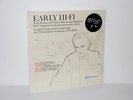
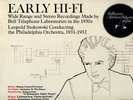
STOKOWSKI Early Hi-Fi
Leopold Stokowski Conducting The Philadelphia Orchestra
NM/NM Audiophile Vinyl Record
Record Label: Bell Laboratories BTL-7901
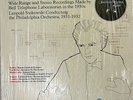
Wide Range And Stereo Recordings Made By Bell Telephone Laboratories in the 1930's. Leopold Stokowski Conducts the Philadelphia Orchestra, 1931-1932.
"We are indebted to Bell Laboratories of 1979-1981, and to Keller and Marston for the surperb examples of these important early sound experiments."
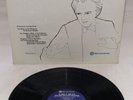
Condition: Gatefold jacket is in superb condition. No wear showing, corners are sharp and gatefold crackles when you open it. Like new. Vinyl is beautiful to the eye and plays very nicely.
Side One
1. Berlioz - Roman Carnival Overture, Op. 9 8:20
2. Von Weber - Invitation To The Dance 8:24
3. Mendelssohn - "Scherzo" From The Incidental Music For Shakespeare's A Midsummer Night's Dream 4:46
4. Wagner - Prelude And Liebestod From Tristan And Isolde 3:58
Side Two
5. Scriabin - Symphony No. 5. Prometheus: The Poem Of Fire, Op. 60 (Excerpt) 3:28
6. Scriabin - Symphony No. 5. Prometheus: The Poem Of Fire, Op. 60 (Excerpt) 3:32
7. Mussorgsky - Pictures At An Exhibition (Promenade -- Conclusion, Gnomes) 3:34
8. Mussorgsky - Pictures At An Exhibition (The Old Castle -- Excerpt) 3:49
9. Mussorgsky - Pictures At An Exhibition (Bydlo -- Conclusion) 8:10
10. Mussorgsky - Pictures At An Exhibition (Hut On Fowl's Legs, The Great Gate Of Kiev) 3:58
Review: In April, 1931, Bell Labs began recording Stokowski and the Philadelphia Orchestra in the Academy of Music, using new equipment installed in the basement, with Stokowski's permission. This equipment, did not use the conventional lateral cutting heads used for contemporary 78 RPM disks. Keller’s disk cutting equipment used a vertical cut ("hill and dale") recording method, using a magnetic moving coil pickup fitted with a sapphire stylus cutting the wax master.
Bell Labs had also earlier determined that surface noise on 78 wax recording masters (called the “matrix”) was caused by the graphite which was deposited on the wax surface during the manufacturing process. Arthur Keller and A.G. Russell devised the approach of processing the wax masters by means of gold sputtering in a vacuum chamber, which laid down a one-molecule thickness of gold onto surface of the wax. This conductive layer allowed them to electroplate a copper layer onto the gold surface, thus bypassing the need for the conductive graphite surface. This eliminated the surface noise resulting from the graphite on the surface of the recording.
Pressings of the recordings from these quiet masters were then made using cellulose acetate disks, rather than the typical noisy shellac material of the usual 78 rpm disks of that era.
In December, 1931, the first electrical recordings with this improved process were made and the experiments continued throughout the 1931-1932 concert season. The audio spectrum was extended first to 9,000 Hertz and then to 10,000 Hertz, giving for the first time good fidelity in the overtones and treble range of instruments.
Bell Laboratories asked Arthur Keller to come out of retirement in 1979 to catalogue, and assist in transcribing some of the gold sputtered disks still in storage. Keller identified Stokowski - Philadelphia recordings from among 600 metal masters at the Bell Laboratories in Murray Hill, New Jersey4. Of these, more than 100 were preserved by transcription, done by the legendary remastering engineer Ward Marston. I should add that Arthur Keller in his interviews does not give (in my opinion) the proper recognition of the contributions of Ward Marston in restoring and therefore making available these historic, and wonderful recordings.
Ward Marston, Arthur Keller and their associates were able to save many of the old metal masters. These masters were then cataloged and transcribed, including some of the stereo masters. Based on Ward Marston and Arthur Keller's work, Bell Telephone issued two commemorative albums with some of these transcriptions in 1979 and 1980, Bell Telephone BTL-7901 and BTL-8001. As far as I have been able to determine, all of the CDs and other media which circulate with some of this material come from these Bell LP disks compiled by Arthur Keller and Ward Marston, whatever these 'knock-off' CDs may claim (or leave unsaid). The Bell Laboratories disks are the only sources of this pioneering recordings (at least so far) and we are indebted to Bell Laboratories of 1979-1981, and to Keller and Marston for the surperb examples of these important early sound experiments.
price rating



![It Is What It Is (Red LP) [VINYL] by Thundercat [VINYL]](https://www.popsike.info/php/thumbnail.php?url=https://www.popsike.pics/pix/20260407/117129444393.jpg)