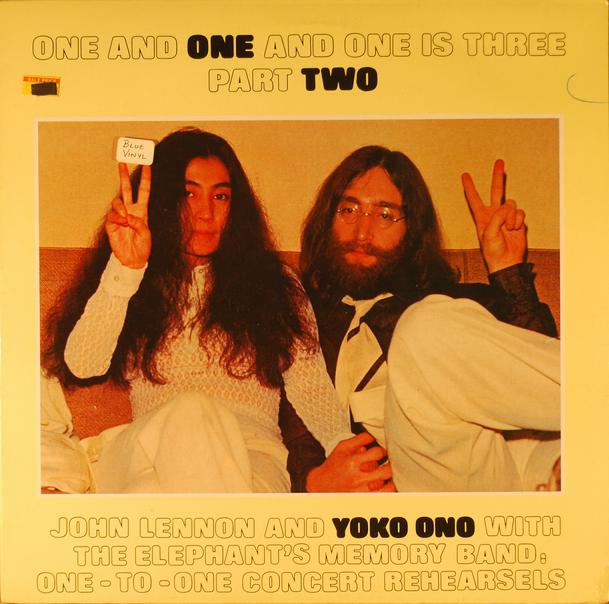
SEALED LP: JOHN LENNON & YOKO ONO: 1+1+1 IS 3 - PART 2
$
30


$ 30
Sold For
Feb 6, 2010
Sold Date
Jan 30, 2010
Start Date
1
Number Of Bids
USA
Country Of Seller
eBay
Sold at
Favourite Auctions
To save auctions to your favourites, please login
If you don't have an account, please register
Description
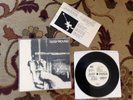
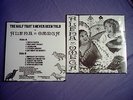
John Lennon & Yoko Ono: 1 And 1 And 1 is 3 - Part 2
FACTORY SEALED LP
Format: Sealed LPRecord Company/Release Number: Benefit Records: 002
Barcode: NONE
Original release date: 1985
Country: U.S.A.
Condition of the cover: NEAR MINT
Condition of the record: Sealed - Assumed Mint
Shipping Weight: 1 pounds, 0 ounces
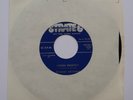
Notes: This is a blue vinyl record. There is a blue ballpoint pen mark on the front of the cover. The sticker on the front of the cover by Yoko's hand is on the shrink wrap and will come off easily. Songs:
- Unchained Melody
- Well Well Well
- Born In A Prison
- Instant Karma
- Mother
- We're All Water 1
- Come Together
- Open Your Box
- John Lennon: Guitar, vocals
- Yoko Ono: Vocals
- Stan Bronstein: Sax
- Gary Van Scyox: Bass
- Adam Ippolito: Key boards
- Rick Frank: Drums
- Wayne 'Tex' Gabriel: guitar
- Out of all the Beatles, John Lennon had the most interesting -- and frustrating -- solo career. Lennon was capable of inspired, brutally honest confessional songwriting and melodic songcraft; he also had a tendency to rest on his laurels, churning out straight-ahead rock & roll without much care. But the extremes, both in his music and his life, were what made him fascinating. Where Paul McCartney was content to be a rock star, Lennon dabbled in everything from revolutionary politics to the television talk-show circuit during the early '70s. After releasing a pair of acclaimed albums, John Lennon/Plastic Ono Band and Imagine, in the early '70s, Lennon sunk into an infamous "lost weekend" where his musical output was decidedly uneven and his public behavior was often embarrassing. Halfway through the decade, he sobered up and retired from performing to become a house-husband and father. In 1980, he launched a comeback with his wife Yoko Ono, releasing the duet album Double Fantasy that fall. Just as his career was on an upswing, Lennon was tragically assassinated outside of his New York apartment building in December of 1980. He left behind an enormous legacy, not only as a musician, but as a writer, actor and activist.
- Considering the magnitude of his achievements with the Beatles, Lennon's solo career is relatively overlooked. Even during the height of Beatlemania, Lennon began exploring outside of the group. In 1964, he published a collection of his writings called -In His Own Write, which was followed in 1965 by -A Spaniard in the Works, and in 1966, he appeared in Dick Lester's comedy How I Won the War. He didn't pursue a musical career outside of the group until 1968, when he recorded the experimental noise collage Unfinished Music, No. 1: Two Virgins with his new lover, avant-garde artist Yoko Ono. Two Virgins caused considerable controversy, both because of its content and its cover art, which featured a nude photograph of Lennon and Ono. The couple married in Gibraltar in March 20, 1969. For their honeymoon, the pair staged the first of many political demonstrations with their "Bed-In for Peace" at the Amsterdam Hilton. Several months later, the avant-garde records Unfinished Music, No. 2: Life With the Lions and The Wedding Album were released, as was the single "Give Peace a Chance," which was recorded during the Bed-In. During September of 1969, Lennon returned to live performances with a concert at a Toronto rock & roll festival. He was supported by the Plastic Ono Band, which featured Ono, guitarist Eric Clapton, bassist Klaus Voormann and drummer Alan White. The following month, Lennon and the Plastic Ono Band released "Cold Turkey," which was about his battle with heroin addiction. When the single failed to make the Top Ten in Britain and America, Lennon sent his MBE back to the Queen, protesting Britain's involvement in Biafra, America's involvement in Vietnam and the poor chart performance of "Cold Turkey."
- Before the release of "Cold Turkey," Lennon had told the Beatles that he planned to leave the group, but he agreed not to publicly announce his intentions until after Allen Klein's negotiations with EMI on behalf of the Beatles were resolved. Lennon and Ono continued with their campaign for peace, spreading billboards with the slogan "War Is Over! (If You Want It)" in 12 separate cities. In February of 1970, he wrote, recorded and released the single "Instant Karma" within the span of the week. The single became a major hit, reaching the Top Ten in both the U.K. and the U.S.. Two months after "Instant Karma," Paul McCartney announced that the Beatles were splitting up, provoking the anger of Lennon. Much of this anger was vented on his first full-fledged solo album, John Lennon/Plastic Ono Band, a scathingly honest confessional work inspired by his and Ono's primal scream therapy. Lennon supported the album with an extensive interview with Rolling Stone, where he debunked many of the myths surrounding the Beatles. Early in 1971, he released another protest single, "Power to the People," before moving to New York. That fall, he released Imagine, which featured the Top Ten title track. By the time Imagine became a hit album, Lennon and Ono had returned to political activism, publicly supporting American radicals like Abbie Hoffman, Jerry Rubin and John Sinclair. Their increased political involvement resulted in the double-album Sometime in New York City, which was released in the summer of 1972. Recorded with the New York hippie band Elephant's Memory, Sometime in New York City consisted entirely of political songs, many of which were criticized for their simplicity. Consequently, the album sold poorly and tarnished Lennon's reputation.
- Sometime in New York City was the beginning of a three-year downward spiral for Lennon. Shortly before the album's release, he began his long, involved battle with U.S. Immigration, who refused to give him a green card due to a conviction for marijuana possession in 1968. In 1973, he was ordered to leave America by Immigration, and he launched a full-scale battle against the department, frequently attacking them in public. Mind Games was released in late 1973 to mixed reviews; its title track became a moderate hit. The following year, he and Ono separated, and he moved out to Los Angeles, beginning his year-and-a-half long "lost weekend." During 1974 and 1975, Lennon lived a life of debauchery in Los Angeles, partying hard with such celebrities as Elton John, Harry Nilsson, Keith Moon, David Bowie and Ringo Starr. Walls and Bridges appeared in November of 1974, and it became a hit due to the inclusion of "Whatever Gets You Through the Night," a song he wrote with Elton John. At the end of the year, John helped reunite Lennon and Ono, convincing the ex-Beatle to appear during one of his concerts; it would be Lennon's last performance.
- Rock & Roll, a collection of rock oldies recorded during the lost weekend, was released in the spring of 1975. A few months before its official release, a bootleg of the album called Roots was released by Morris Levy, who Lennon later sued successfully. Lennon's immigration battle neared its completion on October 7, 1975, when the U.S. court of appeals overturned his deportation order; in the summer of 1976, he was finally granted his green card. After he appeared on David Bowie's Young Americans, co-writing the hit song "Fame," Lennon quietly retired from music, choosing to become a house-husband following the October birth of his son, Sean Lennon.
- During the summer of 1980, Lennon returned to recording, signing a new contract with Geffen Records. Comprised equally of material by Lennon and Ono, Double Fantasy was released in November to positive reviews. As the album and its accompanying single, "(Just Like) Starting Over," were climbing the charts, Lennon was assassinated on December 8 by Mark David Chapman. Lennon's death inspired deep grief from the entire world; on December 14, millions of fans around the world participated in a ten-minute silent vigil for Lennon at 2 p.m. EST. Double Fantasy and "(Just Like) Starting Over" both became number one hits in the wake of his death. In the years after his death, several albums of unreleased recordings appeared, the first of which was 1984's Milk and Honey; perhaps the most substantial was the 1998 four-disc box set Anthology, issued in conjunction with a single-disc sampler titled Wonsaponatime.
- Few women in the history of rock & roll have stirred as much controversy as Yoko Ono. Although her romance with John Lennon was hardly the only factor straining the relationships between the individual Beatles, she made a convenient scapegoat for the group's breakup, and was repeatedly raked over the coals in the media for the influence she held over Lennon, both in his life and his music. Ono's own work as an artist and musician didn't mitigate the public's enmity toward her; to the average man on the street, her avant-garde conceptual art seemed bizarre and ridiculous, and her highly experimental rock & roll (which often spotlighted her primal, caterwauling vocals) was simply too abrasive to tolerate. That view wasn't necessarily universal (or true), and in fact the merits of her work are still hotly debated. Regardless of individual opinion, Ono has left a lasting legacy; she was an undeniably seminal figure in the history of performance art, and elements of her music prefigured the arty sides of punk and new wave (whether she was a direct influence is still debated, although the B-52's did admit to drawing from her early records). Moreover, between Lennon's assassination and the myriad drubbings she's taken in the press and the court of public opinion, an alternate portrait of Ono as a strong, uncompromising survivor has emerged in more recent years.
- Although her link with John Lennon will always be foremost in the public's mind, Ono's own life story is fascinating in its own right. She was born February 18, 1933, into a wealthy Japanese family in Tokyo. Her childhood was somewhat lonely and isolated; her father, a banker and onetime classical pianist, was transferred to San Francisco a few weeks before she was born, and her socialite mother was often busy throwing elaborate parties. She didn't meet her father until age two, when the whole family moved to San Francisco. However, they returned to Tokyo three years later to avoid the anti-Japanese backlash that was beginning in the United States in response to Japan's growing military expansionism. Ono was educated at the Gakushuin School, the most exclusive private school in Japan (the Emperor's sons were her classmates). She began classical piano lessons at a very young age, and later received vocal training in opera. In 1945, her mother took the family to the countryside to escape Tokyo, in time to survive the massive Allied bombing of the city; however, rich city dwellers were unwelcome, and the Ono children were often forced to beg for food.
- After the war, Ono's father transferred to New York, and she moved to the U.S. in 1952, where she studied music at Sarah Lawrence College. During this time, Ono became enamored of classical avant-gardists like Schoenberg, Webern, and especially Cage. She also began dating Juilliard student Toshi Ichiyanagi, who shared her interests and became her husband (over her family's objections) in 1956. The couple moved to Manhattan, and Ono made ends meet by teaching Japanese art and music in the public school system, among other sporadic jobs (she'd rejected her parents' wealth and the attendant lifestyle). The couple's Chambers Street loft soon became a hot spot in the nascent downtown New York art scene; Ono frequently staged "happenings" (sometimes in partnership with minimalist composer LaMonte Young) that featured music, poetry, and other performance, and John Cage used the loft space to teach classes in experimental composition. During this period, Ono's art was largely conceptual, sometimes existing only in theory or imagination; she created a series of instructional pieces suggesting nonsensical activities, which were later published in book form as -Grapefruit in 1964. Her first solo show was at George Maciunas' gallery in mid-1961, but the same year, Ichiyanagi and Ono separated, with the former returning to Japan. That November, Ono performed at the Carnegie Recital Hall (not the main hall), an event that featured a miked-up toilet flushing at various points throughout the show. It received negative reviews, however. With her parents' encouragement, Ono returned to Japan in March 1962, seeking a resolution to her marriage.
- Once in Japan, Ono became lonely and depressed; not only was her marriage effectively over, but she received more negative reviews for her performances in conjunction with John Cage. After an overdose of pills, she was committed to a mental institution and kept under extremely heavy sedation. Fortunately, she was rescued by Anthony Cox, a jazz musician, film producer, and friend of LaMonte Young's who had traveled to Japan hoping to study calligraphy with her. Cox threatened to publicize the callous treatment Ono had received at the institution (her sedative dosage was abnormally high), and secured her release; the two became romantically involved, and when Ono became pregnant, she made her divorce from Ichiyanagi official and married Cox. Their daughter Kyoko was born in 1963, but Cox's sometime volatility put a strain on the relationship, and they separated in 1964. Cox returned to New York, and Ono followed a few months later, after which the couple reconciled.
- Once back in New York, Ono resumed her art career to considerable attention from the avant-garde community; by this time, George Maciunas had become the leader of an art movement dubbed Fluxus, whose philosophies were compatible with (and even influenced by) Ono's, prizing abstraction and audience interaction. Ono performed at the Carnegie Recital Hall for a second time in early 1965, and debuted her seminal "Cut Piece," in which audience members were invited to cut off pieces of her clothing with scissors. In September 1966, she traveled to England for an art symposium, and "Cut Piece" helped make her a sensation in the London art world. In November, she got her own exhibition at the famed Indica Gallery, which was ardently patronized by John Lennon. Lennon was impressed by her work, particularly a piece where the viewer was required to climb a ladder and hold up a magnifying glass to read a small inscription on the ceiling that said "Yes!" The two read each other's writings, and Lennon financed an exhibition in which Ono painted various everyday objects white and cut them in half. In the meantime, Ono and Cox had begun making experimental films, usually centered on the repetition of simple movements; their fourth effort, Bottoms, consisted of 365 close-ups of nude buttocks (the idea was to fill the screen with motion when the subjects walked). British film censors were scandalized, and Ono became an even more notorious public figure with "Wrapping Event," in which she wrapped the lion statues beneath Nelson's column in Trafalgar Square with white cloth and tied herself to one. She also sang in concert with pioneering free jazz saxophonist Ornette Coleman at the Royal Albert Hall. The avant-garde was becoming increasingly suspicious of her visibility, which only intensified when Ono and Lennon began having an affair that spring.
- Fans of Lennon the pop musician couldn't understand what he saw in Ono, but it's important to know that Lennon was an art student prior to falling in love with rock & roll, and had long harbored an interest in avant-garde art. The difficulty with understanding Ono's art was that its impact came largely from her ideas; from putting new contextual frames around everyday objects, or asking her audience to complete an experience with their own imaginations. For example, most of Ono's pieces were white, so that the audience could imagine their own colors (or, in the case of her all-white chess set "Play It By Trust," to create ambiguity); even her so-called "Blue Room" was all-white (viewers were supposed to stay in the room until it turned blue). Her first musical composition, 1955's "Secret Piece," existed only in her mind (she was unable to transcribe the notes of a bird song effectively), and, in 1968, she announced a 13-day dance festival that would take place entirely in the imaginations of anyone who participated. In 1971, she took things a step further by presenting an imaginary art exhibit at New York's Museum of Modern Art, and filmed the spectators as the real works of art. As an artist, Ono dealt in concepts, not craft (i.e., practiced, developed technique and training in a specific medium). Her work wasn't what most people recognized as art, which was why many Beatles fans dismissed her as a talentless charlatan. Lennon, on the other hand, saw someone who could help him find a new direction.
- Lennon and Ono's first musical collaboration was on the highly experimental Unfinished Music, No. 1: Two Virgins, which was recorded around the beginning of their affair and released toward the end of 1968. None of Lennon's fans knew what to make of any aspect of the album; not the odd snippets of noise, faint dialogue, and sounds from the immediate environment, and not the fully nude photographs of the couple on the record jacket, taken from the front and rear. They were further dismayed with Lennon's participation in Ono's bizarre public events, such as appearing together in black plastic bags as a statement about judging by appearances. (Ono herself long suspected that fans' hostility was due to their discomfort seeing Lennon with a woman who was not only strong-willed, but of a different race.) After Ono's divorce from Cox, the couple married in Gibraltar on March 20, 1969, and took advantage of the publicity surrounding their honeymoon to hold "Bed-Ins for Peace" in Amsterdam and Montreal (the latter of which produced the single "Give Peace a Chance"). Cox was later able to gain custody of Kyoko, pointing to Lennon and Ono's drug intake, and disappeared with the child, whom Ono would not see again for 25 years.
- The second Lennon/Ono album, Unfinished Music, No. 2: Life With the Lions, was released not long after their wedding; it spotlighted Ono's cathartic, wailing vocal improvisations, as well as addressing her first of several miscarriages. It was quickly followed by The Wedding Album, one side of which featured more Ono improv, the other of which consisted of nothing but the couple calling each other's names. Over the next few years, Lennon and Ono continued their peace activism, and entered primal-scream therapy with Dr. Arthur Janov, which began to inform both of their individual careers. In 1970, they each recorded an album backed by the Plastic Ono Band; predictably, Yoko Ono/Plastic Ono Band was the less structured, more avant-garde of the two. Ono followed it in 1971 with the double-LP Fly, which featured more conventionally structured songs as well as her typical experimentalism. 1972 brought the Lennon/Ono protest-song album Sometime in New York City, which was roasted for the simplicity of its sentiments. Ono returned in 1973 with two of her strongest solo statements, the brutally intense, explicitly feminist Feeling the Space and the more varied Approximately Infinite Universe, both of which featured less musical involvement from Lennon. Perhaps that was symptomatic of the problems the couple had been having; they split up for a year and a half toward the end of 1973, exhausted from their constant time together and their battles with U.S. immigration over Lennon's threatened deportation. Ono recorded a more accessible album, A Story, in 1974, but it was shelved and remained unavailable until 1997.
- The couple got back together in early 1975, and Ono was finally able to bear a child, Sean Taro Ono Lennon, who was born on John's birthday, October 9. Lennon dropped out of show business for several years to raise his son and effectively become a house-husband, while Ono took charge of his business affairs. Although she contributed some of her most accessible songs to his 1980 comeback album Double Fantasy, she did not return to solo recording until after Lennon's assassination on December 8, 1980. The harrowing, grief-stricken Season of Glass was released the following year to highly complimentary reviews. Ono followed it in 1982 with the more hopeful, pop-oriented It's Alright (I See Rainbows), and had a minor success with the single "Never Say Goodbye." 1985's Starpeace continued that optimistic trend, and teamed Ono with producer Bill Laswell and other downtown New York scenesters, but failed to connect as her previous two efforts had.
- Ono gradually returned to visual art, creating installations and also exploring photography. Interest in her previous work led to several retrospectives over the course of the '90s, and in 1992 Rykodisc reissued her complete back catalog on CD, as well as the six-CD box set retrospective Onobox. In 1995, she recorded a new album for Capitol called Rising, which featured son Sean and recalled the harsh experimentalism of her early recordings. The same year, her musical play +New York Rock debuted off-Broadway. 2001 brought another new album, Blueprint for a Sunrise, which updated the feminist tone of Feeling the Space while being somewhat more accessible. V2 reissued several of her albums once again in early 2007.
Yoko Ono biography by Steve Huey, All Music Guide
FINE PRINT
- All pictures are of the exact item being sold.
- Your item(s) will be shipped the next business day after I receive your payment.
- I always leave feedback before your item ships. Please consider leaving feedback for me after you have had a chance to inspect and enjoy this item.
- Please avoid questions on the last day of the auction. I might not have enough time to give you an answer before the auction ends.
- Payment by PayPal only (except for items when local pick-up has been arranged).
- All album reviews, credits and artist biographies are from All Music Guide. If you haven't been to their web site, you have to check it out. It's one of the most comprehensive music references on the internet. In some cases, credits may include reissue (CD) information. Obviously any credits referenced to CDs do not apply to these album releases.
- This record came from a reocrd store called "Phantasmagoria" which was located in Allentown, Pennsylvania. Phantasmagoria went out of business in 1978. I purchased most of their leftover inventory some years later when I owned a new & used record store in Catasauqua called "Music Madness". Music Madness is still listed in the phone book if you want to try to contact me.
- Phantasmagoria used round colored stickers to indicate the price of the albums. They had a sign on the wall with the color sticker combinations for the customers to use so they knew the price of the albums. Most of the albums still have these stickers on them, and in some rare cases, the stickers are written on.
- All sealed albums are being sold as collector's items and cannot be returned due to manufacturer's defects. It may be almost impossible to replace many of the sealed albums that I am selling.
- IT IS NOT MY INTENTION TO MAKE A PROFIT ON THE POSTAGE. ANY ACCIDENTAL OVERCHARGE GREATER THAN $1 WILL BE REFUNDED TO YOU.
Shipping
Domestic (U.S.A.) buyers:- Pick-up is fine with me. Just be prepared to pay by cash. No shipping fees apply. E-mail me to setup a time that is convenient for the both of us.
- All uninsured and underinsured shipments are the responsibility of the buyer.
- Foreign buyers must pay with US dollars through PayPal only. Please do not send cash - it's too risky.
- SHIPPING: I will send an invoice with options for the cost of shipping after the auction ends. You will have the choice of the following two options:
- USPS First Class International: Estimated delivery time to most countries is about 10-30 days. (Customs may delay delivery)
- USPS Priority Mail International: Estimated delivery time to most countries is about 6-10 days. (Customs may delay delivery)
- All uninsured and underinsured shipments are the responsibility of the buyer.
- The buyer is responsible for all customs regulations and fees in their own country.
- You can go to the USPS International Postage Calculator to approximate the cost of your postage. The shipping weight for this record is listed near the beginning of this listing. If you are purchasing multiple records and need to manually calculate the postage, subtract 8 ounces for each additional record.
If you also collect Grand Funk, let me know if you have anything that you might want to sell or trade. I am always looking to add something new to my collection.
Counter by AuctionTamer
price rating