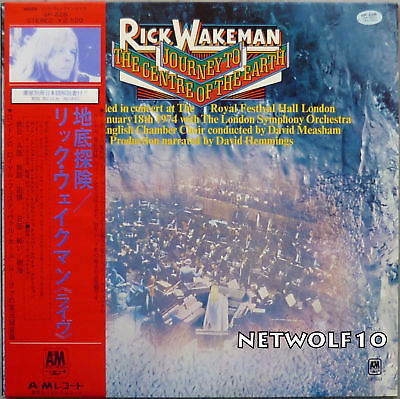
Rick Wakeman - Journey To The Centre Of The Earth - LP - Japan with OBI
€
70
$
81



Favourite Auctions
To save auctions to your favourites, please login
If you don't have an account, please register
Description
Rick Wakeman – JOURNEY TO THE CENTRE OF THE EARTH
LP
JAPAN PRESS WITH OBI
Descrizione Dettagliata – Detailed Description
Artista - Artist
Rick Wakeman
Titolo - Title
Journey To The Centre Of The Earth
Stampa - Issue
Japan Press
Etichetta - Label
King Record Ltd. Japan / A&M Record
Anno - Year
1974
N° Catalogo – N° Catalog
GP – 226
N° Dischi – N° LP
1
Commento - Comment
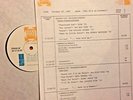
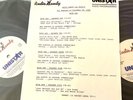
LP a copertina apribile. Vinile a 4 tracce, stampato da King Record Japan, su etichetta gialla A&M Records. Con inserto di 6 pagine, riportante i testi in inglese e giapponese, note biografiche in giapponese e ulteriore inserto di 8 pagine lucido con testi in inglese e illustrazioni colori. OBI a colori a sfondo rosso, riportante il prezzo di yen 2.500.
Richard Christopher Wakeman, più noto come Rick Wakeman (Perivale, 18 maggio 1949), è un tastierista e compositore britannico, noto soprattutto per il suo contributo agli album della formazione classica degli Yes. Insieme a Keith Emerson degli Emerson Lake & Palmer, a Jon Lord dei Deep Purple e Tony Banks dei Genesis, è stato uno dei tastieristi più rappresentativi e influenti del panorama del progressive rock degli anni settanta. Formatosi come pianista classico, è stato un pioniere nell'uso delle tastiere elettroniche. Diventato celebre negli Yes, è estremamente prolifico anche come solista. Soprannominato "lunga chioma bionda" (sia per la capigliatura fluente che per l'incredibile statura - ben oltre il metro e 90), Wakeman ha iniziato la propria carriera di musicista professionista nel 1970, suonando nel gruppo The Strawbs, e nel 1971 entrò a far parte degli Yes (unendosi a Jon Anderson, Chris Squire, Bill Bruford e Steve Howe). Il rapporto di Wakeman con il gruppo è stato decisamente turbolento, con almeno quattro abbandoni e successivi ritorni. Dal 2002 è tornato a far parte della band per la quinta volta. Verso la fine degli anni ottanta, Wakeman ha partecipato al progetto di "rifondazione degli Yes classici", realizzato da Jon Anderson col nome Anderson Bruford Wakeman Howe, suonando nell'unico album in studio della formazione e nel successivo live. La carriera solista di Wakeman è molto lunga e prolifica, ed è stata caratterizzata da alcuni grandi successi soprattutto a metà anni Settanta. Fra gli album più apprezzati si possono ricordare l'innovativo disco strumentale The Six Wives of Henry VIII (1973, oltre sei milioni di copie vendute, composto da sei brani dedicati appunto a ognuna delle sei mogli di Enrico VIII), The Myths and Legends of King Arthur and the Knights of the Round Table (1975) e Journey To The Centre Of The Earth (1974, oltre dodici milioni di copie vendute), che molti considerano uno degli album più significativi del rock progressivo inglese. Ha anche suonato spesso come ospite o session man per artisti anche molto diversi fra loro, come David Bowie, Elton John, Cat Stevens, Lou Reed, i Black Sabbath, John Williams, Al Stewart e i Brotherhood Of Man, fornendo un contributo decisivo a vari loro grandi successi. Wakeman è uno dei tastieristi che ha saputo "dominare" meglio il Mellotron, tastiera elettronica notoriamente ostica e basata sulla riproduzione continua di suoni registrati su nastro. È stato anche l'inventore, insieme a David Biro, del Birotron, uno strumento a tastiera che superò vari limiti e difficoltà del Mellotron, ma che non ebbe successo commerciale anche per il contemporaneo avvento (alla fine degli anni Settanta) delle tastiere digitali. Come ampiamente dimostrato dai numerosi brani che egli ha inciso o eseguito dal vivo più volte nel corso della sua carriera (ad esempio Merlin The Magician, Roundabout, South Side Of The Sky, Journey To The Centre Of The Earth, Catherine Parr, Anne Boleyn e Wurm), Wakeman va senz'altro annoverato tra i più grandi improvvisatori della storia del rock. Gran maestro dei colori timbrici e dell'orchestrazione tastieristica, è un grandissimo solista al MiniMoog nonché un sorprendente maestro del Clavinet: a quest'ultimo riguardo, si ascolti ad esempio l'episodio dopo la terza Narrazione di The Journey (da Journey To The Centre Of The Earth), più volte documentato sia su CD che su DVD. Nella sua produzione più recente, vanno inoltre ricordati vari album legati al genere New Age e numerosi ottimi album per pianoforte solo, come Country Airs (che tra le altre cose è stato un best-seller della musica New Age), The Piano Album, The Yes Piano Variations, Prelude To A Century, Heritage Suite e soprattutto l'incantevole quanto misconosciuto Chronicles Of Man. Un tempo noto per il carattere estremamente godereccio, Wakeman ha mutato abitudini in seguito a un attacco di cuore, al matrimonio (con la modella Nina Carter, ora divorziata), ai figli e alla rinascita della sua fede cristiana (battista). È stato direttore della squadra di calcio londinese del Brentford F.C., per la quale faceva il tifo fin da bambino, ma a seguito di una divergenza di vedute con l'amministrazione della squadra, attualmente fa il tifo per il Manchester City F.C. Alla fine degli anni Settanta è anche entrato in società con altri famosi musicisti come Paul Simon e Peter Frampton per acquisire la squadra di calcio americana dei Philadelphia Fury. Wakeman è noto per le simpatie politiche di destra: egli è uno dei pochi esponenti dell'ambiente musicale britannico ad essersi dichiarato sostenitore ufficiale del Partito Conservatore, per il quale si è anche esibito durante la tornata elettorale del 2005. Inoltre Wakeman è anche un convinto assertore dell'introduzione della pena di morte per gli spacciatori di droga, una battaglia storica dell'ex primo ministro Margaret Thatcher.
Journey to the Centre of The Earth è il secondo album solista del tastierista inglese Rick Wakeman. Pubblicato nel 1974, è basato sul racconto di Jules Verne Viaggio al centro della Terra ed è stato registrato dal vivo alla Royal Festival Hall a Londra, il 18 gennaio del 1974. Si dice che Wakeman dovette vendere alcuni dei suoi beni ed ipotecare la sua casa per registrare il disco. Non poté usufruire dello studio di registrazione a causa del suo ristretto budget. Originariamente questo lavoro aveva una maggior durata, ma alcune parti dovettero essere tagliate e ridoppiate dal momento che l'orchestra era costosa e Wakeman non poteva permettersi di ri-registrare queste parti; alcune sezioni di testo sono state eliminate. Dopo la registrazione, A&M UK non desiderava più produrre l'album, così Rick convinse A&M USA a farlo. Questo è stato il primo album Quadraphonic (Surround Sound) della A&M ad usare il sistema CD-4. L'album è disponibile in versione DVD, da incisione originale presso Sidney Myer Music Bowl a Melbourne, Australia (1975) e in una successiva versione studio (senza orchestra) registrata per la compilation Yes Story. Di solito l'abum compare assieme ad alcuni dei seguenti brani (sebbene non sempre in questo ordine): Catherine Parr, Guinevere, Journey to the Centre of the Earth, Catherine Howard, Merlin the Magician (o Merlyn the Magician), Anne Boleyn, Reprise from The Forest, The Forrest (sic), Journey, e The Lost End Journey Documentary. Insieme a The Six Wives Of Henry VIII e The Myths And Legends Of King Arthur And The Knights Of The Round Table, questo album è generalmente considerato come il miglior lavoro di Wakeman. Journey To The Centre Of The Earth è composto da numerosi arrangiamenti progressive rock eseguiti con l'ausilio di un'orchestra sinfonica e di un coro. Come detto all'inizio di questa voce, i testi sono basati sul libro di Giulio Verne. L'abilità di Wakeman nel dominare più sintetizzatori contemporaneamente è mostrata nei numerosi assolo e nelle sezioni di accompagnamento dei brani orchestrali. Nel corso dell'esecuzione, Wakeman utilizza principalmente sintetizzatori analogici Moog, un pianoforte elettrico Fender Rhodes, un Clavinet e un clavicembalo elettrico. Alcuni brani dell'opera sono stati utilizzati nel film Journey To The Centre Of The Earth. A seconda della performance, l'opera può durare dai 30 ai 40 minuti. Nell'edizione pubblicata nel primo disco di The Yes Story: The Gold Collection (un compilation degli Yes) la durata è di 31 minuti e 52 secondi, mentre la registrazione live del 1975 dura esattamente 40 minuti. Wakeman riprende nella parte finale dell'opera alcune alcune battute tratte da "In The Hall Of The Mountain King", di Edvard Grieg, adattandole con l'uso di sintetizzatori, orchestra, chitarra saturata (guitar overdriven), e percussioni. Lo stesso Wakeman cita il brano di Grieg all'interno della doppia copertina dicendo: "Because I stole a few bars" ("...perché gli ho rubato alcune battute""). Wakeman fu colpito da un infarto di lieve entità nel corso di un'intervista rilasciata subito dopo l'uscita del'album. A seguito di ciò fu ricoverato in ospedale e, nel corso della convalescenza, il componente (e fondatore) degli Yes Jon Anderson gli porse visita. Journey to the Centre of the Earth è stato il primo album di Wakeman a contenere delle sezioni cantate. Insieme a Gary Pickford-Hopkins, il cantante presente nel incisione live del 1974 è Ashley Holt, che apparirà spesso nei successivi album di Wakeman.
Tratte dall’ album segnalo: The Forest e The Battle, visionabili ai seguenti link:
http://www.youtube.com/watch?v=0pNVkkXqprk
http://www.youtube.com/watch?v=vGHUPz2TpRo
LP gatefold. Vinyl 4-track, printed by King Records Japan, on yellow label A & M Records. 6-page insert, showing the lyrics in English and Japanese, biographical notes in Japanese and another 8-page glossy insert with lyrics in English and color illustrations. OBI color red background, showing the price of 2.500 yen.
Richard Christopher Wakeman, better known as Rick Wakeman (Perivale, May 18, 1949) is a British keyboardist and composer, best known for his contribution to the album the classical training of Yes Together with Keith Emerson of Emerson Lake & Palmer, Jon Lord of Deep Purple and Tony Banks of Genesis, was one of the most representative and influential keyboard players in the panorama of progressive rock of the seventies. Trained as a classical pianist, was a pioneer in the use of electronic keyboards. Became famous in the Yes, it is extremely prolific as a soloist. Dubbed the "long blonde hair (both the hair flowing to the incredible height - well over one meter and 90), Wakeman began his career as a professional musician in 1970, playing in the group The Strawbs, and in 1971 became part of the Yes (joining Jon Anderson, Chris Squire, Bill Bruford and Steve Howe). Wakeman with the ratio of the group was very turbulent, with at least four dropouts and subsequent returns. Since 2002, he returned to join the band for the fifth time. In the late eighties, Wakeman was in the project of "re-founding of the Yes classic, made by Jon Anderson with the name Anderson Bruford Wakeman Howe, playing in the one studio album and subsequent live training. Wakeman's solo career is very long and prolific, and was marked by some great successes especially in the mid seventies. Among the most popular album you can remember the innovative instrumental album The Six Wives of Henry VIII (1973, over six million copies sold, with six tracks just dedicated to each of the six wives of Henry VIII), The Myths and Legends of King Arthur and the Knights of the Round Table (1975) and Journey To The Centre Of The Earth (1974, over twelve million copies sold), which many consider one of the most significant album of English progressive rock. He has also performed frequently as a guest or session musician for artists is also very different, as David Bowie, Elton John, Cat Stevens, Lou Reed, Black Sabbath, John Williams, Al Stewart and the Brotherhood of Man, providing a key role in various their greatest hits. Wakeman is a keyboard that was able to "dominate" the best Mellotron, electronic keyboard notoriously tricky, and based on continuous playback of sounds recorded on tape. It was also the inventor, along with David Biro of Birotron, a keyboard instrument which overcame various difficulties and limitations of the Mellotron, but had no commercial success for the simultaneous advent (in the late seventies) of digital keyboards. As amply demonstrated by the many songs he has recorded or performed live several times during his career (such as Merlin the Magician, Roundabout, South Side Of The Sky Journey To The Centre Of The Earth, Catherine Parr, Anne Boleyn and Wurm), Wakeman is certainly to be counted among the greatest improvisers in rock history. Grand Master's keyboard orchestration and timbral colors, is to a great soloist and a surprising master of MiniMoog Clavinet: the latter respect, it plays such as after the third episode of The Journey Narrative (from Journey To The Centre Of The Earth), documented several times on both CD and DVD. In its most recent production, should also be mentioned various New Age album gender and many fine solo piano album, Country Airs (which among other things was a best-selling New Age music), The Piano Album, The Yes Piano Variations, Prelude To A Century, Heritage Suite and especially charming as misunderstood Chronicles Of A Man once known for the extremely pleasure-seeking, Wakeman has changed habits after a heart attack, the marriage (with model Nina Carter, now divorced), children and the rebirth of his Christian faith (Baptist). He was director of the London football club Brentford FC, for which he was a typhoid as a child, but due to a divergence of views with the administrative team is currently cheering for Manchester City FC In the late seventies he also entered into partnership with other famous musicians such as Paul Simon and Peter Frampton to capture the American football team the Philadelphia Fury. Wakeman is known for right-wing political sympathies: He is one of the few British members of the musical to have declared an official supporter of the Conservative Party, for which he also performed during the elections in 2005. Wakeman is also a strong supporter of the introduction of the death penalty for drug dealers, a historic battle of former Prime Minister Margaret Thatcher.
Journey To The Centre Of The Earth is the second solo album by keyboardist Rick Wakeman English. Published in 1974, is based on the novel by Jules Verne Journey to the Center of the Earth and was recorded live at the Royal Festival Hall in London, January 18, 1974. It is said that Wakeman had to sell some of its assets and mortgaging his house to record the disc. He could not take advantage of the recording studio because of its limited budget. Originally, this work had a longer life, but some parts had to be cut and redubbed since the orchestra was expensive and Wakeman could not afford to re-register these shares, with some sections of text have been removed. After registering, UK A & M did not wish to produce the album, so Rick convinced A & M USA to do so. This was the first album Quadraphonic (Surround Sound) A & M to use the system CD-4. The album is available in DVD, from the original engraving at Sidney Myer Music Bowl in Melbourne, Australia (1975) and in a subsequent study (without orchestra) recorded for the compilation Yes Story. Usually abum appears along with some of these tracks (though not always in that order): Catherine Parr, Guinevere, Journey to the Center of the Earth, Catherine Howard, Merlin the Magician (or Merlyn the Magician), Anne Boleyn, Reprise from The Forest, The Forrest (sic), Journey, and The Lost Weekend Journey Documentary. Together with The Six Wives Of Henry VIII and The Myths And Legends Of King Arthur And The Knights Of The Round Table, this album is generally regarded as the best work of Wakeman. Journey To The Centre Of The Earth is composed of many progressive rock arrangements made with the aid of a symphony orchestra and a choir. As mentioned earlier this voice, the lyrics are based on the book by Jules Verne. Wakeman's ability to dominate once more synthesizers is shown in numerous solo and orchestral pieces to accompany each section. During the implementation, using mainly Wakeman Moog analog synthesizers, Fender Rhodes electric piano, Clavinet and an electric harpsichord. Some songs work were used in the movie Journey To The Centre Of The Earth. Depending on performance, the work can last from 30 to 40 minutes. In the edition published on the first disc of The Yes Story: The Gold Collection (a compilation of Yes), the duration is 31 minutes and 52 seconds, while the live recording of 1975 lasts exactly 40 minutes. Wakeman takes some work in the final few lines taken from "In The Hall Of The Mountain King" by Edvard Grieg, adapting to the use of synthesizers, orchestra, saturated guitar (overdriven guitar), and percussion. Wakeman himself mentions the song by Grieg in the double cover, saying: "Because I stole A Few bars" ("... because I stole some jokes "). Wakeman suffered a mild heart attack during an interview shortly after the release Jamal. As a result he was hospitalized, and during his convalescence, the component (and founder) Jon Anderson of Yes visited him. Journey to the Center of the Earth was the first album of Wakeman to contain the sung sections. Along with Gary Pickford-Hopkins, the singer in the live recording of 1974 is Ashley Holt, who often appears in the following albums Wakeman.
Taken from album suggest: The Forest e The Battle, viewed at the following links:
http://www.youtube.com/watch?v=0pNVkkXqprk
http://www.youtube.com/watch?v=vGHUPz2TpRo
Condizioni - Conditions
Copertina
Cover
MINT
Vinile
Vinyl
MINT
Testi
Lyric Sheet
MINT
Obi
MINT
Foto Dettagliate
Modalità di pagamento e condizioni generali – Shipping and Payment
Contattatemi per ulteriori informazioni o richieste di sconti per acquisti multipli.
Accetto pagamenti solo con Paypal e bonifico bancario.
Per i pagamenti effettuati tramite Paypal, si accettano solo spedizioni tracciabili.
Il pagamento dovrà avvenire entro 7 giorni dalla chiusura dell’ acquisto ( a meno che il compratore non comunichi le sue motivazioni). Trascorso tale termine l’ oggetto sarà rimesso in vendita con conseguente rilascio di feedback negativo.
Tutte le foto utilizzate nelle mie aste sono sempre riferite ai reali oggetti in vendita.
Tutti gli imballi, sia per i dvd che per i vinili, saranno effettuati nel miglior modo possibile, per evitare danneggiamenti del prodotto durante il trasporto.
Contact me for more information or requests for discounts for multiple purchases.
I accept payments only through Paypal and bank transfer.
For payments made via Paypal, we only accept shipments traceable.
Payment must be within 7 days from the closure of purchase (unless the buyer does not give reasons). After that time, the object will be relisted for sale, with consequent release of negative feedback.
All photos used in my auctions are always referring to real objects in the sale.
All packaging, both for the dvd for the vinyl, will be made in the best possible way, to avoid damage of the product during transport. Any duty or customs for incoming items are the responsibility of buyer.
Tipologie di Spedizione e costi per l’ Italia
Posta Raccomandata
Per Acquisti fino a 350 grammi
6,50 euro
Per Acquisti da 350 grammi a 1 Kg
8,50 euro
Pacco celere 3
Per Acquisti oltre 1 Kg
12 euro
Tipologie di Spedizione e costi per l’ Estero – Shipping’s metod and cost
Posta Raccomandata
ZONA 1
ZONA 2
ZONA 3
Europa,
Bacino del Mediterraneo
Africa,
Asia,
Americhe
Oceania
For Purchases of up to 350 grams
Per Acquisti fino a 350 grammi
11 euro
14 euro
18 euro
For Purchases from 350 grams to 1 kg
Per Acquisti da 350 grammi a 1 Kg
15 euro
19 euro
26 euro
For Purchases of 1 Kg to 2 Kg
Per Acquisti da 1 Kg a 2 Kg
21 euro
31 euro
36 euro
price rating