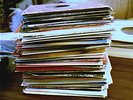
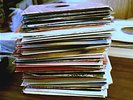
Randy Newman Sail Away 1972 MS 2064 1st US WL Promo LP White Label
$
50


Favourite Auctions
To save auctions to your favourites, please login
If you don't have an account, please register
Description
Randy Newman – Sail Away
Label: Reprise Records – MS 2064 Format: Vinyl, LP, Album, Promo, Stereo, Gatefold Country: US Released: 1972 Genre: Rock, Pop Style: Soft Rock, Pop Rock, Vocal A1 Sail Away 2:56 A2 Lonely At The Top 2:32 A3 He Gives Us All His Love 1:53 A4 Last Night I Had A Dream 3:01 A5 Simon Smith And The Amazing Dancing Bear 2:00 A6 Old Man 2:42 B1 Political Science 2:00 B2 Burn On 2:33 B3 Memo To My Son 1:56 B4 Dayton, Ohio - 1903 1:47 B5 You Can Leave Your Hat On 3:18 B6 God's Song (That's Why I Love Mankind) 3:36 Recorded At – Amigo Studios Recorded At – Western Recorders Recorded At – Poppi Studios Phonographic Copyright ℗ – Warner Bros. Records Inc. Published By – January Music Corp. Published By – Randy Newman Publishing Published By – Warner-Tamerlane Publishing Corp. Alto Saxophone – Abe Most (tracks: A2) Artwork By [Album Graphics], Photography – MIke Salisbury Bass – Chris Ethridge, Jimmy Bond, Wilton Felder Co-producer [Production Assistant] – Judy Maizel, Trudy Portch Composed By, Arranged By – Randy Newman Concertmaster – Louis Kauffman* Conductor – Emil Newman (tracks: A1, B2), Larry Marks (tracks: A6) Drums – Earl Palmer, Gene Parsons, Jim Keltner Engineer [Other] – Bob Kovach, Bruce Botnick, Don Landee*, Lanky* Engineer, Mixed By – Lee Herschberg Guitar – Russ Titelman, Ry Cooder Lacquer Cut By – LH* Percussion – Milt Holland Piano, Vocals – Randy Newman Producer – Lenny Waronker, Russ Titelman ℗ 1972 Warner Bros. Records Inc.
Labels state PROMOTION - NOT FOR SALE.
Randall Stuart Newman (born November 28, 1943) is an American singer, songwriter, arranger, pianist, composer, conductor and orchestrator. He is known for his non-rhotic Southern-accented singing style, early Americana-influenced songs (often with mordant or satirical lyrics), and various film scores.[5] His hits as a recording artist include "Short People" (1977), "I Love L.A." (1983), and "You've Got a Friend in Me" (1995), and has written songs such as "Mama Told Me Not to Come" (1966), "I Think It's Going to Rain Today" (1968), and "You Can Leave Your Hat On" (1972).
Born in Los Angeles to an extended family of Hollywood film composers,[6] Newman began his songwriting career at the age of 17, penning hits for acts such as the Fleetwoods, Cilla Black, Gene Pitney, and the Alan Price Set. In 1968, he made his formal debut as a solo artist with the album Randy Newman, produced by Lenny Waronker and Van Dyke Parks. Four of Newman's non-soundtrack albums have charted in the US top 40: Sail Away (1972), Good Old Boys (1974), Little Criminals (1977), and Harps and Angels (2008).
Since the 1980s, Newman has worked mostly as a film composer. He has scored nine Disney-Pixar animated films, including the first four Toy Story films (1995–2019), A Bug's Life (1998), both Monsters, Inc. films (2001, 2013), and the first and third Cars films (2006, 2017), as well as Disney's James and the Giant Peach (1996) and The Princess and the Frog (2009). His other film scores include Cold Turkey (1971), Ragtime (1981), The Natural (1984), Awakenings (1990), Pleasantville (1998), Meet the Parents (2000), Seabiscuit (2003), and Marriage Story (2019).
Newman has received numerous accolades over his career including two Academy Awards, three Emmys, seven Grammy Awards as well as nominations for a BAFTA Award and seven Golden Globe Awards. He was honored with Recording Academy's Governors Award and was made a Disney Legend in 2017.[7][8] He was inducted into the Songwriters Hall of Fame in 2002 and to the Rock and Roll Hall of Fame in 2013.[9]
Early life and education Newman was born to a Jewish family on November 28, 1943, his father's 30th birthday,[10] in Los Angeles, California. He is the son of Adele "Dixie" (née Fuchs/Fox; August 30, 1916 – October 4, 1988), a secretary, and Irving George Newman (November 28, 1913 – February 1, 1990), an internist.[11] He lived in New Orleans, Louisiana, as a young child and spent summers there until he was 11 years old, when his family returned to Los Angeles. The paternal side of his family includes grandparents Luba (née Koskoff) (July 21, 1883 – March 3, 1954) and Michael Newman (Nemorofsky) (1874–1948), and 3 uncles who were Hollywood film-score composers: Alfred Newman, Lionel Newman, and Emil Newman.[12] Newman's cousins, Thomas, Maria, David, and Joey, are also composers for motion pictures. He graduated from University High School in Los Angeles. He studied music at the University of California, Los Angeles, but dropped out one semester shy of a B.A.[13] In June 2021, he finally completed his degree at UCLA.[14]
Newman's parents were non-observant Jews: Newman himself is an atheist.[15] He has said that religion or any sense of religious identity was completely absent in his childhood. To illustrate this, he has often recounted in interviews an antisemitic incident that occurred when he was young: he was invited by a classmate to be her date to a cotillion at her Los Angeles country club, the Riviera Country Club.[15] He accepted the invitation but was subsequently disinvited by the girl's father, who told Newman that his daughter should never have invited him because Jews were not allowed at the club. Newman hung up the phone, then went to ask his own father what a "Jew" was.[15][16][17]
Career
Newman playing piano in 1972 Songwriter Newman has been a professional songwriter since he was 17. He cites Ray Charles as his greatest influence growing up, stating, "I loved Charles' music to excess."[18] His first single as a performer was 1962's "Golden Gridiron Boy", released when he was 18.[19] The single flopped and Newman chose to concentrate on songwriting and arranging for the next several years.
An early writing credit was "They Tell Me It's Summer", used as the b-side of the Fleetwoods 1962 single, "Lovers by Night, Strangers by Day", which led to further commissions from the Fleetwoods and also Pat Boone.[20] Other early songs were recorded by Gene Pitney, Jerry Butler, Petula Clark, Dusty Springfield, Jackie DeShannon, the O'Jays, and Irma Thomas, among others. His work as a songwriter met with particular success in the UK: top 40 UK hits written by Newman included Cilla Black's "I've Been Wrong Before" (No. 17, 1965), Gene Pitney's "Nobody Needs Your Love" (No. 2, 1966) and "Just One Smile" (No. 8, 1966); and the Alan Price Set's "Simon Smith and the Amazing Dancing Bear" (No. 4, 1967). Price, an English keyboardist who was enjoying great success at the time, championed Newman by featuring seven Randy Newman songs on his 1967 A Price on His Head album.
In the mid-1960s, Newman kept a close musical relationship with the band Harpers Bizarre, best known for their 1967 hit version of the Paul Simon composition "The 59th Street Bridge Song (Feelin' Groovy)". The band recorded six Newman compositions, including "Simon Smith" and "Happyland", during their short initial career (1967–1969).
In this period, Newman began a long professional association with childhood friend Lenny Waronker. Waronker had been hired to produce the Tikis, the Beau Brummels and the Mojo Men, who were all contracted to the Los Angeles independent label Autumn Records. He in turn brought in Newman, Leon Russell and another friend, pianist/arranger Van Dyke Parks, to play on recording sessions. Later in 1966, Waronker was hired as an A&R manager by Warner Bros. Records and his friendship with Newman, Russell and Parks began a creative circle around Waronker at Warner Bros. that became one of the keys to Warner Bros.' subsequent success as a rock music label.[21]
In the 1970s, Newman co-wrote with Jake Holmes the "Most Original Soft Drink Ever" jingle for Dr Pepper.[22]
In 2011, Newman endorsed jazz singer Roseanna Vitro's album, The Randy Newman Project (Motéma Music, 2011).[23]
In 2020, Newman wrote a song called “Stay Away” to support people during the COVID-19 pandemic. The song can be downloaded and proceeds go to the Ellis Marsalis Center to support underserved children in New Orleans’ 9th Ward.[24]
Newman's song compositions are represented by Downtown Music Publishing.[25]
Recording artist His 1968 debut album, Randy Newman, was a critical success but never entered the Billboard Top 200. Many artists, including Barbra Streisand, Helen Reddy, Bette Midler, Alan Price, Van Dyke Parks, Dave Van Ronk, Judy Collins, Glen Campbell, Cass Elliot, Art Garfunkel, the Everly Brothers, Claudine Longet, Bonnie Raitt, Dusty Springfield, Tom Odell, Nina Simone, Lynn Anderson, Wilson Pickett, Pat Boone, Neil Diamond and Peggy Lee, covered his songs and "I Think It's Going to Rain Today" became an early standard.
In 1969, he did the orchestral arrangements for the songs "Minstrel of the Dawn" and "Approaching Lavender" on Gordon Lightfoot's Sit Down Young Stranger (later renamed If You Could Read My Mind) (1970), and for Peggy Lee's single "Is That All There Is?", as well as her album with the same title (which also contained her cover versions of two of his songs: "Love Story" and "Linda").[26] Also in 1969 he recorded "Gone Dead Train" for the 1970 movie and soundtrack album to Performance, starring Mick Jagger.
In 1970, Harry Nilsson recorded an entire album of Newman compositions (Newman played piano) called Nilsson Sings Newman. The album was not a commercial success, but critics liked it (it won a "Record of the Year" award from Stereo Review magazine), and it paved the way for Newman's 1970 release, 12 Songs, a more stripped-down sound that showcased Newman's piano. Ry Cooder's slide guitar and contributions from Byrds members Gene Parsons and Clarence White helped to give the album a much rootsier feel. 12 Songs was also critically acclaimed (6th best album of the seventies according to Village Voice critic Robert Christgau), but again found little commercial success, though Three Dog Night made a huge hit of his "Mama Told Me Not to Come". The following year, Randy Newman Live cemented his cult following and became his first LP to appear in the Billboard charts, at No. 191. Newman also made his first foray into music for films at this time, writing and performing the theme song "He Gives Us All His Love" for Norman Lear's 1971 film Cold Turkey.
1972's Sail Away reached No. 163 on Billboard, with the title track making its way into the repertoire of Ray Charles and Linda Ronstadt. "You Can Leave Your Hat On" which was covered by Three Dog Night, then Joe Cocker, and later by Keb Mo, Etta James, Tom Jones (whose version was later used for the final striptease to the 1997 film The Full Monty), and the Québécois singer Garou. The album also featured "Burn On", an ode to an infamous incident in which the heavily polluted Cuyahoga River literally caught fire. In 1989, "Burn On" was used as the opening theme to the film Major League, whose focus was the hapless Cleveland Indians.
price rating