Previn FORTUNE COOKIE Film Soundtrack OST LP (aka WHIPLASH WILLIE) Billy Wilder
£
25
$
33


Favourite Auctions
To save auctions to your favourites, please login
If you don't have an account, please register
Description
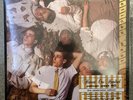
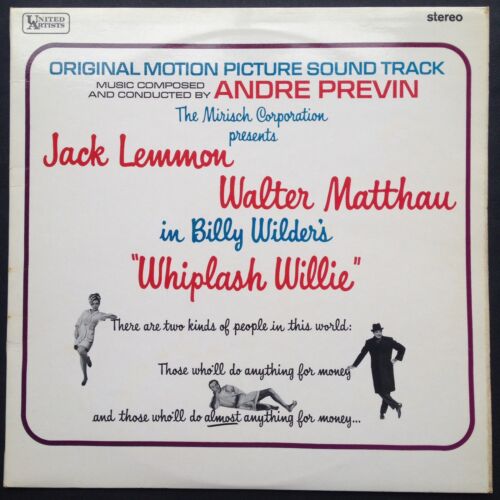
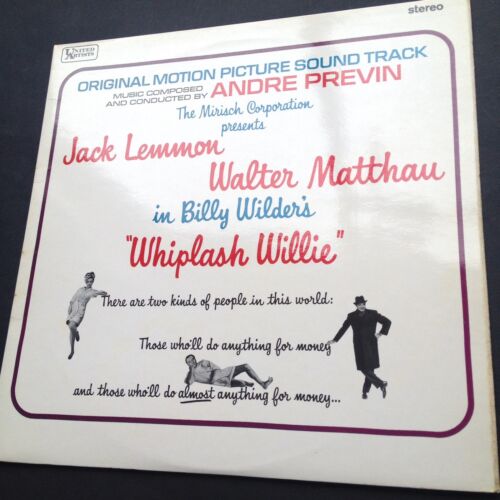
Here I have for sale the rare UK release of the original soundtrack LP to Billy Wilder's 'Whiplash Willie' (US title: 'The Fortune Cookie'), composed and conducted by Andre Previn.
The film starred Jack Lemmon and Walter Matthau.
Whiplash Willie / The Fortune Cookie (Original Motion Picture Soundtrack) - Andre Previn (1966)
Condition (refer also to notes at bottom):
Vinyl - VG-EX. Both sides look superbly clean. No obvious signs of wear or scratches. Played just pre-listing and sound clarity is super. Some mild clicks in places.
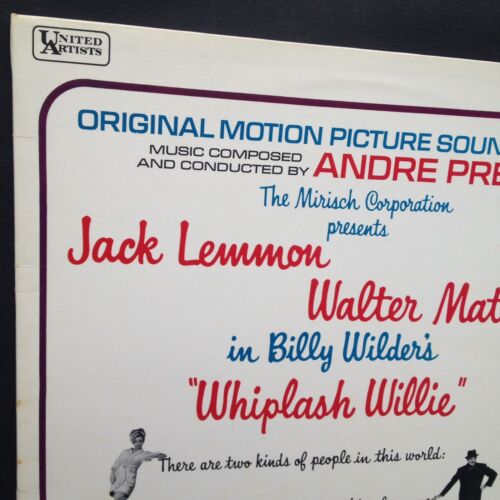
Outer Sleeve/Cover - EX. Mild corner wear and creasing but colours remain bright and unfaded on superb laminated cover. Some soiling on flipbacks. Disc showthrough outline evident on front. Minor aperture wear.
Inner Sleeve - EX. Original. White paper with slightly curved corners. A few folds/creases but intact.
Label: United Artists SULP 1166
Format: Vinyl, LP, Album
Year: 1966
Country: UK
Genre: Jazz, Classical, Stage & Screen, Soundtrack, Easy Listening
Style: Swing, Score, Contemporary, Instrumental, Theme, Pop
Track listing:
A1. The Bad Guys (03:00)
A2. The Nice Guys (03:20)
A3. Second Chance (02:46)
A4. Waltz Of The Fortune Cookies (02:34)
A5. You'd Be So Nice To Come Home To (01:53) (Cole Porter composition)
B1. Main Title (01:24)
B2. An Old Roomate (03:13)
B3. The Caper (01:55)
B4. One Million Dollars (02:03)
B5. The Detectives (01:58)
B6. Final Score-End Title (02:31)
----------------
About the score:
After working with Adolph Deutsch on Some Like It Hot and The Apartment, Billy Wilder turned to composer André Previn for his next four films: One, Two, Three (1960), Irma La Douce (1963), Kiss Me, Stupid (1964) and The Fortune Cookie (1966).
A big sports fan, Wilder had once witnessed a sideline collision between a football player and a cameraman while watching a game on television. “Nothing happened,” he later recalled, “but I put the incident into my idea bank, where it didn’t collect interest.” The director had hoped to film The Private Life of Sherlock Holmes after Kiss Me, Stupid, but due to casting problems with the Holmes film—and the immediate availability of Jack Lemmon—he opted to develop The Fortune Cookie instead. Walter Matthau, then starring in The Odd Couple on Broadway, quickly signed on.
The film’s story centers on CBS-TV cameraman Harry Hinkle (Lemmon). While working at a Cleveland Browns football game, he is accidentally tackled by Luther “Boom Boom” Jackson (Ron Rich), the league’s leading punt returner. Harry’s shyster brother-in-law, “Whiplash Willie” Gingrich (Matthau), concocts a plan to fake a severe injury and defraud an insurance company. To help persuade the generally honest Harry to go along with the conspiracy, Willie enlists the aid of Sandy (Judi West), Harry’s no-good ex-wife, for whom Harry still has feelings. Convinced that Gingrich is up to something, the insurance company’s lawyers hire private detective Chester Purkey (Cliff Osmond) to mount an around-the-clock surveillance of Harry’s apartment. In the end, Willie’s plan succeeds—at least temporarily—when he negotiates a $200,000 settlement, but Purkey uses Harry’s innate honesty and loyalty to goad the cameraman into giving up the hoax in order to defend Boom Boom.
Shooting commenced at Cleveland’s Municipal Stadium during an actual NFL game on October 31, 1965. Local residents were invited to participate as extras the following day for additional location photography. The production then moved to California and proceeded without incident for the next two months—until Walter Matthau suffered a heart attack. Initially the press was told that he had been hospitalized with hepatitis, but it became clear that Matthau would not make a quick recovery. Rather than reshoot Matthau’s scenes with another actor, Wilder and his crew shut down production and waited. The gamble paid off: Matthau won a Best Supporting Actor Oscar for his role as the resourceful but ethically compromised attorney; Matthau’s career as a leading actor was launched; and he and Lemmon would team up again and again, most famously in the screen adaptation of The Odd Couple.
By 1966, André Previn was on the verge of an international conducting career: The Fortune Cookie would be his last score for a Hollywood film. Previn and Wilder shared a similar background (both had fled from Hitler’s Germany to the United States via Paris around the same time) and sense of humor—the composer’s musical sensibilities were a perfect match for the director’s razor-sharp wit.
Each of Previn’s prior collaborations with Wilder had involved an element of adaptation as well as original composition: his score for One, Two, Three interpolated Aram Khachaturian’s “Saber Dance,” Irma La Douce incorporated songs from the original stage musical into the instrumental background score, and Kiss Me, Stupid employed lesser-known Gershwin tunes. The Fortune Cookie would use one of songwriter Cole Porter’s most famous compositions, “You’d Be So Nice to Come Home To” (originally written for the 1943 Columbia Pictures musical Something to Shout About). The song is heard both instrumentally as a theme for Sandy and vocally as source music. Another pre-existing work is also incorporated into the score: The fight song for the University of Chicago, “Wave the Flag (For Old Chicago)” by Gordon Erickson, is heard during the football sequences and when allusions are made to Hinkle’s accident.
Previn’s original thematic material includes themes for the “bad guys” (Willie and the private detectives), the “nice guys” (Boom Boom and Harry) and a rhapsodic waltz that serves as something of love theme for Harry and Sandy. The score was recorded at Goldwyn Studios on June 13, 14 and 15, 1966, with an additional session on July 14. Previn also wrote a song called “The Fortune Cookie” (with lyrics by his then-wife, Dory Langdon Previn) that was “inspired by” the film but was not heard in the movie or thematically related to the score in any way; it was recently recorded by vocalist David Pascucci for his CD Inside André Previn.
The soundtrack LP for The Fortune Cookie released by United Artists Records (UAS 5145) in the fall of 1966 presented slightly less than half of the music heard in the film, but included all of the thematic material and most of the major musical episodes. While only the album masters survive today, many of the omitted cues were brief in duration and/or consisted of slight variants of cues included on the LP.
Two unreleased sequences are noteworthy, however: in one, Previn employs a Theremin (recalling Rózsa’s score for Wilder’s The Lost Weekend) when insurance company doctors perform a battery of tests on Harry Hinkle; in the other, “You’d Be So Nice to Come Home To” is treated to a stellar orchestral arrangement as Sandy arrives in Cleveland.
––––––––––––––––––––––
Postage and packaging FREE to UK.
Will post worldwide.
Europe (Royal Mail International Standard) = £6.50
Europe (Royal Mail International Tracked and Signed) = £11
North and South America, USA, Canada (Royal Mail International Standard) = £9
Asia, Australia, Japan (Royal Mail International Standard) = £11.
Sorry but no returns accepted.
Payment by cheque (UK only) or Paypal please.
Please see my other soundtrack listings.
Thanks for looking and happy eBaying!
ITEM CONDITION - items are graded according to Record Collector definitions - see below:
MINT: The record itself is in brand new condition with no surface marks or deterioration in sound quality. The cover and any extra items such as the lyric sheet, booklet or poster are in perfect condition. Records advertised as Sealed or Unplayed should be Mint.
EXCELLENT: The record shows some signs of having been played, but there is very little lessening in sound quality. The cover and packaging might have slight wear and / or creasing.
VERY GOOD: The record has obviously been played many times, but displays no major deterioration in sound quality, despite noticeable surface marks and the occasional light scratch. Normal wear and tear on the cover or extra items, without any major defects, is acceptable.
GOOD: The record has been played so much that the sound quality has noticeably deteriorated, perhaps with some distortion and mild scratches. The cover and contents suffer from folding, scuffing of edges, spine splits, discolouration, etc.
FAIR: The record is still just playable but has not been cared for properly and displays considerable surface noise; it may even jump. The cover and contents will be torn, stained and / or defaced.
POOR: The record will not play properly due to scratches, bad surface noise, etc. The cover and contents will be badly damaged or partly missing.
BAD: The record is unplayable or might even be broken, and is only of use as a collection filler.
ITEM CONDITION - items are graded according to Record Collector definitions - see below:
MINT: The record itself is in brand new condition with no surface marks or deterioration in sound quality. The cover and any extra items such as the lyric sheet, booklet or poster are in perfect condition. Records advertised as Sealed or Unplayed should be Mint.
EXCELLENT: The record shows some signs of having been played, but there is very little lessening in sound quality. The cover and packaging might have slight wear and / or creasing.
VERY GOOD: The record has obviously been played many times, but displays no major deterioration in sound quality, despite noticeable surface marks and the occasional light scratch. Normal wear and tear on the cover or extra items, without any major defects, is acceptable.
GOOD: The record has been played so much that the sound quality has noticeably deteriorated, perhaps with some distortion and mild scratches. The cover and contents suffer from folding, scuffing of edges, spine splits, discolouration, etc.
FAIR: The record is still just playable but has not been cared for properly and displays considerable surface noise; it may even jump. The cover and contents will be torn, stained and / or defaced.
POOR: The record will not play properly due to scratches, bad surface noise, etc. The cover and contents will be badly damaged or partly missing.
BAD: The record is unplayable or might even be broken, and is only of use as a collection filler.
price rating