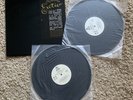
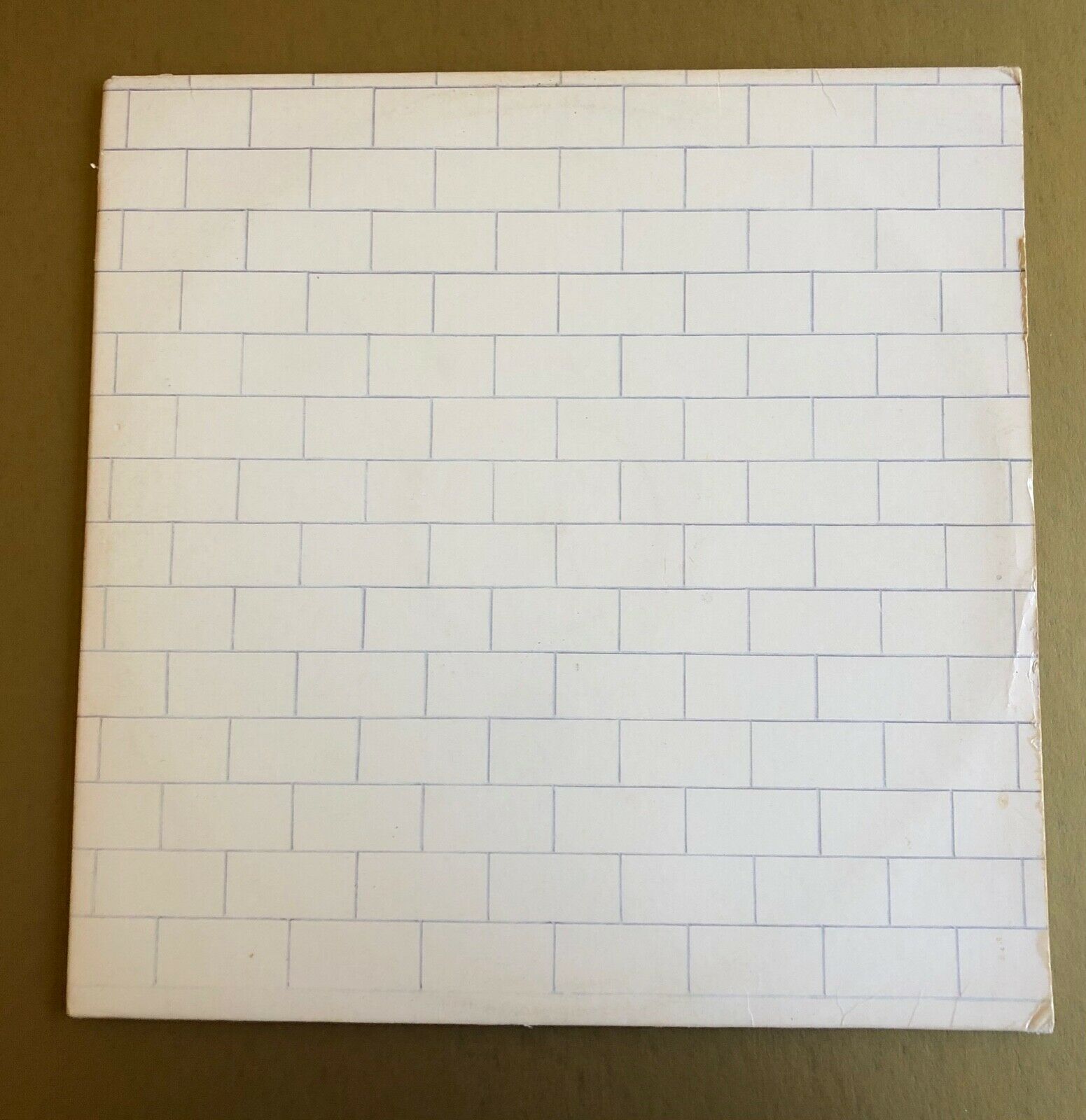
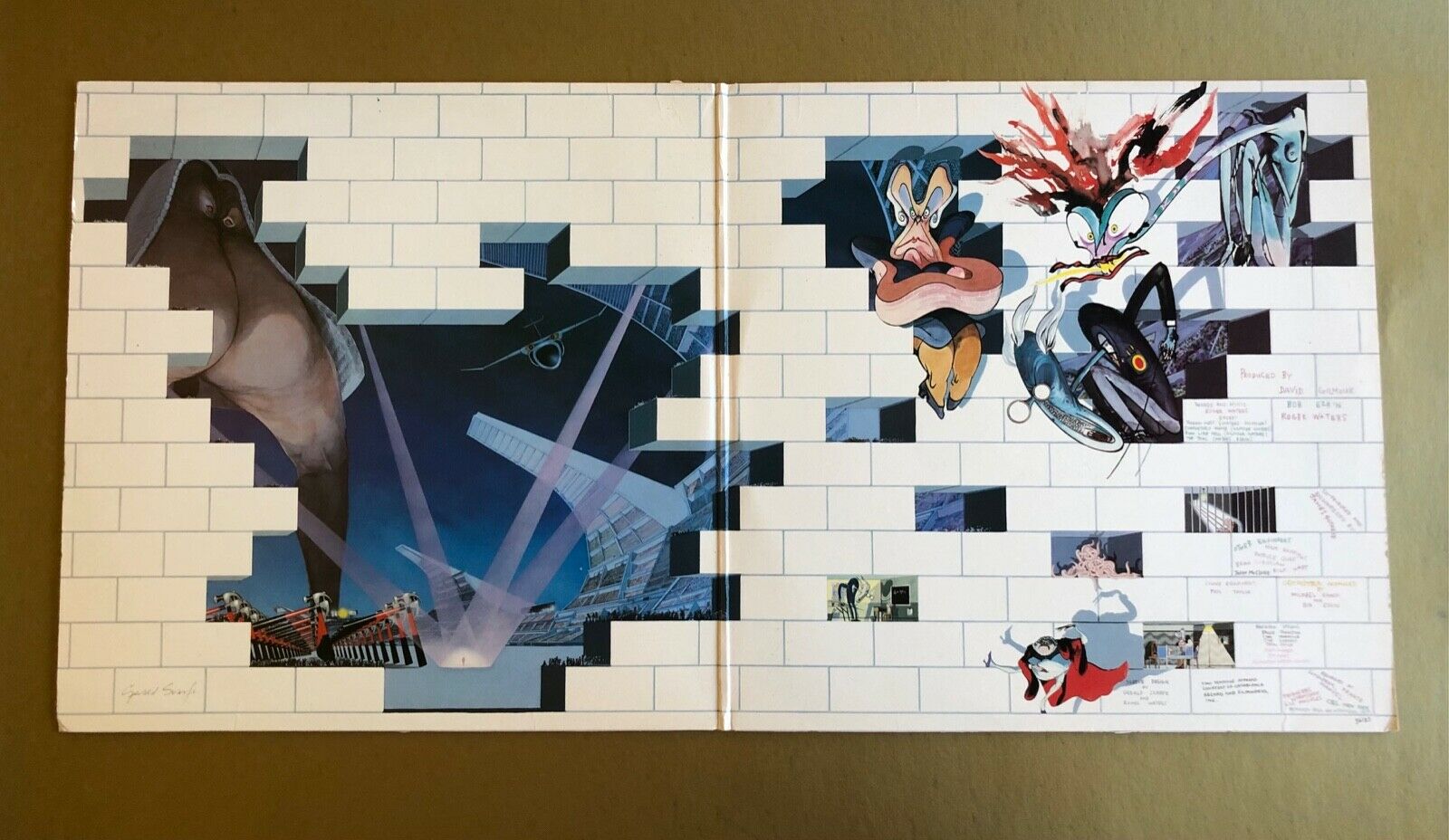
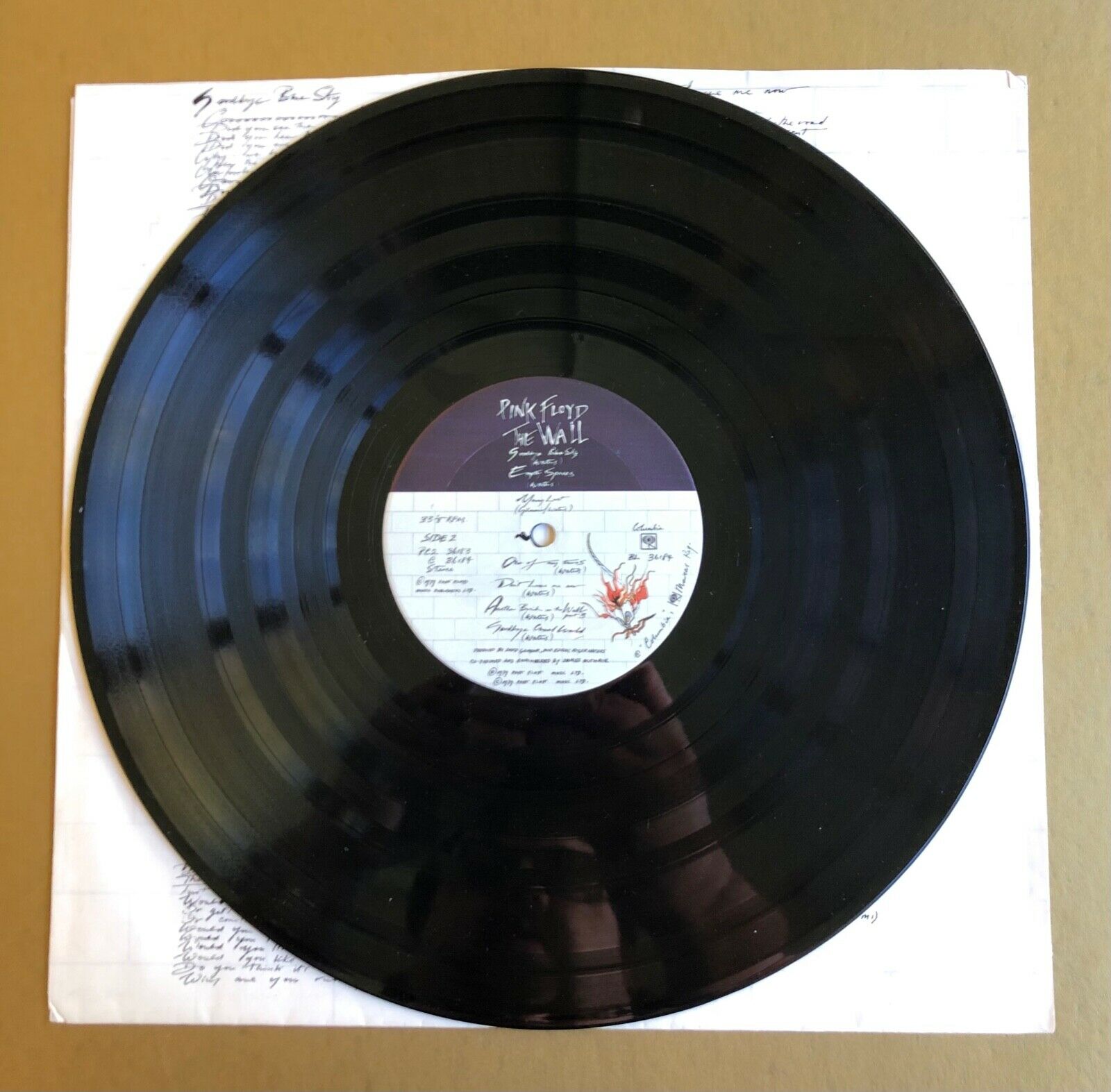
Pink Floyd "The Wall" Vinyl 2-LP First Pressing (1979)
$
60


Favourite Auctions
To save auctions to your favourites, please login
If you don't have an account, please register
Description
Pink Floyd The Wall PC2 36184 Dead Wax: AL 36184 PAL 36184-1AC First Pressing Terre Haute 91979)
From wikipedia:
Released 30 November 1979 Recorded December 1978 – November 1979 Studio Various[show] Genre
- Art rock[1]
- progressive rock[2]
- progressive pop[3]
- Bob Ezrin
- David Gilmour
- James Guthrie
- Roger Waters
The Wall is the eleventh studio album by the English rock band Pink Floyd, released on 30th November 1979 by Harvestand Columbia Records. It is a rock opera that explores Pink, a jaded Rockstar whose eventual self-imposed isolation from society forms a figurative wall. The album was a commercial success, topping the US charts for 15 weeks, and reaching number three in the UK. It initially received mixed reviews from critics, many of whom found it overblown and pretentious, but later received accolades as one of the finest albums of all time.
Bassist Roger Waters conceived The Wall during Pink Floyd's 1977 In The Flesh tour, modelling the character of Pink after himself and former bandmate Syd Barrett. Recording spanned from December 1978 to November 1979. Producer Bob Ezrinhelped to refine the concept and bridge tensions during recording, as the band were struggling with personal and financial issues at the time. The Wall is the last album to feature Pink Floyd as a quartet; keyboardist Richard Wright was fired by Waters during production, but stayed on as a salaried musician. Three singles were issued from the album: "Another Brick in the Wall, Part 2" (the band's only UK number-one single), "Run Like Hell", and "Comfortably Numb". From 1980 to 1981, Pink Floyd performed the full album on a tour that featured elaborate theatrical effects. In 1982, The Wall was adapted into a feature film, for which Waters wrote the screenplay.
The Wall is one of the best-known concept albums.[4] With over 30 million copies sold, it is the second best-selling album in the band's catalogue (behind The Dark Side of the Moon) and one of the best-selling albums of all time.[5] Some of the outtakes from the recording sessions were used on the group's next album, The Final Cut (1983). In 2000 it was voted number 30 in Colin Larkin's All Time Top 1000 Albums.[6] In 2003 and 2012, it was included in Rolling Stone's lists of the greatest albums of all time.[7] From 2010 to 2013, Waters staged a new Wall live tour that became the highest-grossing tour by a solo musician.
Contents
- 1Background
- 2Concept and storyline
- 2.1Plot
- 3Production
- 3.1Recording
- 3.2Instrumentation
- 3.3Sound design
- 4Artwork and packaging
- 5Release and reception
- 6Reissues
- 7Tour
- 8Adaptations
- 9Track listing
- 10Personnel
- 11Charts
- 11.1Weekly charts
- 11.2Year-end charts
- 12Certifications and sales
- 13References
- 14External links
Background[edit]
In 1977, Pink Floyd played the In the Flesh Tour, their first playing in stadiums. Bassist and singer-songwriter Roger Waters despised the experience, feeling the audience was not listening and that many were too far away to see the band. He said: "It became a social event rather than a more controlled and ordinary relationship between musicians and an audience."[8] Some audience members set off firecrackers, leading Waters to stop playing and scold them. In July 1977, on the final date at the Montreal Olympic Stadium, a group of noisy and excited fans near the stage irritated Waters so much that he spat on one of them.[9]
Guitarist and singer-songwriter David Gilmour refused to perform a final encore and sat at the soundboard,[10] leaving the band, with backup guitarist Snowy White, to improvise a slow, sad 12-bar blues, which Waters announced to the audience as "some music to go home to".[11][12] That night, Waters spoke with producer Bob Ezrin and Ezrin's psychiatrist friend about the alienation and despair he was experiencing, and he articulated his desire to isolate himself by constructing a wall across the stage between the performers—himself, along with the rest of the band—and the audience.[13]
While Gilmour and Wright were in France recording solo albums, and drummer Nick Mason was busy producing Steve Hillage's Green, Waters began to write material.[14]The spitting incident became the starting point for a new concept, which explored the protagonist's self-imposed isolation after years of traumatic interactions with authority figures and the loss of his father as a child.[12]
In July 1978, Pink Floyd reconvened at Britannia Row Studios, where Waters presented two new ideas for concept albums. The first was a 90-minute demo with the working title Bricks in the Wall.[15] The second was about a man's dreams across one night, and dealt with marriage, sex, and the pros and cons of monogamy and family life versus promiscuity.[16] The band chose the first option; the second eventually became Waters's first solo album, The Pros and Cons of Hitch Hiking (1984).[15]
By September, Pink Floyd were having financial problems and urgently needed to produce an album to make money.[17] Financial planners Norton Warburg Group (NWG) had invested £1.3–3.3 million, up to £19.1 million in contemporary value,[18] of the group's money in high-risk venture capital to reduce their tax liabilities. The strategy failed when many of the businesses NWG invested in lost money, leaving the band facing tax rates potentially as high as 83 percent. "We made Dark Side and it looked as if we'd cracked it," recalled Waters. "Then suddenly these bastards had stolen it all. It looked as if we might be faced with huge tax bills for the money that had been lost. Eighty-three per cent was a lot of money in those days and we didn't have it."[19] Pink Floyd terminated their relationship with NWG, demanding the return of uninvested funds.[20][nb 1] "By force of necessity, I had to become closely involved in the business side," said Gilmour, "because no one around us has shown themselves sufficiently capable or honest to cope with it, and I saw with Norton Warburg that the shit was heading inexorably towards the fan. They weren't the first crooks we stupidly allied ourselves with. Ever since then, there's not a penny that I haven't signed for. I sign every cheque and examine everything."[19]
To help manage the project's 26 tracks, Waters decided to bring in a producer and collaborator,[15] feeling he needed "a collaborator who was musically and intellectually in a similar place to where I was".[21] They hired Ezrin at the suggestion of Waters's then-girlfriend Carolyne Christie, who had worked as Ezrin's secretary.[17] Ezrin had worked with Alice Cooper, Lou Reed, Kiss, and Peter Gabriel.[22] From the start, Waters made it clear who was in charge, telling him: "You can write anything you want. Just don't expect any credit."[23]
Ezrin and Gilmour reviewed Waters's concept, discarding what they thought was not good enough. Waters and Ezrin worked mostly on the story, improving the concept.[24] Ezrin presented a 40-page script to the rest of the band, with positive results. He recalled: "The next day at the studio, we had a table read, like you would with a play, but with the whole of the band, and their eyes all twinkled, because then they could see the album."[21] Ezrin broadened the storyline, distancing it from the autobiographical work Waters had written and basing it on a composite character named Pink.[25] Engineer Nick Griffiths later said: "Ezrin was very good in The Wall, because he did manage to pull the whole thing together. He's a very forceful guy. There was a lot of argument about how it should sound between Roger and Dave, and he bridged the gap between them."[26] Waters wrote most of the album, with Gilmour co-writing "Comfortably Numb", "Run Like Hell", and "Young Lust",[27] and Ezrin co-writing "The Trial".[24]
price rating