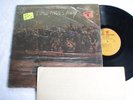
Pink Floyd - The Wall - 2 LP - Japan Press with OBI
€
250
$
291


Favourite Auctions
To save auctions to your favourites, please login
If you don't have an account, please register
Description
PINK FLOYD
THE WALL
2 LP
JAPAN PRESS WITH OBI
Descrizione Dettagliata – Detailed Description
Artista - Artist
Pink Floyd
Titolo - Title
The Wall
Stampa - Issue
CBS
Etichetta - Label
CBS/Sony Inc. Japan
Anno - Year
1979
N° Catalogo - N° Catalog
40AP-1750/1
N° Dischi - N° LP
2
Commento - Comment
Lp a copertina apribile. Edizione originale in splendide condizioni globali di conservazione, con inserto di 4 pagine riportante la presentazione dell’ album, i testi in giapponese e note biografiche e discografiche in giapponese. Inner sleeves lucidi riportanti tutti i testi in inglese. Caps OBI orizzontale a sfondo azzurro riportante il prezzo di yen 4.000
I Pink Floyd sono stati una rock band britannica formatasi nella seconda metà degli anni sessanta che, nel corso di una lunga e travagliata carriera, è riuscita a riscrivere le tendenze musicali della propria epoca e a diventare uno dei gruppi più importanti della storia del rock. Sebbene agli inizi siano stati influenzati prevalentemente dal rock psichedelico e dallo space rock, il genere al quale appartengono è in prevalenza il rock progressivo. Caratterizzati da testi filosofici, esperimenti sonori, grafiche innovative e spettacolari concerti, hanno venduto oltre 210 milioni di dischi in tutto il mondo, di cui 74,5 milioni nei soli Stati Uniti d'America. I Pink Floyd hanno influenzato considerevolmente la musica successiva, dai gruppi progressive degli anni settanta, come Genesis e Yes, fino a musicisti contemporanei, come Nine Inch Nails e i Dream Theater. Il gruppo, nato a Londra nel 1965, è formato dal cantante e chitarrista Roger Keith "Syd" Barrett, dal bassista George Roger Waters, dal batterista Nicholas Berkeley "Nick" Mason e dal tastierista Richard William "Rick" Wright. Nel 1968 si aggiunge al gruppo il chitarrista David Jon "Dave" Gilmour, che sostituisce Barrett, costretto ad abbandonare da problemi psichiatrici esacerbati dall'uso di droghe pesanti. La band, dopo essersi fatta notare grazie a lavori di stampo psichedelico, raggiunge la maturità con Atom Heart Mother, e si afferma a livello mondiale con The Dark Side of the Moon ed i successivi album, tra cui Wish You Were Here e The Wall, che consegnano i quattro alla storia del rock. La formazione non subisce sostanziali cambiamenti fino al 1985, escludendo una parentesi in cui Wright figura solo come turnista. Nel 1985 Waters abbandona il gruppo; i membri rimanenti pubblicano successivamente altri due album in studio di notevole successo: A Momentary Lapse of Reason e The Division Bell. La formazione cessa la propria attività nel 1995, e si scioglie nel 2006, quando Gilmour nega ufficialmente la possibilità di una reunion.Con la morte di Wright, nel 2008, si spengono di fatto le speranze dei fan.
The Wall è il loro nono album in studio, pubblicato nel 1979. Fu seguito da un tour di concerti dal vivo, che avevano effetti scenici elaboratissimi, e dal film Pink Floyd The Wall. L'album è un'opera rock incentrata sul personaggio Pink; egli durante la sua infanzia ha subito un profondo trauma, quale la morte del padre nella seconda guerra mondiale, al quale si aggiunsero altri disagi: la madre iperprotettiva, i maestri eccessivamente autoritari e, in età adulta, i tradimenti della moglie. Tutti questi sono i fattori che portano alla costruzione del "muro" di Pink, da cui il titolo dell'album. Come le opere precedenti del gruppo, anche The Wall è un concept album e fu ispirato da un evento che accadde durante il tour "In The Flesh", quando Waters sputò addosso ad uno spettatore troppo molesto, dopo il quale fu ammesso da lui stesso il desiderio di costruire un muro tra lui ed il pubblico. Il pianista Richard Wright non partecipò alla registrazione dell'album, ma fu presente nella band durante il tour di promozione. Il successo dell'album fu enorme: fu l'album più venduto negli Stati Uniti nel 1980, divenendo uno degli album doppi più venduti nella storia. Si è posizionato all' 87° posto nella lista dei 500 migliori album secondo Rolling Stone. Durante l'ultimo concerto del tour "In The Flesh", eseguito al Montreal Olympic Stadium nel luglio del 1977, un gruppo di spettatori in prima fila irritarono Waters con le loro urla a tal punto che il bassista sputò ad uno di loro. L'intera band si sentiva a disagio nell'esibirsi davanti ad un pubblico così numeroso, ma Waters fu il membro più influenzato dalla situazione, tant'è che, dopo uno scontro con il manager Steve O'Rourke in cui si infortunò il piede, parlò con Bob Ezrin ed uno psichiatra, con i quali si trovava in auto, del distacco che sentiva dal tour, del suo odio per le esibizioni negli stadi e della barriera che percepiva tra lui e il pubblico durante i concerti. Così, mentre Gilmour e Wright si trovavano in Francia per registrare degli album solisti e Mason partecipava alla realizzazione dell'album Green di Steve Hillage, Waters cominciò a scrivere nuovo materiale. L'incidente dello sputo diventò la base per un nuovo concept, basato sul distacco tra il pubblico e gli artisti. Così, nello stesso luglio del '77, Waters presentò alla band due nuovi progetti: una demo di circa novanta minuti intitolata Bricks in the Wall ed un'altra che sarebbe poi diventata il suo primo album solista, The Pros and Cons of Hitch Hiking. Fu scelta la prima come loro successivo album. Gilmour e Mason vollero essere cauti inizialmente con il progetto, dato che Waters aveva fornito solo un'idea di base per l'album. La band fu, comunque, costretta ad intraprendere la creazione dell'opera, data la terribile situazione finanziaria in cui si trovava in quel periodo; essa avrebbe dovuto contenere 26 canzoni, divise su due dischi. Fu ingaggiato come co-produttore Bob Ezrin, che aveva di recente lavorato al primo album solista di Peter Gabriel ed era stato suggerito alla band dalla compagna di Waters, Carolyne Christie, che aveva lavorato per Ezrin come segretaria. Waters mise subito in chiaro le cose con il produttore: «Puoi scrivere ciò che vuoi. Solamente non ti aspettare nessun riconoscimento.». Fu così che la band cominciò, insieme ad Ezrin, a preparare l'album, la maggior parte del quale è opera di Waters (Gilmour lavorò attivamente solo a poche canzoni, come Young Lust, Run Like Hell e Comfortably Numb). Ezrin e Waters si impegnarono sulla storia; i due partirono dal lavoro autobiografico del bassista per poi ampliarlo, modificandolo in molte sue parti, e giungere alla creazione del personaggio protagonista dell'album: Pink. Il co-produttore Ezrin collaborò anche al brano The Trial[. Pink è un artista che, anche a causa dei tragici avvenimenti della propria vita (il padre morto in guerra mentre lui era ancora in fasce, la scuola disumanizzante, la madre iperprotettiva, l'alienante vita da rock-star, le groupies, il divorzio), si chiude dietro ad un muro psicologico invalicabile che, per proteggerlo dal mondo esterno lo soffoca inesorabilmente, trascinandolo nella follia (e richiamando, in tal modo, anche la storia personale di Syd Barrett). Dall'infanzia e dalla prima giovinezza di Pink, si passa - nel lato B del primo disco - al difficile rapporto del protagonista, ormai divenuto un rock-star, prima con la madre, poi con il successo. Intanto il rapporto tra Pink e la moglie si incrina a causa della loro incomunicabilità; il muro ormai si è chiuso. Con esso Pink cerca di proteggersi dalle delusioni, da ogni dolore, ma resta più che mai solo. Tenta di vincere il proprio isolamento, ma inutilmente (Is There Anybody Out There? - Nobody Home). Pink è solo ed in balia dei propri produttori che lo salvano da un'overdose solo per sbatterlo su un palco per il suo ennesimo concerto. Waters immagina che la massificazione giovanile, la perdita di identità delle masse di adolescenti venga favorita e forse anche sfruttata dalle rock star, il cui seguito acritico potrebbe addirittura far rivivere gli incubi del nazismo. Ma resta l'isolamento del protagonista. Tale solitudine può essere vinta in un solo modo: analizzare la propria vita, rivedere il proprio percorso; così si apre un processo (The Trial), il cui esito è la condanna, forse dolorosa, forse liberatoria, ad abbattere il muro, ad eliminare le proprie difese, ad esporsi - nudo - ai propri simili. Il doppio album si chiude con la ballade Outside the Wall, poesia delicata e dal tono introspettivo. Le canzoni dell'album spaziano tra sbotti di rabbia anche molto violenti (One of My Turns) e ballate delicate ma strazianti (Nobody Home). La novità del sound si afferma fin dai primi brani dell'album. Le quartine suonate sul rullante da Mason (In the Flesh) evocano un suono più heavy di quello dei precedenti albums. Il disco richiama spesso suoni bellici (è ancora la batteria di Nick Mason a richiamare sventagliate di mitragliatrice). L'elicottero di The Happiest Days Of Our Lives (brano precedente ad Another Brick in the Wall p. II che ne fa da introduzione) evoca scene di guerra che, legate alla morte del padre di Waters (deceduto nel 1944 ad Anzio), dominano la prima facciata dell'album. Viene forse suggerito anche un rapporto tra la massificazione, subita dai ragazzi ad opera del rigido ed alienante sistema scolastico, e l'inquadramento militare. L'album è attraversato dal "leit motiv" di Another Brick in the Wall (ma dal vivo i leit motiv sono vari - il tema di Empty Spaces ad esempio ricorre prima di Goodbye Cruel World). In tal modo Waters inserisce nel rock elementi della musica classica. Inoltre l'opera è anche una rappresentazione teatrale: The Trial si svolge addirittura nel palcoscenico della mente di Pink. È un'elaborazione mentale attraverso la quale Pink processa se stesso, immaginando, come testimoni a carico, il maestro, la moglie, la madre. Infine The Wall diventa un film, diretto da Alan Parker con il contributo grafico di Gerald Scarfe. Nei concerti di The Wall si è ricreata minuziosamente la forte critica del disco senza sfilacciarla, ma anzi, amplificandola, ribadendo il ruolo di The Wall come opera rock contro il rock. All'inizio di ogni concerto, saliva sul palco la cosiddetta "Surrogate Band", quattro persone che indossavano maschere che riproducevano il volto dei veri membri della band. Dopo essere giunta sul palco la vera band, il concerto andava avanti accompagnato dai mostruosi cartoni animati creati da Gerald Scarfe, proiettati su di uno schermo circolare. A metà dello spettacolo, tra Another Brick in the Wall part. 3 e Goodbye Cruel World, in pochi minuti, veniva edificato un muro di polistirolo che divideva il pubblico dal gruppo (una delle principali metafore del concept di The Wall). Durante Comfortably Numb, però Roger Waters usciva dal muro indossando un camice bianco, mentre David Gilmour veniva innalzato al di sopra di esso. Alla fine del concerto, il muro veniva violentemente fatto crollare (senza però danneggiare né gli spettatori, né la troupe, né la band). Il doppio album live Is There Anybody Out There?: The Wall Live 1980-1981 è stato pubblicato nel 2000.
Lp gatefold. Original edition in excellent condition overall conservation, with an insert of four pages showing the presentation of 'album, the lyrics in Japanese and biographical notes and record in Japanese. Inner sleeve slides showing all texts in English. Caps OBI horizontal blue background showing the price of 4.000 yen
Pink Floyd were a British rock band formed in the mid-sixties, during a long and troubled career, has managed to rewrite the musical trends of his time and become one of the most important bands in rock history. Although at the beginning were mainly influenced by the psychedelic rock and space rock, the kind to which they belong is mostly progressive rock. Characterized by philosophical texts, sonic experimentation, innovative album cover have sold over 210 million records worldwide, including 74.5 million in the United States alone. Pink Floyd influenced the later music, from progressive bands of the seventies, like Genesis and Yes, up to contemporary artists such as Nine Inch Nails and Dream Theater. The group, born in London in 1965, was formed by singer / guitarist Roger Keith "Syd" Barrett, bassist George Roger Waters, drummer Nicholas Berkeley "Nick" Mason and keyboardist Richard William "Rick" Wright. In 1968 the group added guitarist David Jon Dave Gilmour to replace Barrett, who was forced to flee from psychiatric problems exacerbated by the use of hard drugs. The band, after having made a lasting impression with a psychedelic print jobs, reaches maturity with Atom Heart Mother, and states worldwide with The Dark Side Of The Moon and the subsequent albums including Wish You Were Here and The Wall delivering four to rock history. The training does not undergo substantial changes until 1985, excluding a period in which Wright is mentioned only as a session musician. In 1985, Waters left the group, the remaining members subsequently released two more highly successful studio albums: A Momentary Lapse of Reason and The Division Bell. The formation ceases trading in 1995 and disbanded in 2006, when Gilmour officially denies the possibility of a reunion.Con death of Wright in 2008, he made off of the hopes of the fans.
The Wall is their ninth studio album, released in 1979. It was followed by a live concert tour, which had elaborate stage effects, and the film Pink Floyd The Wall. The album is a rock opera centered on the character Pink, during his childhood he suffered a deep trauma, which his father died in World War II, who joined other inconveniences: the overprotective mother, the teachers too authoritarian and in adulthood, the treachery of his wife. All these are factors that lead to the construction of the "wall" by Pink, hence the title. As the group's previous works, including The Wall is a concept album and was inspired by an event that happened during the tour "In The Flesh", where Waters spat at an audience too troublesome, after which he was admitted to the desire to build a wall between him and the public. The pianist Richard Wright did not attend the recording of the album, but was present in the band during the tour promotion. The album's success was enormous: it was the biggest selling album in the United States in 1980, becoming one of the best-selling double album in history. It is positioned at '87 ° on the list of the 500 greatest albums of Rolling Stone. During the last concert of the tour "In The Flesh", performed at the Montreal Olympic Stadium in July 1977, a group of spectators in the front row Waters irritated with their screams so much that the bass player spit to one of them. The whole band felt uncomfortable in performing before an audience so large, but Waters was the member most affected by the situation, so much so that after a confrontation with manager Steve O'Rourke when he injured his foot, spoke with Bob Ezrin and a psychiatrist, with whom he was in a car, the tour felt that the posting of his hatred for performances in stadiums and the perceived barrier between him and the audience during concerts. So while Gilmour and Wright were in France to record solo albums and Mason participated in the creation of the album Green Steve Hillage, Waters began writing new material. The incident sputum became the basis for a new concept based on the separation between audience and artists. Thus, in the same July 77, Waters introduced the band two new projects: a demo of about ninety minutes entitled Bricks in the Wall and another that would later become his first solo album, The Pros and Cons of Hitch Hiking. It was the first choice as their next album. Gilmour and Mason initially wanted to be cautious with the project, as Waters had provided only a basic idea for the album. The band was, however, forced to undertake the creation of the work, given the terrible financial situation was at that time, it should contain 26 songs, spread over two discs. He was hired as co-producer Bob Ezrin, who had recently worked on the first solo album by Peter Gabriel and the band was suggested by fellow Waters, Carolyn Christie, who had worked as a secretary for Ezrin. Waters began immediately to clear things with the producer: "You write what you want. Just do not expect any recognition.. " That was how the band started, together with Ezrin, preparing the album, most of which is the work of Waters (Gilmour actively worked only a few songs, like Young Lust, Run Like Hell and Comfortably Numb). Ezrin and Waters undertook on the history and the two left the autobiographical work of bassist then extended, changed in many parts, and finally establishing the main character of the album: Pink. Co-producer Ezrin also contributed the song "The Trial" [. Pink is an artist, partly because of the tragic events of his life (his father died in the war while he was still in diapers, school dehumanizing, overprotective mother, the alienating life rock star, the groupies, divorce ), close behind a psychological wall that impassable, to protect it from the outside world relentlessly choking, dragging him into madness (and recalling, in this way, the personal story of Syd Barrett). Childhood and early adulthood of Pink, you go - in the B-side of the first disc - the difficult relationship the protagonist has become a rock star, first with her mother, then with success. Meanwhile the relationship between Pink and his wife cracks because of their inability to communicate, the wall has now closed. Pink with it trying to protect themselves from disappointment, from every pain, but remains more than ever alone. Attempts to overcome their isolation, but in vain (Is There Anybody Out There? - Nobody Home). Pink is in the hands of its producers and that saves him from an overdose just to throw him on stage for his umpteenth concert. Waters imagines that the massification of youth, loss of identity of the masses of teenagers to be encouraged and perhaps even exploited by the rock star, after which the uncritical could even revive the nightmares of Nazism. But it remains the isolation of the protagonist. That loneliness can be overcome in one way: to analyze their lives, review their own path, so you open a trial (The Trial), whose outcome is the condemnation, perhaps painful, perhaps liberating to break down the wall to eliminate his defense, to expose himself - naked - to his fellows. The double album closes with the ballade Outside the Wall, poetry delicate and introspective tone. The songs range from very violent burst of anger (One of My Turns) and gentle ballads but harrowing (Nobody Home). The novelty of the sound is said from the first album. The quatrains played on the snare by Mason (In the Flesh) evoke a heavier sound than previous albums. The disc draws often sounds of war (the battery is still Nick Mason to draw bursts of machine gun). The helicopter of The Happiest Days Of Our Lives (previous track to Another Brick in the Wall p. II makes an introduction) evokes scenes of war, related to the death of Waters' father (who died in 1944 at Anzio), dominate the first side of the album. You might also suggested a relationship between the massification, suffered by children by the harsh and alienating school system, and military framework. The album is crossed by the "leitmotif" of Another Brick in the Wall (live but the leitmotif is different - the issue of Empty Spaces such use before Goodbye Cruel World). Waters thus part of the rock elements of classical music. Moreover, the work is also a play: The Trial takes place even in the stage of mind Pink. It is an elaboration mental processes through which Pink himself, imagining, as witnesses against him, the teacher, wife, mother. Finally, The Wall became a film directed by Alan Parker with contributions by Gerald Scarfe chart. Concerts in The Wall has meticulously recreated the strong criticism of the disc without frayed, but rather, amplifying, reaffirming the role of The Wall as a rock opera against the rock. Beginning of each concert, took the stage called "Surrogate Band, four people were wearing face masks that reproduce the real band members. After finishing the real band on stage, the concert went on accompanied by monstrous cartoon created by Gerald Scarfe, projected onto a circular screen. In the middle of the show, including "Another Brick in the Wall Part. 3 and Goodbye Cruel World, in minutes, was built a wall of foam that separated the public from the group (one of the main metaphors of the concept of The Wall). During "Comfortably Numb, Roger Waters, however, came from the wall wearing a white coat, and David Gilmour was raised above it. After the concert, the wall was brought down violently (without damage to either the audience or the crew or the band). The double live album Is There Anybody Out There?: The Wall Live 1980-1981 was published in 2000.
Condizioni - Conditions
Copertina - Cover
NM
Vinile 1 - Vinyl 1
NM
Vinile 2 - Vinyl 2
NM
Testi - Lyric Sheet
NM
Obi
NM
Foto Dettagliate
Modalità di pagamento e condizioni generali – Shipping and Payment
Contattatemi per ulteriori informazioni o richieste di sconti per acquisti multipli.
Accetto pagamenti solo con Paypal e bonifico bancario.
Per i pagamenti effettuati tramite Paypal, si accettano solo spedizioni tracciabili.
Il pagamento dovrà avvenire entro 7 giorni dalla chiusura dell’ acquisto ( a meno che il compratore non comunichi le sue motivazioni). Trascorso tale termine l’ oggetto sarà rimesso in vendita con conseguente rilascio di feedback negativo.
Tutte le foto utilizzate nelle mie aste sono sempre riferite ai reali oggetti in vendita.
Tutti gli imballi, sia per i dvd che per i vinili, saranno effettuati nel miglior modo possibile, per evitare danneggiamenti del prodotto durante il trasporto.
Contact me for more information or requests for discounts for multiple purchases.
I accept payments only through Paypal and bank transfer.
For payments made via Paypal, we only accept shipments traceable.
Payment must be within 7 days from the closure of purchase (unless the buyer does not give reasons). After that time, the object will be relisted for sale, with consequent release of negative feedback.
All photos used in my auctions are always referring to real objects in the sale.
All packaging, both for the dvd for the vinyl, will be made in the best possible way, to avoid damage of the product during transport. Any duty or customs for incoming items are the responsibility of buyer.
Tipologie di Spedizione e costi per l’ Italia
Posta Raccomandata
Per Acquisti fino a 350 grammi
6,50 euro
Per Acquisti da 350 grammi a 1 Kg
8,50 euro
Pacco celere 3
Per Acquisti oltre 1 Kg
11 euro
Tipologie di Spedizione e costi per l’ Estero – Shipping’s metod and cost
Posta Raccomandata
ZONA 1
ZONA 2
ZONA 3
Europa,
Bacino del Mediterraneo
Africa,
Asia,
Americhe
Oceania
For Purchases of up to 350 grams
Per Acquisti fino a 350 grammi
11 euro
14 euro
18 euro
For Purchases from 350 grams to 1 kg
Per Acquisti da 350 grammi a 1 Kg
15 euro
19 euro
26 euro
For Purchases of 1 Kg to 2 Kg
Per Acquisti da 1 Kg a 2 Kg
21 euro
31 euro
36 euro