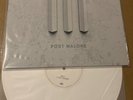
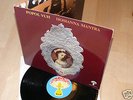
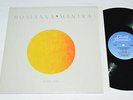
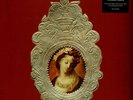
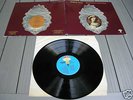
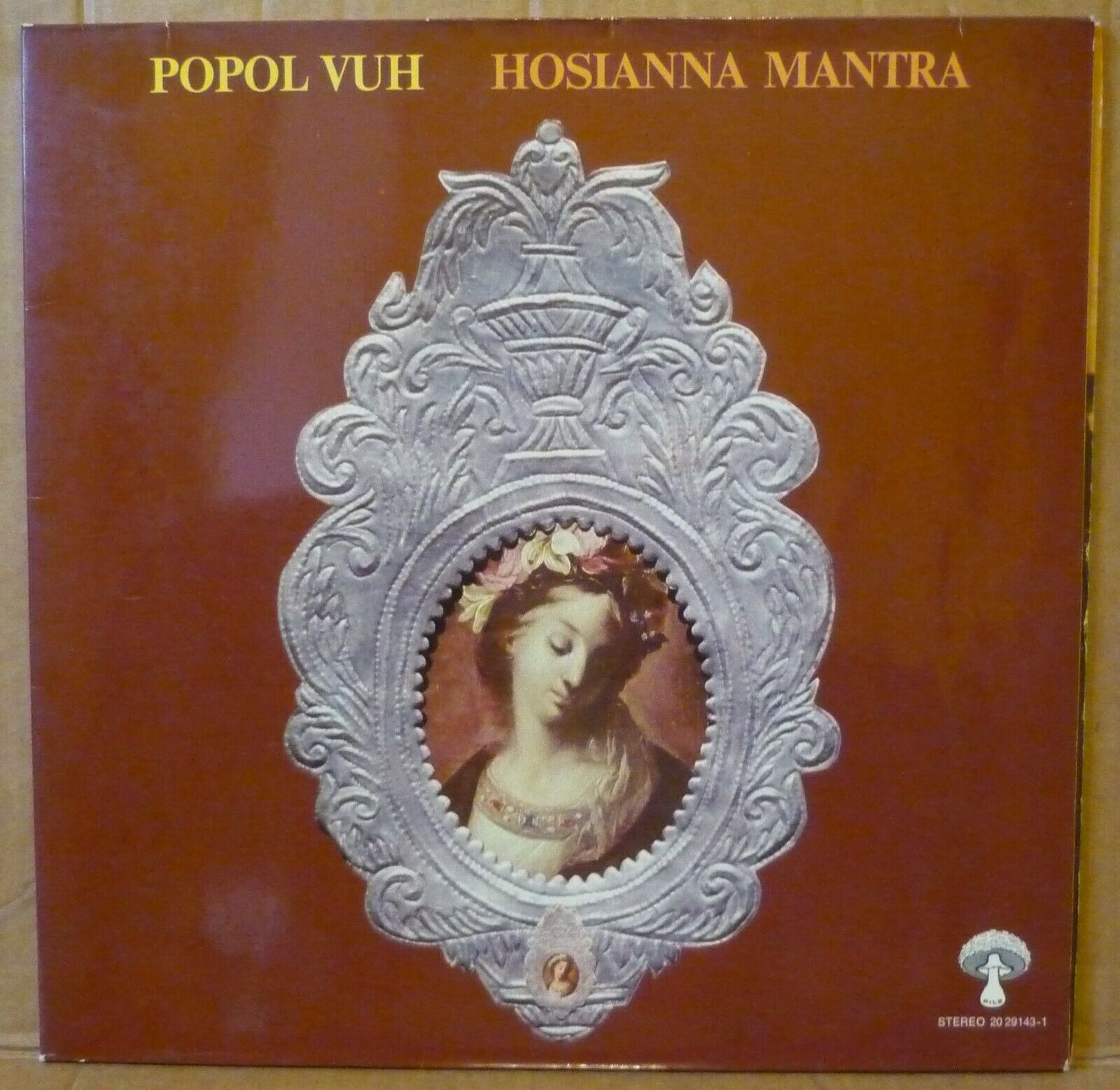
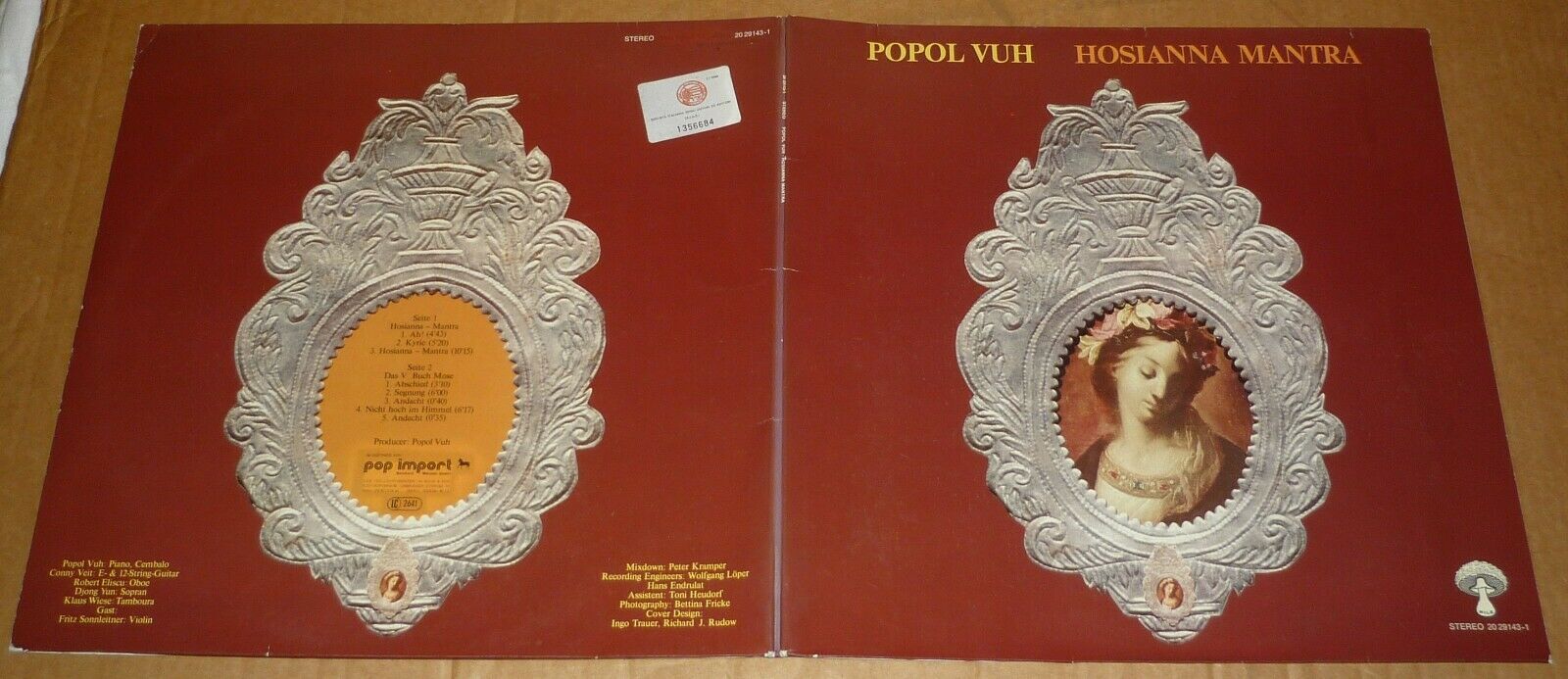
POPOL VUH Hosianna Mantra LP PILZ RECORDS 1972 GER reissue+foc 20 29143-1
€
42
$
47


Favourite Auctions
To save auctions to your favourites, please login
If you don't have an account, please register
Description
WE ARE POSTING EVERYWHERE IN THE WORLD.
SO IN ORDER TO AVOID MISUNDERSTANDING WE ADVISE YOU TO ENQUIRE
ABOUT POSTAGE COST BEFORE YOU ACTUALLY BID/PURCHASE THE ITEM
PLEASE ASK FOR ANY INFORMATION
POPOL VUH
Experimental band craft mind-expanding ambient Moog pieces supported by tribal percussion that mimicked Indian ragas.
Of the many now-legendary artists to emerge from the Krautrock movement, few anticipated the rise of modern electronic music with the same prescience as Popol Vuh -- the first German band to employ a Moog synthesizer, their work not only anticipated the emergence of ambient, but also proved pioneering in its absorption of worldbeat textures.
"HOSIANNA MANTRA"
<reissue, originally published in 1972>
LP PILZ RECORDS 20 29143-1
MADE IN GERMANY 1982 REPRESSING
POP IMPORT SERIES
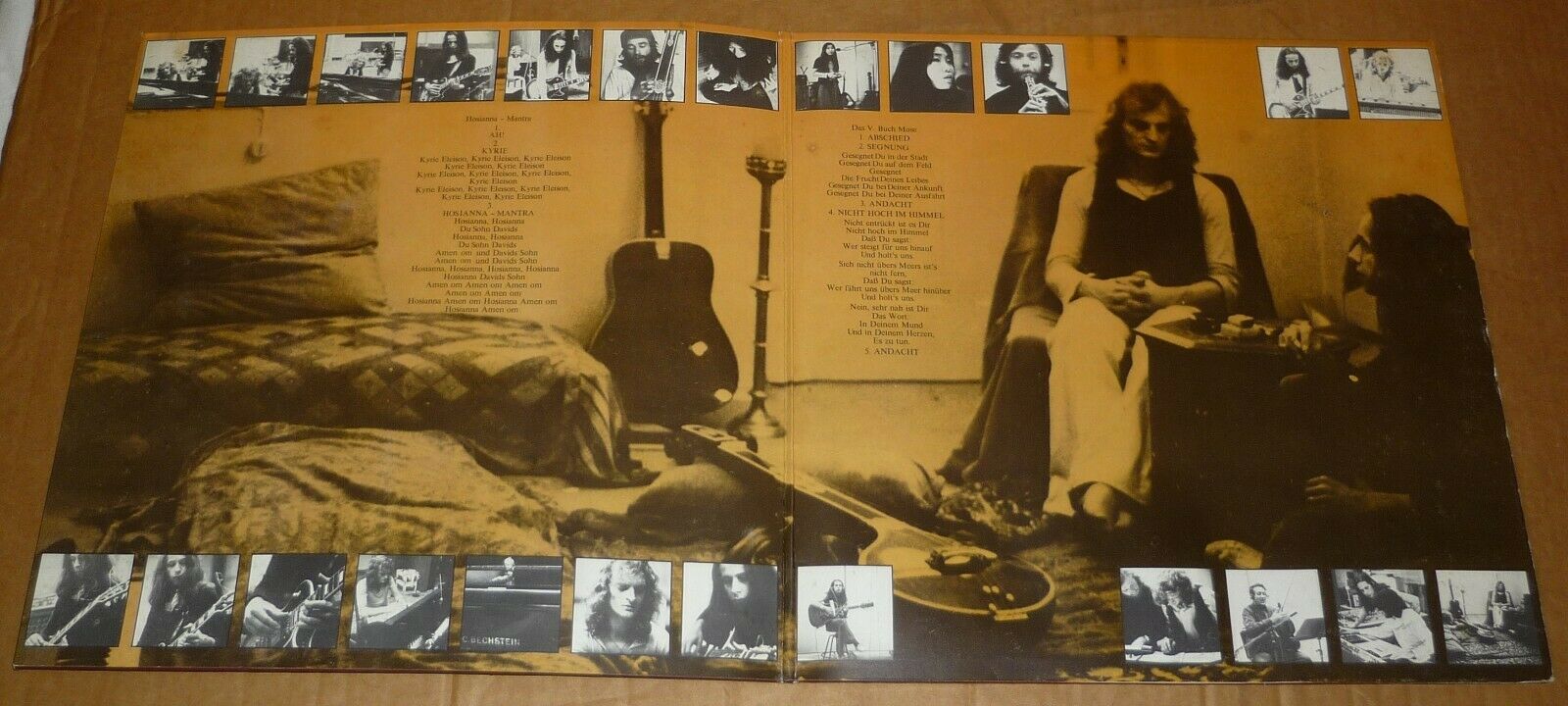
GATEFOLD COVER
Barcode and Other Identifiers
Barcode: none
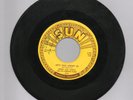
LABEL: PILZ - BLUE LABEL w/"MUSHROOM" ARTWORK - BLACK TEXT (White on rim)
Label Code: LC 2641
Catalog on cover: 20 29143-1
Catalog on labels: (Side B only) Bestell-Nr. 20 29143-1
Matrix / Runout (Side A, Stamped): IP 2029143-1-A Made in Germany (Etched): SST
Matrix / Runout (Side B, Stamped): IP 2029143-1-B Made in Germany (Etched): SST
On labels: (Side B only) rim text reads "Alle urheber..................Made in Germany"
GEMA (boxed) LC 2641 (circled)
Bestell-Nr. 20 29143-1
Verlag: Edition Intro
On Back Sleeve: Producer: Popol Vuh
Im vertrieb von: pop import Bernhard Mikulski Gmbh
LC 2641
credits
tracklisting
Side A: HOSIANNA MANTRA
1) Ah! 2) Kyrie 3) Hosianna - Mantra
Side B: DAS V. BUCH MOSE
1) Abschied 2) Segnung 3) Andacht 4) Nicht Hoch Im HimmeL 5) Andacht
gradingRECORD VG+ but (please, read above description)
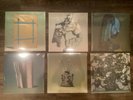
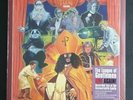
SLEEVE VG+ but (please, see pictures and read above description)
Florian Fricke pioneered the use of synthesizers in German rock, but by the time of Hosianna Mantra he had abandoned them (eventually selling his famous Moog to Klaus Schulze). While In den Gärten Pharaos had blended synths with piano and African and Turkish percussion, Hosianna Mantra focuses on organic instrumentation. Conny Veit contributes electric guitar, but other than that, Fricke pulls the plug and builds the album around violin, tamboura, piano, oboe, cembalo, and Veit's 12-string, often with Korean soprano Djong Yun's haunting voice hovering above the arrangements. As the album's title suggests, Fricke conceived of Hosianna Mantra as a musical reconciliation of East and West, a harmonization of seemingly opposed terms, combining two devotional music traditions. That notion of cultural hybridity resonates throughout. On "Kyrie" droning tamboura, simple piano patterns, ethereal, gull-like guitars, and yearning oboe ebb and flow before coalescing in a passage of intensity and release. The epic title track adds another dimension to the fusion, emphasizing a Western rock sound with Veit's spectacular playing to the fore, simultaneously smoldering and liquid, occasionally yielding to Djong Yun's celestial vocals. Above all, Fricke envisioned this as sacred music, intimately linked to religious experience; however, as his musical synthesis of disparate religious traditions indicates, he was seeking to foment a spiritual experience beyond the specificity of any particular faith. Indeed, Fricke called this album a "mass for the heart" and that aspect can be heard most succinctly on the melancholy "Abschied" and the gossamer-fragile "Segnung," which blend an austere hymnal sensibility with a more mystical vibe. Julian Cope has said that Hosianna Mantra sounds like it was made in a "cosmic convalescent home" -- an excellent description underscoring the timeless, healing quality of this music, which is far removed from the everyday world and yet at one with it...(AllMusic)
price rating