Odd/Rare LIBR of CONG ARCHIVE AMERICAN FOLK SONG 78 RPM FM 1 Pete Steele with 5
$
23


Favourite Auctions
To save auctions to your favourites, please login
If you don't have an account, please register
Description
Odd/Rare LIBR of CONG ARCHIVE AMERICAN FOLK SONG 78 RPM FM 1 Pete Steele with 5 String Banjo “Pretty Polly” / ‘Lady of Carlisle” Basil May with guitar. E+/E Visible Condition, one scuff “Lady…” side drops it to E that side. Plays as new. Recorded for the “Friends of music in the Library of Congress” Fabulous Hillfolk music – banjo, guitar and real old timey “Doc Watson-ish” folk music. Nothing on Basil May.
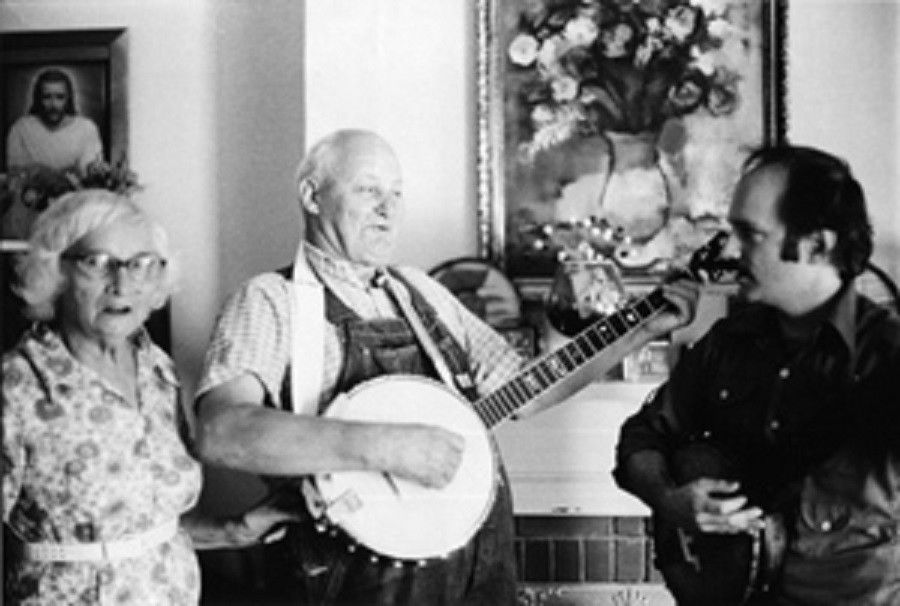
In 1957, archivists Art Rosenbaum and Ed Kahn traveled to Hamilton, Kentucky, to look for Pete Steele, a singer and banjo player they had heard on Alan Lomax’s recordings from the 1930s. In the next few months, Kahn recorded Steele playing and talking about his music, and the resulting album, Banjo Tunes and Songs, showcases Steele’s unique two- and three-finger banjo picking style. Included on the album are Steele’s two best known songs, which he learned from his friend Andy Whitaker during his coal-mining days: “Coal Creek March” and “Last Pay Day at Coal Creek” are both written about strikes and disasters at the mine in Coal Creek, Tennessee.
Of all the early banjo players recorded for the Library of Congress’s folk music archive, none commanded as many techniques or employed as many tunings as Simon “Pete” Steele. A dazzling array of frailing, two-?nger, and up-picking styles de?nes his extensive repertoire of instrumentals, folk songs, and ballads. Born in Woodbine, Kentucky, on March 5, 1891, Steele gave few public performances outside his home community in Hamilton, Ohio, yet he had considerable in?uence on musicians of the urban folk revival during the 1950s and 1960s.
Steele began playing the banjo when he was six or seven on a fretless instrument made for him by his ?ddle-playing father. While much of Steele’s instruction came from his father, other local musicians also passed along tunes. One of these, “Coal Creek March,” a parlor-based banjo instrumental with a series of ascending and descending arpeggios, commemorated mining troubles that occurred in the early 1890s in Coal Creek, Tennessee.
In 1938 Steele recorded “Coal Creek March” for the Library of Congress. With the tune’s publication in 1942, Steele’s playing came to be known to a wider audience, and by the mid-1950s, Pete Seeger had made the “March” an integral part of his concerts, urging his listeners to learn directly from the music’s authentic sources. This led to Steele’s 1958 solo album on the Folkways label, Banjo Tunes and Songs. In later years, those who traveled to his home were rewarded with his performance of “Coal Creek March,” which had become a sig- nature piece among the many he had mastered. Steele died November 21, 1985The scratches on the left of every photo are my broken glass on scanner ? not on item. Images of artists etc. are for information only and not included in auction, record & sleeve only.
If possible we gladly combine shipping items to lessen postage. PLEASE don?t use eBay auto pay. I will invoice you for general shipping costs which will be easier and cheaper for you: insurance added for all items $10+ or at your request. We will pack securely ? but are not responsible for shipping company damage if uninsured.
1 record - $4.70 ? Add $1 for each additional record (+ insurance if required). (USA ONLY) (Int?l use eBay calculator and I will adjust to get cheapest rate)
More of all the types of records listed: Odd tunes, Political, Blues, Hot Jazz, Hillbilly, Odd labels, Doo-Wop, etc. More of all the types of records listed: Odd tunes, Political, Blues, Hot Jazz, Hillbilly, Odd labels, Doo-Wop, etc.E++, Visibly nearly new with no visible signs of wear or damage.
E+, Looks and plays like new with only few signs of handling and play.
E Still very shiny, near new looking, with slight visible signs of wear and a few nearly inaudible scuffs and scratches
E- Still shiny but without the luster of a new record, few scuffs that have little or no effect on play, some light scratches.
E- - Mostly shiny but with even less of the luster of an E- record, more scuffs than E-that have little or no effect on play, light scratches with some light noise.
VG+, Slightly above average condition 78 in which scuffs and general use has dulled the finish somewhat. Wear is moderate but playing is generally free from distortion. Surface noise not overly pronounced.
VG, An average condition 78 - moderate wear throughout, but still very playable and enjoyable. Surface somewhat dull with noise and scratches audible but not intrusive.
VG-, Quite playable still, but with some distortion and may have some graying in loud passages. Music remains loud in most passages. Surface noise and scratches well below music level.
VG- - Quite playable still, but with distortion and most have some graying in loud passages. Music remains loud in most passages. Surface noise and scratches noticeable and may be loud at times.
G+ Quite worn and scratched, but music level is still higher than surface noise. Grey may be throughout but still serviceable. Music begins to sound muffled.
G Not so good. Wear and scratch damage extensive. Listening can become uncomfortable as music and surface noise probably blending. Lowest level music can be understood.
G-, Music barely audible over surface noise & listening is uncomfortable. Record is borderline unplayable.
P Used only for high dollar space fillers like Black Patti, Okeh blues, etc. Music covered by surface noise, scratches, and needle digs, label may be trashed, & listening is almost if not definitely impossible. Record is basically unplayable. What you keep because you can?t bear to toss ? while you look for that E+ copy of Robert Johnson on Vocalion at the local flea markets for $1 (Good Luck!)
See Description, A wildcard grade that can be used when standard grading does not apply or when a record (or item) has special attributes (or defects) that can affect how the item is assigned a grade.
price rating