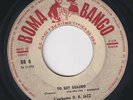
N.O.R.K. GENNETT 5102 1924 JAZZ JELLYROLL MORTON 78 RECORD WOLVERINE BLUES
$
100


Favourite Auctions
To save auctions to your favourites, please login
If you don't have an account, please register
Description
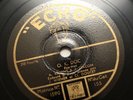
here for you gennett jazz cats are some early jazz with jellyroll morton .....one of the first if not the first intregrated jazz bands of the raccoon coat era.....this historical piece of wax has two chips one minor and a larger one that does not extend into the recording...it has some scuffs and light scratches.... but overaall is in a very good shape ...it plays through easily....and has background noise typical of the era...the label is in very good shape.... with one small patch as shown in the photos from a sticker being removed at one time ...so grab your raccoon coat ,straw hat ,your flapper moll and put this platter on the platter spinner and 23 skidoo Weary Blues
(Artie Mattews) 3-12-1923 Richmond, Indiana Gennett
5102-B Wolverine Blues
(Benjamin Spikes / John Spikes / Jelly Roll Morton) 3-13-1923 Richmond, Indiana Gennett
5102-A The New Orleans Rhythm Kings Gennett recordings were a big influence on many of the white bands and musicians of the 1920s. In 1920, Paul Mares and George Brunies were working on the Mississippi riverboat S.S. Capitol when it stopped in Davenport, Iowa, where they teamed with Leon Roppolo on clarinet. They eventually added Elmer Schobel on piano, Frank Snyder on drums, Alfred Loyacano on bass and Louis Black played banjo. They got a gig at the Friar's Club in Chicago in 1922. At first they called themselves The Friar's Society Orchestra, after the club the Friars Inn at 1834 Wabash Street at Van Buren in Chicago, but they changed their name to The New Orleans Rhythm Kings in 1923 after losing that gig. Unlike Nick LaRocca, the leader of the Original Dixieland Jazz Band, Paul Mares did not try to deny the African-American roots of Jazz. The New Orleans Rhythm Kings were heavily influenced by King Oliver's Creole Jazz Band and became the first group to put out a "racially mixed" Jazz record in 1923 with "Sobbin' Blues", featuring Jelly Roll Morton. Morton went on to record five more tunes with the band. The New Orleans Rhythm Kings were in existence from 1922 to 1925 when Paul Mares left the music business and went back to New Orleans to work at the family fur business. In 1934 and 1935 two recording sessions took place that revived the New Orleans Rhythm Kings name, but George Brunies was the only original memeber of the band to take part in the sessions.
The third recording session occurred after Mares and Roppolo had spent some time playing in a small band in New York. They returned to Chicago and scheduled another session with Gennett Records as the New Orleans Rhythm Kings. This session is particularly notable because of the participation of famed jazz pianist and arranger Ferdinand "Jelly Roll" Morton. Morton was a Creole from New Orleans, and though he identified strongly with the white "French" side of being Creole, he was generally viewed by society as black (though he was fairly light-skinned and could sometimes "pass" as Latin-American[1] and therefore was subjected to many of the same social pressures as other blacks of the day. In 1923 the country was still largely racially segregated, which included the jazz bands. White bands were beginning to spring up attempting to imitate the "hot" jazz style that the black musicians played, but rarely did any racial mixing occur in a professional setting (In a non-professional setting, however it was becoming more and more common). Jelly Roll Morton's participation in recording with the all white New Orleans Rhythm Kings was history in the making: it is an early example of mixed race recordings.
Paul Mares and Leon Roppolo went on to do two more recording sessions in New Orleans under the name "New Orleans Rhythm Kings" in 1925 before the group dissolved altogether and went their separate ways Check out my other items! eclectic-store-e Stores