NEW/SEALED 3X GOBLIN/ELP/ARGENTO PROFONDO ROSSO/INFERNO/PHENOMENA WAXWORK OST LP
$
50
Favourite Auctions
To save auctions to your favourites, please login
If you don't have an account, please register
Description
eBay listing template 2013 Artists
GOBLIN / KEITH EMERSON
Titles
PROFONDO ROSSO (Original Motion Picture Soundtrack)
INFERNO (Original Motion Picture Soundtrack)
PHENOMENA (Original Motion Picture Soundtrack)
Format
Three (3) Original Motion Picture Soundtrack vinyl LP releases:
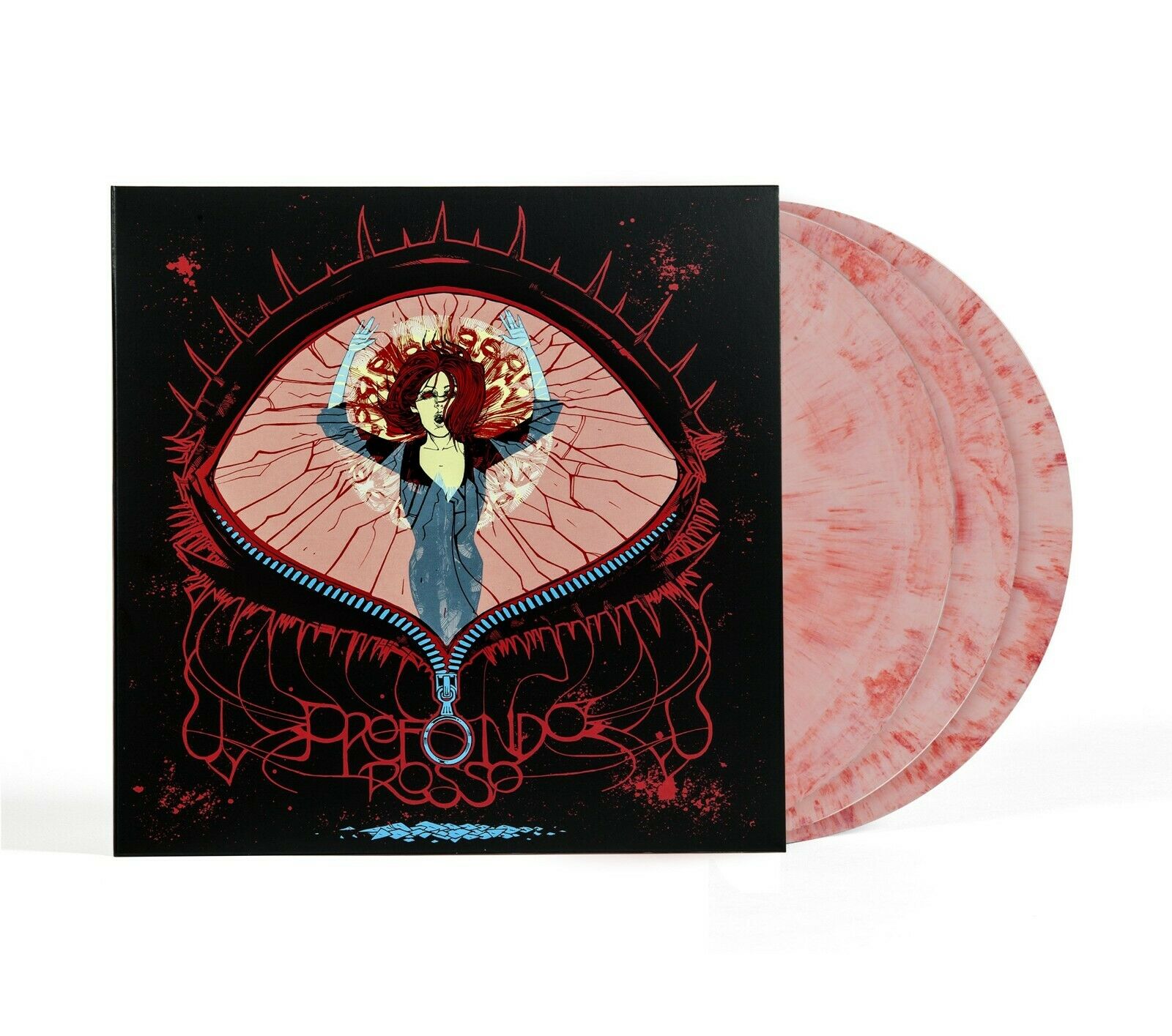
1. Profondo Rosso: 3xLP (triple vinyl LP)
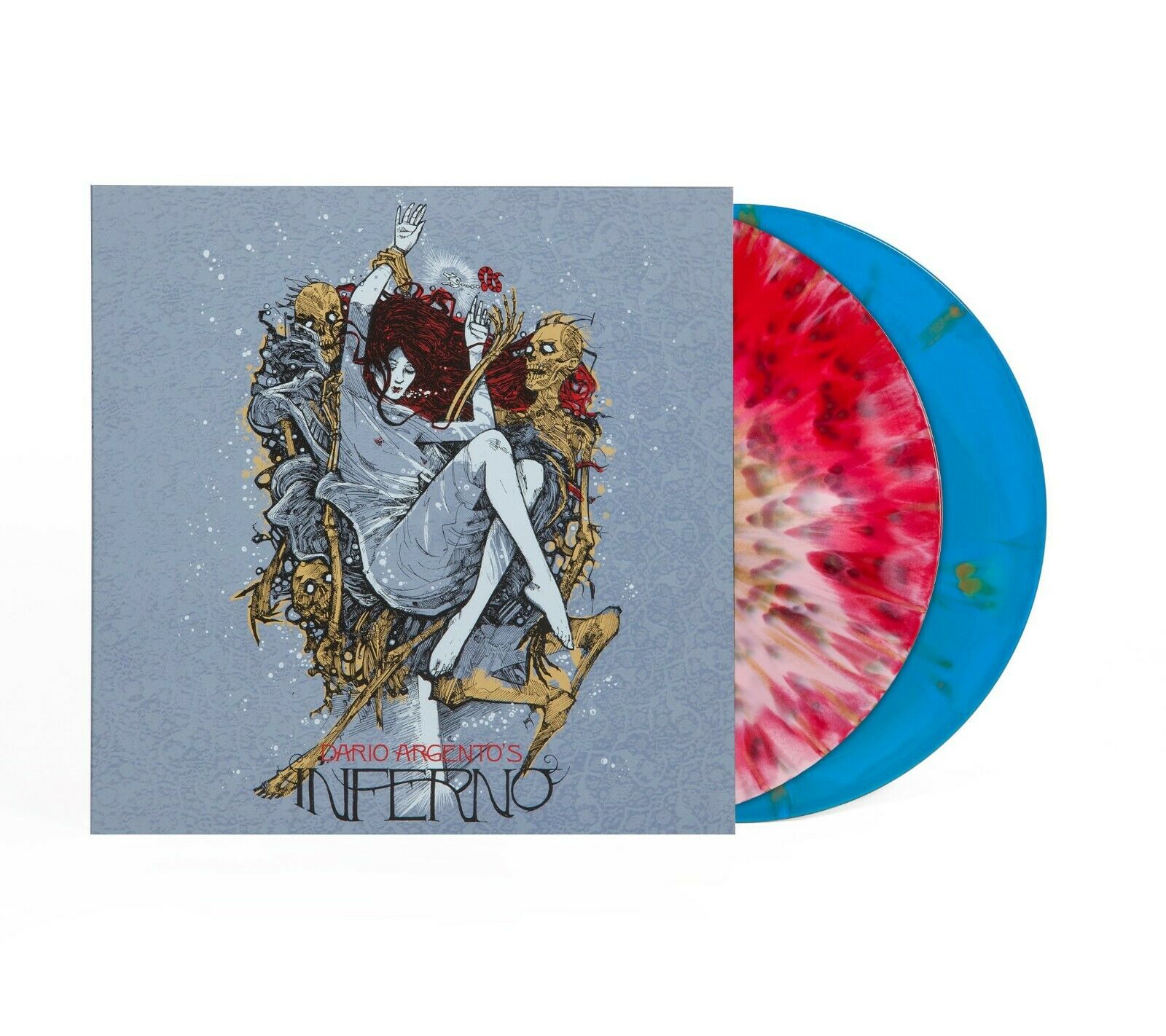
2. Inferno: 2xLP (double vinyl LP)
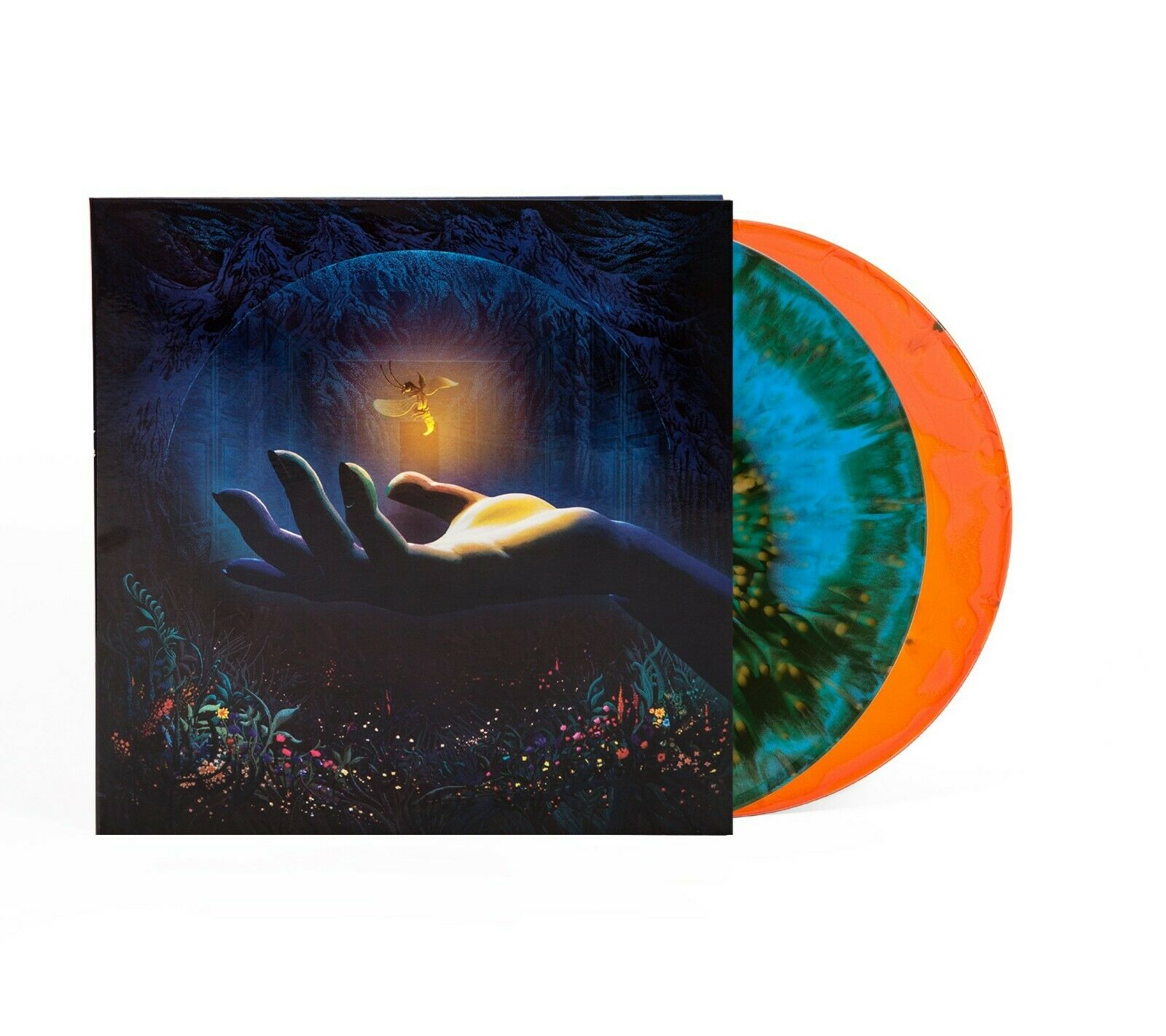
3. Phenomena: 2xLP (double vinyl LP)
Condition New / Mint / Factory Sealed
Country of manufacture USA
Label
Catalog
Release Date
Waxworks Records
WW054 728028469301 (Profondo Rosso)
WW053 728028469783 (Inferno)
WW055 728028468328 (Phenomena)
September 7, 2018
Info
Friday, September 7, 2018:
"In celebration of Dario Argento's 78th birthday today, Waxwork Records is honored to release the deluxe and expanded soundtracks to the director's beloved films PROFONDO ROSSO, INFERNO, and PHENOMENA!
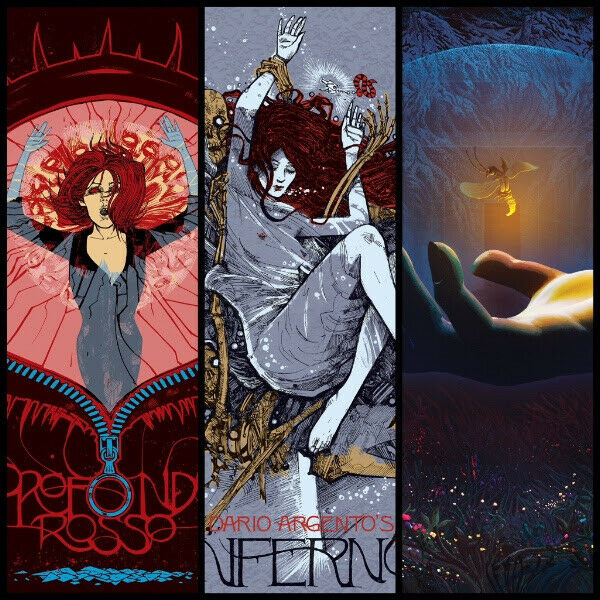
Each title has been remastered, expanded, and features the most complete versions of each soundtrack available for the very first time on vinyl. All three releases have been pressed to 180 gram colored vinyl, include high quality packaging, and feature all new artwork by Kilian Eng and Italian art collective, MALLEUS."
*. *. *. *. *
PROFONDO ROSSO
Waxwork Records is proud to announce the expanded and definitive triple-LP release of PROFONDO ROSSO Original Motion Picture Score. The ground-breaking film music for the 1975 Italian-giallo-horror film Profondo Rosso marks the first collaboration of many between famed visionary-director Dario Argento and the band GOBLIN. Originally unable to acquire Pink Floyd to score the film, Argento discovered the synth-heavy progressive rock quartet that, at the time, featured the classic lineup of Morante, Simonetti, Pignatelli, and Martino. This collaboration proved fruitful and thus birthed the impending sonic landscape of numerous Argento written, directed, or produced classic horror films such as Suspiria, George A. Romero’s Dawn Of The Dead, Tenebrae, and Phenomena.
The Profondo Rosso score by Goblin is a mix of driving synth work, bass guitar, percussion, Jazz, piano, organ, and sound effects. This eclectic blend of instruments with an attack by well-rounded musicians created a film-scoring style completely new to the world of horror movies, and arguably, cinema in general.
The newly expanded triple-LP of Profondo Rosso features the complete original 1975 album by Goblin in addition to the complete alternate versions, instrumentals, original score music by Giorgio Gaslini, source music, and haunting sound effects. This comprehensive version of the score marks the very first time the complete film music has been ever made available on vinyl.
Profondo Rosso Original Motion Picture Score by GOBLIN
The Expanded and Complete Film Score
Available For The First Time On Vinyl
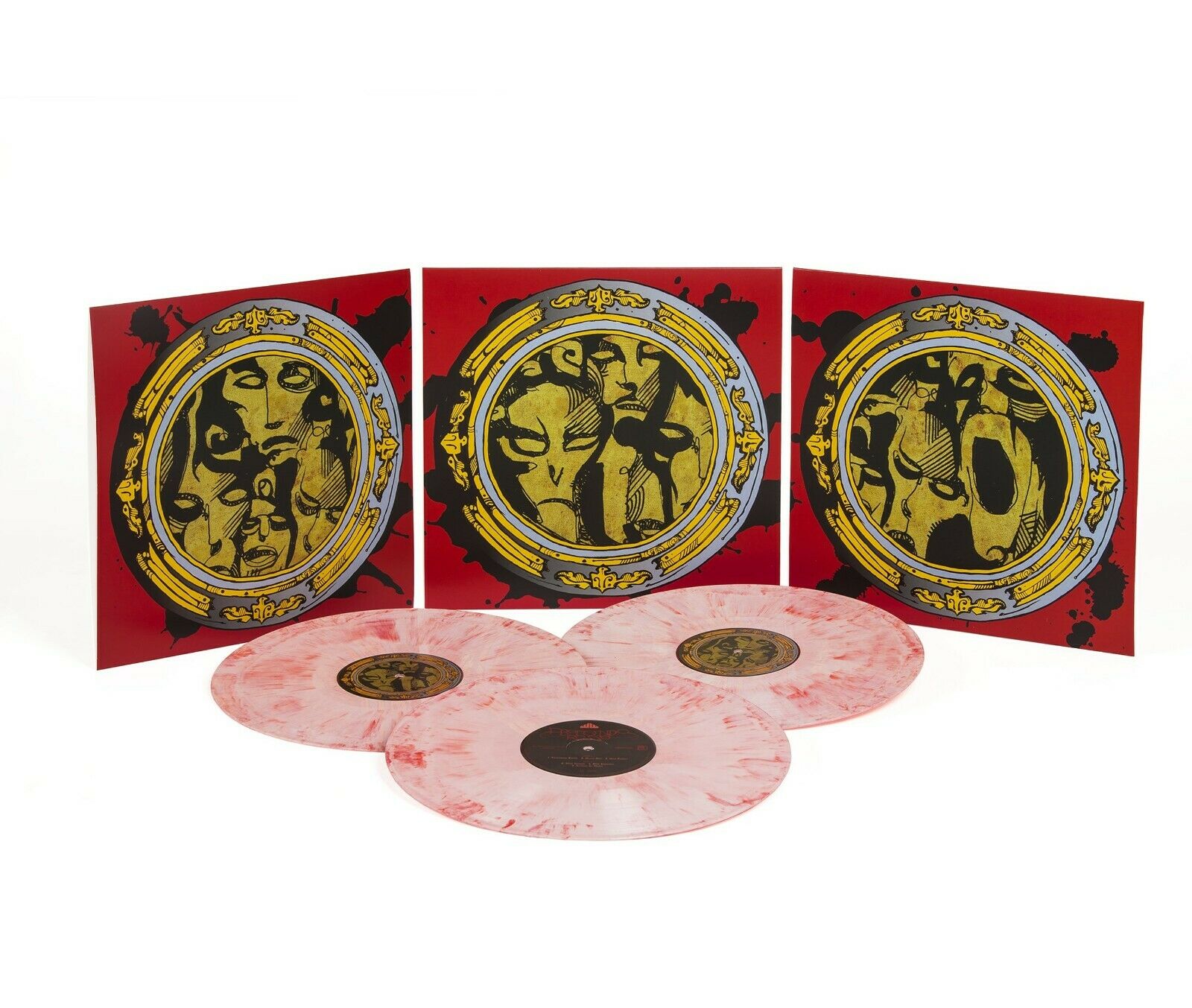
180 Gram 3xLP “Bloodied Doll” Colored Vinyl
Artwork By Italian Illustration Collective MALLEUS
Triple Gatefold Jacket Packaging
Track List:
Side A
1. Profondo Rosso
2. Death Dies
3. Mad Puppet
Side B
4. Wild Session
5. Deep Shadows
6. School At Night
7. Gianna
Side C
8. Mad Puppet Laughs (Opening Intro)
9. School At Night (Lullaby - Child Version)
10. Profondo Rosso (Jazz Source #1)
11. Profondo Rosso (Paura)
12. Profondo Rosso (Paura #2)
13. School At Night (Lullaby - Instrumental Version)
14. Profondo Rosso (Paura #3)
15. School At Night - Traccia 8
16. Profondo Rosso (Paura #4)
Side D
17. School At Night (#2)
18. School At Night (School At Night - Celesta Version)
19. Profondo Rosso (Paura #5)
20. Gianna (#2)
21. Death Dies (Film Version)
22. Profondo Rosso (Jazz Flute)
23. Profondo Rosso (Jazz Source #2)
Side E
24. Deep Shadows (Film Version)
25. Profondo Rosso (Paura #6)
26. Death Dies (Film Version #2)
27. Profondo Rosso (Jazz Source #3)
28. Deep Shadows (Film Version #2)
29. School At Night (Lullaby - Music Box Version)
30. Profondo Rosso (Jazz Source #4)
31. Deep Shadows (Film Version #3)
Side F
32. Death Dies (Film Version #3)
33. Profondo Rosso (Jazz Flute #2)
34. School At Night (Lullaby - Echo Version)
35. Profondo Rosso (Remix Version)
36. Profondo Rosso (Original Sound Effect)
*. *. *. *. *
INFERNO
Waxwork Records is thrilled to present the expanded and completed release of INFERNO Original Motion Picture Soundtrack. Written and directed by horror visionary Dario Argento and featuring a haunting soundtrack composed by the late Keith Emerson, INFERNO is a 1980 Italian supernatural horror film that serves as a thematic sequel to SUSPIRIA.
INFERNO serves as the second installment of Argento’s “The Three Mothers” trilogy, beginning with Suspiria and concluding with The Mother Of Tears, and tells the story of a poet living in New York City that discovers an ancient book. The book, written by an alchemist, tells of three sister witches that run the world with sorrow, tears, and darkness. Inferno focuses on Mater Tenebrarum, the Mother of Darkness, whom is the youngest and most cruel of the sisters, and lives in New York. The film is highly stylized with Argento’s signature use of extreme colors and lighting. Bright blues, magentas, pinks, and greens are used liberally throughout the movie.
The soundtrack by accomplished progressive rock and electronic musician Keith Emerson differs from the previous Argento films in that it did not feature the band GOBLIN. Emerson’s soundtrack to Inferno is a mix of both electronic work, orchestral compositions, percussion, piano, and a full choir by way of the Chorus of Rome. Waxwork’s newly mastered and expanded Inferno soundtrack marks the film music’s most comprehensive and definitive version ever available on vinyl featuring the complete 1980 soundtrack in addition to outtakes and alternate tracks.
INFERNO Original Motion Picture Soundtrack
The Complete and Expanded Soundtrack by Keith Emerson
Available For The First Time On Vinyl In Its Entirety
180 Gram 2xLP “Mater Tenebrarum” Colored Vinyl (Disc 1: Red and Pink Swirl Vinyl with Gold Splatter. Disc 2: Opaque Blue and Translucent Blue Swirl Vinyl with Gold Splatter)
Artwork By Italian Illustration Collective MALLEUS
Deluxe Packaging
Track List:
Side A
1. Inferno Main Titles
2. Rose’s Descent Into The Cellar
3. Taxi Ride (Rome)
4. The Library
5. Sarah In The Library Vaults
Side B
6. Bookbinder’s Delight
7. Rose Leaves The Apartment
8. Rose Gets It
9. Elisa’s Story
10. A Cat Attic Attack
Side C
11. Kazanian’s Tarantella
12. Mark’s Discovery
13. Mater Tenebrarum
14. Inferno Finale
15. Cigarettes, Ices, Etc.
Side D
16. Inferno Outakes Suite
*. *. *. *. *
PHENOMENA
Waxwork Records is excited to announce the expanded and deluxe vinyl release of PHENOMENA Original Motion Picture Score. Written and directed by Dario Argento and scored by Claudio Simonetti and Fabio Pignatelli of the progressive-rock group Goblin, Phenomena (also known as Creepers) is a 1985 Italian supernatural giallo-horror film starring Jennifer Connelly (Labyrinth, Requiem For A Dream) and Donald Pleasance (Halloween, Escape From New York). The film tells the story of a young girl residing at a remote Swiss boarding school who discovers she has psychic powers that allow her to communicate with insects. She then uses the insects to pursue a serial killer that is butchering young women at and around the school.
The film originally featured a soundtrack by popular 1980’s heavy metal bands such as Motörhead and Iron Maiden with only pieces of the score music composed by members of Goblin. Waxwork’s new expanded double vinyl release features, for the first time, the complete featured score to PHENOMENA, in addition to all unused, unreleased, alternate score tracks, suites, and bonus tracks.
Waxwork’s new comprehensive PHENOMENA vinyl album features stunning new artwork by Kilian Eng, 180 gram colored vinyl housed within a deluxe old-style gatefold jacket with film laminate gloss coating, and an art print.
PHENOMENA Original Motion Picture Score
The Expanded and Complete Original Score by GOBLIN
180 Gram Double LP (Disc 1 “Insects and Earth” Blue and Green Swirl with Gold Splatter. Disc 2 “Telekinesis” Opaque Orange and Translucent Orange Swirl with Green Splatter).
Heavy Old-Style Gatefold Jacket with Film Laminate Gloss Coating
Artwork By Kilian Eng
11”x11” Art Print
Track List
Side A
1. Phenomena
2. Jennifer
3. The Wind
4. Sleepwalking
Side B
5. Jennifer’s Friends
6. Phenomena (Film version 1)
7. Phenomena (Film version 2)
8. Phenomena (Piano Solo - Film version 3)
9. Sleepwalking (Alternate Version)
Side C
10. The Wind (Film Version Suite 1)
11. The Wind (“Insects” Film Version Suite 2)
12. Jennifer’s Friends (Alternate Version)
Side D
13. Jennifer (End Titles)
14. The Monster Child (SPFX Bonus Track 1)
15. Phenomena (Video Clip Version Bonus Track 2)
16. Phenomena (Alternate Version Bonus Track 3)
Payment & Shipping PayPal is the preferred method of payment. All items are packed with individual care in sturdy protective mailers and shipped promptly upon receipt of payment.
100% positive feedback rated seller since 1998.
With ManhattanMusic, you can bid with confidence!
Be sure to check out ManhattanMusic's other items currently available for your consideration.
Bio
Goblin (also Back to the Goblin, New Goblin, Goblin Rebirth, the Goblin Keys, The Goblins and Claudio Simonetti's Goblin) is an Italian progressive rock band known for their soundtrack work. They frequently collaborate with Dario Argento, most notably creating soundtracks for Profondo Rosso in 1975 and Suspiria in 1977. CD re-releases of their soundtracks have performed well, especially in Germany and Japan. Goblin returned with a series of live concerts in Europe in 2009 and in North America in 2013.
Initially recording as Cherry Five (they had done some live gigs as Oliver), their early work spawned one eponymous progressive rock record, and they were then called in to compose the soundtrack for Profondo Rosso. The band changed their name to Goblin, rewriting most of the score, originally written by Giorgio Gaslini including the famous main theme. The 1975 soundtrack album was a huge hit. After a reshuffle in their line-up, they put out an instrumental progressive rock album Roller, before working with Argento again for 1977's Suspiria. Other film soundtracks and a concept album (Il Fantastico Viaggio Del Bagarozzo Mark) followed, then the score for the European version of George A. Romero's 1978 Dawn of the Dead. In both this and Suspiria's opening title sequences, they are credited as "The Goblins with Dario Argento". Tracks 1, 2 and 7 from the European version are also in the American version of the film.
Despite their success, membership continued to be a revolving door, and the band also struggled to maintain their credibility. The remaining members continued to work on further soundtracks, and there was a partial reunification of three of the four band-members for Argento's Tenebrae (1982) (the album was credited to the three band-members separately, not as Goblin). The last collaboration with the director took place in 2000, with the film Non ho sonno (Sleepless).
Between 1972 and 1973, Claudio Simonetti (keyboards) and Massimo Morante (guitars), aided by Fabio Pignatelli (bass guitar) and Walter Martino (drums), recorded some demo tapes using the name Oliver.
On a trip to London, while looking for contacts, the band bumped into Eddie Offord (then producer of Yes); after listening to a demo tape, the tycoon producer expressed interest and asked them to move to England. By then, Fabio Pignatelli had become a steady member, and the band found a regular drummer, Carlo Bordini, and an English lead vocalist (Clive Haynes). After many months of rehearsing, they returned to London while Offord was on tour with Yes in the US; after many performances and various attempts at striking deals with record houses, they were forced to go back to Italy, due to lack of funds.
Back home, they signed with Cinevox, and Clive Haynes was replaced by Tony Tartarini who had previously recorded with L'Uovo Di Colombo under the name Toni Gionta. The band's name was changed to Cherry Five by the label, and according to Claudio Simonetti for no apparent reason, as the members themselves had intended to continue as "Oliver." Whatever debate about the band's name there may have existed, their first LP was titled Cherry Five. Cinevox Records was active mainly in soundtrack publishing. Due to the band's peculiar sound, the band was frequently called to perform and arrange famous musicians' compositions. This helped them better understand the world of soundtracks and the particular techniques required. Their final act as Cherry Five was to drop new drummer Carlo Bordini and bring back Walter Martino on drums.
At the beginning of 1975, the band began a cooperation with Giorgio Gaslini on the Profondo rosso film project. The band replaced Martino (who went on to join the band Libra) with Agostino Marangolo (of the band Flea on the Honey/Flea/Etna) during this period. Martino recorded on all but two cuts of Profondo rosso.
By chance, after three or four days of recording, Gaslini left the film after a conflict with Dario Argento, so Argento decided to try the band's hand at composing, giving them one night to write a score, and one day to record it. To distinguish this new release from their first LP which was just about to be marketed, the band changed their name again, this time to Goblin. Their success exceeded all expectations: more than one million copies sold, enjoying 52 weeks on the Italian hit charts and ranking first in both the singles and LP categories. It launched a highly successful period for the band, which came to an end in 1978 when the band split after the recording of Dario Argento's Zombi (also known as Dawn of the Dead). (On the score for the European version of the soundtrack, they were credited as "The Goblins.")
In 1976, they collaborated with Willy Brezza to compose the soundtrack to Perché si uccidono (the film was released in the US as "Percy is Killed", but this was a mis-translation and there is no character even called Percy in the film). For the only time, Goblin used the name Il Reale Impero Britannico due to the controversial subject matter of the movie (drug abuse and addiction). Willy Brezza wrote the original soundtrack, and the remaining tracks were written by the band together with Fabio Frizzi. The following year they scored the Italian crime film The Heroin Busters (La via della droga), directed by Enzo G. Castellari, and starring Fabio Testi and David Hemmings.
Between 1978 and 1979, the band's core musicians recruited many new members consecutively. Fabio Pignatelli, Agostino Marangolo, his brother Antonio Marangolo (a saxophonist who contributed to several albums) and nephew Carlo Pennisi (a session man who often played in place of Massimo Morante when he was absent) all worked together from 1980 to 1982 in the band, Flea on the Honey, which managed to record several LPs. Pignatelli took part in all the recordings, with Agostino Marangolo ranking lead for number of performances. The remaining members continued to work on further soundtracks, and there was a partial reunification for Argento's Tenebrae (1982) (although each member of the band was credited separately, not as Goblin). Over time, it was three of the "founding fathers" (Pignatelli, Simonetti and Morante), plus Marongolo, who became synonymous with the name Goblin.
After 22 years of hiatus, in 2000, the group reformed to score the Dario Argento thriller Non ho sonno (Sleepless). The soundtrack was a great success and showed the group could still make great music, much to their fans' delight. The group were scheduled to perform in Tarrytown, New York for the infamous Cult-Con, but failed to appear. Simonetti did however appear at the show and informed fans that old wounds resurfaced during their brief reunion. With his horror theme tribute band, Daemonia (formed by Titta Tani, Bruno Previtali, Federico Amorosi, and Simonetti himself), he performed a nine-song set from the films of Dario Argento, and Goblin later officially disbanded.
Nevertheless, in 2005, with the release of Giovanni Aloisio's official Goblin biography and the opening of their official website, Morante and Pignatelli reformed the group once again and with Marangolo and Guarini recorded the album BackToTheGoblin2005 under the independent label BackToTheFudda. The album was available only through the official site and was not distributed in regular stores. It is also available on iTunes.
In 2009, Goblin, now Back To The Goblin, made their first live concert appearance in 32 years. Keyboardist Aidan Zammit has joined the band for their live performances. Excluding Simonetti, this is basically the "classic" line-up, with Maurizio Guarini contributing keyboard work to most of their original albums, playing on Roller, Chi?, Suspiria, Buio Omega, Patrick, Contamination, St. Helens, Notturno, Volo, BackToTheGoblin and more. The five members (Morante, Guarini, Pignatelli, Marangolo, and Aidan Zammit) performed a few concerts around Europe in 2009:
Donaufestival in Krems, Austria on 23 April 2009
La villette sonique in Paris - 29 May
Dancity Festival at the Auditorium San Domenico - Foligno - 25 June
Supersonic Festival in Birmingham, UK - 26 July
Scala, London - 27 July
In December 2009, Back to the Goblin once again announced their dissolution due to internal conflict. The remaining scheduled concerts into 2010 were then canceled.
New Goblin were scheduled to perform at Unsound Festival Kraków on 23 October 2010, consisting of Claudio Simonetti in the line-up, as well as Morante, Guarini, Bruno Previtali and Titta Tani. Essentially, it was three members of the classic lineup and two members of Simonetti's other band, Daemonia (Previtali and Tani being the bassist and drummer, respectively, of that band).
Yet another incarnation of the band, formed in December 2010 and called Goblin Rebirth, includes former Goblin members Fabio Pignatelli and Agostino Marangolo plus Giacomo Anselmi on guitars, Aidan Zammit and Danilo Cherni on keyboards.
In 2011, the monumental 450-page book, Goblin sette note in rosso (Goblin seven notes in red) was released, written by Fabio Capuzzo. It traces the full history of Goblin from 1973 to 2011 with a detailed analysis of all the albums and movies with music performed by Goblin (including all the works as session musicians). It also details full biographies, exclusive interviews and contains discographies and filmographies of the Italian composers who created scores for police, giallo and horror movies, and information about all the Italian rock bands with a role in movie soundtracks.
In 2011/2012 New Goblin (Morante, Guarini, Simonetti, Previtali and Tani) had an intense live activity around the world, including Japan (twice), Australia (twice) and New Zealand.
In April 2012, Claudio Simonetti and now-Greater Toronto based Maurizio Guarini performed with drummer Bob Scott and guitarist Chris Gartner, in Shock Stock 2012 on 14 April 2012 as The Goblin Keys. On 24 June 2013, the New Goblin line-up announced their first-ever North American tour and under their original banner, Goblin, played 17 dates in October 2013, with Secret Chiefs 3 as the opening act.
Simonetti has since formed another incarnation of the band called Claudio Simonetti's Goblin, which features him and the other members of his horror film theme cover group Daemonia. In February 2014 they began touring and playing complete scores live during screenings of the films Deep Red, Suspiria and Dawn of the Dead. In April 2014, the band was slated to tour, performing the score to Dawn of the Dead live throughout North America, but in July the tour was canceled. In June 2014 Claudio Simonetti's Goblin released an album titled The Murder Collection, consisting of new, but faithful, versions of some of Goblin and Simonetti's most well-known compositions.
Goblin returned for a second US tour leg in December 2013 with Simonetti, Bruno Previtali and Titta Tani being replaced by original members Fabio Pignatelli and Agostino Marangolo and additional keyboard player Aidan Zammit. The reunited band played 13 dates mostly in Midwest US.
In April and May 2014 Goblin returned in US for the third time. Aidan Zammit was replaced by Steve Moore of the band Zombi and Goblin played nine dates throughout the southern United States.
In October 2014 Massimo Morante, Maurizio Guarini, Fabio Pignatelli and Agostino Marangolo announced that, as Goblin, they released an album of new material titled Four of a Kind and started a crowdfunding campaign through the website pledgemusic.com to help complete it.
In June 2015 Goblin Rebirth released their self-titled debut album and did various live appearances.
Also in 2015, Cherry Five reformed with original members Carlo Bordini and Tony Tartarini along with new members Ludovico Piccinini (guitars), Gianluca De Rossi (keyboards) and Pino Sallusti (bass) and released an album titled "Il Pozzo dei Giganti". On 3 April 2017. bassist Pino Sallusti died.
In the spring of 2017, Goblin (Morante, Guarini, Pignatelli, Marangolo with Aidan Zammit) resumed live performance with three concerts in Europe: Sweden, Norway and Greece.
From 26 October 2017 through 12 November, Goblin toured North America on their 'Sound of Fear' tour with 13 dates in US and 2 in Canada.
In October 2017 the US publishing house Ajna has published Fabio Capuzzo’s ‘Goblin Seven Notes in Red’, the full revised and updated English version of the Italian book ‘Goblin sette note in rosso’: "This lavishly illustrated, gorgeous and nearly 600-page tome on one of the most fascinating prog rock bands in the world (…) belongs in the hands of every Goblin/Dario Argento fan (…). The book is chock full with an overwhelming amount of information. If there is an anecdote about Goblin that you are looking for, I would be shocked if you can’t find it in these pages. If you love Goblin, this book is a no-brainer. It’s superb."
In May 2018 Goblin are present on the debut full-length Princess album with a new song called "God Save the Goblin" (Pignatelli/Wolf/Guarini/Morante/Marangolo) plus a couple of featuring (one by Fabio Pignatelli and another by Tony Tartarini). Goblin appeared at the Psycho Las Vegas on August 19, 2018. A new Goblin album "Fearless" is scheduled to be released by the end of 2018.
AllMusic's review of Goblin's soundtrack for Deep Red describes the score as "an ambitious affair that blends jazz, prog rock, and heavy metal into an effective and totally distinctive style" and the track "Deep Shadows" as "a frenetic slice of King Crimson-style jazz-rock".
Influences cited by Goblin include Yes, Genesis, King Crimson, Gentle Giant and Emerson, Lake & Palmer. The band Zombi was influenced by Goblin. The band Opeth included an instrumental titled "Goblin" on their eleventh album, Pale Communion, in tribute to the band.
Discography:
Profondo rosso film soundtrack (1975)
Chi? film soundtrack (1975)
Roller (1976)
Suspiria film soundtrack (1977)
La via della droga film soundtrack (1977)
Il fantastico viaggio del "bagarozzo" Mark (1978)
The Bloodstained Shadow film soundtrack (1978)
Zombi film soundtrack (1978)
Patrick film soundtrack (1979)
Amo non amo film soundtrack (1979)
Squadra Antigangsters film soundtrack (1979)
Buio Omega film soundtrack (1979)
Contamination film soundtrack (1980)
St. Helens film soundtrack (1981)
Volo (1982)
Notturno film soundtrack (1983)
Phenomena film soundtrack (1985)
La Chiesa film soundtrack (1989)
Non ho sonno (2001) film soundtrack
Back to the Goblin 2005 (2006)
Gamma film soundtrack (2007)
Four of a Kind (2015)
Goblin Rebirth (2015)
Austinato Live in Texas (2016)
Current Goblin incarnations
Goblin
Massimo Morante - guitars
Maurizio Guarini - keyboards
Fabio Pignatelli - bass
Agostino Marangolo - drums
with
Aidan Zammit - keyboards
Claudio Simonetti's Goblin (aka Daemonia)
Claudio Simonetti - keyboards
Bruno Previtali - guitars
Cecilia Nappo - bass
Titta Tani - drums
Goblin Rebirth
Fabio Pignatelli - bass
Agostino Marangolo - drums
Aidan Zammit - keyboards
Giacomo Anselmi - guitars
Danilo Cherni - keyboards
Cherry Five
Ludovico Piccinini - guitars
Gianluca De Rossi - keyboards
Pino Sallusti - bass, (died 2017)
Tony Tartarini - vocals
Carlo Bordini - drums percussions
Past Goblin incarnations
1975 - Cherry Five
Massimo Morante - guitars
Claudio Simonetti - keyboards
Fabio Pignatelli - bass
Tony Tartarini - vocals
Carlo Bordini - drums percussions
1975 - Reale Impero Britannico
Massimo Morante - guitars
Claudio Simonetti - keyboards
Fabio Pignatelli - bass
Tony Tartarini - vocals
Walter Martino - drums, percussions
1975 - Profondo Rosso (Deep Red)
Massimo Morante - Guitars
Claudio Simonetti - keyboards
Fabio Pignatelli - bass
Walter Martino - drums, percussions
1975-1976 Roller and Chi? - Suspiria soundtracks
Massimo Morante - guitars
Claudio Simonetti - keyboards
Fabio Pignatelli - bass
Agostino Marangolo - drums
Maurizio Guarini - keyboards
1977-1978 La Via Della Droga soundtrack and Il Fantastico Viaggio Del "Bagarozzo" Mark
Massimo Morante - guitars, vocals
Claudio Simonetti - keyboards
Fabio Pignatelli - bass
Agostino Marangolo - drums, percussions
1978 - Zombi/Dawn of the dead
Massimo Morante - guitars, vocals
Claudio Simonetti - keyboards
Fabio Pignatelli - bass
Agostino Marangolo - drums, percussions
Antonio Marangolo - sax on "Zombi sexy" and "Oblio"
Tino Fornai - violin on "Tirassegno"
1979 - Squadra Antigangsters - Amo non-amo
Claudio Simonetti - keyboards
Fabio Pignatelli - bass, acoustic guitar
Agostino Marangolo - drums, percussions
Carlo Pennisi - guitars
Antonio Marangolo - sax
1979-1981 - Patrick - Buio Omega - Contamination - St. Helens
Maurizio Guarini - keyboards
Fabio Pignatelli - bass, acoustic guitar
Agostino Marangolo - drums, percussions
Carlo Pennisi - guitars (Patrick and Buio Omega)
Roberto Puleo - guitars (Contamination)
Antonio Marangolo - saxophone (Contamination)
1982 - Volo
Marco Rinalduzzi - guitars
Fabio Pignatelli - bass
Derek Wilson - drums
Maurizio Guarini - keyboards
Mauro Lusini - vocals
Antonio Marangolo - saxophone
1982 - Tenebre (as Simonetti/Pignatelli/Morante)
Fabio Pignatelli - bass, drum programming
Claudio Simonetti - keyboards, drum programming
Massimo Morante - guitars
Walter Martino - percussions
1983 - Notturno
Fabio Pignatelli - bass, guitars
Maurizio Guarini - keyboards
Walter Martino - drums
Antonio Marangolo - sax
1985 - Phenomena
Fabio Pignatelli - bass, drum programming
Claudio Simonetti - keyboards, drum programming
1989 - La Chiesa
Fabio Pignatelli - bass, keyboards, drum programming
2000 - Non Ho Sonno
Massimo Morante - guitars
Fabio Pignatelli - bass
Agostino Marangolo - drums
Claudio Simonetti - keyboards
2005-2009 - Back to the Goblin
Massimo Morante - guitars
Fabio Pignatelli - bass
Agostino Marangolo - drums
Maurizio Guarini - keyboards
Aidan Zammit - keyboards (joined 2009)
2012 - The Goblin Keys
Claudio Simonetti - keyboards
Maurizio Guarini - keyboards
Bob Scott - drums
Chris Gartner - guitars
2011-2013 - New Goblin
Massimo Morante - guitars
Claudio Simonetti - keyboards
Maurizio Guarini - keyboards
Bruno Previtali - bass
Titta Tani - drums
2011-present - Goblin Rebirth - Goblin Rebirth
Fabio Pignatelli - bass
Agostino Marangolo - drums
Aidan Zammit - keyboards
Giacomo Anselmi - guitars
Danilo Cherni - keyboards
2013-present - Goblin - Four of a Kind
Massimo Morante - guitars
Maurizio Guarini - keyboards
Fabio Pignatelli - bass
Agostino Marangolo - drums
with
Aidan Zammit - keyboards (live concerts)
2001-present - Claudio Simonetti's Goblin (aka Daemonia) - The Murder Collection
Claudio Simonetti - keyboards
Bruno Previtali - guitars, bass
Titta Tani - drums
Federico Amorosi - bass (left in July 2015)
2015-present - Cherry Five - Il Pozzo dei Giganti
Ludovico Piccinini - guitars
Gianluca De Rossi - keyboards
Pino Sallusti - bass, (died 2017)
Tony Tartarini - vocals
Carlo Bordini - drums percussions.
*. *. *. *. *
Keith Noel Emerson (2 November 1944 – 11 March 2016) was an English musician and composer. He played keyboards in a number of bands before finding his first commercial success with the Nice in the late 1960s. He became internationally famous for his work with the Nice, which included writing rock arrangements of classical music. After leaving the Nice in 1970, he was a founding member of Emerson, Lake & Palmer (ELP), one of the early progressive rock supergroups. Emerson, Lake & Palmer were commercially successful through much of the 1970s, becoming one of the best-known progressive rock groups of the era. Emerson wrote and arranged much of ELP's music on albums such as Tarkus (1971) and Brain Salad Surgery (1973), combining his own original compositions with classical or traditional pieces adapted into a rock format.
Following ELP's break-up at the end of the 1970s, Emerson pursued a solo career, composed several film soundtracks, and formed the bands Emerson, Lake & Powell and 3 to carry on in the style of ELP. In the early 1990s, Emerson rejoined ELP, which reunited for two more albums and several tours before breaking up again in the late 1990s. Emerson also reunited the Nice in 2002 for a tour.
During the 2000s, Emerson resumed his solo career, including touring with his own Keith Emerson Band and collaborating with several orchestras. He reunited with ELP bandmate Greg Lake in 2010 for a duo tour, culminating in a one-off ELP reunion show in London to celebrate the band's 40th anniversary. Emerson's last album, The Three Fates Project, was released in 2012. Emerson reportedly suffered from depression, and in his later years developed nerve damage that hampered his playing, making him anxious about upcoming performances. He died by suicide on 11 March 2016 at his home in Santa Monica, California (although his death was reported as having occurred on the night of 10 March, his grave memorial lists his date of death as 11 March 2016).
Emerson was widely regarded as one of the top keyboard players of the progressive rock era. AllMusic describes Emerson as "perhaps the greatest, most technically accomplished keyboardist in rock history".
Emerson was born on 2 November 1944 in Todmorden, Yorkshire, his family having been evacuated there from southern England during the Second World War. He grew up in Goring-by-Sea, a seaside resort near Worthing in West Sussex, and attended West Tarring School. His father was an amateur musician but his mother was not musical. They arranged for him to take piano lessons starting at the age of eight. His father, Noel, played the piano, and thought that Emerson would benefit most from being versatile and being able to read music. However, he never received any formal musical training, and described his piano teachers as being "local little old ladies". He learned western classical music, which largely inspired his own style, combining it with jazz and rock themes.
Although Emerson did not own a record player, he enjoyed listening to music on the radio, particularly Floyd Cramer's 1961 slip note-style "On the Rebound" and the work of Dudley Moore. He used jazz sheet music from Dave Brubeck and George Shearing and learned about jazz piano from books. He also listened to boogie-woogie, and to country-style pianists including Joe "Mr Piano" Henderson, Russ Conway and Winifred Atwell. Emerson later described himself: "I was a very serious child. I used to walk around with Beethoven sonatas under my arm. However, I was very good at avoiding being beaten up by the bullies. That was because I could also play Jerry Lee Lewis and Little Richard songs. So, they thought I was kind of cool and left me alone."
Emerson became interested in the Hammond organ after hearing jazz organist Jack McDuff perform "Rock Candy", and the Hammond became his instrument of choice in the late 1960s. Emerson acquired his first Hammond organ, an L-100 model, at the age of 15 or 16, on hire purchase. After leaving school he worked at Lloyds Bank Registrars where he played piano in the bar at lunchtimes. Outside work, he played with several different bands. The flamboyance for which he would later be noted began when a fight broke out during a performance in France by one of his early bands, the V.I.P.s. Instructed by the band to keep playing, he produced some explosion and machine gun sounds with the Hammond organ, which stopped the fight. The other band members told him to repeat the stunt at the next concert.
In 1967, Emerson formed the Nice with Lee Jackson, David O'List and Ian Hague, to back soul singer P. P. Arnold. After replacing Hague with Brian Davison, the group set out on its own, quickly developing a strong live following. The group's sound was centred on Emerson's Hammond organ showmanship and abuse of the instrument, and their radical rearrangements of classical music themes as "symphonic rock".
To increase the visual interest of his show, Emerson would abuse his Hammond L-100 organ by, among other things, hitting it, beating it with a whip, pushing it over, riding it across the stage like a horse, playing with it lying on top of him, and wedging knives into the keyboard. Some of these actions also produced musical sound effects: hitting the organ caused it to make explosion-like sounds, turning it over made it feed back, and the knives held down keys, thus sustaining notes. Emerson's show with the Nice has been cited as having a strong influence on heavy metal musicians.
Emerson became well known for his work with the Nice. Outside of the group, he participated in the 1969 Music from Free Creek "supersession" project that included Eric Clapton and Jeff Beck. For the session, Emerson performed with drummer Mitch Mitchell and bassist Chuck Rainey covering, among other tunes, the Eddie Harris instrumental "Freedom Jazz Dance".
Emerson first heard a Moog when a record shop owner played Switched-On Bach for him. Emerson said, "My God that's incredible, what is that played on?" The owner then showed him the album cover. "So I said, 'What is that?' And he said, 'That's the Moog synthesizer.' My first impression was that it looked a bit like electronic skiffle." Without one of his own, Emerson borrowed Mike Vickers' Moog for an upcoming Nice concert at the Royal Festival Hall, London, with the Royal Philharmonic Orchestra. Vickers helped patch the Moog, and the concert was a success. Emerson's performance of "Also sprach Zarathustra" (a composition most famous for its use in the 1968 film 2001: A Space Odyssey) was acclaimed. Emerson later explained, "I thought this was great. I've got to have one of these."
In 1970, Emerson left the Nice and formed Emerson, Lake & Palmer (ELP) with bassist Greg Lake from King Crimson and drummer Carl Palmer from Atomic Rooster. Within a few months, the band played its first shows and recorded its first album, having quickly obtained a record deal with Atlantic Records. ELP became popular immediately after their 1970 Isle of Wight Festival performance, and continued to tour regularly throughout the 1970s. Not all were impressed, with BBC Radio 1 DJ John Peel describing their Isle of Wight set as "[a] waste of talent and electricity". Their set, with a half-million onlookers, involved "annihilating their instruments in a classical-rock blitz" and firing cannons from the stage. Recalling the gig in a 2002 interview, Emerson said: "We tried the cannons out on a field near Heathrow airport ... They seemed harmless enough. Today we would have been arrested as terrorists."
ELP's record deal provided funds for Emerson to buy his own Moog modular synthesizer. He later said, "It cost a lot of money and it arrived and I excitedly got it out of the box stuck it on the table and thought, 'Wow That's Great! a Moog synthesizer [pause] How do you switch it on?' ... There were all these leads and stuff, there was no instruction manual." The patch which had been provided by Mike Vickers produced six distinctive Moog sounds, and these six became the foundation of ELP's sound.
While other artists such as the Beatles and the Rolling Stones had used the Moog in studio recordings, Emerson was the first artist to tour with one. His use of the Moog was so critical to the development of new Moog models that he was given prototypes, such as the Constellation, which he took on one tour, and the Apollo, which had its début on the opening track "Jerusalem" on the 1973 album Brain Salad Surgery.
The Moog was a temperamental device; the oscillators went out of tune with temperature change. He later said, "I had my faithful roady Rocky tune the instrument to A 440 just prior to the audience coming in, but once the audience came into the auditorium and the temperature rose up then everything went out of tune."
His willingness to experiment with the Moog led to unexpected results, such as the time he stumbled into the signature sound for "Hoedown", one of ELP's most popular tunes. He later said, "We'd started working on that arrangement and then I hit, I don't know what, I switched a blue button and I put a patch cord in there, but anyway 'whoooeee'."
The so-called "Monster Moog", built from numerous modules, weighed 550 pounds (250 kg), stood 10 feet (3 m) feet tall and took four roadies to move. Even with its unpredictability, it became an indispensable component of not only ELP's concerts, but also Emerson's own.
As synthesiser technology evolved, Emerson went on to use a variety of other synthesisers made by Moog and other companies, including the Minimoog, the Yamaha GX-1 used on ELP's Works Volume 1 album, and several models by Korg (see Instrumentation).
Emerson performed several notable rock arrangements of classical compositions, ranging from J. S. Bach via Modest Mussorgsky to 20th-century composers such as Béla Bartók, Aaron Copland, Leoš Janá?ek and Alberto Ginastera. Occasionally Emerson quoted from classical and jazz works without giving credit, particularly early in his career, from the late 1960s until 1972. An early example of Emerson's arranging was the song "Rondo" by the Nice, which is a 4/4 interpretation of Dave Brubeck's 9/8 composition "Blue Rondo à la Turk". The piece is introduced by an extensive excerpt from the 3rd movement of Bach's Italian Concerto.
On ELP's eponymous first album, Emerson's classical quotes went largely uncredited. Classical pianist Peter Donohoe has said that "The Barbarian" was an arrangement of "Allegro barbaro" by Bartók, and that "Knife Edge" was based on the main theme of the opening movement of "Sinfonietta" by Janá?ek. By 1971, with the releases Pictures at an Exhibition and Trilogy, ELP began to fully credit classical composers, including Modest Mussorgsky for the piano piece which inspired the Pictures album, and Aaron Copland for "Hoedown" on the Trilogy album. Emerson indicated in an interview that he based his version of Pictures at an Exhibition on Mussorgsky's original piano composition, rather than on Maurice Ravel's later orchestration of the work.
Following ELP's 1974 tour, the members agreed to put the band on temporary hiatus and pursue individual solo projects. During this time, Emerson composed his "Piano Concerto No. 1" and recorded it with the London Philharmonic Orchestra. According to Emerson, he was motivated by critical comments suggesting that he relied upon adapting classical works because he was unable to write his own music, and further motivated by the London Philharmonic "who weren't that helpful to begin with" and "had the attitude of 'What's a rock musician doing writing a piano concerto?'" Emerson said, "I wanted people to say, look, I'm a composer, I do write my own music, and what greater challenge than to write a piano concerto." The recording later appeared on ELP's album Works Volume 1. Emerson's concerto has since been performed by classical pianists, most notably Jeffrey Biegel, who has performed it several times and recorded it with Emerson's permission.
In 1976, while still in ELP, Emerson also released his first solo record, the single "Honky Tonk Train Blues" b/w "Barrelhouse Shake-Down". "Honky Tonk Train Blues", Emerson's cover of a 1927 boogie-woogie piano song by Meade Lux Lewis, reached No.?21 on the UK Singles Chart.
In addition to his technical skills at playing and composing, Emerson was a theatrical performer. He cited guitarist Jimi Hendrix and organist Don Shinn as his chief theatrical influences. While in ELP, Emerson continued to some degree the physical abuse of his Hammond organ that he had developed with the Nice, including playing the organ upside down while having it lie over him and using knives to wedge down specific keys and sustain notes during solos. In addition to using his knives on the organ, he also engaged in knife throwing onstage, using a target fastened to his keyboard rig. He was given his trademark knife, an authentic Nazi dagger, by Lemmy, who was a roadie for the Nice in his earlier days.
Over time, Emerson toned down his act with the organ in response to ELP's greater reliance on spectacular stage props. For example, during the Brain Salad Surgery tour, at the end of the show, a sequencer in Emerson's Moog Modular synthesiser was set running at an increasing rate, with the synthesiser pivoting to face the audience while emitting smoke and deploying a large pair of silver bat wings from its back.
One of Emerson's memorable live show stunts with ELP involved playing a piano suspended 15 to 20 feet in mid-air and then rotated end-over-end with Emerson sitting at it. This was purely for visual effect, as according to Greg Lake, the piano was fake and had no works inside. In a 2014 interview with Classic Rock Music journalist Ray Shasho, Emerson was asked about the origin of the "flying piano" and about the difficulty of performing while spinning in the air. He explained:
"I think having a pilot's licence helped a little bit. One of my road crew said we found this guy that used to work in the circus and he does a lot of things for TV and special effects and he's made something that might interest you, it's a piano that spins round, and I immediately responded, oh that sounds interesting. I happened to be within the New York area and I was driven over to Long Island to a guy called Bob McCarthy, and there in the background he had this piano situated. So he called his wife down from upstairs and said, darling could you demonstrate this for Keith? I looked on, I wasn't quite sure what to expect. His wife comes down and sits on the seat and up she goes in the air and proceeds to spin around. I thought, well that's great! Then Bob asked me, do you want to have a go at it? ... Yea, okay. You need to understand, below the keyboard there's an inverted-tee, like a bar. You wrap your legs around the down pipe and put your heels under the inverted-tee. Then you go up in the air and try and do your best to play. It was a little difficult to play at first because of the centrifugal force, so it wasn't easy. I think we actually used it for the first time at Madison Square Garden, it was a Christmas concert. People in the audience were so astounded they couldn't quite believe what they were seeing. Later on that coming year the California Jam came up and I said we have to do that there. Bob drove the whole contraption down to the California Jam and there was very little space to set it up. There were loads of bands up on that stage, all having to do their set and then getting their equipment off. Now, with the moog, the Hammonds, Carl's gongs and everything, it was hard enough to just get that off stage. We had the spinning piano and everything that went along with it and we tried to find a place to situate it. It ended up going just at the end of the stage, so when the piano went up it was literally over the heads of the audience. After that every TV show I did came the question ... Keith, how do you spin around on that piano? I'd say what about my music? When I had the honor of meeting the great jazz pianist Dave Brubeck just before he died, he said, Keith you've got to tell me how do you spin around on that piano? Dave Brubeck was 90 years old then and I said, 'Dave, don't try it!'"
The spinning piano was part of ELP's stage show only for a short time due to the complexity of the stunt and the number of injuries sustained by Emerson while performing it, including many finger injuries and a broken nose. Emerson wanted to use the spinning piano again at ELP's 2010 reunion concert at the High Voltage Festival in London, but was forbidden from using it by the local authority who said that the plans did not meet Health and Safety standards.
After ELP disbanded in 1979, Emerson pursued a variety of projects during the 1980s and 1990s, including solo releases, soundtrack work and other bands, including supergroup the Best. In the early 1990s, Emerson rejoined the reunited ELP, but the group broke up again by the end of that decade.
In 1981, Emerson released his debut solo album, Honky. Recorded in the Bahamas with local musicians, it departed from Emerson's usual style in featuring calypso and reggae songs, and was generally not well received, except in Italy where it was a hit. Emerson's subsequent solo releases were sporadic, including a Christmas album in 1988, and the album Changing States (also known as Cream of Emerson Soup) recorded in 1989 but not released until 1995, after several of its songs had already been re-recorded and released in different versions on ELP's 1992 comeback album Black Moon. Changing States also contained an orchestral remake of the ELP song "Abaddon's Bolero" with the London Philharmonic Orchestra, and "The Church", which Emerson composed for the 1989 Michele Soavi horror film of the same name.
In the 1980s, Emerson began to write and perform music for films, as his orchestral and classical style was more suited for film work than for the new wave-dominated pop/ rock market. Films for which Emerson contributed soundtrack music include Dario Argento's Inferno (1980), the action thriller Nighthawks (1981) starring Sylvester Stallone, (1984 film) Best Revenge, notable because he collaborated with Brad Delp from the band Boston on this soundtrack, that also featured an instrumental piece called "Dream Runner" that became a standard solo performance piece for Emerson during at ELP shows throughout the next decade, Lucio Fulci's Murder Rock (1984), and Michele Soavi's The Church (also known as La chiesa) (1989). He was also the composer for the short-lived 1994 US animated television series Iron Man.
Starting in the mid-1980s, Emerson formed several short-lived supergroups. The first two, Emerson, Lake & Powell (with Lake and ex-Rainbow drummer Cozy Powell) and 3 (with Palmer and American multi-instrumentalist Robert Berry), were intended to carry on in the general style of ELP in the absence of one of the original members. Emerson, Lake & Powell had some success, and their sole album is considered one of the best of both Emerson's and Lake's careers. Stylistically, it was a departure from their 80's progressive rock peers, Genesis and Asia. Progressive rock analyst Edward Macan wrote that Emerson, Lake & Powell were closer to the "classic ELP sound" than ELP's own late-1970s output. By contrast, 3's only album sold poorly and drew comparisons to "the worst moments of Love Beach" (which had been a commercial disaster for ELP).
Emerson also toured briefly in 1990 with The Best, a supergroup including John Entwistle of The Who, Joe Walsh of the Eagles, Jeff "Skunk" Baxter of Steely Dan and The Doobie Brothers, and Simon Phillips. This project focused on covering songs from each of the members' past bands.
In the early 1990s, Emerson formed the short-lived group Aliens of Extraordinary Ability with Stuart Smith, Richie Onori, Marvin Sperling and Robbie Wyckoff. The group's name came from the application process for a US work visa, and the members included several British musicians who, like Emerson, had come to Los Angeles to further their careers. The group turned down a record deal with Samsung because of Emerson's commitment to an ELP reunion and Smith's involvement with a possible reformation of The Sweet.
In 1991, ELP reformed for two more albums (Black Moon (1992) and In the Hot Seat (1994)) and world tours in 1992–1993. After the 1993 tour, Emerson was forced to take a year off from playing due to a nerve condition affecting his right hand (see Health issues). Following his recovery, ELP resumed touring in 1996, including a successful US tour with Jethro Tull, but broke up again in August 1998.
Emerson participated in the Nice's reunion tour and a 40th anniversary show for ELP, preceded by a short duo tour with Greg Lake. Apart from these reunions, he continued his solo career, releasing solo and soundtrack albums, touring with his own Keith Emerson Band, and making occasional guest appearances. Starting in 2010, he increasingly focused on orchestral collaborations. A documentary film based on his autobiography was reportedly in production at the time of his death in 2016.
In 2002 Emerson reformed and toured with the Nice, though performing a longer set of ELP music using a backing band including guitarist/vocalist Dave Kilminster. During the spring of 2010, he toured with Greg Lake in the United States and Canada, doing a series of "Intimate Evening" duo shows in which they performed newly arranged versions of the music of Emerson, Lake & Palmer, the Nice, and King Crimson as well as Emerson's new original composition. On 25 July 2010, a one-off Emerson, Lake & Palmer reunion concert closed the High Voltage Festival as the main act in Victoria Park, East London, to commemorate the band's 40th anniversary.
Emerson continued his solo and soundtrack work into the 2000s. His solo releases included the all-piano album Emerson Plays Emerson (2002), several compilations, and contributions to Pink Floyd and Led Zeppelin tribute albums (see Discography). He was also one of three composers who contributed to the soundtrack for the Japanese kaiju film Godzilla: Final Wars (2004).
Following the August 2008 release of the album Keith Emerson Band Featuring Marc Bonilla, Emerson also toured with his own self-named band in Russia, the Baltic States and Japan between August and October 2008. The tour band members were Marc Bonilla, Travis Davis and Tony Pia.
Japanese composer Takashi Yoshimatsu worked with Emerson to create an arrangement of ELP's song "Tarkus", which premiered on 14 March 2010, performed by the Tokyo Philharmonic Orchestra. Yoshimatsu's arrangement has been featured in multiple live performances and two live recordings.
In September 2011, Emerson began working with Norwegian conductor Terje Mikkelsen, along with the Keith Emerson Band featuring Marc Bonilla and the Munich Radio Orchestra, on new orchestral renditions of ELP classics and their new compositions. The project "The Three Fates" was premiered in Norway in early September 2012, supervised by Norwegian professor and musician Bjørn Ole Rasch for the Norwegian Simax label. The work received its UK live premiere on 10 July 2015 at London's Barbican Centre, with the BBC Concert Orchestra, as part of the celebration of the life and work of Robert Moog.
Emerson made his conducting debut with Orchestra Kentucky of Bowling Green, Kentucky in September 2013. In October 2014, Emerson conducted the South Shore Symphony at his 70th birthday tribute concert at Molloy College in Rockville Centre, New York. The concert also featured the premiere of his Three String Quartets, and a performance of Emerson's "Piano Concerto No. 1" by Jeffrey Biegel.
In 2000, Emerson was a featured panelist and performer at "The Keyboard Meets Modern Technology", an event honouring Moog presented by the Smithsonian in Washington, D.C., in conjunction with a gallery exhibition celebrating the 300th anniversary of the piano. Emerson later headlined both the first and third Moogfest, a festival held in honour of Robert Moog, at the B. B. King Blues Club & Grill at Times Square in New York City, in 2004 and 2006 respectively.
Emerson opened the Led Zeppelin reunion/Ahmet Ertegun Tribute Concert at the O2 Arena in London on 10 December 2007, along with Chris Squire and Alan White (Yes) and Simon Kirke (Bad Company/Free). The supergroup played a new arrangement of "Fanfare for the Common Man". Emerson also made a guest appearance in 2009 on Spinal Tap's album Back from the Dead, and played on several songs at Spinal Tap's "One Night Only World Tour" at Wembley Arena on 30 June 2009.
In 2004 Emerson published his autobiography entitled Pictures of an Exhibitionist, which dealt with his life up to his nearly career-ending nerve-graft surgery in 1993. In 2007, Emerson began working with Canadian independent filmmaker Jason Woodford to make a documentary film based on his autobiography. As of March 2016, production was still ongoing and the filmmakers were seeking funding to finish the film, according to the webpage of an artists' management company representing Emerson.
Emerson married his Danish girlfriend, Elinor, around Christmas 1969. They had two sons, Aaron and Damon, but later divorced. He later had a long-term relationship with Mari Kawaguchi.
Emerson enjoyed flying as a hobby, and obtained his pilot's licence in 1972. When Emerson moved to Santa Monica, California, in the mid-1990s, John Lydon, who had openly and harshly criticized ELP during the 1970s when Lydon was a member of the punk band Sex Pistols, was Emerson's neighbour. The two became friends, with Lydon saying in a 2007 interview, "He's a great bloke".
In 1993, Emerson was forced to take a year off from playing after he developed a nerve-related condition affecting his right hand that he likened to "writer's cramp" and that was also reported as a form of arthritis. According to Emerson, this coincided with his divorce, his Sussex home burning down, and financial difficulties. During his time off, he ran marathons, customised a Harley-Davidson motorcycle, and wrote film scores and his autobiography, Pictures of an Exhibitionist, which opens and closes with an account of his illness and subsequent arm operation. By 2002 he had regained full use of his hands and could play to his usual strength.
In September 2010, Emerson released a message stating: "During a routine medical examination, a colonoscopy revealed a rather dangerous polyp in my lower colon. It is the conclusion of the doctors here in London that I must undergo surgery immediately. Unfortunately, the timing of this urgent surgery does not allow me to start touring in early October because of the required period of hospitalization and recuperation. I must remain optimistic that all will turn out well".
Emerson died on 11 March 2016 in Santa Monica, California, of a self-inflicted gunshot wound to the head. His body was found at his Santa Monica home. Following an autopsy, the medical examiner ruled Emerson's death a suicide, and concluded that he had also suffered from heart disease and from depression associated with alcohol. According to Emerson's girlfriend Mari Kawaguchi, Emerson had become "depressed, nervous and anxious" because nerve damage had hampered his playing, and he was worried that he would perform poorly at upcoming concerts in Japan and disappoint his fans.
Emerson was buried on 1 April 2016 at Lancing and Sompting Cemetery, Lancing, West Sussex. Although his death had been reported by news sources and an official Emerson, Lake and Palmer social media page as having occurred on the night of 10 March, his grave memorial gives his date of death as 11 March 2016.
His former ELP bandmates, Carl Palmer and Greg Lake, both issued statements on his death. Palmer said, "Keith was a gentle soul whose love for music and passion for his performance as a keyboard player will remain unmatched for many years to come." Lake said, "As sad and tragic as Keith's death is, I would not want this to be the lasting memory people take away with them. What I will always remember about Keith Emerson was his remarkable talent as a musician and composer and his gift and passion to entertain. Music was his life and despite some of the difficulties he encountered I am sure that the music he created will live on forever."
Emerson would sometimes reach into the interior of his piano and hit, pluck or strum the strings with his hand. He said that as a keyboard player, he hated the idea of being "static" and that to avoid it, he "wanted to get inside the piano, brush the strings, stick Ping-Pong balls inside". "Take a Pebble" included Emerson strumming the strings of his piano as if he were playing an autoharp. In the Nice's 1968 live performance of "Hang on to a Dream" on the German television program Beat-Club (later released on DVD in 1997), Emerson can be seen and heard reaching inside his grand piano at one point and plucking its strings.
In addition to such experimentation, Emerson also incorporated unique musical stylization into his work. Emerson is recognized for having integrated different sounds into his writing, utilizing methods of both horizontal and vertical contrast. Horizontal contrast is the use of distinct styles in a piece of music, combined by alternating between two different segments (in Emerson's case, most frequently alternating classical and non-classical); this technique can be seen in numerous works, such as "Rondo", "Tantalising Maggie", "The Thoughts of Emerlist Davjack" and others. Vertical contrast is the combination of multiple styles simultaneously; Emerson would frequently play a given style in one hand, and a contrasting one in the other. This structure can be seen in works such as "Intermezzo from the Karelia Suite", "Rondo", and others. Emerson's love of modern music such as Copland and Bartok was evident in his open voicings and use of fifths and fourths, "Fanfare" emulating guitar power chords. He also used dissonance, atonality, sonata and fugue forms, exposing rock and roll audiences to a myriad of classical styles from Bach to Stravinsky.
Emerson used a variety of electronic keyboard instruments during his career, including several Hammond organs and synthesisers by Moog Music, Yamaha, and Korg. From time to time he also used other instruments such as pipe organs, a grand piano, a clavinet, and very briefly, a Mellotron. During his ELP years, Emerson toured with a large amount of gear, taking thirteen keyboard units to a December 1973 show at Madison Square Garden, and later traveling with a large Yamaha GX-1 that required eight roadies to move it. Michael "Supe" Granda of The Ozark Mountain Daredevils recalled Emerson's organ rig as being "as large as [the Daredevils'] entire stage plot".
Initially a piano player, Emerson obtained his first Hammond organ, an L-100, after hearing jazz organist Jack McDuff and becoming frustrated with broken hammers inside pianos. Around 1968, during his time with the Nice, he added a second Hammond organ, the more expensive C-3, and would place the two organs sideways and facing each other so he could stand between the two keyboards and play both with his unobstructed body facing the audience. Emerson preferred the sound of the C-3 as being "far superior" to the cheaper L-100, and used the L100 to "throw around and make it feed back". Emerson got the L-100 to feed back by placing it close to the onstage speakers and using a fuzzbox. He continued to perform physical abuse stunts with the L-100 to some degree throughout his years with ELP.
Throughout his career, Emerson owned a number of L-100 models in various states of repair to support his act. These organs were also specially reinforced and modified to enhance their sound and help prevent damage while on tour, and were reported to weigh 300 to 350 pounds. By contrast, his C-3 organ was not used for stunts and Emerson continued to play his original C-3 for many years, using it on all the ELP tours throughout the 1970s. He also owned several other Hammond organ models in addition to the L-100s and the C-3. When Emerson sold much of his gear in the mid-1990s, his Hammond organs were among the items he kept as being "too personal to let go". The remains of one L-100 that failed and burned during a 1990s ELP show in Boston were donated to the Rock and Roll Hall of Fame.
With ELP, Emerson added the Moog synthesiser behind the C-3 with the keyboard and ribbon controller stacked on the top of the organ. The ribbon controller allowed Emerson to vary pitch, volume or timbre of the output from the Moog by moving his finger up and down the length of a touch-sensitive strip. It also could be used as a phallic symbol, which quickly became a feature of the act. He continued to divide his keyboard setup into two banks so that he could play between them with his body in view. When the Moog Minimoog first appeared it was placed where needed, such as on top of the grand piano. A Hohner clavinet was also part of Emerson's keyboard rig, but according to Emerson was only used for one song, "Nut Rocker".
During the Brain Salad Surgery tour of 1974, Emerson's keyboard setup included the Hammond C-3 organ, run through multiple Leslie speakers driven by HiWatt guitar amplifiers, the Moog 3C modular synthesiser (modified by addition of various modules and an oscilloscope) with ribbon controller, a Steinway concert grand piano with a Minimoog synthesiser on top of it, an upright acoustic-electric piano that was used for honky-tonk piano sounds, a Hohner Clavinet and another Minimoog synthesiser. Emerson also used a prototype polyphonic synthesiser produced by Moog, which was the test bed for the Moog Polymoog polyphonic synthesiser. The original synthesiser setup as envisioned by Moog was called the Constellation, and consisted of three instruments – the polyphonic synthesiser, called the Apollo, a monophonic lead synthesiser called the Lyra, and a bass-pedal synthesiser, called the Taurus, but Emerson never used the Taurus.
Occasionally Emerson used a pipe organ, when available, in live performances and on recordings. He played the Royal Albert Hall Organ at a show with the Nice on 26 June 1968, where the band controversially burned a painting of an American flag onstage to protest against the Vietnam War. The stunt caused a storm of objections in the US and the Nice received a lifetime ban from the venue.
With ELP, Emerson used the Royal Festival Hall organ for the "Clotho" segment of "The Three Fates" on the 1970 eponymous debut album by ELP. He played this organ again in 2002 to open a Nice reunion tour show, but according to a reviewer, the organ failed to operate at the expected volume.
The Newcastle City Hall organ was used for the introductory section of Pictures at an Exhibition, recorded there live on 26 March 1971. Emerson was recorded playing the organ at St. Mark's Church in London for "The Only Way (Hymn)" on the 1971 ELP album Tarkus.
After founder Robert Moog left Moog Music in the late 1970s, Emerson began to consider using synthesisers made by other companies. Emerson became one of the few buyers of the Yamaha GX-1 polyphonic synthesiser, which reportedly cost almost $50,000. The GX-1 was subsequently used on the ELP album Works Volume 1, particularly on the song "Fanfare for the Common Man", and on tour. It can be seen in ELP's Works Orchestral Tour video and in promotional photos and videos from 1977 featuring the band playing "Fanfare" outdoors during a snowstorm in Montreal's Olympic Stadium. Emerson later bought a second GX-1 from John Paul Jones of Led Zeppelin, and used parts from it to repair his original GX-1, which was damaged by a tractor crashing into Emerson's home studio.
Emerson sold much of his keyboard equipment in the 1990s when he relocated from England to Santa Monica, California. The John Paul Jones GX-1 was sold to film composer Hans Zimmer, while Emerson's original GX-1 was sold to Italian keyboardist Riccardo Grotto.
Korg synthesisers
In the late 1970s, Emerson also began to use the Korg PS-3300 and PS-3100, which at the time were among the world's first fully polyphonic synthesizers. These Korgs appeared on the ELP album Love Beach, and Emerson continued to use them into the 1980s for his solo album Honky and his soundtrack work. He also became an official endorser for the PS-3300 and PS-3100 in the early 1980s.
By the late 2000s, Emerson was employing "a host of Korg gear" including the Korg OASYS and Korg Triton Extreme music workstation synthesisers. A review of the DVD release of ELP's 2010 one-off reunion show said that the Korg OASYS "appear[ed] to be Emerson's go-to instrument", although he also used a Hammond C-3 and a Moog with ribbon controller onstage.
In March 2010, Emerson received the annual Frankfurt Music Prize for his achievements, awarded in Frankfurt on the eve of the annual Musikmesse fair.
In September 2013, Orchestra Kentucky of Bowling Green gave Emerson their Lifetime Achievement Award in the Arts and Humanities "for his role in bringing classical music to the masses".
In 2014, Emerson was inducted into the Hammond Hall of Fame by the Hammond Organ Company.
Discography
Solo works
Studio albums
Honky (1981) (digitally re-mastered 2013)
The Christmas Album (1988)
Changing States (1995)
Emerson Plays Emerson (2002)
Keith Emerson Band featuring Marc Bonilla (2008)
The Three Fates Project (with Marc Bonilla, Terje Mikkelsen) (2012)
Live albums
Boys Club – Live from California (with Glenn Hughes, Marc Bonilla) (2009)
Moscow (with Keith Emerson Band Featuring Marc Bonilla) CD & DVD (2010)
Live from Manticore Hall (with Greg Lake) (2014)
Soundtrack albums
Inferno (1980)
Nighthawks (1981)
Best Revenge (1985)
Murder Rock (1986)
Harmageddon/China Free Fall (1987) — Split album with Derek Austin. Emerson did the Harmageddon soundtrack while Austin did the China Free Fall soundtrack.
La Chiesa (2002) — Music from the 1989 horror film The Church, also known as La chiesa. Also contains material by Fabio Pignatelli and Goblin.
Godzilla: Final Wars (2004)
Compilations
Chord Sampler (1984)
The Emerson Collection (1986)
At the Movies (2005)
Hammer It Out – The Anthology (2005)
Off the Shelf (2006)
Singles
"Honky Tonk Train Blues" (Lewis) b/w "Barrelhouse Shake-Down" (1976) — [ITA #1] [UK #21]
Contributions
"In the Flesh?" (2 versions) and "Waiting for the Worms" on Pink Floyd tribute album Back Against the Wall (2005)
"Black Dog" on Led Zeppelin tribute album Led Box: The Ultimate Led Zeppelin Tribute (2008)
Ayreon - "Progressive Waves" on The Theory of Everything (2013)
Emerson would occasionally cover or sample other musical works in his compositions. Permission to use pieces was sometimes denied by the composer or his family; for example Gustav Holst's daughter refused to grant official permission for rock bands to perform her late father's composition Mars, the Bringer of War. However, a number of composers did grant permission for their works to be used. Aaron Copland said that there was "something that attracted [him]" about ELP's version of "Fanfare for the Common Man", and so approved its use, although he said, "What they do in the middle (i.e., the modal section between repeats of Copland's theme), I'm not sure exactly how they connect that with my music". Alberto Ginastera, on the other hand, enthusiastically approved Emerson's electronic realisation of the fourth movement of his first piano concerto, which appeared on their album Brain Salad Surgery under the title "Toccata". Ginastera said, "You have captured the essence of my music, and no one's ever done that before."
With the Nice
"America, 2nd Amendment", from West Side Story's "America", by Leonard Bernstein, credited, quoting Antonín Dvo?ák's Symphony No. 9, From the New World, uncredited.
"Rondo", derived from Dave Brubeck's "Blue Rondo à la Turk", uncredited, quoting Bach, Italian Concerto third movement, uncredited.
"Diary of an Empty Day", from Symphonie Espagnole by Édouard Lalo, credited.
"Azrael Revisited", quoting Sergei Rachmaninoff's Prelude in C-sharp minor, credited.
"Ars Longa Vita Brevis" – Bach, the third Brandenburg Concerto, Allegro, credited.
"Intermezzo from the Karelia Suite" – Sibelius, credited.
"Pathetique", Symphony No. 6 by Tchaikovsky, credited.
"Hang on to a Dream", from "How Can We Hang On to a Dream?" by Tim Hardin, credited, quoting (during a live recording) "Summertime", from Porgy and Bess by George Gershwin, uncredited.
"She Belongs to Me", by Bob Dylan, credited, quoting Bach, uncredited, and fragments of the theme from The Magnificent Seven, by Elmer Bernstein, uncredited.
"Country Pie", by Bob Dylan, credited, lyrics partly set to Bach, the sixth Brandenburg Concerto, credited.
With ELP
"The Barbarian", based on Allegro barbaro, Sz. 49, BB 63 by Béla Bartók, uncredited on US release of Emerson Lake & Palmer (credited on the British Manticore re-pressing of the original LP, on the back cover of the LP jacket).
"Knife-Edge", based on the Sinfonietta by Leoš Janá?ek, uncredited on US release (credited on the British Manticore re-pressing of the original LP, on the back cover of the LP jacket); middle section based on the Allemande from French Suites No. 1 in D minor, by J. S. Bach, uncredited.
"The Only Way (Hymn)", incorporating (in the song's introduction and bridge) J. S. Bach's 'Organ Toccata in F and Prelude VI from Book I of the Well-Tempered Clavier', credited on Tarkus.
"Are You Ready Eddy?", based on the tune of Bobby Troup's song "The Girl Can't Help It" and including a quote from the Assembly bugle call, both uncredited (on Tarkus).
Pictures at an Exhibition, by Modest Mussorgsky, credited.
"Blues Variation" from Pictures at an Exhibition also contains an uncredited quote of the 'head' of Bill Evans' minor blues piece "Interplay" (1:52).
"Nut Rocker", adapted by Kim Fowley, credited, from Tchaikovsky's "March of the Wooden Soldiers", uncredited.
"Hoedown", from Rodeo by Aaron Copland, credited, quoting "Shortnin' Bread" and "Turkey in the Straw", both traditional.
"Abaddon's Bolero", quoting "The Girl I Left Behind", traditional.
"Jerusalem", by C. Hubert H. Parry, credited.
"Maple Leaf Rag", by Scott Joplin (in Works Volume 2), credited.
"Toccata", from a piano concerto by Alberto Ginastera, endorsed by the composer, credited.
"Karn Evil 9, 2nd Impression", quoting "St. Thomas", a Caribbean melody sometimes attributed to Sonny Rollins, uncredited.
"Fanfare for the Common Man", by Aaron Copland, credited.
Carmina Burana, by Carl Orff, quoted in an extended solo in live recordings from Poland.
With Emerson, Lake & Powell, the main theme to "Touch & Go" is identical to the English folk song "Lovely Joan", better known as the counterpoint tune in Ralph Vaughan Williams' Fantasia on Greensleeves. Not credited.
With Emerson, Lake & Powell, "Mars" is based on the equivalent movement from the suite The Planets, by Gustav Holst.
"Romeo & Juliet" from the Romeo and Juliet suite by Sergei Prokofiev, credited.
"Love at First Sight" intro, Étude Op. 10, No. 1, by Frédéric Chopin, uncredited.
On the UK surreal television comedy series Big Train, Kevin Eldon portrayed Emerson as a Roman slave fighting his enemies with progressive rock.
The long-running comic-strip character Keef da Blade in the Gonville and Caius College, Cambridge, student newspaper Lachesis (1970s) is based largely on Emerson, the character's name being presumably a reference to his trademark stage antics with knives.
- wikipedia
price rating