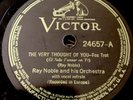
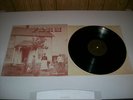
Mr. Sunshine & His Guitar Pickers ?Marijuana, The Devil's Flower Deep South 1977
$
200


Favourite Auctions
To save auctions to your favourites, please login
If you don't have an account, please register
Description
Ultra Obscure late 70's version of Mr. Sunshine Carl J. Swanson opus Marijuana, The Devil's Flower. Recorded in Muscle Schoals Alabama and released on the slightly difficult to research Deep South label. A forever timely ballad of the evils of marijuana it has been famously featured on the Hillbilles from Hell Compilation along with being covered by Holly Golightly.
Carl Swanson is one of a small company: the men and women, working in the profoundly American idiom of hillbilly music, who were not native North Americans. Indeed, “small” may sell him short: a poll of experts elicited only two other claimants, the singer Christine Endeback, the “Little Swiss Miss” of WLS, actually born in the Netherlands, and Raney Van Vink, who in the late 1920s played guitar on some records with the Spartanburg, South Carolina, accordionist Homer Christopher, and was born in Belgium. You might, if you searched among the myriad radio bands of the ’30s and ’40s, be able to extend the list with an Italian-American or two. But for now, Carl Swanson can fairly be described as a rare bird. He was born in Norway and crossed the Atlantic in 1926. A mandolin player since childhood, he reminded himself of home by playing old airs from Norway and Sweden. Then one day he caught the sound of singing and guitar playing from a room nearby. It was his first contact with country music. In 1932 he auditioned for the Major Bowes Amateur Hour, teaming up with a couple of guitarists to sing “Empty Saddles in the Old Corral.” “They had this hook,” he remembered, “and if they didn’t like you, they just came out and pulled you off,” but the audience approved of the youngster with the odd accent and he won second prize. Among the radio listeners that night was a singer and guitarist originally from Cullman, Alabama, named Jake Watts. A few days later he called up and suggested they work together. He had heard of a vacancy for a hillbilly act on a station upstate, but he needed a second instrument and someone to sing a high harmony part. They rehearsed by busking in Manhattan taverns, and a Swedish girl got them a booking for their first proper public appearance, at a Finnish dance hall in Harlem. In 1934, billing themselves “Jake & Carl, The Original Nightherders,” they auditioned for WTIC in Hartford, Connecticut, and won a slot, besting the duet act of Jimmy & Dick, later popular on WEEI in Boston. By 1935 they had moved to WTAM in Cleveland, Ohio, where they shared airtime with Bradley Kincaid, and over the next three years to stations in Schenectady and Rochester, New York. Meanwhile the music publisher and songwriter Bob Miller trained them on records of Mac & Bob and secured them recording sessions with ARC in 1937 and Bluebird in 1939. Most of the songs they cut were Miller’s, like his parody “What Would You Give (In Exchange for Your Mother-in-Law),” “When the White Azaleas Start Blooming,” and, amusingly given Swanson’s background, “Hill Billy Boy from the Mountains.” They also received an offer from Decca, but Watts thought they should stay with Bluebird. As it turned out, Bluebird never called them back, although someone there told Swanson that as a mandolin player he was second only to the famous Dave Apollon. They also published a song folio, notable for its outrageous reconstruction of Swanson’s personal history. “[He] hails,” the publisher’s hack reported, “from the Black Hills of North Dakota... and comes from a sturdy stock of Swedish Pioneers, that settled in the North West. . . . He worked in the wheat fields of the great North West and the potato fields of Canada... was a real cowpuncher at a ranch in Butte, Montana... and soon won fame at a Rodeo in Cheyenne, Wyoming. During the long lonesome evenings of the great Roundups, Carl sang to the stars, the little doggies and the hardened cowpunchers. Even the little prairie dogs seemed even more docile at the softness of Carl’s soft voice.” Not a word of this is true. Jake & Carl separated in 1940 or ’41. Watts briefly partnered Don Sullivan in the Ozark Boys and was involved with hillbilly music until the ’50s, but his career was cut short by blindness. Swanson, however, followed a winding and eventful trail through the music business of the ’40s and ’50s. He wrote songs for other artists, such as the wartime composition “The K. P. Blues,” recorded by Wilf Carter. (K. P. meant Kitchen Police, an unloved chore in the armed services.) He treated the world to the lugubrious homily “Marijuana, the Devil’s Flower.” There were records with his Swedish born wife Berget as “Jane & Carl, The Sunshine Pals.” But he was best known as the disc jockey “Mr. Sunshine” on WRUN, Utica–Rome, a popular station in the Central New York area, owned by Dick Clark’s father. He also ran a record store in Utica, celebrating its opening day by giving away a hundred copies of a Sun record by a young singer he liked, Elvis Presley. One of his triumphs as a disc jockey, he liked to recall, was to spot, while on vacation in Europe, the French song “Le Trois Cloches” by Les Compagnons de la Chanson, and bring the disc back to play on his two daily shows. Thanks to his plugging, the industry took notice and an English translation, “The Three Bells,” was a hit for the country group The Browns. By the end of the ’50s, Swanson was a little frustrated. His act with his wife had been put on permanent hold while she raised their four daughters, so he began to develop a business of supplying promotional gifts for banks and other companies. Then in 1977, his enthusiasm for music refreshed, he put out an album of mandolin tunes, Mandolino-Texas Country. Disc jockey response was so favorable that he decided to move to Nashville, settling in the suburb of Hendersonville. The album got some airplay, and he was invited to appear on Ernest Tubb’s Record Shop’s Midnight Jamboree, where he had the enormous satisfaction of playing “San Antonio Rose” and “The Tennessee Waltz” with Roy Acuff and the Smoky Mountain Boys: a reward for his long, loyal love affair with the music he first heard, all those years before, as a Norwegian boy in a New York apartment
price rating