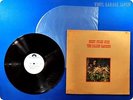
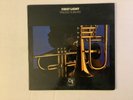
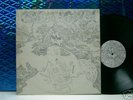
Miles Davis The Great Prestige Recordings Mosaic 5 LP´s
$
151


Favourite Auctions
To save auctions to your favourites, please login
If you don't have an account, please register
Description
Miles Davis Quintet
"The Great Prestige Recordings"
Analogue productions APJ 035
Near Mint, played part of it once (with Van den Hul Grashopper IV Gold)
Limited Edition 180gm HQ 5LP Box Set Including Illustrated Booklet.
This Is Number 1574 (of 2500).
RECORD OF THE YEAR in 1997, ultra rare
Box: NM
Vinyl: NM
Grading as follows:
NM (Near Mint): Record has been opened, and probably played, but is in impeccable condition. Rarely used
EX (Excellent): Has signs of use or storage, but still considered top collection quality. Jackets may display some very light wear; vinyl may have a few light sleeve marks only visible in the highest light. Sound will full and clear, with little if any noise (NOTE, some records are just pressed poorly).
VG+ (Very Good Plus): Still a great copy but has a bit more wear. Vinyl may have some light scuffs or scratches, but nothing deep. Jacket may have some ringwear or seamwear. Sound should be great, with minimal if any noise.
VG (Very Good): A great play copy but clearly used. Vinyl will display many hairline scuffs or scratches, but will play with a tolerable amount of noise. Jacket may have splits and wear but will not be falling apart.
VG-, G: A record that has not been taken good care of. Will display scuffs, scratches, warps, and other defects. Will NOT skip unless otherwise noted, but will play with noise.
IF YOU NEED MORE PHOTOS FROM THE BOX INSIDE, PLEASE SEND AN EMAIL
Please place questions to seller before bidding!
International bidders welcome!
We stand behind our product 100% and will refund the cost of the item if it is defective. However, uninsured and untracked items are the buyer's responsibility once they leave these hands. Insurance and tracking services are available upon request.
Regarding questions about shipping costs: Please give always your zip-code, so that we can check your approx shipping costs!
Private auction! No guarantee!
Recording of March 1997: The Great Miles Davis Prestige Recordings
By Robert Baird & Wes Phillips • March, 1997
MILES DAVIS QUINTET: The Great Prestige Recordings
Includes: The New Miles Davis Quintet, Cookin', Relaxin', Workin', Steamin'
Miles Davis, trumpet; John Coltrane, tenor sax; Red Garland, piano; Paul Chambers, bass; Philly Joe Jones, drums.
Analogue Productions APJ 035 (5 LPs). 1996. Bob Weinstock, original prod.; Rudy Van Gelder, original eng.; Chad Kassem, reissue prod.; Stan Ricker, mastering eng. AAA. TT: 3:11:09
Music *****
Sonics *****
The music of Miles Davis is more a religion than a career. What are the three subjects you should never mix with jazz-literate in-laws (or outlaws) and single-malt? Politics, religion, and whether or not Kind of Blue is really the best jazz album ever made. Religions have been based on much less than the illuminations to be found in the Davis catalog.
The only problem with worshipping at the church of Miles was that, just when you'd signed on to his system of beliefs, he'd change the rules—often radically so. The permutations are endless. Early fans remain attached to Birth of the Cool, or even his first sessions with Bird and Dizzy Gillespie. A slight majority still holds (probably correctly) that Kind of Blue is the one true Miles to have. Simultaneously, Miles and Gil Evans were fashioning their elegant orchestral collaborations, headed by Sketches of Spain.
The next generation of fans, however, bowed down and howled hosannahs that the spacey In A Silent Way was the indisputable icon. Then came the blasphemy of the jazz/rock fusion of Bitches Brew, which engendered a rift slightly less yawning than the Reformation. Motivated by a restless creativity and an impish love for confounding the faithful, Miles then veered even further from his boppish beginnings and got funky with On the Corner and Big Fun. From there, genres blurred into indistinguishable (and to some ears masterful) mélanges like the Ellington/Stockhausen homage Get Up With It, the return to big-band sensibilities (Aura), and the final unexpected stylistic turn, Doo-Bop.
After choosing your favorite style, another way to approach the Miles monolith is to pick which of his many bands you favor most. In my unhumble opinion—really, I'm more live-and-let-live when it comes to Miles's chameleonesque catalog—I've always been most attached to the five discs recorded by the quintet he formed in 1956. With John Coltrane on tenor and the monster rhythm section of Red Garland (piano), Paul Chambers (bass), and the great Philly Joe Jones (drums), this quintet cut one disc (Miles) in November of 1955, and four more (Cookin', Relaxin', Workin', and Steamin') between May and October of 1956. A contract settlement between Miles, Prestige (his old label), and Columbia (his new one) accounts for the rapid-fire recording.
Because they were recorded so close together—and are in many ways a creative extension of each other—these discs are best considered as the result of one gigantic session. This closeness also made them a natural choice for a boxed set (the previous Prestige box, Chronicle: The Complete Prestige Recordings, 1951-1956, covers everything Miles recorded for the label), a circumstance that Chad Kassem of Analogue Productions must be commended for finally spotting.
None of the five albums stands out as the unquestioned winner. All revel in the interplay between Miles's quiet, soulful, sinuous solos and Coltrane's aggressive, unstoppable exclamations. The deeper Miles sank into himself, the more extraverted Coltrane became. While these discs show Miles's unique tone and exquisite phrasing fully formed, Coltrane's mature style was just beginning to emerge. Critics of the time (who, like critics today, thought they knew everything) questioned Miles's choice of Coltrane. And while it's true that Coltrane's playing on these sessions is more potential than actual proof, it remains an enthralling display of awesome talent thrashing about in search of the coherent solos and torrential arpeggios (the so-called "sheets of sound" style) that he began flashing in the Prestige dates he began leading the year after these sessions.
Up to the dual tasks of supporting these two towering soloists and driving the sessions along, the rhythm section is without equal, and for my money is one of the main reasons to own this set. Thought of today as "classic jazz," these five LPs remain potent documents of the state of post-bop ca 1956, easy to enjoy both for their artistry and instrumental fire and for their smooth, spontaneous class.
Compared to the DCC gold CDs of these same titles, the sound of the LPs is generally excellent. The only problems surface on Workin', where numerous dropouts signal the deterioration of the master tapes. (See Wes Phillips' "Quarter Notes" sidebar for a full discussion of sound quality.) The only slight downside to these sessions is what their continued transcendence says about the state of the modern jazz trumpet (or the modern tenor sax, for that matter). Will Wynton Marsalis or Roy Hargrove or any of the other young guns ever lead a session with this much soul and fire?
The Miles box might just be the record of the year, a brash prediction for me to make on the third day of 1997—but, given the significance of this material, also practically a no-brainer.
Impressed by Miles's performance at the 1955 Newport Jazz Festival—and cognizant that their newly developed 12" LP had the potential to revolutionize the industry—Columbia Records executives recruited Davis to bolster their stable of jazz artists. There was just one problem: Miles was under contract to Prestige at the time. So Columbia and Prestige sharpened their pencils and worked out a compromise: Davis would fulfill his contract to Prestige by the end of 1956, but he would also be allowed to record for Columbia as long as the label didn't release any of his records until 1957. Thus Davis began an extraordinary year and a half of activity, recording all-star dates for Prestige, putting Round About Midnight and four other compositions in the can for Columbia, and, in two marathon sessions conducted in May and October, recording most of the material collected here.
The five Prestige records collected in this box are the narrative of a band—possibly the most influential band in modern jazz. The New Miles Davis Quintet shows some birthing pains. In retrospect, we can see the seeds of greatness, but the seams show, and Miles's choice of musicians puzzled many jazz aficionados at the time. Joe Goldberg, in his liner notes to Steamin' with the Miles Davis Quintet, described the initial critical assessment of the Quintet as "a trumpet player who could play only in the middle register and fluffed half his notes; an-out-of-tune tenor player; a cocktail pianist; a drummer who played so loud that no one else could be heard; and a teen-age bassist." Listening to Coltrane practically blunder into his solos on The New Miles..., one can understand why people were puzzled by Miles's choices. Miles being Miles however, he wasn't limited only by what he'd already heard—he was hearing music yet to be.
And glorious music it turned out to be—Cookin', Relaxin', Workin', and Steamin' laid down the template for serious jazz for the rest of the '50s and the first half of the '60s. And then the band that shattered that mold was...Miles's next stable ensemble.
There are so many wonderful performances here: "My Funny Valentine" from Cookin'; "If I Were a Bell" from Relaxin'; "It Never Entered My Mind" from Workin'; and "When I Fall in Love" from Steamin' all rank as personal favorites, but they're emblematic of the melancholy, extremely intimate interplay that permeates the individual albums. And, while those last four discs were recorded in two extended sessions, they don't run together at all—each disc has been crafted into a satisfying set, giving the feeling of dropping in on the group at your favorite watering hole. (Considering that this was the dawn of the LP, that sort of conceptual programming was pretty prescient.) Not to mention that each song is brimming over with fresh melodic and developmental ideas. I take away something new every time I revisit these classics. (For more on these seminal sessions, see Robert Baird's assessment in this issue's "Recording of the Month.")
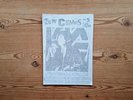
Analogue Productions has done a wonderful job with this reissue. They've reproduced each original cover and collected the five LPs into a luxurious box, emblazoned with a rich color portrait of Miles—reiterated in B&W on the cover of the enclosed booklet, which features a lovely essay by Bob Blumenthal, portraits of the musicians, and notes on the production of the LPs from Mastering Engineer Stan Ricker, Audio Systems Consultant Neil Muncy, Press Manager Rick Hashimoto, and Plating Engineer Gary Salstrom. The set is limited to an edition of 2500 pressings.
Keep in mind that the master tapes for these discs are 40 years old; by the time AcousTech got them, age had taken its toll. Adhesive from the splices had migrated onto the oxide, and the splices themselves were brittle—and, in some cases, stretched. Ricker had a time of cutting the lacquers, but only partially because of the aged masters. As he explains in the booklet, Davis's choice of a Harmon mute made for an unusually complex waveform, one that stressed the cutting head on the lathe beyond its limits.
Past experience with half-speed mastering—of which Stan is the acknowledged master—told him that he'd lose bass going that route with the equipment available at AcousTech. So he went to a really old solution: two-thirds$nspeed mastering. Mastering at 22.5rpm has been an option on many cutting lathes since the days when singles were king—after all, while 22.5rpm is two-thirds speed for LPs, it's half speed for 45s—and was developed to cut "hotter" singles for radio play. With the help of Krieg Wunderlich, an erstwhile co-worker at Mobile Fidelity Sound Labs, Stan managed to slow down the Studer Mastering Deck's servo-motor capstan to the point where it was possible to do justice to Davis's muted horn—not to mention Coltrane's muscular sax.
The result is a set of records whose tonal richness is abetted by absolute clarity. I've never heard Davis's muted trumpet sound harmonically richer—nor, for that matter, have I heard Coltrane's sax bigger or more aggressive. Garland's piano has never figured more bell-like; the notes float unfettered in space, even given Van Gelder's relatively close-miked perspective. Yet none of the detail and precision detract from Mr. PC's big bass sound—he is as present and palpable here as I've ever heard him.
That said, there is a small problem that might drive some persnickety listeners nuts. There are drop-outs, some splices are audible, and in places the oxide is audibly damaged. This means that at least once per disc—and, in the case of Workin', quite a bit more than that—you will be pulled out of the world the Quintet created and reminded of the technology that is bringing them to you—and its limitations. How big a deal is that? It depends on your level of tolerance, of course. I'll put up with it gladly to have discs of this overall quality: The tapes are what they are, and I feel fortunate that Analogue Productions has gone to all the trouble to make this set available at all. Compared to the OJC pressings—or the Prestige CDs—the AP LPs sound far, far better. And, of course, they're records, which is how I want to hear these performances—think of it as an original instruments thing. With mint originals coming to market for $150 each, I couldn't afford them; $200 for this box actually begins to look like a bargain.—Wes Phillips
price rating


![The Live Anthology * [7-LP] by Tom Petty (Vinyl, Nov-2009, 7 LP Vinyl, Reprise)](https://www.popsike.info/php/thumbnail.php?url=https://www.popsike.pics/pix/20170603/162540640729.jpg)