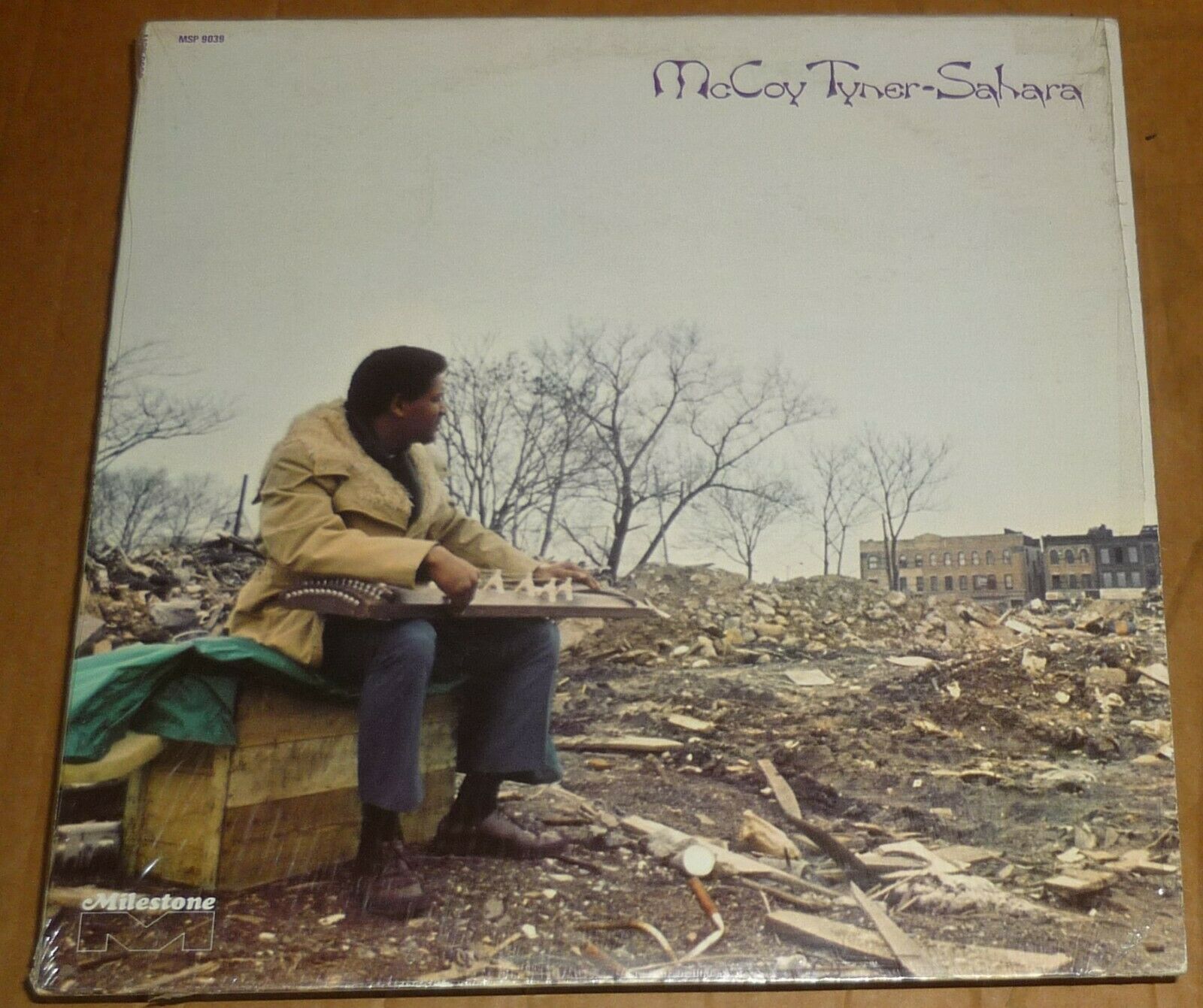
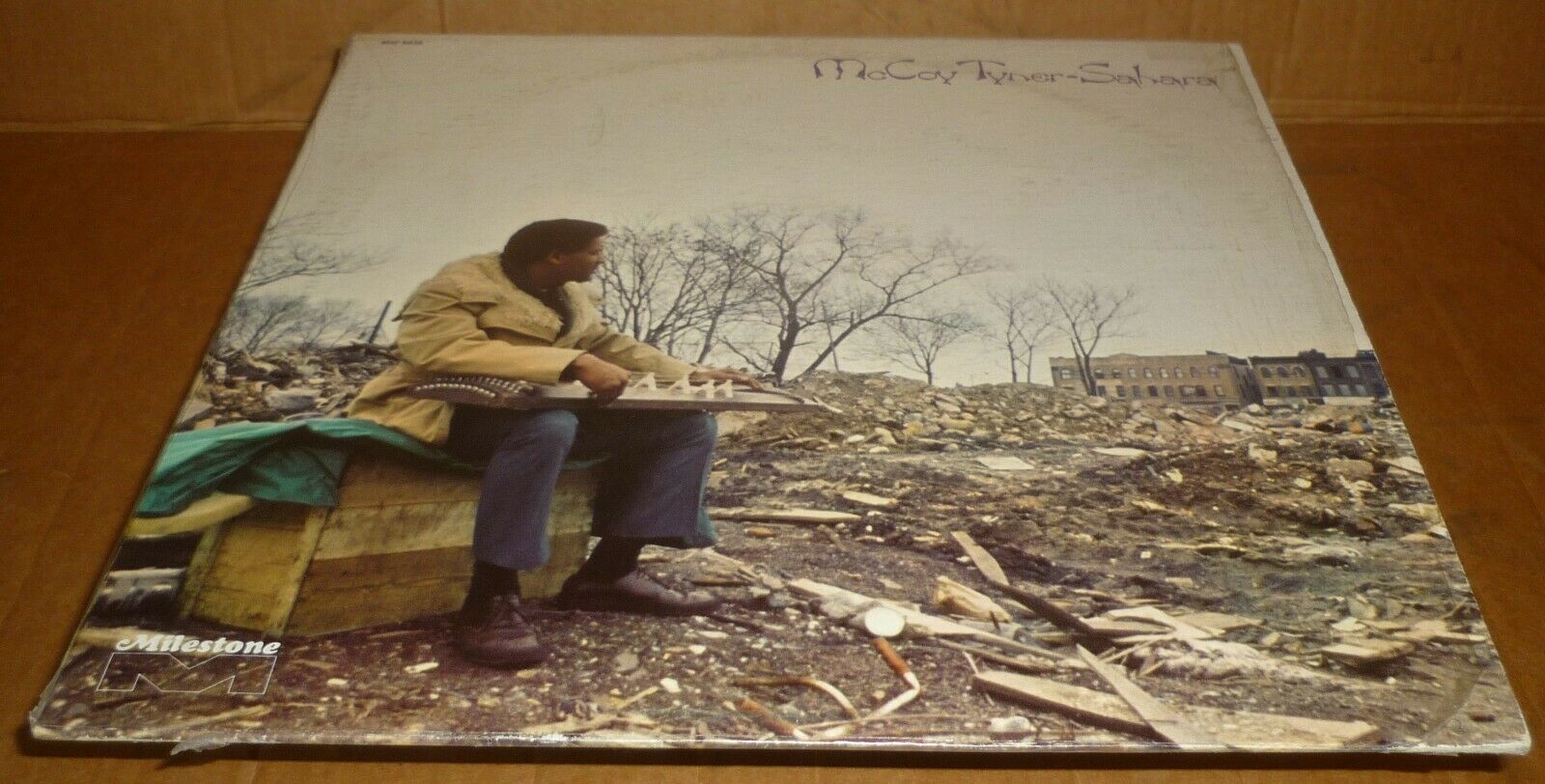
McCOY TYNER Sahara LP MILESTONE 1972 US reissue MSP 9039 ALPHONSE MOUZON
€
20
$
23

Favourite Auctions
To save auctions to your favourites, please login
If you don't have an account, please register
Description
IN ORDER TO AVOID MISUNDERSTANDING WE ADVISE YOU TO ENQUIRE
ABOUT POSTAGE COST BEFORE YOU ACTUALLY BID/PURCHASE THE ITEM
PLEASE ASK FOR ANY INFORMATION
McCOY TYNER
with SONNY FORTUNE, CALVIN HILL, ALPHONSE MOUZON
One of the most celebrated and influential jazz pianists of his generation, McCoy Tyner was known for his harmonically expansive modal voicings, commanding two-handed block-chord style, and fearless improvisational lines that touched upon African and Eastern musical traditions. Along with contemporaries Herbie Hancock, Bill Evans, and Chick Corea, Tyner redefined the sound of the modern jazz piano from the '60s onward, and his playing continues to guide up-and-coming musicians. Although primarily recognized for his work as a member of saxophonist John Coltrane's famed quartet with bassist Jimmy Garrison and drummer Elvin Jones, Tyner distinguished himself as a leader in his own right, releasing forward-looking dates like 1967's The Real McCoy, 1972's Sahara, and 1980's Horizon. Those albums found him building upon his time with Coltrane, having already contributed to innovative albums like 1961's Africa/Brass, 1961's My Favorite Things, and 1965's A Love Supreme.
"SAHARA"
<reissue, originally published in 1972>
Produced by Orrin Keepnews
LP MILESTONE RECORDS MSP 9039 STEREO
PRINTED IN U.S.A. MID-70s REPRESSING
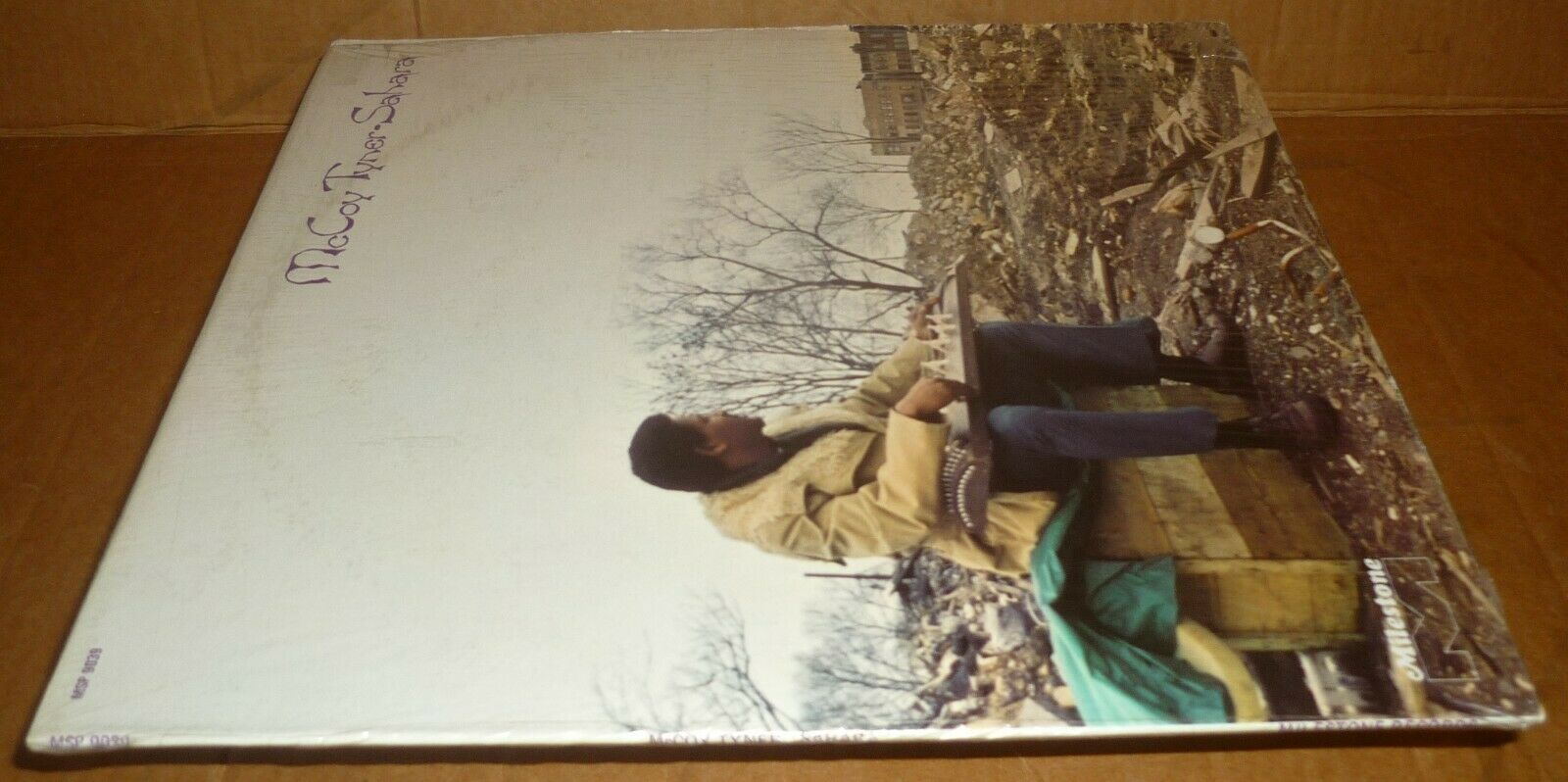
PARTIALLY IN SHRINK SINGLE SLEEVE
THICK CARDBOARD COVER (AMERICAN STYLE)
Barcode and Other Identifiers
Barcode: none
LABEL: MILESTONE - BRICKY LABEL - BLACK TEXT (Brownish on rim)
Catalog on cover: MSP 9039
Catalog on labels: MSP-9039 (MSP-9039-A) / MSP-9039 (MSP-9039-B)
Matrix / Runout (Side 1, Etched): \T MSP 9039-A-1
Matrix / Runout (Side 2, Etched): T l MSP 9039-B-1
On labels: rim text reads "Distributed by Fantasy Records.....California"
? 1972 Milestone Records
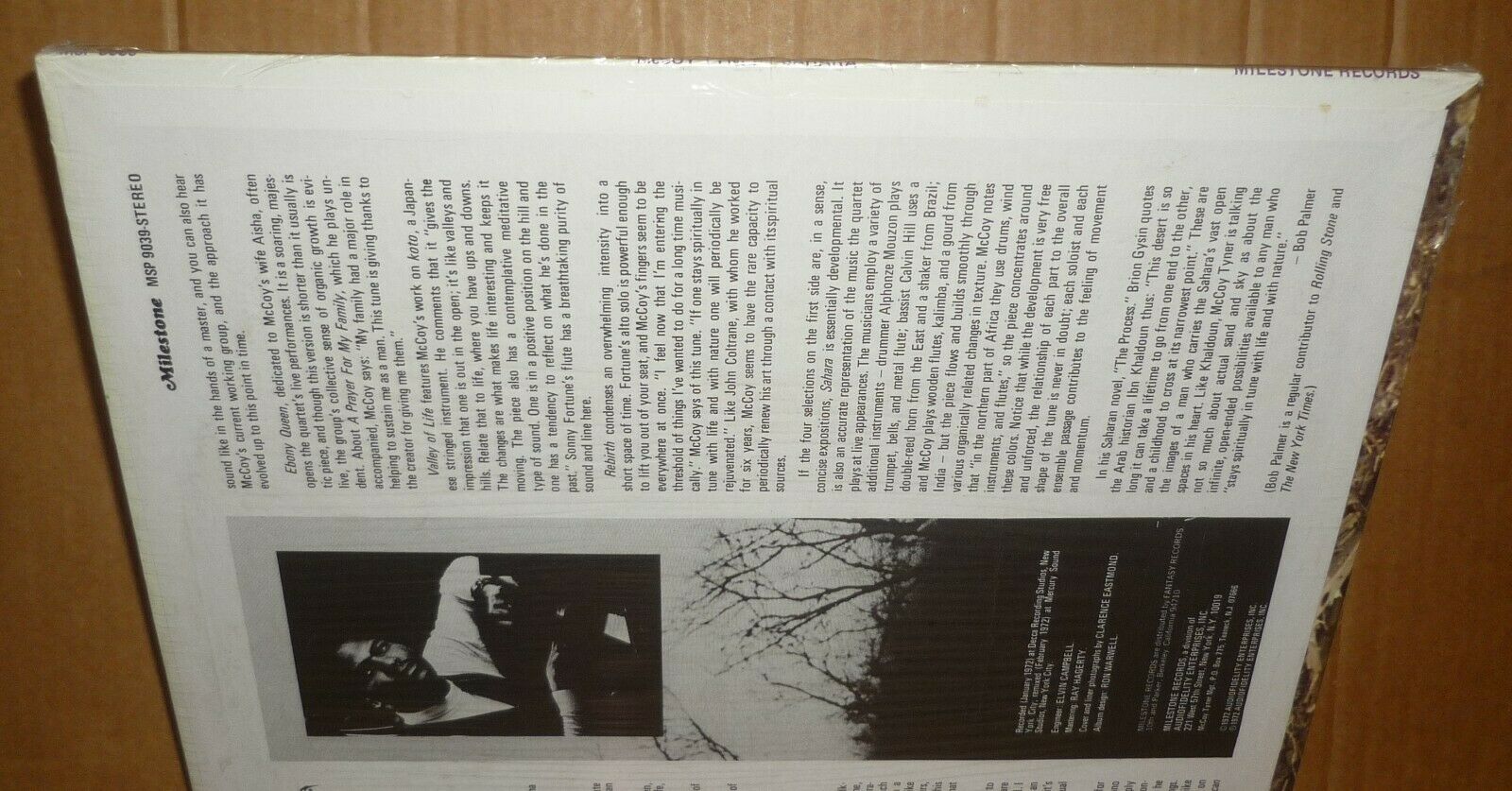
On back cover: All selections composed by Tyner and published by Aisha Music Co. (BMI)
Produced by Orrin Keepnews
Notes by Bob Palmer (Bob Palmer is a regular contributor to Rolling Stone and The New York Times.)
Recorded (January 1972) at Decca Recording Studios, New York City......
© 1972 Audiofidelity Enterprises, Inc.
? 1972 Audiofidelity Enterprises, Inc.
tracklisting
Side A: EBONY QUEEN - A PRAYER FOR MY FAMILY - VALLEY OF LIFE - REBIRTH
Side B: SAHARA
grading
RECORD EX but (please, also read above description)
SLEEVE VG+ but (please, see pictures and read above description)
After the death of John Coltrane, his longtime pianist McCoy Tyner was in something of a musical quandary. Keeping up with his mentor through the incredible explorations of the early '60s, he seemed to have some difficulty navigating the even further out territories explored in the two or three years before Coltrane's death in 1967. His subsequent albums as a leader were solid, enjoyable efforts but seemed oddly retrograde, as though he needed time to settle back and re-digest the information handed down to him. With Sahara, Tyner found the precise perfect "middle ground" on which to stand, more structured than late Coltrane, but exploding with a ferocity and freedom of sound that made it simply one of the greatest jazz recordings of the decade. None of the other members of his quartet ever sounded so inspired, so liberated as they do here. Sonny Fortune threatens to tear the roof off the joint on more than one occasion, Calvin Hill is more than rock-solid on bass, his roots arcing deeply into the earth, and as for Alphonse Mouzon, well, no one familiar with his later vapid meanderings in fusion would begin to recognize him here, so incendiary is his playing. And Tyner develops so much pure energy, channeled with such pinpoint precision, that one worries about the physical stability of any piano under such an assault. From the extraordinarily intense "Ebony Queen" through the ruminative solo "A Prayer for My Family, the equally intense "Rebirth," and the concluding, side-long title track, there's not a misstep to be heard. "Sahara," over the course of its 23 minutes, covers vast ground, echoing the majesty and misery of the geographical area with percussion and flute interludes to some of Tyner's very best playing on record. Even something that could have resulted in a mere exercise in exotica, his koto performance on "Valley of Life," exudes both charm and commitment to the form. Tyner would go on to create several fine albums in the mid-'70s, but never again would he scale quite these heights. Sahara is an astonishingly good record and belongs in every jazz fan's collection...(AllMusic)
price rating