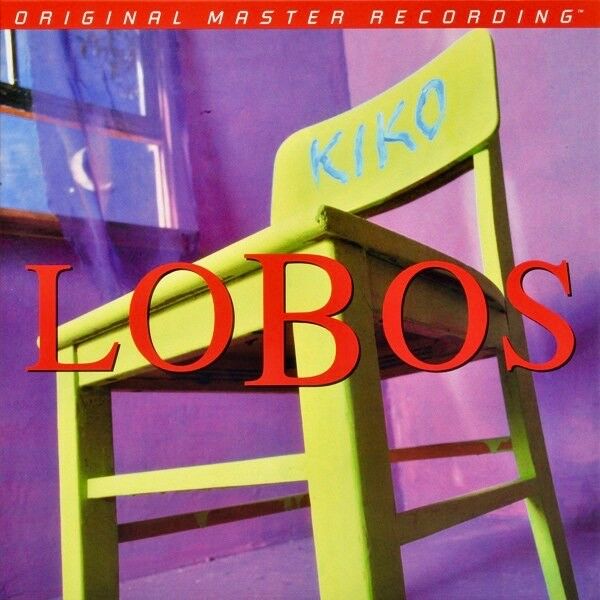
MFSL LP 1-371 LP: LOS LOBOS - Kiko - Near MINT 2012 USA Numbered 180-gram MOFI
C$
50
$
36


C$ 50
Sold For
Apr 27, 2020
Sold Date
May 21, 2018
Start Date
1
Number Of Bids
Canada
Country Of Seller
eBay
Sold at
Favourite Auctions
To save auctions to your favourites, please login
If you don't have an account, please register
Description
****Welcome to our listing, thanks very much for looking!
****See our own website! We have lots of out of print LPs and CDs! Find us on the web at -
hearthedifference.net
****Shipping cost is only an estimate - it depends on the actual weight and size of the package as well as the service required. We do not profit from shipping costs, so if we overcharge, we will refund the difference back to you. It's always best to wait for our invoice before paying for your item. We will combine shipping for multiple items purchased.
****Please see our other listings - new items added daily!
****To access our eBay store click on the little red door at the top right section of any of our eBay listings or, click on -
http://stores.ebay.com/Hear-The-Difference
Background -
One of the most acclaimed American bands of the 1980s and '90s, Los Lobos were seasoned musical veterans with nearly 15 years of experience under their belts when they scored their first hit in 1987 with a cover of Richie Valens' "La Bamba." Though their time as pop stars was short, the group -- who enjoyed calling themselves "just another band from East L.A." -- won over critics and a legion of loyal fans with their bracing mixture of rock, blues, Tex-Mex, country, R&B, and Mexican folk sounds, with the band's sound ranging from gentle acoustic ballads to the outer limits of experimental rock. While often cited as one of the great bands of Latino Rock, Los Lobos' eclectic sound in fact defined them as a vital example of America's cultural melting pot.Los Lobos were formed in 1973 by guitarist/accordionist David Hidalgo and percussionist Louie Perez, two students at Garfield High School in East Los Angeles who discovered they shared eclectic tastes in music. Recruiting two other Garfield students -- guitarist Cesar Rosas and bassist Conrad Lozano -- they put together a band which they dubbed Los Lobos del Este (de Los Angeles), a take-off on the celebrated Norteño band Los Lobos del Norte. While their interests ranged from hard rock to free jazz, the new group began exploring the Mexican folk music they grew up with, and they soon found themselves regularly playing weddings, parties, and Mexican restaurants in East Los Angeles.
As an acoustic folk group, Los Lobos cut a self-released album in 1978, Del Este de Los Angeles (Just Another Band from East L.A.), but they had greater stylistic ambitions, and were eager to embrace newer sounds and a larger audience, especially as they discovered the energy and stylistic freedom of the L.A. punk scene. Los Lobos struck up a friendship with fellow punk-influenced roots rockers the Blasters, and after opening some shows for them, Los Lobos developed their own following on the Hollywood club scene. They also won new fans through their presence on the soundtrack of the cult comedy Eating Raoul.
In 1983, Slash Records, a powerful L.A. indie label distributed by Warner Bros., signed Los Lobos, and the group cut a seven-song EP, ... And a Time to Dance, that showcased the force and wide-ranging influences of their music. Producer T-Bone Burnett also brought in local sax player Steve Berlin to play on the sessions, and he would soon become a full member of the group. Los Lobos began touring the country in support of the EP, and an even more ambitious full-length album, How Will the Wolf Survive?, followed in 1984. After extensive road work, the band recorded their third album, 1987's By the Light of the Moon, with an eye toward breaking the band out to a larger audience. Sales were not as good as hoped, but Los Lobos did land a major chart hit that year -- they recorded a handful of songs for the soundtrack of a film about pioneering Latino rocker Richie Valens, and their version of Valens' biggest hit, "La Bamba," became the movie's title song and a hit single that topped the pop charts.
For the follow-up to La Bamba, Los Lobos returned to their first love, Mexican folk, on the 1988 album La Pistola y el Corazón. The album was a modest success, but their next effort, the fine and stylistically rich 1990 album The Neighborhood, sold poorly, and the band was looking for a new direction when they returned to the studio in 1992. Producer Mitchell Froom encouraged the band to explore unusual sounds and arrangement ideas, and combined with an outstanding set of songs, Kiko was hailed as the band's masterpiece, wowing critics and fans alike.
In 1993, Los Lobos celebrated 20 years together with the retrospective set Just Another Band from East L.A., which included rare tracks and live performances alongside the band's best known numbers. However, while they recorded a children's album with Lalo Guerrero, 1995's Papa's Dream, and scored the Robert Rodriguez film Desperado, a proper follow-up to Kiko didn't arrive until 1996, and Colossal Head didn't click with audiences like Kiko.
For several years, Los Lobos maintained a low profile as Rosas cut a solo album, Soul Disguise, and Hildago worked on side projects with Mike Halby (Houndog) and his Los Lobos bandmate Perez (Latin Playboys). Los Lobos returned in 1999 with This Time, their first release for the Disney-affiliated Hollywood Records label, who also reissued the band's 1978 Del Este de Los Angeles in 2000. (2000 was a good year for Los Lobos archivists; it also saw the release of a four-disc retrospective box set from Rhino Records, El Cancionero: Mas y Mas).They shifted to the Hollywood-owned Mammoth Records imprint for 2002's outstanding Good Morning Aztlan. Always a favorite with fellow musicians, Los Lobos collaborated with a number of their favorite artists on 2004's The Ride, including Mavis Staples, Dave Alvin, Richard Thompson, Elvis Costello, and Ruben Blades. The Ride spun off an EP of covers, Ride This, and while touring behind the album, Los Lobos cut their first-ever live album, 2005's Live at the Filmore. A second live set devoted to acoustic performances, Acoustic en Vivo, appeared a few months later.
Los Lobos regrouped in 2006 to record The Town and the City, a return to the themes of The Neighborhood, and they cut a second children's album in 2009, Los Lobos Goes Disney, featuring tunes from classic Disney films. (For the album, the group revived their cover of "I Wanna Be Like You" from The Jungle Book, which they first cut for Hal Willner's 1989 Disney tribute Stay Awake). Los Lobos cut ties with Hollywood Records and signed with Shout! Factory, who issued the streetwise Tin Can Trust in 2010, while the group reworked their most celebrated album with the 2012 release Kiko Live. As Los Lobos celebrated their fourth decade together, they looked back at their roots in acoustic music with 2013's Disconnected in New York City, recorded during shows at the Big Apple venue the City Winery; it was also the band's first release for the independent 429 Records label. In 2015, Los Lobos released the bold and eclectic album Gates of Gold; the album's arrivial coincided with the publication of Los Lobos: Dream in Blue, a group biography written by veteran Los Angeles music journalist Chris Morris. - Mark Deming
Kiko is the ninth album by the Mexican American rock group Los Lobos. A year later, Los Lobos performed a spoof of their song "Kiko and the Lavender Moon" known as "Elmo and the Lavender Moon" on the PBS series Sesame Street.
- Los Lobos Kiko on Numbered Limited Edition 180g LP from Mobile Fidelity! Mastered From Original Master Tapes!
- Distinguished Band's Ambitious 1992 Album Stands as Peak Moment in a Career Filled With High-Water Marks
- Gloriously Multidimensional Sonics Yield Colorful Quilt of Textures and Subtleties: Mobile Fidelity Reissue Exposes Use of Studio as an Instrument
- Rollicking Blues, Cabaret Jazz, Otherworldly Lullabies, Snarling Rock, and More Fill Landmark Set
Mastered from original master tapes, Mobile Fidelity’s 180g LP version of Kiko presents the record in previously unimaginable fidelity. In particular, Froom’s exquisite production can now be experienced in full relief, with the vintage tape-loop keyboards and spare arrangements yielding an ethereal feel, otherworldly ambience, and colorful finish that complement the ace playing. The subtleties of the richly detailed backdrops—splashed with distortion, feedback, random sound effects, sonorous horns, ominous chants, delicately plucked harps—are greatly enhanced, turning the multifaceted Kiko into the aural equivalent of a sensational IMAX presentation.
The material, too, ravishes the senses. In Rolling Stone's original review of Kiko, David Okamoto remarks "the music sounds more created than contrived, thanks to the compassionate touch of the group's main songwriters, singer-guitarist David Hidalgo and drummer Louis Pérez." Indeed, the Los Angeles ensemble tackles tough-minded social issues such as alcoholism, suicide, abuse, homelessness, death, and rape without coming across as preachy or melodramatic. The record’s power relates to that possessed by the most timeless albums—the emotional and metaphysical capacities to transcend problems, overcome adversity, and deliver catharsis.
Spanning rollicking blues and dreamy pop balladry to snarling rock and traditional Mexican-inspired waltzes, Kiko seemingly knows no bounds. Lullabies such as “Saint Behind the Glass” claim mellifluous elegance while the cabaret-laced jazz of work like “Kiko and the Lavender Moon” glows with a dark majesty, thanks to both the skilled performance and Froom's illuminating production. Los Lobos seldom, if ever, drifted so far outside of the roots-rock box as they do on Kiko. And yet, the collective’s binding connection to folklore remains in tact. Native American, Hispanic, and Catholic elements surface in the lyrics and arrangements, the characteristics expressing a multicultural reach that parallels the songs’ multidimensional construction.
And still, it remains impossible to ignore the use of the studio as the record’s secret-weapon instrument. Imaginative tricks such as noise gates, filters, and psychedelic devices help establish a surrealism that never lets up. Neither does Kiko.
Seen from any angle, Kiko is a landmark recording. Experience it in the best possible fidelity.
Features:
• Numbered, Limited Edition
• Production and Mastering by Mobile Fidelity Sound Lab
• Specially Plated and Pressed on 180 grams of High Definition Vinyl
• Special Static Free - Dust Free Inner Sleeve
• Heavy Duty Protective Packaging
• Mastered from the Original Master Tapes
Los Lobos had earned a reputation as one of the most intelligent and creative roots rock acts in America with the albums By the Light of the Moon and The Neighborhood, but it was with 1992's Kiko that they really demonstrated the breadth of their sonic ambitions. Produced in collaboration with Mitchell Froom, Kiko exchanged the more straightforward approach of Los Lobos' previous sessions for a uniquely textured sound, with the group's guitars thrown into sharp relief against Froom's collection of vintage tape-loop keyboards, and the arrangements are often unusually spare, most powerfully in the ghostly spaciousness of "Kiko and the Lavender Moon" and "Wake Up Delores." Even the more full-bodied cuts, such as the rollicking "That Train Don't Stop Here" and the hard-rocking "Whiskey Trail," boast a different personality than in Los Lobos' previous work, with the guitars clean but cutting like a switchblade and the drums snapping hard, and the more contemplative selections drip with a mysterious, otherworldly ambience that's matched by the impressionistic imagery of David Hidalgo and Louie Pérez's superb songs. At its best, Kiko sounds like the musical equivalent of a Luis Buñuel dream sequence, balancing beauty and menace with intelligence and a skill that's little short of dazzling; it's a brilliant, singular achievement, and the most rewarding album in the group's catalog. - Mark Deming
Nothing Los Lobos recorded previous to 1992’s Kiko could have prepared anyone for this piece of sustained, surreal brilliance. Dreamlike sonic vistas, ominous lyrical horizons, mysterious musical crevices, and spring-like rhythmic compressions and extensions combine to create a dayglo, funhouse-like environment filled with familiar, but oddly drawn musical elements.
The chill inducing title tune, with its creepy, slinky rhythm, its haunted saxophones, its "lavender moon" and "big black cat," is a self-contained macabre vision more powerful than any MTV video. And yet, beneath the daring musical invention is a familiar bedrock of musical Americana. There's swing jazz, blues, rock and all of the other roots- including the group's ethnic ones, but they've been strangely, and wonderfully twisted.
The group takes on very serious subject matter but manages to do so without preaching.
If you hear The Band poking around the musical corner it is not a coincidence. Hidalgo and Perez traveled to Woodstock to help the group write songs before starting on this album. "Two Janes" sounds oddly familiar- like The Band's cover of "The Long Black Veil." If any Band album sows the seeds of Kiko it's Stagefright, which contains the mystical "Daniel and The Sacred Harp"—one of the group's more magical songs. But the influences range far and wide—intentional or otherwise, which is part of the album's fascination. Listen to "Just A Man" and you'll hear the Robin Trower edition of Procol Harum.
The Hidalgo/Perez team comes up with its most affecting, tender yet tough batch of tuneful songs like "Short Side of Nothing," and Cesar Rosas turns up the heat with the gritty "That Train Don't Stop Here Anymore," and the hard scrapple "Wicked Rain."
The playing is intense, the rhythms relentless, the musical choices breathtakingly fresh, and Froom and Blake brush with iridescent paint on a black velvet canvas achieving a perfect subject/object match. While not much sounds "real" in the natural sense, the sonic picture is smooth and clean, with outstanding bass extension and definition. Overall clarity is superb, the mix is masterful, and the overall spectrum balance is ideal, though the top end sounds tucked and rolled as intended. A masterpiece, period.
When first issued during the 1990’s vinyl drought, a UK release sourced from who knows what and pressed in Holland didn’t sound as good as the original CD mastered by Dave Collins, known to some as Mr. EveAnna Manley.
Mobile Fidelity’s new 180g mastering (also available on SACD) is far superior to that original CD in every way: it’s more spacious, more full bodied on bottom and extended on top. The recording is hardly a “band playing live in a room” and features a lot of co-producer Mitch Froom’s tape loop wizardry and studio tricks in service of the concept but it’s still a very good sounding, dynamic studio record. If you want to hear the band’s best sounding record, and one that’s also worthwhile musically, check out The Neighborhood (Slash/Warner Brothers 26131-1 LP) featuring John Hiatt and Levon Helm. Hopefully Mobile Fidelity will get around to reissuing that one as well.
If you’ve somehow not yet gotten into Los Lobos, this is the one with which to start the musical conversation, especially since for all intents and purposes it has never before been available on vinyl other than on the aforementioned not good sounding limited edition. - Michael Fremer, Analog Planet
-
MFSL - Mobile Fidelity Sound Lab Record LP item - BLACK record labels with WHITE lettering
-
Record Made in the USA
-
Pressing is in STEREO - recording is from 1992 - originally issued on the SLASH label
-
Limited Edition and Numbered LP - No. 000113
-
Record Speed: 33 1/3 rpm
-
Record Made issued in: 2012
-
Record Catalog Number: MFSL 1-371
Featured on this item:
Los Lobos
Title of this Audiophile LP -
Kiko
Track Listings -
A1. Dream In Blue - Engineer, Mixed By – Tchad BlakeA2. Wake Up Dolores - Drums – Gary Mallaber Engineer, Mixed By – Kevin Killen, Tchad Blake Mixed By [Assistant] – Dan Bosworth Percussion – Alex Acuña
A3. Angels With Dirty Faces - Engineer, Mixed By – Tchad Blake
A4. That Train Don't Stop Here - Engineer, Mixed By – Tchad Blake
A5. Kiko And The Lavender Moon - Engineer, Mixed By – Tchad Blake
A6. Saint Behind The Glass - Engineer, Mixed By – Tchad Blake Harp [Veracruz] – Fermin Herrera
A7. Reva's House - Engineer, Mixed By – Tchad Blake
A8. When The Circus Comes - Engineer, Mixed By – Tchad Blake
B1. Arizona Skies - Engineer – Paul duGré Engineer [Additional] – Tchad Blake Engineer [Assistant] – Wendy Thompson
B2. Short Side Of Nothing - Engineer – Paul duGré Engineer [Additional] – Tchad Blake Engineer [Assistant] – Wendy Thompson
B3. Two Janes - Engineer – Paul duGré Engineer [Additional] – Tchad Blake Engineer [Assistant] – Wendy Thompson
B4. Wicked Rain
B5. Whiskey Trail
B6. Just A Man
B7. Peace - Drums – Victor Bisetti
B8. Rio De Tenampa - Engineer – Paul duGré Engineer [Additional] – Tchad Blake Engineer [Assistant] – Wendy Thompson Percussion – Victor Bisetti
Performed By / Credits on this LP include -
• Steve Berlin - tenor, baritone, and soprano sax, flute, melodica, harmonica, organ, piano, synthesizer, percussion
• David Hidalgo - guitars, accordion, violin, banjo, piano, percussion, vocals
• Conrad Lozano - Fender 5-string jazz bass and 4-string precision bass, Godin fretless bass, guitarron, background vocals
• Louie Pérez - drums, vocals, guitars, percussion
• Cesar Rosas - electric and acoustic guitars, vocals
• Pete Thomas - drums
• Victor Bisetti - drums, percussion
• Fermin Herrera - Veracruz harp
• Alex Acuña - percussion
• Gary Mallaber - drums
• Mitchell Froom and his House of Keyboards La Chilapeña brass band
• Art Direction – Tom Recchion
• Edited By [Digital] – Dave Collins
• Engineer [Assistant] – John Paterno
• Other [Make Up] – Cloutier, Osmundson, Wendy
• Other [Set & Construction] – Kelly Ray
• Other [Stylists] – El-Garaje, Linda Gamboa, Victor Martinez
• Photography By – Dennis Keeley
• Producer – Los Lobos, Mitchell Froom
• Remastered By – Krieg Wunderlich
• Technician [Guitar] – Brian Hunt
CONDITION Details:
LP Jacket:-
The GATE-FOLD jacket is in Near MINT condition - no seam splits or corner dings - like new!
-
The jacket has NO splits of any kind - it is completely solid and intact, and shows only some very minimal shelf wear. The LP still has the original outer plastic wrap (bag).
-
It has NO drill holes or saw marks of any kind.
-
There is NO writing on the front or back of the jacket.
-
The cover has clean and sharp colors - see picture with this listing for more detail.
-
The LP is in Near MINT condition - super glossy and appears never played!
-
This is the near mint copy you want for your collection - any super picky audiophile would be happy with this one!
-
As for any record, even brand new, sealed ones, we always recommend a proper record cleaning before playing!
A Short Note About LP GRADING -
- Mint = Only used for sealed items.
- Near Mint = Virtually flawless in every way.
- Near Mint Minus = Item has some minor imperfections, some audible.
- Excellent = Item obviously played and enjoyed with some noise.
- Very Good Plus = Many more imperfections which are noticeable and obtrusive.
price rating