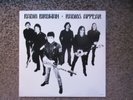
MAHLER Symphony No. 2 "Resurrection" CLASSIC RECORDS Abravanel / Utah Symphony
$
43


$ 43
Sold For
Jul 11, 2025
Sold Date
Mar 29, 2025
Start Date
1
Number Of Bids
USA
Country Of Seller
eBay
Sold at
Favourite Auctions
To save auctions to your favourites, please login
If you don't have an account, please register
Description
MAHLER Symphony No. 2 "Resurrection" CLASSIC RECORDS Abravanel / Utah Symphony Orchestra Two Record Set
Label:
Vanguard Cardinal Series – VCS 10003, Classic Records – VCS 10003Format:
2 x Vinyl, LP, Album, Remastered, 200g Quiex SV-PCountry:
USReleased:
2002Genre:
ClassicalStyle:
RomanticTracklist
Symphony No. 2 In C Minor "Resurrection" A I. Allegro Maestoso 19:28 B V. Im Tempo Des Scherzo's-Langsam, Misterioso (Fin) Choir – University Of Utah Civic Chorale Contralto Vocals – Florence Kopleff Soprano Vocals – Beverly Sills Choir – University Of Utah Civic Chorale Contralto Vocals – Florence Kopleff Soprano Vocals – Beverly Sills 19:27 C II. Andante Moderato - III. In Ruhig Fliessender Bewegung 20:50 D IV. "Urlicht" (Aus Des Knaben Wundernhon) - V. Im Tempo Des Scherzo's-Langsam; Misterioso (Début) Contralto Vocals – Florence Kopleff Contralto Vocals – Florence Kopleff 17:29- Artwork – Ivan Pastor
- Artwork [Art Cover] – Aublé
- Choir – University Of Utah Civic Chorale
- Composed By – Gustav Mahler
- Conductor – Maurice Abravanel
- Contralto Vocals – Florence Kopleff
- Orchestra – Utah Symphony Orchestra
- Organ – Alexander Schreiner
- Soprano Vocals – Beverley Sills
- Lacquer cut by Bernie Grundman
Notes
Classic Records reissue on 200g Quiex Super Vinyl Profile- Pressed By – Record Technology Incorporated
- Matrix / Runout (Side One, etched): VCS 10003-A BG
- Matrix / Runout (Side Two, etched): VCS 10003-B BG
- Matrix / Runout (Side Three, etched): VCS 10003-C BG
- Matrix / Runout (Side Four, etched): VCS 10003-D BG
MAHLER SYMPHONY NO. 2 INC MINOR ‘RESURRECTION’ BEVERLY SILLS, soprano FLORENCE KOPLEFF, contralto UNIVERSITY OF UTAH CIVIC CHORALE UTAH SYMPHONY ORCHESTRA ALEXANDER SCHREINER, organist MAURICE ABRAVANEL, conductor
It has taken more than half a century for the symphonies of Mahler to penetrate into the active mainstream of symphonic life around the world. Composers have often claimed to be ahead of their time, but there probably is no more dramatic illustration of this in music history than Gustav Mahler and his symphonies. Were he alive today, Mahler himself would perhaps be astonished at the great popular success his music is enjoying in the second half of the twentieth century. The reasons for this success are many and complex. Part of it stems from the appositeness of the emotional content of the music to the turbulence of our own times; part of it is due to the technical advances of the recording medium and the ability today to capture large masses of sound on tape and discs; much of it is due to the presence on the world scene of several extraordinary interpreters of Mahler’s music, men like Leonard Bernstein, Sir John Barbirolli, Jascha Horenstein and Otto Klemperer. Maurice Abravanel certainly belongs in any such listing of dedicated Mahler conductors. To his exemplary Vanguard recordings of the composer’s Seventh and Eighth Symphonies this new performance of the Second Symphony adds further laurels. The Second Symphony seems to have been stirring in Mahler’s thoughts for a good long while before he actually sat down to commit notes to paper; sketches for the score go back to the seasons 1886-88 when Mahler, in his midtwenties, was assistant conductor to the great Artur Nikisch in Leipzig. Mahler’s conducting career rose steadily and in 1891, at the age of 31, he became the conductor of opera at the Hamburg Stadttheater. The conductor of the symphony concerts in Hamburg at the time was the man who was probably the most famous and most respected of all living conductors, Hans von Bülow. Though a thirty-year age difference existed between Mahler and Bülow, a warm relationship developed between them based on great mutual respect. Mahler’s admiration for Bülow had begun some years earlier, when the older man was in charge of the concerts of the Meiningen Orchestra at Cassel. Now it was Biilow’s turn to discover that in Mahler the Hamburg State Opera had a young and pioneering dynamo who was able to accomplish extraordinary performances. It was Bülow who dubbed Mahler “the Pygmalion of the Hamburg Opera House.” Bülow’s admiration for Mahler the man and conductor did not, however, extend to Mahler’s music. Mahler wrote that when he played for Biilow a piano reduction of the first movement of the Second Symphony, the older man “fell into a state of extreme nervous terror, carrying on like a lunatic, and exclaimed, ‘Beside your music Tristan sounds as simple as a Haydn symphony!’ Indeed, I’m beginning to believe it myself; my symphonies are either maudlin ravings or ... well, choose your own alternative.” In 1893 Bülow was forced by failing health to give up his directorship of the symphony concerts in Hamburg. The orchestra authorities did not have to look far for his successor; with a logic not often followed today, the position was offered to Mahler and he accepted. That summer he spent the first of four summer vacations at Steinbach on the Attersee Lake in Austria. It was there, away from the petty intrigues, the cares and the responsibilities of Hamburg’s musical life, that Mahler set out in earnest to work on his Second Symphony. In an enormous burst of creative energy, Mahler apparently completed all but the last movement of the score during that first Li Bee SS ee au ID) Vvau Tv summer in the Steinbach retreat. The last movement was to give Mahler some trouble before he was able to compose it, and it remained for an external stimulus to trigger the completion of the symphony. Mahler himself has described the circumstances: “When I conceive a great musical idea, I always come to the point where I must make the ‘word’ the bearer of the idea. That is what must have happened to Beethoven in his Ninth—only that era could not yet furnish him with appropriate material. For, basically, Schiller’s poem is not fitted for the expression of the unheardof conception which was in Beethoven’s mind. Furthermore, I recall that Wagner says this somewhere in quite uncompromising fashion. What happened to me with the last movement of the Second Symphony is simply this: I looked through all the world’s literature, even the Bible, to find the redeeming Word—and was finally forced to express my feelings and thoughts in my own words. The way in which I received the inspiration to this act is very indicative of the true nature of artistic expression. At that time I had long planned to introduce the chorus into the last movement, and had only hesitated in fear that this might be interpreted as a superficial imitation of Beethoven. Just then, Bülow died, and I attended his funeral here (in Hamburg). The mood in which I sat there and thought of the departed one was exactly that of the work which occupied me constantly then. At that moment, the chorus, near the organ, intoned the Klopstock chorale Auferstehn! (Resurrection!) It struck me like a bolt of lightning, and everything stood clear and vivid before my soul. The creator waits for this bolt of lightning; this is his Holy Annunciation. What I then experienced I had to create in tones. And yet, if I had not had this work already in me, how could I have had this experience?” The score was given a partial premiere at a Berlin Philharmonic concert in March, 1895 when Richard Strauss conducted the first three movements, the purely instrumental ones. Though one would never know it from reading the reviews of the time, the truncated performance was apparently very favorably received by the audience: after the scherzo Mahler was called out no fewer than five times. The first performance of the complete work was given at a Berlin Philharmonic concert conducted by Mahler in December, 1895. Thirteen years later, as conductor of the New York Symphony Society, Mahler introduced the symphony to the United States. The Second Symphony is a veritable colossus. It takes nearly an hour and a half to perform, it requires a large mixed chorus and two vocal soloists, and it is scored for an enormous orchestra: four flutes, four piccolos, four oboes, two English horns, five clarinets, two E flat clarinets and bass clarinet, four bassoons and contrabassoon, six horns (and four horns offstage), six trumpets (and four off-stage), four trombones, tuba, two sets of tympani, bass drum, snare drum (one or more), cymbals, small and large tamtams, triangle, glockenspiel, three bells, Ruthe (bundle of sticks), two harps, organ and strings (additional tympani, bass drum, cymbals and triangle are indicated “in the distance”.) The Symphony has been described as “a tonal allegory of the life of man.” Mahler himself described the first movement as a “Celebration of the Dead” (“Totenfeier”). The second and third movements, following after the tumultuous upheaval of the first, are more reflective: the second is a gentle intermezzo and the third a grim scherzo, “a recollection of the world’s vulgarities.” The fourth movement is titled Urlicht (Primal Light) and is a haunting song for contralto and orchestra. The text is taken from Des Knaben Wunderhorn (The Youth’s Magic Horn), a collection of German folk poetry much loved by Mahler and used by him in his music repeatedly. In the last movement, which incorporates the setting of Klopstock’s “Resurrection” Ode, Mahler uses all the forces he can summon to portray for us a musical spectacle of the Day of Judgment. Klopstock’s verses are used, but Mahler also adds verses of his own. In the words of Paul Stefan, one of Mahler’s finest biographers and authorities, “The dead arise and march onward in endless procession. The cry for mercy and grace sounds terribly in our ears. Fear and hope struggle in all hearts. The Great Summons is heard, the trumpets of the Apocalypse sound the call. Amid the awful silence we seem to hear a far, far distant nightingale like the last quivering echo of earthly life. The chorus of the saints and heavenly host begins almost inaudibly: ‘Thou shalt rise, arise from the dead.’ The splendor of God appears.” After Mahler completed the symphony, he apparently felt that the tender Austrian dance-like second movement was out of character with the rest of the score. Rather than remove. the movement or change it, Mahler took a different and rather extraordinary course: at the end of the first movement he directed that a pause of at least five minutes should be allowed before the Andante begins. He wrote: “A definite pause for organization is necessary after the first movement because the second movement does not achieve an effect of contrast, but is merely a discrepancy after the first movement. This is my fault, and is not due to any lack of understanding on the hearer’s part. .... While the first, third, fourth and fifth movements hang together thematically and spiritually, the second movement stands alone and interrupts, in a sense, the stern and inexorable sequence of events.” With this appraisal it is easy to disagree. Whether he thought so or not, Mahler created in the second movement of the symphony the perfect contrast for the heaven-storming music of the first movement; the graceful contours of the Andante place the music among the most treasurable Mahler left us and its positioning in the architectural structure of the score has about it the element of inevitable rightness. Paul Stefan’s vivid analysis of the last movement concludes with these words: “With the peal of organ and bells amid ad jubilation of the orchestra, this ‘Resurrection Symphony’ ends.” Notes by MARTIN BOOKSPAN
Stephen R. Westman 5.0 out of 5 stars This is a wonderful recording! To bad so many reviews are of other performances!! Reviewed in the United States on November 12, 2018 I don't know what's wrong with Amazon, but they have reviews from at least FIVE different recordings in the list here, only ONE is for the recording in question: Maurice Abravanel and the Utah Symphony with Beverly Sills and Florence Kopleff as soloists. If you are interested in this recording, this is a review OF that performance.
Even though I am a tremendous aficionado, I am totally in love with this performance. It flows tremendously, the soloists are incredible (I've always had a crush on Florence Kopleff's voice ever since she did Messiah with Robert Shaw in the 60s. And Beverly Sills, having recorded this at the beginning of her career, is in extremely clear and beautify voice, full of expressiveness for which she became known in her later years).
This is a very straight-forward approach to Mahler (unlike Bernstein). It is beautifully nuanced and constitutes a performance of the symphony as a whole with each section growing organically out of the previous one. The Utah Symphony, while not the Chicago Symphony (thank goodness!), plays with incredible precision, musicality, sensitivity, and care with powerful, but musically sensitive brass playing on the part of the Utah Symphony). The dynamics are incredible and instrumental solos come out of the texture without overwhelming it.
Back in the 1960s, Bernard Jacobson (reviewer of Mahler recording for High Fdelity) labelled this is the fininet performance of the work. I still agree with that opinion. While I have heard (and purchased) a number of more recent performances, none of the come close to matching this recordings beauty, control, and utter expressive power,. I STRONGLY recommend acquiring a copy of this performance while it is still available!!
5.0 out of 5 stars One of the Great Mahler 2nds Reviewed in the United States on July 24, 2012 Maurice Abravanel, like Leonard Bernstein, was a large part of the Mahler revival in the the 1960's and 1970's.
Much like Leinsdorf, Abravanel lets the music speak for itself without pushing it to eccentric extremes as is the modus operandi of so many Mahler conductors. That being said, this is certainly not a complacent performance on any level. Abravanel's Utah Symphony was the little train that could in the history of recorded Classical music. They play beautifully and are certainly the equal of many European orchestras. The first movement has great tension and power. Movement two is lilting and the scherrzo quite telling. Florence Kopleff, the great American contralto sings what has to be one of the most heartfelt and musical versions of Urlicht on record. The finale is massive, apocalyptic, and spiritual.
One advantage that Abravanel had was that he recorded his Mahler cycle in the Mormon Tabernacle in Salt Lake City. This space has an ambient, rich acoustic. The various loud and soft brass calls in the finale sound as if your hearing the symphony in the Alps; a demonstration recording for its time. Vanguard producer Seymour Solomon always elicited superb sonics for Abravanel. Similar results are heard in Abravanel's excellent Mahler 3 and 4.
price rating