MAHLER Sym. No. 8 Classic Records 45 rpm Test Pressing Box Set (8 disc box set)
$
170


$ 170
Sold For
May 20, 2025
Sold Date
Mar 16, 2025
Start Date
1
Number Of Bids
USA
Country Of Seller
eBay
Sold at
Favourite Auctions
To save auctions to your favourites, please login
If you don't have an account, please register
Description
Mahler Symphony No. 8 (Symphony of A Thousand) Classic Records 45 rpm Test Pressing (8 single-sided disc box set) Maurice de Abravanel conducting The Utah Symphony Orchestra with The University of Utah Chorus
Label:
Classic Records – VSD 71120-45, Vanguard – VSD 71120Series:
Clarity SV-P II 45 RPM Series – VSD 71120-45Format:
8 x Vinyl, 12", 45 RPM, Single Sided, Album, Reissue, Remastered, Test Pressing, CLARITY SV-P IICountry:
USReleased:
2008Genre:
ClassicalStyle:
Romantic, ModernTracklist
Symphony No. 8 In E-Flat Major, Pt. 1 "Veni Creator Spiritus" A1-1 I. "Veni Creator Spiritus” A1-2 II. "Imple Superna Gratia” A1-3 III. “Infirma Nostri Corporis” A1-4 IV. Tempo Lo A1-5 V. “Infirma Nostri Corporis” A2-1 VI. “Ascendit Lumen Sensibus” A2-2 VII. “Praevio Te Ductore” A2-3 VIII. “Veni Creator Spiritus” A2-4 IX. “Gloria Patri Domino” Symphony No. 8 in E-Flat Major, Pt. 2 "Schlußszene aus 'Faust'" B1-1 I. Poco Adagio B1-2 II. Più Mosso B1-3 III. “Waldung, Sie Schwankt Heran” B2-1 III. “Waldung, Sie Schwankt Heran” B2-2 IV. “Ewiger Wonnebrand” B2-3 V. "Wie Felsenabgrund Mir Zu Füßen" B2-4 VI. “Gerettet Ist Das Elde Glied” B2-5 VII. “Jede Rosen” C1-1 VIII. “Uns Bleibt Ein Erdenrest” C1-2 IX. “Hier Ist Das Aussicht Frei” C1-3 X. "Höchste Herrscherin Der Welt!” C2-1 XI. "Dir, Der Unberührbaren" C2-2 XII. "Bei Der Liebe" C2-3 XIII. "Bei Dem Hochgeweihten Ohre" C2-4 XIV. "Neige, Neige, Du Ohnegleiche" D1-1 XIV. "Neige, Neige, Du Ohnegleiche" D1-2 XV. “Komm! Komm!” D1-3 XVI. “Blicket Auf Zum Retterblick” D2-1 XVII. "Werde Jeder Bess're Sinn" D2-2 XVIII. Langsam D2-3 XIX. "Alles Vergängliche"- Manufactured by Classic Records, Inc.
- Mastered At – Bernie Grundman Mastering
- Recorded December, 1963 in the Mormon Tabernacle, Salt Lake City, Utah
- Producer: Seymour Solomon
- Engineer: Marc Aubort and Ed Friedner
- Lacquer cuty by Bernie Grundman
- Soprano I (Magna Peccatrix) – Jeannine Crader
- Soprano II (Una Poenitentium) – Lynn Owen
- Soprano III (Mater Gloriosa) – Blanche Christensen
- Alto I (Mulier Samaritana) – Nancy Williams
- Alto II (Maria Aegyptiaca] – Marlena Kleinman
- Tenor (Doctor Marianus) – Stanley Kolk
- Baritone (Pater Estaticus) – David Clatworthy
- Bass (Pater Profundus) – Malcolm Smith
- Childern's Choir of the Salt Lake City Schools
- (Vernon Lee Masters, director)
- University of Utah Choruses
- (Newell Wright, director)
- Alexander Schreiner, Salt Lake Tabernacle Organ
- Utah Symphony Orchestra
- Maurice Abravanel, conductor
- Matrix / Runout (side A1 label): VSD-71120-A1-45 (Bernie Grundman signature) etched
- Matrix / Runout (side A2 label): VSD-71121-A2-45 (Bernie Grundman signature) etched
- Matrix / Runout (side B1 label): VSD-71121-B1-45 (Bernie Grundman signature) etched
- Matrix / Runout (side B2 label): VSD-71120-B2-45 (Bernie Grundman signature) etched
- Matrix / Runout (side C1 label): VSD-71120-C1-45 (Bernie Grundman signature) etched
- Matrix / Runout (side C2 label): VSD-71121-C2-45 (Bernie Grundman signature) etched
- Matrix / Runout (side D1 label): VSD-71121-D1-45 (Bernie Grundman signature) etched
- Matrix / Runout (side D2 label): VSD-71120-D2-45 (Bernie Grundman signature) etched
Notes
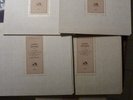
Maurice Abravanel’s pioneering recording of Mahler’s Eighth Symphony in 1964 was the most ambitious undertaking in Vanguard Records’ history – and a landmark in the history of records. The recording, which took place at the Mormon Tabernacle, was the first Eighth to be made in stereo, and was produced by Seymour Solomon and engineered by Marc Aubort and Ed Friedner. Upon its original LP release in June 1964, the recording proved to be a resounding commercial success in the United States and Europe, receiving strong critical acclaim – even drawing comparisons to the top conductors and orchestras of the day – and introducing Abravanel’s Utah Symphony to a global audience. This release is the Clarity SV-P II Test Pressing from the Michael Hobson Archive, which was never commercially released.NUMBERED and Limited to 20 copies. This copy is № 16. A 45rpm 8-Disc Test Pressing Box Set of "Mahler's Symphony of A Thousand", pressed on 200g CLARITY Vinyl from Classic Records. This title was planned, but never released as a 45rpm set or on clarity vinyl, thereby making this an ultra collectible set. This test pressing box set has special significance and collectability because it comes from the Michael Hobson ARCHIVES. This is a truly one of a kind collectible of one of the most valuable and highly sought after Classic Records pressings. All discs are single sided pressings cut at 45 rpm. Further, the pressings are on Classic Record's legendary 200g "FLAT" Super Vinyl Profile and use Classic's proprietary "Clarity Vinyl". 45 rpm records have long been recognized as providing a higher fidelity musical experience resulting purely from the cartridge being able to extract more of the nuance from the complex vertical and horizontal groove modulations in stereo LP’s. Further, Classic Records 45 rpm “single sided” pressings dramatically reduce the mechanical resonances created by the cartridge during playback by allowing these resonances to be more fully transmitted to and absorbed by the turntable platter. Classic Records Clarity Vinyl 45 rpm pressings were designed and manufactured to provide the “LOWEST DISTORTION” in every aspect of LP playback resulting in putting the listener as close to the music as possible. Given that this set was never released and is only available as test pressings makes it an uber collectible that will likely rise in value over time. These test pressings are from the first stamper and reflect the closest you can get to the lacquers, and hence have a special collectible value and store of value. Only a very small number of these unreleased sets exist and thus this is a special opportunity to hear your favorite title on Classic's 200g Super Vinyl Profile on Clarity Vinyl at 45 rpm - it doesn't get any better than this! This set is packaged in a white special edition box and each test pressing comes in a white jacket. Includes original jacket. ULTRA RARE item! *45 rpm records have long been recognized as providing a higher fidelity musical experience resulting purely from the cartridge being able to extract more of the nuance from the complex vertical and horizontal groove modulations in stereo LP’s. Further, Classic Records 45 rpm “single sided” pressings dramatically reduce the mechanical resonances created by the cartridge during playback by allowing these resonances to be more fully transmitted to and absorbed by the turntable platter. Classic Records Clarity Vinyl 45 rpm pressings are designed and manufactured to provide the “LOWEST DISTORTION” in every aspect of LP playback resulting in putting the listener as close to the music as possible. Only 20 Michael Hobson archive copies of this definitive reissue were produced. Michael Hobson Archives From the start of Classic Records in 1994, Michael Hobson, insisted on having as complete a "personal archive" as possible, of all varieties and issues of Classic Records' various releases (180g, 200g, Blue Vinyl, etc) as a reference of what had been done. This Archive was one of the few things Acoustic Sounds did not acquire as part of the deal to buy Classic in 2010 albeit Chad Kassem has pursued Hobson to buy it ever since. Still intact, in its entirety (with only a few holes) sits the Archive which will be offered exclusively on this shop by special arrangement with Michael Hobson. Each piece has an official Classic Records “MH" Archive Sticker on it and is accompanied by a certificate of authenticity hand signed by Michael Hobson personally to assure authenticity and enhance the collectibility over time. Generally, only 5 numbered “MH archive" copies, most often from the first stamper, were added to the Hobson archive. In the case of popular titles, there are various versions because of the use of different plants (RTI, Bill Smith, Classic Pressing Plant) which offers the possibility to have comparisons of various machines the copies were made on - all of which sound different because of various vibrations from the different machines that are "pressed" into the vinyl. Yes, according to Hobson, you can hear the difference is machines among the various Test Pressings and production pressings for that matter. Further, the Classic Records folklore is that Hobson, insisted on the “best copies” from the “sweet spot” of the pressing run for his personal archive of 5 numbered copies of each release! It is reported that Hobson personally selected the copies of the records that went into his archive by listening to 1st stamper pressings to determine when the “stamper” was in the “sweet spot” and pressing the best sounding records during the run. Further, these records have not been moved from Hobson’s own climate controlled air-conditioned storage for all these years. This is not only a unique opportunity to own a piece of Classic Record's history but also the chance to have some of the best production pressings of Classic's various issues over time. Ridiculously collectible and likely a better investment than the stock market! Background on Classic 200g Super Vinyl Profile In 2003, Classic Records launched its now famous Signature Blue Note Mono reissue series. As part of that series Classic developed an "authentic" 200 gram LP profile that replicated that of an original Blue Note record from the 1950's. Comparing a test pressing on the new profile versus the same title on the normal 180 gram pressing it was discovered that the 200 gram version sounded significantly better. The 200 gram pressing sounded louder, with more definition and solidity of notes across all frequencies and there was more detail - particularly low level detail like room or hall sounds, pages being turned, musicians whispering and automobile sounds outside the studio all became easier to identify. At first it was speculated inside Classic Records that the extra weight resulted in the better performance as no one could come up with a better answer given that the stampers were the same as well as the vinyl pellets used on both 180g and 200g pressings. One day, Michael Hobson, the founder of Classic Records was discussing this unexplainable sonic discovery with the Legendary Mastering Engineer and Sheffield Records founder, Doug Sax when Doug, without hesitation stated "Ah Michael you've discovered the difference in a flat versus conventional profile". Puzzled, Hobson asked for an explanation which Sax described as going all the way back to 1950's mono pressings and what happened when stereo records came out in the early 1960's. Sax explained that in the 1950's when mono records had no vertical modulation (only lateral), pressing PolyVinylChloride PVC (plastic) records were more easily pressed on "Flat Profile" dies fitted to the pressing machines since the grooves on the mono stampers were all the same height (no vertical modulation). The molten vinyl was able to flow evenly across the stampers and fill properly during the molding (pressing) of the record. The problems started when stereo record cutting came into vogue producing stampers that had variable height grooves sticking up across the diameter of each stamper. Using the older mono pressing dies resulted in tremendous problems getting the areas between grooves of different heights to fill properly - a groove that is in front of another taller one often got passed over by the flowing molten vinyl resulting in "non-fill" which was audible and thus a "defective" record. Pressing plants don't like to press defective records and are always looking for high pressing yields or a s few rejects as possible. To solve the problem, the engineers developed a new pressing die profile which tapers from the center of the die, flattens in the middle of the diameter and then tapers again toward the outside of the die. The new profile was "concave" rather than flat. When you put a flat stampers onto the concave dies the stampers distort and are no longer flat - the grooves are no longer perpendicular across the stamper and by association across a finished vinyl pressing. This new die profile created "back pressure" on the flowing vinyl and solved the "non-fill" problem with stereo pressings and resulted in higher yields which was great for pressing plants and good for record companies who wanted good prices on pressings. The problem was and still is that the new profile records don't sound as good as they could because they are not flat across their profile. Using a micrometer across the diameter of a 1950's mono records reveals that the thickness is virtually the same across the record's diameter from center label to outer edge but not so for a newer stereo profile pressing which is convex across its diameter resulting from the concave profile dies / distorted stampers. This is the dirty little secret that Classic had rediscovered was known to old school experts like Doug Sax who founded Sheffield Labs in the 1970's. After the discovery, Classic Records never looked back and all of its releases and re-pressings after 2003 were on the new 200 gram Flat Profile dies that were specially made for Classic. Some years later Classic discovered that the very same profile was used by JVC in Japan to produce the legendary UHQR pressings for Mobile Fidelity which are well known to sound better than the conventional Mobile Fidelity pressings of the same titles - it all makes sense now. The long and the short of this is that Classic 200g Super Vinyl Profile (Flat Profile) pressings are as good as it gets for proper playback without groove distortion from non-flat pressings - Period. Background on Clarity Vinyl Pressings In 2008, Classic discovered that de-magnitizing black vinyl records leads to better sound in playback. The engineers at Furutech in Japan, makers of a commercial record demag machine, explained that the carbon black that was added to PVC record pellets contained trace metal that became randomly magnetized and while spinning below an electro-mechanical transducer (phono cartridge) caused electrical distortion inside a cartridge during LP playback. Hence, demagnetizing a black vinyl record dramatically reduces the electrical distortion and leads to more "Clarity" in playback. Michael Hobson, founder of Classic Records reasoned that if the carbon black were removed then the result should be more Clarity in playback. Working closely with the PVC manufacturer Kenan, Classic developed its own proprietary "Clarity Vinyl" devoid of the problems with trace magnetic particles contained in black vinyl formulas. A Clarity vinyl pressing on a flat profile die is the absolute ultimate pressing possible and even a step above the JVC UHQR black vinyl pressings. Not to be missed - you can hear the difference!
price rating


![Jets to Brazil - Perfecting Lonliness [New Vinyl LP] 180 Gram](https://www.popsike.info/php/thumbnail.php?url=https://www.popsike.pics/pix/20171009/362127177531.jpg)