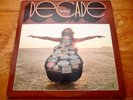
Led Zeppelin III 1977 Atlantic Records Vinyl LP Near Mint in Shrink
$
100


Favourite Auctions
To save auctions to your favourites, please login
If you don't have an account, please register
Description
Welcome to Classic Cadillac Records! I visually grade all my records as accurately as possible and will never grade anything above Near Mint unless it's still sealed. Please note that a visual grade can differ from a play grade, and am happy to spot check a record upon request. All orders are shipped within 1 business day (usually sooner) and packed with extra care to ensure fast, safe arrival. Please look closely at all pictures, read all relevant details and ask any questions you may have before buying. I offer a full 30-day return policy on everything I sell, so buy with confidence! 20% restocking fee charged on items returned for reasons other than it not working properly. Thanks for looking!
Led Zeppelin III Studio album by Led Zeppelin Released 5 October 1970 Recorded November 1969 – August 1970 Studio
- Rolling Stones Mobile
- Headley Grange, Hampshire
- Island and Olympic, London
(1969) Led Zeppelin III
(1970) Untitled
(1971) Singles from Led Zeppelin III
- "Immigrant Song"
Released: 5 November 1970
Led Zeppelin III is the third studio album by the English rock band Led Zeppelin, released on 5 October 1970. It was recorded in three locations. Much of the work was done at Headley Grange, a country house, using the Rolling Stones Mobile Studio. Additional sessions were held at Island Studios and Olympic Studios in London. As with the prior album, the band eschewed the use of guest musicians, with all music performed by band members Robert Plant (vocals), Jimmy Page (guitars), John Paul Jones (bass, keyboards), and John Bonham (drums). The range of instruments played by the band was greatly enhanced on this album, with Jones especially emerging as a talented multi-instrumentalist, playing a wide range of keyboard and stringed instruments, including various synthesizers, mandolin and double bass, in addition to his usual bass guitar. As with prior albums, Page served as producer on the album, with mixing done by Andy Johns and Terry Manning.
The album showed a progression from straightforward rock towards folk and acoustic music. While hard rock influences were still present, such as on "Immigrant Song", acoustic-based songs such as "Gallows Pole" and "That's the Way" showed Led Zeppelin were capable of playing different styles successfully. The band wrote most of the material themselves, but as with prior records, included two songs that were re-interpretations of earlier works: "Gallows Pole", based on a traditional English folk song, by way of American singer Fred Gerlach; and "Hats Off to (Roy) Harper", a reworking of a blues song by Bukka White. The acoustic material developed from a songwriting session between Plant and Page at Bron-Yr-Aur cottage in Wales, which influenced the musical direction.
The album was one of the most anticipated of 1970, and its shipping date was held up by the intricate inner sleeve design based around a volvelle, with numerous images visible through holes in the outer cover. It was an immediate commercial success upon release and topped the UK and US charts. Although many critics were initially confused over the change in musical style and gave the album a mixed response, Led Zeppelin III has since been acknowledged as representing an important milestone in the band's history and a turning point in their music.
Background
Three songs on Led Zeppelin III were written by Page and Plant while holidaying in Bron-Yr-Aur cottage.By 1970, Led Zeppelin had achieved commercial success in both the UK and the US with their first two albums. They were determined to have a proper break, having recorded most of Led Zeppelin II in various locations while on tour, financing the sessions with the album sales and tour receipts. Following an exhausting concert tour of North America that spring, lead singer Robert Plant recommended to guitarist and producer Jimmy Page that they should retreat to Bron-Yr-Aur, an 18th-century cottage in Snowdonia, Wales, on a hilltop overlooking the Dyfi Valley, three miles (4.8 km) north of the market town Machynlleth. Plant had spent holidays there with his family.
This remote setting had no running water or electric power, which encouraged a slight change of musical direction for the band towards an emphasis on acoustic arrangements. Page later explained that the tranquillity of Bron-Yr-Aur stood in sharp contrast to the continual touring of 1969, affecting the overall tone of the songwriting and dominance of acoustic guitars. His playing was influenced by folk guitarists Davey Graham and Bert Jansch, who regularly used alternative guitar tunings. Plant also recalled the band were "obsessed with change" and enjoyed listening to John Fahey. The band specifically wanted a change in direction, to show they could play any style of music they wanted.
Packaging and artwork
The volvelle used on the front coverLed Zeppelin III's original vinyl edition was packaged in a gatefold sleeve with an innovative cover, designed by Zacron, a multi-media artist whom Page had met in 1963 whilst Zacron was a student at Kingston College of Art. Zacron subsequently graduated from the Royal Academy of Arts and became a lecturer at the University of Leeds. Page asked him if he would help design a sleeve for the album, which he helped arrange in January 1970.
The cover and interior gatefold art consisted of a surreal collection of seemingly random images on a white background, many of them connected thematically with flight or aviation. Behind the front cover was a rotatable laminated card disc, or volvelle, covered with more images, including photos of the band members, which showed through holes in the cover; moving an image into place behind one hole would usually bring one or two others into place behind other holes. The back cover was a composite shot of the best photographs from the photography sessions. Zacron chose the images because he wanted to "show them as the giant force they were in music". In France, this album was released with a different album cover, simply showing a photo of the four band members.
Zacron later said that, upon his completion of the artwork, Page telephoned him while he was in New York to express his satisfaction with the results, saying, "I think it is fantastic". However, he later thought the artwork was unsatisfactory because of working to a deadline.
Release and reception
Retrospective professional reviews Review scores Source Rating AllMusic Christgau's Record Guide B+ Classic Rock The Daily Telegraph Encyclopedia of Popular Music The Great Rock Discography 9/10 MusicHound Rock 3.5/5 Q The Rolling Stone Album Guide Tom Hull – on the Web ALed Zeppelin III was one of the most anticipated albums of 1970, and advance orders in the US alone were close to the million mark. The volvelle-designed sleeve held up production and caused a two-month delay. In the run-up to release, the group bought a full-page advertisement in Melody Maker magazine at the end of September, which simply said, "Thank you for making us the world's number one band." The album was released in the US on 5 October, then in the UK on 23 October. It immediately topped the British charts.
Although the band's expanding musical boundaries were greeted warmly by some, detractors attacked the heavier tracks as being mindless noise. In a review for Rolling Stone, critic Lester Bangs praised "That's the Way" as "beautiful and genuinely moving", while characterising the band's heavier songs as crude and little differentiated from each other. Others criticised the acoustic material for imitating the music of Crosby, Stills, Nash & Young, which Page disputed, as the group had featured a similar style on both of their previous albums. Page later said that the negative press given to the third album affected him so much that he did not give press interviews for 18 months after its release, adding that the criticism was one of the reasons why the band's untitled follow-up album contained no written information on it at all. Page later came to believe that journalists had little time to listen to the material and were simply looking for "the new 'Whole Lotta Love'" instead of appreciating the album on its own merits.
A positive review came from Robert Christgau, who originally assigned it an A-minus grade and wrote in his "Consumer Guide" review for The Village Voice: "I have always approved theoretically of Led Zep's concept, and now the group has finally whipped it into shape. It's amazing to realize that Robert Plant's vocals can convey that same overbearing power when Page plays acoustic, as he does to great effect on several cuts here. No drum solos, either. Heavy."
Led Zeppelin III was a trans-Atlantic number one hit. In the UK, it reached No. 1 on 7 November 1970 and remained on the chart for 40 weeks. In the US, it entered the chart at No. 3 on 24 October and reached No. 1 the following week. It remained on the chart for 19 weeks and was certified Gold on 8 October 1970. However, following the lukewarm, if not confused and sometimes dismissive reception from critics, sales lagged after this initial peak.
Despite mostly indifferent reviews and lower sales than Led Zeppelin's previous two albums, Led Zeppelin III's reputation has increased over time. The RIAA certified the album 2 times platinum in 1990, and 6 times platinum in 1999. The 2014 reissue of the album helped itself get back into the Billboard Top 10.
Accolades for Led Zeppelin III Publication Country Accolade Year Rank The Book of Rock Lists US "The Top 40 Albums (1970)" 1981 39 Mojo UK "The 100 Greatest Albums Ever Made" 1996 99 Colin Larkin UK All Time Top 1000 Albums 1998 361 Q UK "50 Best British Albums Ever" 2004 9 Robert Dimery US 1001 Albums You Must Hear Before You Die 2005 * Classic Rock UK "100 Greatest British Rock Album Ever" 2006 31 (*) designates unordered lists.Track listing
Original release
Side one No. Title Writer(s) Length 1. "Immigrant Song"- Jimmy Page
- Robert Plant
- Page
- Plant
- Page
- Plant
- John Paul Jones
- Page
- Plant
- Jones
- Page
- Plant
- John Bonham
- Page
- Plant
- Page
- Plant
- Jones
price rating







![DON DRUMMOND - SMILING / THE VIBRATORS - MONEY OR LOVE [ BLANK ] 7](https://www.popsike.info/php/thumbnail.php?url=https://www.popsike.pics/pix/20241022/176635932507.jpg)