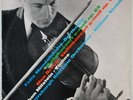
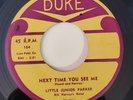
LITTLE JUNIOR PARKER GOODBYE LITTLE GIRL VOCALION BLUES
£
20
$
26


Favourite Auctions
To save auctions to your favourites, please login
If you don't have an account, please register
Description
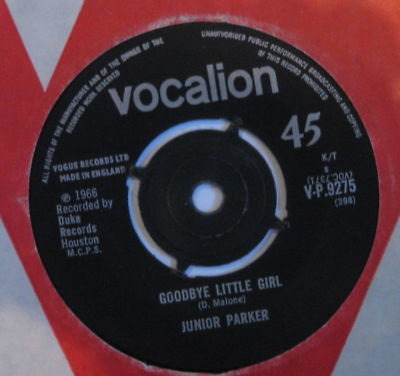
YOU ARE BIDDING ON A RARE 7"
JUNIOR PARKER
GOODBYE LITTLE GIRL
WALKING THE FLOOR OVER YOU
RELEASED ON VOCALION RECORDS
V-P.9275
THE VINYL IS IN EXCELLENT CONDITION, THE SIDE 2 LABEL HAS SOME DAMAGE/PARTIAL REMOVAL
WE DO COMBINE POSTAGE FOR ITEMS PURCHASED MEANING THAT WE DO PROVIDE POSTAGE DISCOUNTS ON MULTIPLE PURCHASES WHERE POSSIBLE, AS A RULE THE FIRST LP IS CHARGED AT STANDARD POSTAL RATE AND EACH ITEM THERE AFTER AT AROUND A 50% DISCOUNT, AND THE SAME GOES FOR 7" RECORDS, THERE MAY BE A FEW EXCEPTIONS TO THIS, SUCH AS BEING UNABLE TO COMBINE POSTAGE FOR A POSTER AND A RECORD, PLEASE FEEL FREE TO CONTACT US IF YOU ARE STILL UNSURE
ITEMS ARE PACKAGED IN STIFF CARD MAILERS WITH STIFFENERS, AND ARE REMOVED FROM SLEEVES PRIOR TO PACKING-UNLESS THE ITEM IS SOLD AS 'SEALED'
His velvet-smooth vocal delivery to the contrary, Junior Parker was a product of the fertile postwar Memphis blues circuit whose wonderfully understated harp style was personally mentored by none other than regional icon Sonny Boy Williamson.
Herman Parker, Jr. only traveled in the best blues circles from the outset. He learned his initial licks from Williamson and gigged with the mighty Howlin' Wolf while still in his teens. Like so many young blues artists, Little Junior (as he was known then) got his first recording opportunity from talent scout Ike Turner, who brought him to Modern Records for his debut session as a leader in 1952. It produced the lone single "You're My Angel," with Turner pounding the 88s and Matt Murphy deftly handling guitar duties.
Parker and his band, the Blue Flames (including Floyd Murphy, Matt's brother, on guitar), landed at Sun Records in 1953 and promptly scored a hit with their rollicking "Feelin' Good" (something of a Memphis response to John Lee Hooker's primitive boogies). Later that year, Little Junior cut a fiery "Love My Baby" and a laid-back "Mystery Train" for Sun, thus contributing a pair of future rockabilly standards to the Sun publishing coffers (Hayden Thompson revived the former, Elvis Presley the latter).
Before 1953 was through, the polished Junior Parker had moved on to Don Robey's Duke imprint in Houston. It took a while for the harpist to regain his hitmaking momentum, but he scored big in 1957 with the smooth "Next Time You See Me," an accessible enough number to even garner some pop spins.
Criss-crossing the country as headliner with the Blues Consolidated package (his support act was labelmate Bobby Bland), Parker developed a breathtaking brass-powered sound (usually the work of trumpeter/Duke-house-bandleader Joe Scott) that pushed his honeyed vocals and intermittent harp solos with exceptional power. Parker's updated remake of Roosevelt Sykes's "Driving Wheel" was a huge R&B hit in 1961, as was the surging "In the Dark" (the R&B dance workout "Annie Get Your Yo-Yo" followed suit the next year).
Parker was exceptionally versatile -- whether delivering "Mother-in-Law Blues" and "Sweet Home Chicago" in faithful down-home fashion, courting the teenage market with "Barefoot Rock," or tastefully howling Harold Burrage's "Crying for My Baby" (another hit for him in 1965) in front of a punchy horn section, Parker was the consummate modern blues artist, with one foot planted in Southern blues and the other in uptown R&B.
Once Parker split from Robey's employ in 1966, though, his hitmaking fortunes declined. His 1966-1968 output for Mercury and its Blue Rock subsidiary deserved a better reception than it got, but toward the end, he was covering the Beatles ("Taxman" and "Lady Madonna," for God's sake!) for Capitol. A brain tumor tragically silenced Junior Parker's magic-carpet voice in late 1971 before he reached his 40th birthday. In 2001, he was inducted into the Blues Hall of Fame.
price rating