King Crimson - In The Wake Of Poseidon, Island pink `i'
£
23
$
30


Favourite Auctions
To save auctions to your favourites, please login
If you don't have an account, please register
Description
King Crimson - In The Wake Of Poseidon
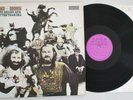
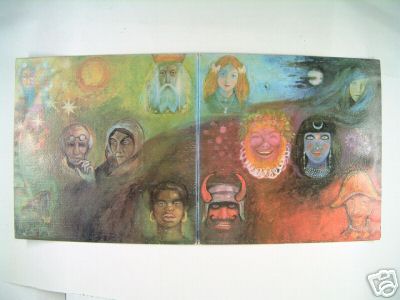
ORIGINAL COPY. FIRST UK PRESSING. Released 1970. Stereo. Island Records, catalogue number; ILPS-9127, Matrix numbers; ILPS 9127 A/B //1.
Superb condition first UK original pressing.
This record is deleted and not available new on vinyl.
Record Collector Rare Record Price Guide value is £35.
The last comparable condition copies sold on eBay for £50 to £100+.
99p start.
Overall Sleeve Condition : EXCELLENT.
Gatefold outer cover: Heavily textured outer cover. Very very minute light rubs to bottom edge and slight creases.
Gatefold inner cover: Mint bar owners name written very faintly in blue fountain pen to top left corner.
Edges: No scuffs, no seam splits. Very light rubbing in a few places.
Corners: Very light rubs.
Opening Slit: No scuffs, no rubs, no tears.
Vinyl Condition, Visual: MINT.
Superb as new condition, does not look worn or seem to have had any play, kept in a polylined inner sleeve.
Vinyl Condition, Audible: MINT.
Plays superbly. Well preserved and cared for, no decrease from the original sound quality. Kept in stunning condition by the previous owner. No skips, no jumps, no sign of heavy play, no wear.
Label Condition : EXCELLENT (NEAR MINT).
Pink Island `i' label, very minor and virtually invisible spindle wear around centre hole.
Tracklist:
A1 Peace - The Beginning (0:50) A2 Pictures Of A City (Including 42nd At Treadmill) (8:01) A3 Cadence And Cascade (4:37) Vocals - Gordon Haskell A4 In The Wake Of Poseidon (Including Libra's Theme) (7:56) A5 Peace - A Theme (1:15) B1 Cat Food (4:55) B2a The Devil's Triangle #1: Merday Morn (11:34) B2b The Devil's Triangle #2: Hand Of Sceiron B2c The Devil's Triangle #3: Garden Of Worm B3 Peace - An End (1:52)Bass - Peter Giles
Drums - Michael Giles
Engineer - Robin Thompson
Piano - Keith Tippet*
Producer - Peter Sinfield
Producer, Guitar, Mellotron - Robert Fripp
Saxophone, Flute - Mel Collins
Vocals - Greg Lake
AMG Review by Bruce Eder
King Crimson opened 1970 scarcely in existence as a band, having lost two key members (Ian McDonald and Michael Giles), with a third (Greg Lake) about to leave. Their second album — largely composed of Robert Fripp's songwriting and material salvaged from their stage repertory ("Pictures of a City" and "The Devil's Triangle") — is actually better produced and better sounding than their first. Surprisingly, Fripp's guitar is not the dominant instrument here: The Mellotron, taken over by Fripp after McDonald's departure — and played even better than before — still remains the band's signature. The record doesn't tread enough new ground to precisely rival In the Court of the Crimson King. Fripp, however, has made an impressive show of transmuting material that worked on stage ("Mars" aka "The Devil's Triangle") into viable studio creations, and "Cadence and Cascade" may be the prettiest song the group ever cut. "The Devil's Triangle," which is essentially an unauthorized adaptation of "Mars, Bringer of War" from Gustav Holst's The Planets, was later used in an eerie Bermuda Triangle documentary of the same name.
AMG Biography by Bruce EderIf there is one group that embodies both the best and the worst aspects of progressive rock (from the standpoints of both its supporters and its detractors), it is King Crimson. During its first five years of existence, from 1969 through 1974, in a variety of different lineups, this band led by guitar/Mellotron virtuoso Robert Fripp broke lots of new ground in progressive rock, stretching both the language and structure of the music into realms of jazz and classical, all the while avoiding any of the pop or psychedelic sensibilities of the Moody Blues. The absence of those pop compromises, and the lack of an overt sense of humor, ultimately doomed King Crimson to nothing more than a large cult following, but made their albums among the most enduring and respectable of progressive rock relics.
King Crimson originally grew out of the remnants of an unsuccessful trio called Giles, Giles & Fripp. Michael Giles (drums, vocals), Peter Giles (bass, vocals), and Robert Fripp (guitar) had begun working together in late 1967, after playing in a variety of bands. Robert Fripp (born May 16, 1946, Dorset, England) had studied guitar in Bournemouth with a teacher named Don Strike, whose other students included a slightly younger Greg Lake. As a teenager, he'd played in a local band called the Ravens, whose lineup included vocalist Gordon Haskell, also a boyhood friend of Fripp's. From the spring of 1965 until the following spring, he and Haskell had been members of a group called the League of Gentlemen (the name taken from a very famous British crime-caper movie), and Fripp had also played guitar in the Majestic Dance Orchestra.
Michael Giles (born 1942, Bournemouth, Dorset, England) and Peter Giles had played with bandleader/brothers Dave and Gordon Dowland in a group called the Dowland Brothers from 1962 until 1964. More recently, they'd been part of a Bournemouth group called Trendsetters, Ltd., but had left that group in the summer of 1967 and were looking to put together a band of their own. They hooked up with Fripp in August of 1967, and by September the trio had journeyed to London in search of fame and fortune. Instead, they found an Italian singer for whom they played backup for a week before parting company.
At the time, British rock, and especially the London music scene, was in the process of evolving by leaps and bounds. The release of the Sgt. Pepper album in the summer of 1967, coupled with the ever druggier ambience both in everybody's songwriting and at the city's clubs, was causing a revolution in the sound of rock music. The totally unexpected success of what had been intended as a "stereo demonstration" record by the Moody Blues and the London Festival Orchestra, released by Decca Records' Deram imprint later that year, seemed to confirm that bands other than the Beatles could sell records of that type.
Deram Records, thanks to the Moody Blues, was suddenly a locus for this new sound, and the label was scrambling around for anything vaguely psychedelic and pretentious. One of their signings was Giles, Giles & Fripp, who began cutting their single "One in a Million" and a follow-up album, The Cheerful Insanity of Giles, Giles & Fripp, during the summer of 1968. Neither sold in any quantities, however, and Keith Moon of the Who, reviewing the record in Melody Maker, even trashed the single and its production. In retrospect, Giles, Giles & Fripp's sound was too precious for words, with pop choruses (with a strange "French" feeling to the arrangements, in some people's ears) and jazzy guitar juxtaposed alongside odds songs and narrative tales.
Even as the album was in the works, however, the group's lineup was changing. London-born Ian McDonald (born June 24, 1946) and Peter Sinfield, working in a band called Infinity as singer/guitarists, joined up with the trio late in 1968. McDonald's enthusiasm for music dated back to age seven, when he was listening to the music of Louis Belson, Les Paul, and Earl Bostic. By 11 he was playing guitar and had joined his first band at 13. He was an unexceptional student, however, and after leaving school at 16, he made what seemed to be the mistake of his life by joining the army as a bandsman. He was in for five years, in the course of which he learned the clarinet, the saxophone, and the flute, as well as studying harmony and orchestration. He emerged a multi-instrumentalist and made his living playing in various orchestras and dance bands before hooking up with Sinfield, a poet, computer operator, and would-be guitarist and singer, in Infinity.
McDonald switched to saxes and keyboards while Sinfield provided the words to a couple of songs, "I Talk to the Wind" and "Under the Sky," written with McDonald. And then Judy Dyble, who had passed through the first Fairport Convention lineup, joined briefly as a singer. This lineup recorded demos of "I Talk to the Wind" and "Under the Sky," but Dyble exited quickly.
The band that shook out of this lineup, Giles, Giles & Fripp (Mark III), consisted of Fripp, McDonald, Giles, and Giles, and existed for about four months. Bassist Peter Giles, however, wasn't happy with the direction in which the new group was moving — Fripp left open the possibility that either he or Peter Giles could be replaced by Fripp's boyhood friend Greg Lake, who was proficient on both bass and guitar, at the decision of Michael Giles and Ian McDonald. At around this time of decision, Giles, Giles & Fripp ceased to exist, after having sold a total of 600 copies of their album. Peter Giles exited the scene on November 30, 1968, and Greg Lake joined two days later. This lineup, Fripp, Lake, McDonald, and Michael Giles, with fifth member Peter Sinfield writing their lyrics and later running their light show, among other functions, officially became King Crimson on January 13, 1969.
The name derived from Sinfield's lyrics for "The Court of the Crimson King," which also provided the title of their debut album. Ten days later the group was signed to the management company E.G., founded by David Enthoven and John Gaydon in early 1969. During February and March, the quartet (or quintet, counting Sinfield) was still known as Giles, Giles & Fripp.
The group had already come to the attention of Moody Blues producer Tony Clarke, who wanted to get them signed to the band's Threshold label. Unfortunately, the Moody Blues were too impressed with the new band — despite a few technical problems at their shows, the band was so much stronger than the Moodies as musicians, there was no chance of them being signed to Threshold.
In July of 1969, the group played to 650,000 people at a free concert in London's Hyde Park, on a bill with the Rolling Stones, who were introducing their new lineup with Mick Taylor on guitar, and eulogizing a two-days-dead Brian Jones. Later that month, after an abortive start with Tony Clarke, King Crimson ultimately recorded and produced their first album themselves, under a distribution contract negotiated by E.G. with Island Records in England and Atlantic in America. In the Court of the Crimson King was one of the most challenging albums of the entire fledgling progressive rock movement, but somehow it caught the public's collective ear at the right moment and hit number five in England in November of 1969 — four months later, the album climbed to number 28 on the American charts. Ironically, by that time, the original band had broken up.
Crimson had toured America from October through December 1969, astounding audiences and critics with their sound. They played about as loud as anybody, but the sounds that they played were like nothing that had been heard on the concert stage — Fripp's guitar work recalled Jimi Hendrix as much as anyone else, and McDonald's Mellotron presented this instrument in a guise unique in music, generating huge blasts of sound, while Michael Giles revealed himself as maybe the most inventive drummer in rock at that time. Even as that tour was progressing, however, McDonald and Giles were becoming increasingly unhappy with the group and its direction, as well as the strain of three months' touring of the United States. By November they'd decided to leave — Fripp was so shaken that he even offered to leave if they would stay. The original group played its last show on December 16, 1969, before returning to England.
Greg Lake, having joined the group last, was uncomfortable with the idea of staying on with two replacement members. He had also been approached by Keith Emerson of the Nice while both groups were booked on the same bill, about the possibility of forming a group with him. Lake decided to leave Crimson as well, but agreed to stay long enough to record vocals for the next album. Whether there would be a next album was debatable for a time — Fripp was even offered the chance to replace Peter Banks in Yes early in 1970.
A new single ("Catfood") and album (In the Wake of Poseidon) were recorded early in 1970 and released in May of that year. Essentially, In the Wake of Poseidon was a Fripp-dominated retake of In the Court of the Crimson King. Lake sang on all but one of the songs, Fripp played the Mellotron as well as all of the guitars, and there was Mellotron everywhere on the record, and a new singer, Fripp's boyhood friend Gordon Haskell, debuted on one song, "Cadence and Cascade." The album got to number four in England and number 31 in America, both of which were excellent performances considering that there was no "band" at the time to tour and promote the record.
Fripp spent the month of August rehearsing a new King Crimson lineup, consisting of himself, Haskell (bass, vocals), saxman/flutist Mel Collins (who had played on Poseidon), and Andy McCullough (drums). This group, augmented by pianist Keith Tippett, guest vocalist Jon Anderson of Yes, and oboist/English horn virtuoso Marc Charig, recorded the next Crimson album, Lizard, in September and October of 1970, but Haskell and McCullough both walked out on the band soon after it was finished. With Fripp busy putting a new band together, Peter Sinfield took over a lot of the final production chores as well as many of the design decisions on Lizard, resulting in the most ornate, mystical-looking album in Crimson's output.
In December of 1970, Ian Wallace joined on drums, and after auditioning several aspiring singers including Bryan Ferry, Fripp chose Boz Burrell (born August 1, 1946) as the group's new singer. Rick Kemp, later of Steeleye Span, was supposed to play bass in this lineup, but he quit after a pair of rehearsals in January of 1971 and Burrell, after a series of lessons from Fripp, took over on bass.
By this time, the lineup changes, and the fact that Crimson hadn't toured since December of 1969, began to affect the group's record sales. Lizard only reached number 30 in England and peaked at a disappointing number 113 in America. Another complication for the group was the growing competition in the whole field of progressive rock — while Crimson's membership had been splintering over the previous 15 months, both Yes and Emerson, Lake & Palmer had been taking the charts and the airwaves by storm with a brand of prog rock that was not only more animated than Crimson's recent work but also more accessible. Indeed, Lake's presence on the first two albums had undoubtedly helped sustain some interest in those records. Even the presence of Yes' Jon Anderson as guest vocalist on one long track from Lizard didn't help that record's sales, since one had to open the gatefold jacket to realize that Anderson was there.
The album itself was probably the group's most self-consciously beautiful, and its most calculatedly jazz-oriented. The influence of Miles Davis' Sketches of Spain could be heard, surrounded by immense masses of Mellotron-generated sound, Keith Tippett's rippling piano embellishment, Marc Charig's prominent English horn, and Collins' soaring saxes and flutes. Ironically, the departed Gordon Haskell released a solo album a year or two later entitled It Is and It Isn't, which contained one song with a dig at the Lizard album, and one of the players on that solo album was his eventual successor in King Crimson, John Wetton.
The Crimson lineup of Fripp, Burrell, Collins, and Wallace emerged on-stage in April of 1971, and for the next 11 months, King Crimson was a going concern, playing gigs in England, continental Europe, and the United States and Canada. The only casualty during the remainder of the year was Peter Sinfield, who split with Fripp in December after the latter asked him to leave.
The group's new album, Islands, got to number 30 in England, and number 76 in America, helped by the fact that the group toured behind its release. Their audiences were smaller, and the presence of more conventional progressive bands like ELP and the Moody Blues made Crimson seem more outré than ever, but very much on the cutting edge. Where the Moody Blues used the Mellotron as an orchestra, and Genesis used it as a choir, King Crimson used the Mellotron almost like a weapon; huge bursts of sound, like tonal howitzer blasts, emanated from their stage performances, punctuated by Fripp's ferocious guitar and accompanied by Collins' virtuoso sax work.
Actually, what Crimson did with the Mellotron was similar to what Brian Eno was doing with the synthesizer, in contrast to groups like Emerson, Lake & Palmer. Rather than making the instrument mimic other instruments, in the manner of the Moody Blues, King Crimson generally let the Mellotron sound like itself, with its own distinct timbre and tone. Mixed with Fripp's unique guitar sound, this yielded a group sound that was instantly identifiable (and just as instantly off-putting to many people — friends of this writer who soaked up every note that Yes or ELP ever recorded used to called King Crimson "a bunch of noise").
The band might've succeeded had it lasted for another album to make its case. As it was, there were parts of Islands that had their roots all the way back with Giles, Giles & Fripp. Other elements of Islands were very surprising. "A Sailor's Tale" was a dazzling instrumental, progressive rock yet built on surprisingly lean instrumentation; at times, the group's sound was also relatively light and muscular — "Ladies of the Road" could almost have passed for an Abbey Road-period Beatles song, albeit a throwaway. In April of 1972, however, this latest King Crimson lineup broke up — Wallace, Collins, and Burrell moved as a trio to join Alexis Korner in a band called Snape. Burrell later became the bassist with Bad Company.
Meanwhile, Island Records released a live album recorded along the band's final U.S. tour — Earthbound, recorded on a portable cassette unit, may have been the worst-sounding legitimate live album to come out of the entire progressive rock scene, so poor that Atlantic Records rejected it for release. The album later became a choice import, much sought after by hapless fans who were inevitably disappointed by its poor audio quality.
It seemed as though King Crimson had finally come to an end. Then, in July of 1972, Fripp put together a new band consisting of ex-Yes drummer Bill Bruford (born May 17, 1948), ex-Family member John Wetton (born July 12, 1949) on bass and vocals, David Cross on violin and Mellotron, and Jamie Muir on percussion. Peter Sinfield's successor as lyricist was Richard Palmer-James, who was otherwise invisible in the lineup. This group recorded their debut album, Larks' Tongues in Aspic, and made its debut in Frankfurt in October of 1972, and later toured England.
This album revealed the new lineup as the most radical reconsideration of King Crimson's sound since their 1969 debut. Fripp's guitar was now even more prominent, and coupled with Cross' amplified violin and the Mellotrons played by them both as well as Wetton's thundering bass and Bruford's near-melodic drumming, the band's music now sounded not so much majestic as otherworldly. If the original Crimson played music suited to the collision of planets, this new band sounded like their music should accompany atoms splitting and the accompanying vibrations.
Jamie Muir was out of the lineup by February of 1973, but this version of Crimson, as a quartet, toured England, Europe, and America. Larks' Tongues made it to number 61 in America, the group's best chart performance since Poseidon, and all the way to number 20 in England. In January of 1974, King Crimson cut a new album, released early that spring as Starless and Bible Black, thus becoming the first King Crimson band to remain intact for more than one American tour and more than one album (discounting the departed Muir). Starless didn't do as well as Larks' Tongues, only reaching number 28 in England. By this time, the current group had established a credibility that ended any comparisons with the original group (a problem that had bedeviled all of the post-Lake/McDonald/Giles lineups), and their shows and records were getting very positive reviews, even from critics who weren't comfortable with the music. Fripp and company even found themselves treated less as progressive rock musicians, and more like contemporary serious composers, in the manner of Stockhausen.
Amid all of this activity, Fripp began to emerge as an artist separate from King Crimson. He had always produced or played on some other artists' albums, including Soft Machine offshoot Matching Mole, British prog rock outfit Van Der Graaf Generator, and the large-scale jazz orchestra Centipede. In 1973, however, Island Records released No Pussyfootin', a collaboration between Fripp and ex-Roxy Music keyboard player Brian Eno. A follow-up Fripp and Eno album, Evening Star, was released two years later.
Alas, by July of 1974 the most long-lasting King Crimson lineup in the whole history of the band had begun to splinter. This time David Cross was the one to exit, following a performance in New York's Central Park. With King Crimson reduced to a trio of Fripp, Wetton, and Bruford, one more album, Red, was completed that summer with help from Cross and former members Mel Collins and Ian McDonald (who had gone on to fame and fortune as the co-founder of the arena band Foreigner), and it was released in the fall. Fripp disbanded the group on September 25, 1974, seemingly for the last time. Wetton later passed through the lineup of Uriah Heep — curiously, a band spun out of the Gods, the same group that Greg Lake had come from before joining Fripp and company — before going onto international success as the lead singer of Asia (and when he left Asia, his temporary replacement was Greg Lake). David Cross later turned up on the Mellotron multi-artist showcase album The Rime of the Ancient Sampler, which also featured contributions by the Moody Blues' Michael Pinder and the Strawbs' Blue Weaver.
With no band to support Red, it barely scraped the British charts. By this time, however, King Crimson had taken on a life of its own, especially in America, where the group's audience, though not huge, was notably fanatical. There was a growing trade in live tapes going back to the Boz Burrell lineup, and fanatical interest in the original band — tapes of the first lineup's 1969 Fillmore shows were considered the Holy Grail of progressive rock, but were not to be found easily or traded at all. And at least two bootleg albums of live radio broadcasts by the Larks' Tongues/Starless lineup were pressed and distributed widely among collectors.
The band had the last word, however. In June of 1975, 11 months after their last public concert, a live album called USA was issued by Island and Atlantic and got to number 125 in America. In early 1976, Island Records released the first King Crimson retrospective, a double LP called The Young Person's Guide to King Crimson, made up of the best and rarest tracks by the various lineups (including demos by Giles, Giles & Fripp) and highlighted by a huge and incredibly detailed booklet. Four months later, Fripp's first solo album, Exposure, was released.
This item is offered with a money back guarantee, please see below.
Our accurate condition gradings are based on those used in the UK 2008 Record Collector Rare Record Price Guide. Please see below for a complete explanation.
International bidders welcome – Internationales Bewerber Willkommen – Bienvenue Internationale De Soumissionnaires – Recepcion Internacional De los Licitadores
Please read the description and terms of sale carefully and contact me with any questions or further information you may need before you place a bid. Check the website http://www.ratrecordsuk.net Email me- ratrecords@btconnect.com or call me on UK landline 01852 500332, (from Europe, dial 0044 1852 500332, from the United States, dial 01144 1852 500332, from Japan, dial 01044 1852 500332) or UK mobile 07795 424575. I’m usually in the office between 10.00-17.00 GMT. Please see our other King Crimson, progressive and psychedelic items currently offered. We will be uploading more items every Thursday evening. Thank you for looking. I wish you very good luck bidding. Regards, Tom Fisher.
Payment & Postage terms
Acceptable payment forms are; Pay Pal in £ Sterling or cheques from a UK bank. It takes 5 working days to clear cheques so please allow for this when waiting for delivery.
We make no charge for PayPal payments, and offer you the reassurance of PayPal’s Buyer Protection Plan £500 cover, subject to their T & C.
Currency conversion by the xe.com site at end of auction.
Postage Options:
UK, First Class Recorded Delivery: Costs: £3.00, Delivery time: 1-2 working days, Online tracking, Signature required, Insured up to £30. Multiple Purchase Discount: 2 LPs: you pay £5.
UK, Special Delivery: Costs: £5.00, Delivery time: next working day, Online tracking, Signature required, Insured up to £250. Multiple Purchase Discount: 2-4 LPs: you pay £7.00.
Europe, airmail, Costs: £3.50, Delivery time: 3 working days. Multiple Purchase Discount: 2 LPs: you pay £6.
Japan, USA, rest of world, airmail, Costs: £5.50, Delivery time: 5 working days. Multiple Purchase Discount: 2 LPs: you pay £9.50.
For airmail items worth over £30, we strongly recommend buyers pay an additional £5.00 for the International Signed For service which insures the item up to £500 and prioritises delivery.
Why you should buy from Rat Records:
I GUARANTEE this item to be in the condition as described above. If it is not as described, I offer you a full refund of the sale price and sale postage.
Please check my 1300 plus 99.9% positive feedbacks, from over 1650 separate transactions accrued over 6 and a half years on eBay.
I provide a professional, swift and honest service. I value your custom, aim to treat you well and hope we can do more business in the future.
I have been trading in records and CDs for 17 years in London and have owned 4 shops.
I never describe our records as Mint unless they really are superb. Correspondingly my Excellent (Near Mint) is a very high standard. All my records are play graded. As part of my gradings I listen to each item. I will contact you by the next business day after the auction has finished. Items are despatched the next working day after payment clears. I will keep you informed by email throughout the sale.
I do not set reserve prices. I start all my auctions at 99 pence. I do not end my auctions early. My packaging is excellent, will protect your purchase, and is at cost. Items are sent in a PVC sleeve with the vinyl placed in a separate card sleeve. The package is then wrapped in bubble wrap and sent in a heavy grade cardboard mailer.
If you buy more than 1 item from me at a time, I make a postage discount, please see postage terms above.
Please see our other items and add me to your favourite sellers. I list new items once a week on Thursday evenings finishing 10 days later on Sunday nights.
Please mail me with any specific wants you have as I am always buying and processing fresh stock. If you are passing, drop into the shop – Rat Records, 348 Camberwell New Road (Denmark Hill end), London, SE5 0RW, open 6 days 11.00 -18.00 - where I have thousands of bargain items on sale. For further information please see my About Me page. If you do not reply within 3 days to arrange payment, or payment does not reach me within 7 days without explanation I will relist the item or offer it to the second highest bidder.
If you have a problem with your item, please get in contact before leaving any feedback, and I will try to remedy the situation.
Returns. The item must be safely returned to us in the original condition using an insured, traceable delivery method. The item must be returned to us within 7 days of your receiving it. Return postage costs are your responsibility.
UK Record Collector Grading System:
MINT: The record itself is in brand new condition with no surface marks or deterioration in the sound quality. The cover and any extra items such as the lyric sheet, booklet or poster are in perfect condition.
EXCELLENT (US version of this term: Near Mint): The record shows some signs of having been played, but there is very little lessening in the sound quality. The cover and packaging might have slight wear and/or creasing.
VERY GOOD (US version of this term: VG++): The record has obviously been played many times, but displays no major deterioration in sound quality, despite noticeable surface marks and the occasional light scratch. Normal wear and tear on the cover, or extra items, without any major defects, is acceptable.
GOOD (US version of this term: VG): The record has been played so much that the sound quality has noticeably deteriorated, perhaps with some distortion and mild scratches. The cover and contents suffer from folding, scuffing of edges, spine splits etc.
price rating