KOSHER WIDOW Molly Picon Yiddish Theatre PRIVATE M-
$
25


Favourite Auctions
To save auctions to your favourites, please login
If you don't have an account, please register
Description
PLEASE TAKE A LOOK AT MY OTHER eBAY AUCTION AND STORES LISTINGS - ALWAYS EXPECT THE UNEXPECTED
CHECK OUT THE MANY RARE & OBSCURE LPs AND 45s NEWLY LISTED THIS WEEK
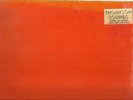
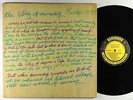
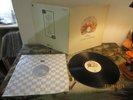
The Kosher Widow-original cast album in mono on Golden Crest 4018. The play starred Molly Picon who also wrote the lyrics with Sheldon Secunda. Music and orchestra conducted by Sholom Secunda. Also featured Irivng Jacobson, Mae Schoenfield, Julius Adler, Henrietta Jacobson, Jacob Kalich, Muni Serebroff, Esta Saltzman, Bruce Adler and Ann Winters. The liner notes don't state the theatre or location of this play but I have to assume, by the story line, that it played off-Broadway in New York City. It took to the stage in 1959. This is a very rare soundtrack in wonderful condition.
Record Grade: Mint-, an 8.5 on a 1-10 scale, full gloss, a few light scuffs
Cover Grade: Mint-
Labels: Green, white and black
First pressing, not a reissue.
About Molly Picon: Molly Picon (1898-1992) A drunk's dare to a five-year-old on a trolley car initiated the career of Molly Picon, the petite darling of the Yiddish musical theater. Molly Picon, with her geneyvishe oygen Courtesy of American Jewish Historical Society Later, with her geneyvishe oygen [mischievous eyes], dark bob, and endearing acrobatics, she won hearts on tours across the United States, Europe, Palestine and Israel, South Africa, and Australia. In over eighty years of performing, "Our Molly" would also delight audiences in radio, film, and television. Despite being told by an English director not to use her hands too much, as it was "too Jewish," Picon used every one of her fifty-eight inches to convey the humor, poignancy, and passion for performance that glowed beneath her physical pranks. For much of her career, her forte was the adorable waif, often a motherless boy, who, with naive gumption, a charming display of tears, laughter, somersaults, splits, songs, cartwheels, and musical instruments, accompanied by an occasional farm animal and good luck, managed to make it in the adult world. Hers was a limber, adaptable sekhl [smarts]: versatile, gallant, indomitable. She seemed simultaneously all-American in her winsome tomboy persona, the irresistible scamp whose good sense and unabashed virtue led to fame and fortune, and entirely Jewish in her devotion to Yiddish and efforts on behalf of Jewish refugees and the State of Israel. A staunch Roosevelt supporter, she was a candle to the world's conscience during and after World War II. Wherever she performed, as well as in her own home, she gave solace through awareness, fun, and compassion. To her audiences, she brought both laughter and tears; to her foster children she offered a haimish [homey] present and the vision of a humane future. Early Years She was born Margaret Pyekoon on Broome Street on the Lower East Side of Manhattan on February 28, 1898. Her grandmother, who cherished a fantasy romance of her own, claimed that Molly's birthday was a sweltering first of June, allowing Molly, who never seemed to age onstage, to celebrate two birthdays a year. Molly's mother, Clara Ostrovsky (later Ostrow), had left Rizshishtchov ("a little town that looks like a sneeze and sounds it") near Kiev, Russia, in 1890, just ahead of the pogroms, with her brothers and sisters (eleven, eventually); her father, Aaron, a wheat grower; her mother, Sarah; a featherbed; and a samovar. Molly's father, Louis (or Lewis) Pyekoon (later Picon), had studied for the rabbinate in Warsaw, where he married his first wife, whom he neglected to divorce before emigrating. Louis was unhappy that his first child, his "Molly Dolly," was a girl. He came and went; after his second daughter, Helen, was born, he left for good. Molly, Helen, Clara, and Clara's mother, Sarah, moved to Philadelphia, where Clara was a seamstress at Kessler's Theater and took in boarders, reputable and otherwise. In 1903, Clara took five-year-old Margaret, dressed in red and sporting an elegant fake-fur muff, to the Bijou Theater for a contest. A drunk on the trolley demanded that she do her act then and there. She consented, concluding with an imitation of the drunk himself. Impressed, he collected pennies for her from the other passengers. At the contest, she would add to them the first-prize five-dollar gold piece and the loose change that her first legitimate audience had spontaneously tossed onstage. Molly Picon had begun her theatrical career. Marriage, in a Dress Stitched from a Theater Curtain Molly studied piano with Fanny Thomashefsky. (She would continue to acquire skills throughout her life, including improvisation from Commedia Dell'Arte and, in her thirties, rope-climbing from an Arab acrobatic troupe.) She performed with Michael Thomashefsky's Yiddish repertory troupe at the Arch Street Theater (including, at age fifteen, Uncle Tom's Cabin, with alternate performances in Yiddish and English) and in cabaret from 1912 to 1915. She left William Penn High School before graduation. In 1918 she was cast as Winter in a touring English-language vaudeville act, The Four Seasons. A flu epidemic in 1919 in Boston closed the theaters, leaving Molly stranded. Only a Yiddish theater the authorities had apparently overlooked, the Boston Grand Opera House, managed by Jacob Kalich, remained open. Molly Picon answered his advertisement for a flaam feierdig soubrettin [lively ingenue]. He cast her. Within a year, after his proposals in five fluent languages and broken English, Picon and Kalich announced their engagement onstage. They married on June 29, 1919, in the back of a Philadelphia grocery store, the bride in a dress stitched by Mama Clara from a theater curtain. On Friday, August 13, 1920, Picon gave birth to a stillborn baby girl. "Peculiar that a perfect love should bear dead fruit," she wrote. Pelvic disease left her unable to bear more children. Yonkel, as Picon called Kalich, took her to Europe for two years, "to perfect my Yiddish, to get my star legs, and not to be inhibited by working with people who knew me" and to enhance her reputation in America. Kalich brought Picon to the great theaters of Europe, the Vilna Troupe, and many non-Jewish companies. He directed Picon in his adaptation of Tzipke, in which she played a plucky ragamuffin much like Yankele, her signature role (performed, she hyperbolized, "3,000 times"). Film Work Thrown out of Romania because of antisemitism and competition with the Romanian National Theater, Picon and Kalich returned to New York, where they teamed with composer Joseph Rumshinsky to create operettas scripted and directed by Kalich with lyrics often by Picon. From 1922 to 1925, Picon appeared on Second Avenue in Yankele and more, including Mamale, Raizele, Oy Is Dus a Meydl [Oh, what a girl], and The Circus Girl, in which Picon dangled by one foot from a rope. D.W. Griffith, calling her "the most interesting actress in America," tried but failed to raise money for a film for Picon, The Yiddisher Baby. Boxing in the Film East & West, Courtesy of American Jewish Historical Society Her first films were made in Europe. She debuted in Das Judenmadel by Otto Freister, filmed in Austria in 1921, followed by Hutet Eure Tochter, which had no Jewish content, in 1922. In Kalich's Yiddish film Ost und West (1923) [East and West, also known as Mizrech un Mayrev], Picon is an American girl who, when not disguised as a Hasidic boy, mistakenly marries a Talmudist, played by Kalich, eventually happily secularized. A censored version was shown in America; in 1932, viewing a restored version with Yiddish dubbing and sound effects added, a critic opined that "it breathes Jewish character, but does not satisfy ... thank God ... high literary expectations." In 1925, Yidn Fun Sibir, a reworking of existing films, linked Clara Young, glamorous star of Eastern European operetta, with Picon. In 1929's Little Girl with Big Ideas, her talkie debut, Picon acted in English with a put-on heavy Yiddish accent. For Yidl Mitn Fidl (1937), directed by Joseph Green with songs by Ellstein and Itsik Manger, Picon, playing a girl who dresses as a boy at her father's bidding, was paid ten thousand dollars, the highest salary for a Yiddish movie; dubbed into English in 1961, it was retitled Castles in the Air. In Mamele (1938), a comic melodrama from a play by Meyer Schwartz, Picon, over forty, played Khavtski, an energetic twelve-year-old gamin who cares for her widowed father and six siblings. This was the last Jewish film made in Poland before the Nazi onslaught. The Molly Picon Theatre In the fall of 1930, back at the Second Avenue Theatre, by now renamed the Molly Picon Theatre, she was performing in The Girl of Yesterday (entering via a rope) and The Love Thief to twenty-seven hundred patrons a week. Following a tour of the States, Picon and Kalich went to Palestine, where Chaim Nachman Bialik hosted them on a kibbutz. Her first American musical, Birdie, was in 1933, the year that Kalich began his long-running column for the Jewish Daily Forward. In 1936, Picon contracted for a radio show, which continued for many years, first sponsored by Jell-O, later by Maxwell House Coffee. She toured South Africa, where she sang Negro spirituals to Zulu dancers, and where the poverty stunned her as it had in Poland. On her return, she played harmonica in Bublichki. At the close of the 1930s, worrying that Yiddish was dying out, Picon took the role of a sophisticated Jewish woman in Sylvia Regan's English-language drama Morningstar, which, despite Stella Adler's directing, closed in eight weeks. After Picon translated her husband's Yiddish play, Schmendrick [Nincompoop], she and Kalich briefly separated, reuniting as personal and professional equals, no longer mentor and student. In her autobiography, Picon, who decried "toilet" comics, is frank about their sexual problems, as she is about the cancer that later invaded Kalich's intestinal tract. Kalich wrote Oy Is Dus a Lebn [What a Life], a musical about his and Molly's life together, and in 1942 they sponsored their foster child, George Weinstein, a seventeen-year-old Belgian Jew living in London. "Deep down within me, I was Yankele. I still am" During the war, Picon performed in refugee camps in Canada. Immediately at war's end, she and Kalich sailed on a barebones vessel to perform in camps and orphanages with the Jewish Labor Committee in Europe, taking chocolates, sewing items, makeup, new costume jewelry, and sanitary products, so that survivors"might feel like (men and) women again." In one camp audience a three-year-old heard his first sounds of laughter. Back in America, while Picon translated songs from French and German, she and Kalich worked for the United Nations Relief and Rehabilitation Administration and sold bonds for Israel and the Children's Fund. In 1947, Kalich and Picon moved from University Place in Manhattan to their country home, Chez Schmendrick, in Mahomac, New York. There, after a shvim, shvitz, und schnaps [skinny-swim, sweat, and snort], they felt refreshed to "fly, fly, fly." At fifty, Picon somersaulted again as the thirteen-year-old Yankele, as she would to the age of eighty. "Deep down within me, I was Yankele. I still am," she claimed. She appeared in For Heaven's Sake, Mother, in which she played a seamstress, Abi Gesunt [So Long as You're Healthy], Sadie Is a Lady, Mazel Tov, Molly, and Pavolye, Tage [Slowly, Daddy], a rewrite of Hello, Molly, in which Variety called Picon "a bean-sized Bernhardt." The Molly Picon Show began on television in 1949. In 1953, the year of her pre-Broadway flop Make Mama Happy, Picon's mother died after a heart attack; Picon did not sing "My Yiddishe Mama" for a year. Kalich began a memoir, I'm Talking About Molly, using Picon's diaries. He wrote Farblondjete [Mixed Up] Honeymoon, in which Picon played a young servant who eventually marries the lord of the manor, and Ghetto Gayeties, for which Picon translated the songs; he starred in The World of Sholom Aleichem, in which Picon sang a small role. They wintered in Miami, where Picon did four vaudeville shows a day. "[T]he Yiddish Helen Hayes" Picon sang for the Knesset in Israel in 1955, where she and Kalich adopted Meira, the daughter of Picon's deceased stepbrother by her father's first wife. In America, Picon broke her wrist onstage, continued the show, and completed the run in a cast. Molly Picon in Majority of One, (Photographer: Fred Fehl) Courtesy of American Jewish Historical Society After another American tour, Picon was asked to audition for the first time in her life, for Mrs. Jacoby in A Majority of One. She was offended by the test, and by the performance of Gertrude Berg, who won the role. Years later, Picon got her "sweet revenge," playing the part in London. Helen Hayes, on learning that Picon had been dubbed "the Yiddish Helen Hayes," responded: "From now on I will be proud to be the shiksa Molly Picon." A surprising revival of Yiddish theater in 1959 was Kalich's The Kosher Widow, their first completely dramatic play, which she called "the biggest thing since the Zionist movement." Picon assumed two roles, wife and sweetheart. Soon thereafter, Picon first refused then accepted the role of an Italian mother whose sons live in the fast lane, in the film version of Neil Simon's Come Blow Your Horn, for which she was nominated for an Academy Award for Best Supporting Actress in 1964. She appeared on television in A Family Affair, The Jack Paar Show, Car 54, Where Are You? (in which she sang Warshawsky's "Der Alef Bays"), and Dr. Kildare. After a bout with appendicitis on tour, Picon wrote her "mish-mosh" family biography, So Laugh a Little, with Ethel Rosenberg. "Thank God for Molly" The role of the genteel widow Clara Weiss in Milk and Honey (originally Shalom), somersaulting with sheep and goats at age sixty-four, was her only original Broadway success. "Thank God for Molly," wrote critic Phil Adler. Picon then chose uncharacteristic stage roles: a nagging mother-in-law in Madame Moussez, The Rubiyat of Sophie Klein, and the lead in Chu Chem, which a critic called "The King and Oy," an absurd piece about a search for Jews in China. After The Six-Day War and more bond sales for Israel, Picon accepted the role of Yente the Matchmaker in Norman Jewison's movie Fiddler on the Roof, in which Kalich had a small role. How to Be a Jewish Mother, a revue in which she appeared with Godfrey Cambridge, was considered insulting by many blacks and ill-conceived by many whites. Picon, who had twice been the only white performer in Harlem, was stunned. Picon performed Solid Gold Cadillac in Chicago in 1969 without Kalich, whose health had begun to deteriorate, but at a gala hosted by the Hebrew Actors Union at the Commodore Hotel in New York, they celebrated their fiftieth wedding anniversary together. On Broadway, in an apt coincidence, Picon took over Helen Hayes's role in The Front Page and was received with cheers. On the other hand, Will It Last, later called Paris Is Out, closed after a hundred uncomfortable performances. "[T]he girl who gets older every year and younger every day" Picon was honored in 1975 at the hundredth anniversary of the Yiddish Theater at the Museum of the City of New York; the museum maintains a collection of her costumes, pictures, programs, and scripts. On October 12, 1975, she performed at Carnegie Hall before a background of slides of her life. Molly Picon with her sister Helen, 1978 Used with permisson. Citation: Picon, Molly and Jean Bergantini Grillo. Molly!. New York: Simon & Schuster, 1980. In 1976, a year after Kalich's death, Picon sold Chez Schmendrick, giving pictures, plaques, and books to YIVO, and rented a house in Cortland. She performed her one-woman show Hello Molly in 1979, selected Jean Grillo Benjamin as coauthor for her autobiography Molly!, and moved near Lincoln Center with her widowed sister Helen Silverblatt, who had also been a child actor. They vowed to speak only Yiddish to each other for the rest of their lives. The Philadelphia Public Library presented a major exhibit on her work while she was performing Milk and Honey there. On June 28, 1980, Picon received the Creative Achievement Award of the Performing Arts Unit of B'nai B'rith. For her lifetime contribution to Jewish performing arts, in 1985 the Congress of Jewish Culture awarded her a Goldie, named for the"father" of the Yiddish theater, Abraham Goldfaden. She accepted wearing a tuxedo in homage to the boy's hand-me-downs she had worn in her early films. Molly Picon, "the girl who gets older every year and younger every day," remained zestful until Alzheimer's disease gripped her final few years. She died on April 6, 1992. Throughout her career, she had lived up to her beloved Yonkel's admonition: "Molly, that's our job. Make them laugh."
All of my records are shipped in sturdy cardboard LP or 45 rpm mailers with appropriate padding (heavy cardboard fillers or bubble wrap or "peanuts" or some combination thereof". With the exception of sealed LP's, all LP's are removed from their outer sleeves to prevent seam splitting. Upon request, I will give your sealed LP's the same treatment. (once an LP is shipped sealed, it cannot be returned once opened).
All records are carefully graded. In an attempt to give customers an accurate impression of condition rather than adhere to somewhat arbitrary criteria, I give an "overall presentation" grade, supplemented when necessary with additional remarks. Please refer to my grading system below for a more detailed explanation.
MY GRADING SYSTEMS: I’ve been told that I grade conservatively. My NM (near mint) is my highest grade for opened records (which would also include unplayed records). It’s a 9 or 10 on a 1-10 scale. M- would be equivalent to an 8; VG++ to a 7; VG+ to a 6; VG to a 5; VG- to a 4; G to a 3; F to a 2 and P to a 1. The same scale applies when I grade covers (jackets). Significant defects are specifically noted and taken into consideration in the grade.
GRADING DESCRIPTIONS
RECORDS:
- GRADING Grading is based on the following criteria
- Sealed = store stock new
- Near Mint = like new or near new with only one or two small insignificant defects, a 9 or better on a 1-10 scale
- Mint- = extremely nice. Would be Near Mint, except for a couple of light hairlines or scuffs, which do not affect play
- VG++ = still a very nice record with all or nearly all of its original gloss but may have a few more light, surface marks, hairlines, needle tracks or the like which should not materially effect play
- VG+ = a nice, but used record that may have a series of light scuffs or scratches. It probably plays with a few pops, but has no serious problems.
- VG = a well-used record that still should sound OK when played, but may have moderate surface noise, pops, etc.
- VG- = a very well-worn record that plays through without skipping, but will do until a better copy comes along.
- Good = not actually good at all but probably will play through but with much in the way of surface noise, pops, crackles, etc. Still, will have no cracks, chips or the like
- Fair = you’re getting this record just to own but not to play
- Poor = the sky’s the limit, generally I will discard a record this bad (and sell the cover, jacket or sleeve alone) unless the label holds some particular interest
VISUAL GRADING: All records are visually graded only unless I state that they are play-graded. Some major labels were pressed on better quality vinyl and will sound better than a record which visually appears the same on "budget" labels which were pressed on lower quality vinyl. Recording techniques also varied. The sound on live albums may be far inferior to studio recordings. There may also be defects in the pressing which are invisible. The point is that an album on a high quality label that was visually graded VG+ may sound better than an album on a budget label that was visually graded Mint- or even Near Mint. Please refer to my return policy, below. But please don’t be shocked if a record visually graded Near Mint doesn’t sound state of the art. If I base my grade on a PLAY GRADE, I will state this specifically in my grading section.
COVERS: There are really too many possible defects regarding covers to be as specific in my definitions as I had been with my record grades. But please keep in mind these general grading guidelines:
- I will give greater weight to the condition of the front cover than back cover when assigning an overall grade
- No cover with a cut out hole or saw mark will be graded Near Mint even if it is still in factory shrink and there is no other wear
- I will not reduce the grade of a cover for stickers which are glued to the jacket by the record company (eg. Contains the hit song Expressway to Your Heart); but will reduce the grade for stickers glued on the cover by stores, previous owners, etc.
- If I write that a cover has a bb hole, I’m talking about a small cut out hole
- A saw mark is a narrow cut in the perimeter of the cover, could be anywhere and vary in length from 1/2” to 2” at the most.
- The overall grade takes into consideration any stated defects. For example, if I grade a cover VG+ and then state it has 6” top and bottom seam splits - I’ve already reduced the grade because of the seam splits. If the seams weren’t split, the cover would be graded higher such as VG++ or Mint-.
Shipping Costs: NEW SHIPPING RATES & POLICIES AS OF JANUARY 4, 2010.
The buyer pays for shipping.
DOMESTIC SHIPPING WITHIN THE UNITED STATES: Due to increase in postage rates, I have sometimes been losing money on shipping as I send all records in sturdy professional mailers with one or more fillers. Therefore, I now will be using the eBay postage calculator method. This will also result in a more equitable charge for priority mail shipments. Instead of charging $9 across the board, those who live in the southeast and mid-east will reap the benefit of reduced priority mail rates.
DOMESTIC AND INTERNATIONAL SHIPMENTS: COMBINED SHIPPING - Save money when I mail 2 or more records in the same package.
INTERNATIONAL SHIPMENTS (NEW POLICIES): Overseas customers are welcome to bid. As with U.S. shipments, I will use eBay's postage calculator for all overseas shipments. Postage to Canada is substantially less than to other countries - if you live in Canada and don't see a separate rate for Canada , please e-mail me and I'll modify the invoice to reflect the lower shipping charges. Surface mail is no longer available for overseas. Express Mail International and Priority Mail International are available - rates are substantially higher than first class international and will be quoted for each purchase if buyer requests this service. Express Mail International or Registered mail is now required for purchases over $100. Generally, Express International costs $35 for 1 album and additional albums are about $5-6 more. Registered costs about $26 for 1 album, about $5 more for each additional album. Registered mail may not be available to certain countries.Why the change? It's because of eBay's and paypal's policies requiring proof of delivery - or - buyer can make a claim for a refund from paypal. This has happened too often to me in the past couple of months. I know that one buyer (twistwatcher, no longer a registered user) that actually received his package but paypal has given me problems and I cannot get the payment back that they reversed. With the other "non-deliveries", I have no way of knowing if the buyer is being truthful and the package was simply "lost or misdelivered" or if the buyer is making a false claim. So...that is the reason for my policy change. I am sorry but the increased risks and costs must be passed on to the international buyer. On the bright side of things, Express Mail International will get you the package much faster and it is safer. Registered mail is much safer (but not as fast). So there are benefits to the buyer as well as the seller.
In certain situations, Registered Mail might also be an option - please inquire.Sorry, but I do not give refunds for items damaged or lost in the mail.
Please check out my other eBay auctions and stores listings.
. I’ve been listing all types of records - mostly LP’s - including 50’s and 60’s rock ‘n’ roll, country, folk jazz, blues, personalities, new wave and punk, surf, psych, spoken word, comedy, etc., etc....... I try to list unusual, unique or obscure records, not the ones that you see all the time. While a majority of my listings are albums, you’ll often find a nice selection of 45’s, EP’s or picture sleeves...and an occasional 78 or two.My return policy: . You may return an item if it's not in the conditon described. You may not return items if you decide you don't like the music. I will return the base price of the item unless I make an error in shipment such as sending you the wrong record or cd. In that case, you will be reimbursed for the cost of the item and shipping both ways. In addition, the item must be returned in its original condition , i.e. the way it was shipped when it left my hands. While a very high percentage of my records arrive safe and sound (I use professional mailers and a filler or two, more for 78’s), they occasionally are damaged in transit. If that happens, I won’t accept the return of the record or other item.
Sealed Records: After a sealed record is paid for, I will gladly open it before mailing to make sure that the record is new & unplayed. If the record is not, I will give a full refund. Even though it is easy to spot most resealed records from the 50's and 60's [I will mention that in the desription if it looks like a possibility], not all records from the 70's & 80's are quite as obvious. Please ask for any details about the seal of a particular record & I will be happy to answer.
Any other questions? About anything? Please e-mail me at ibuyvinyl@nc.rr.com .
price rating